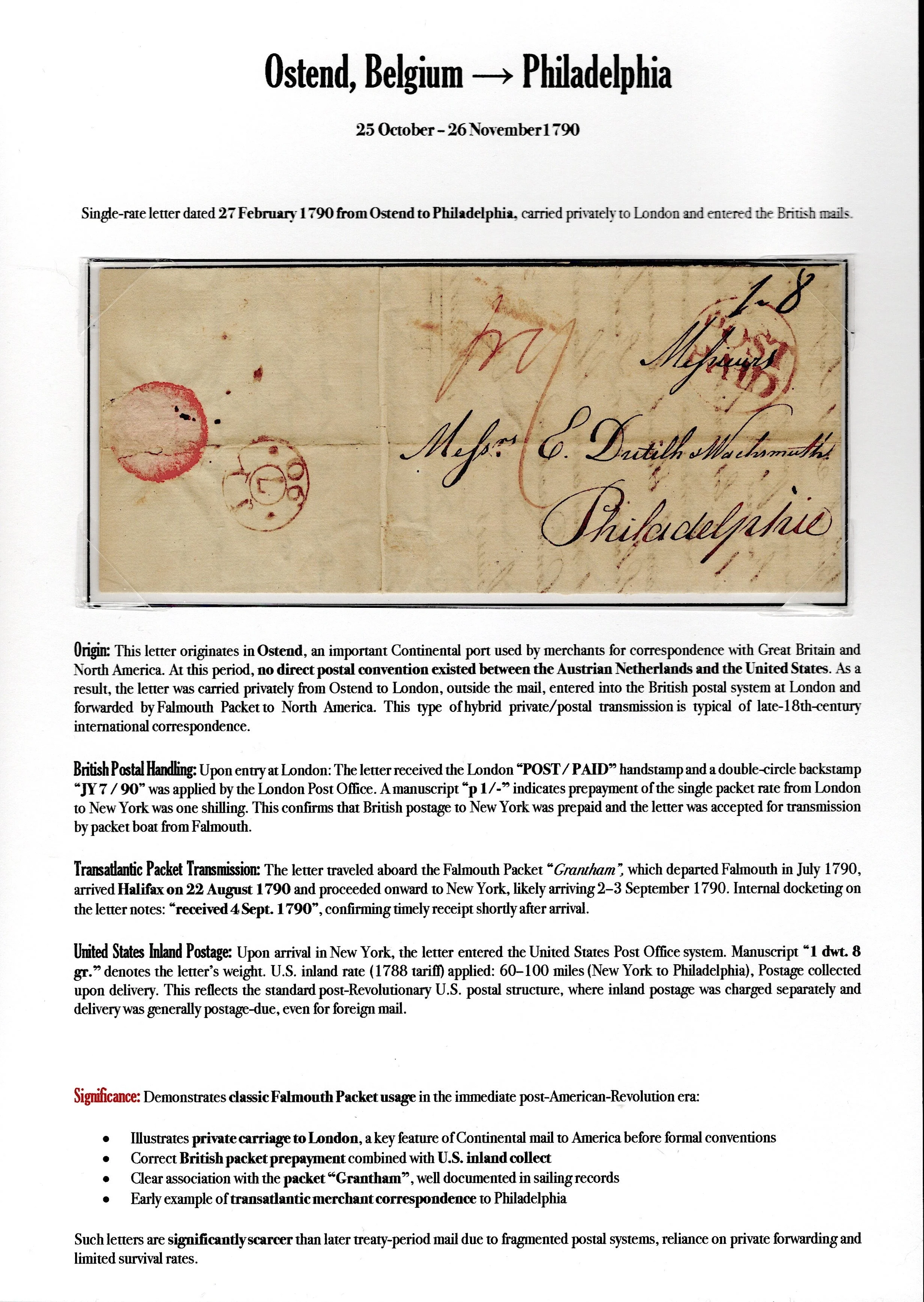
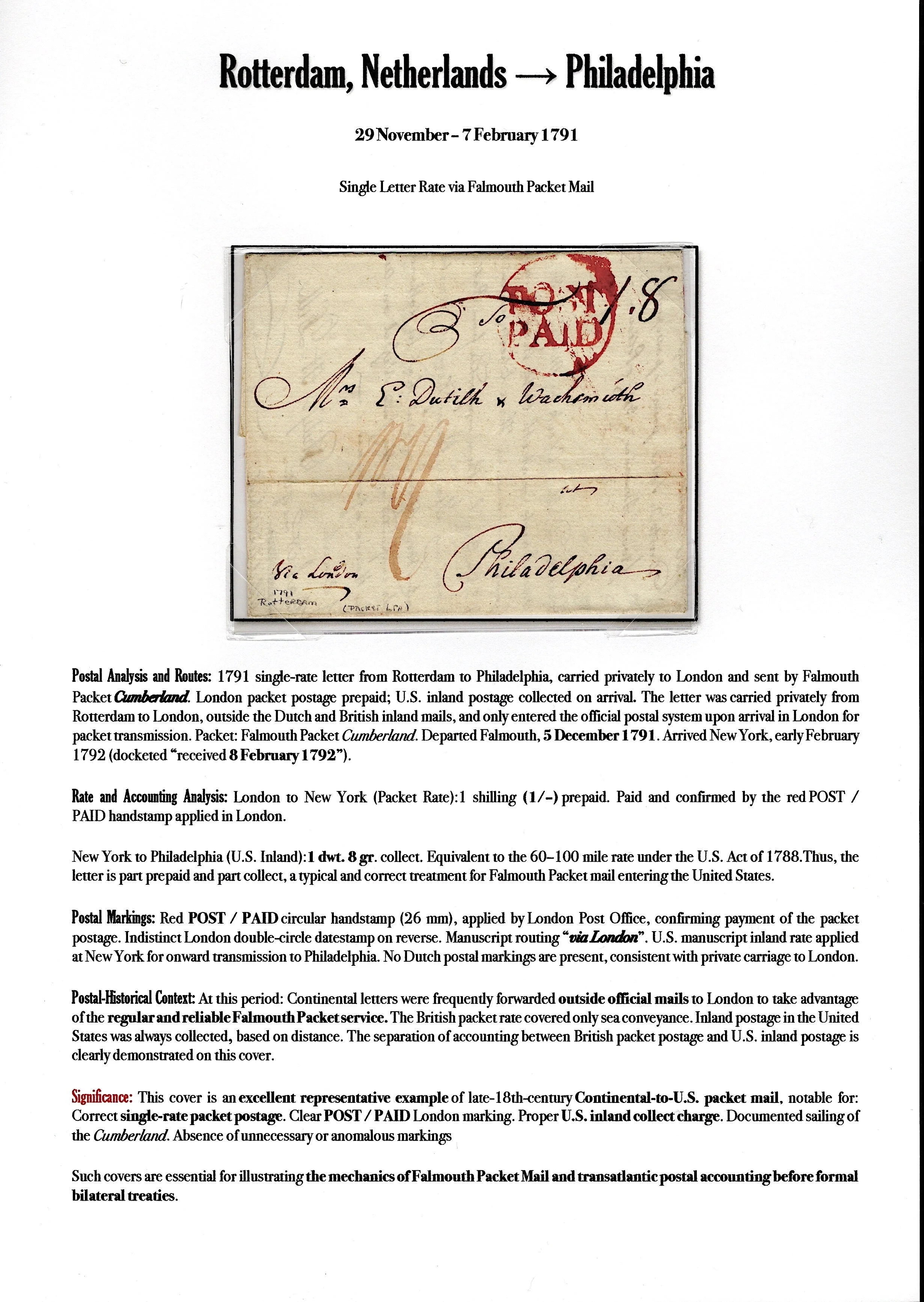
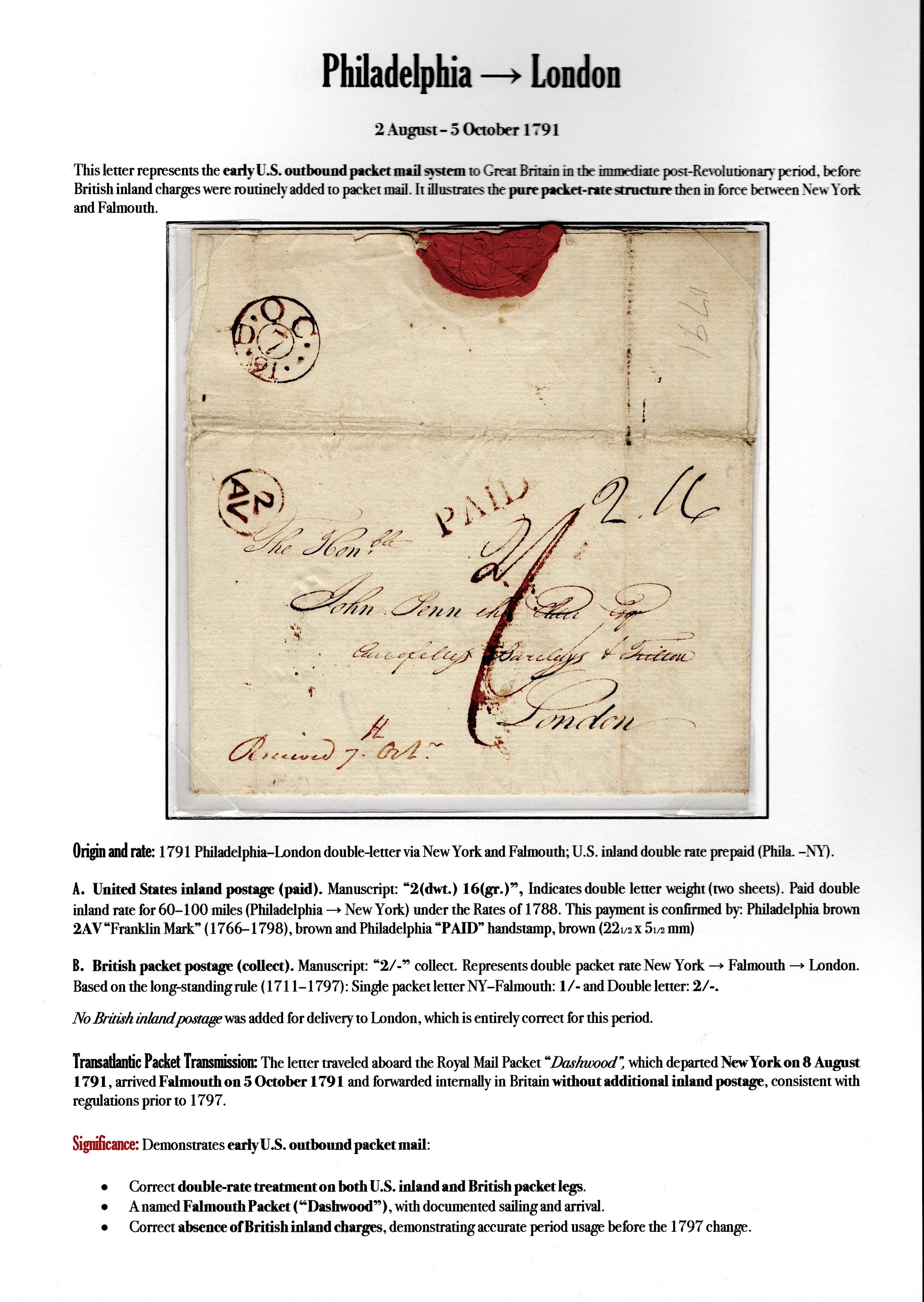
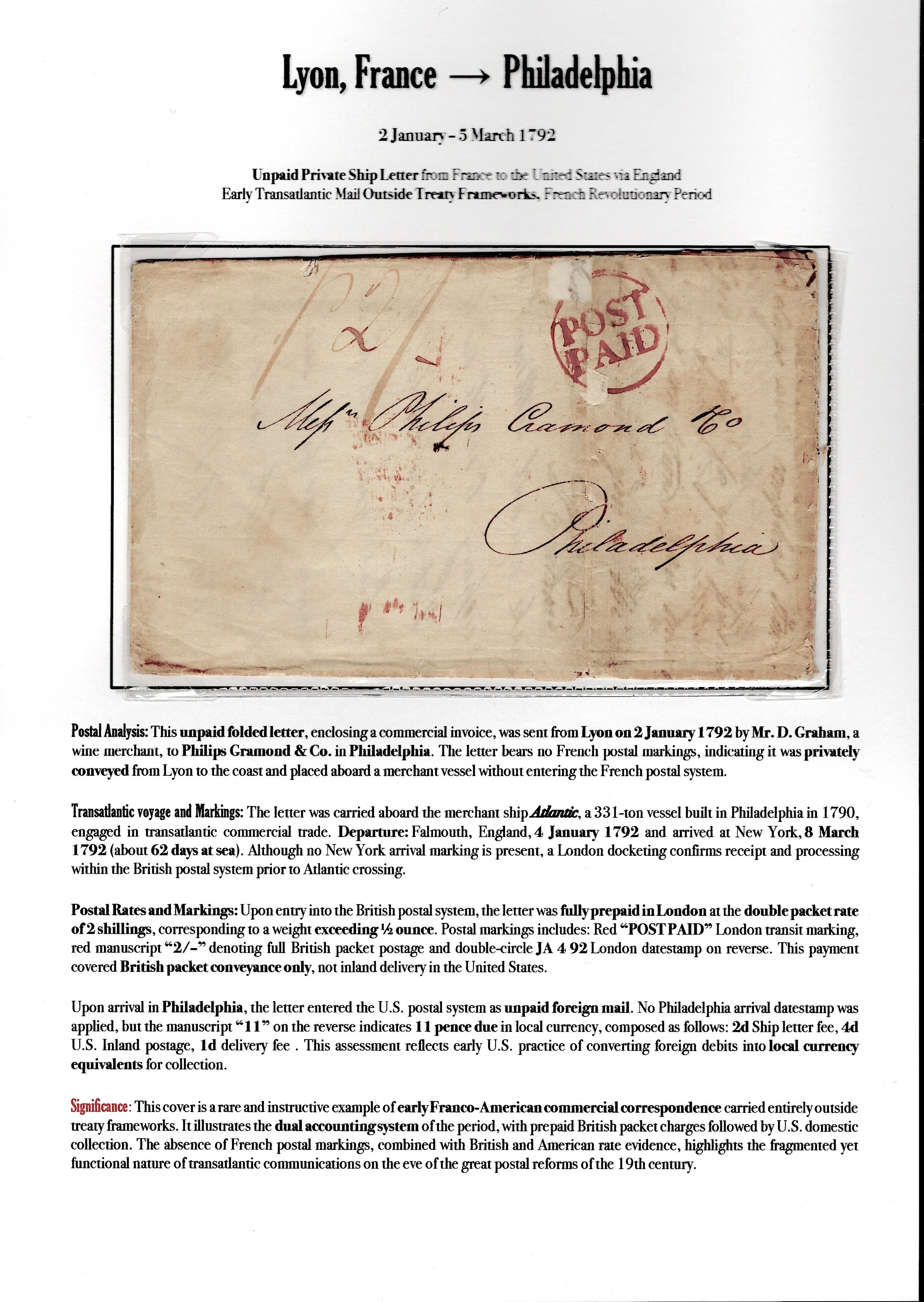
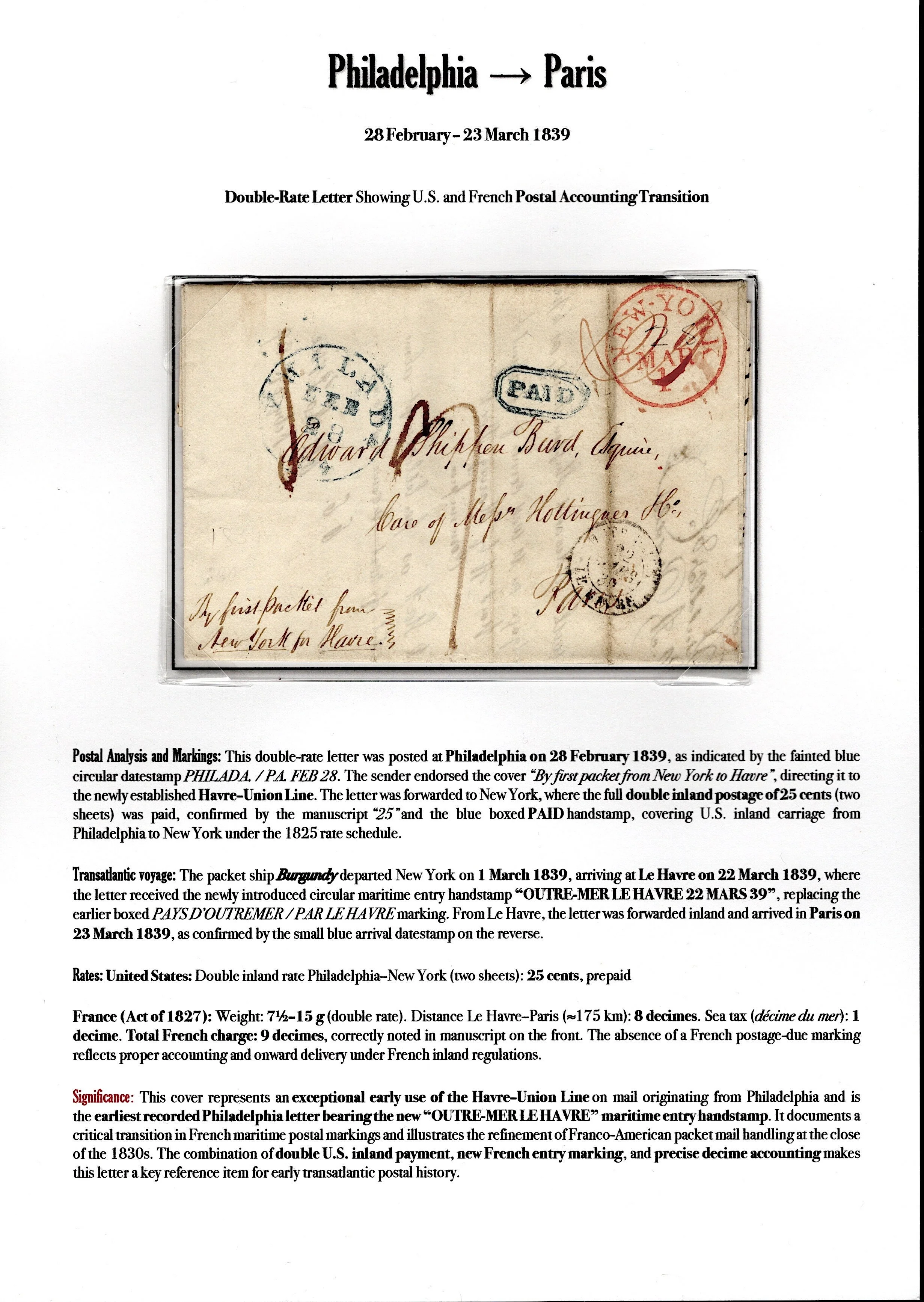
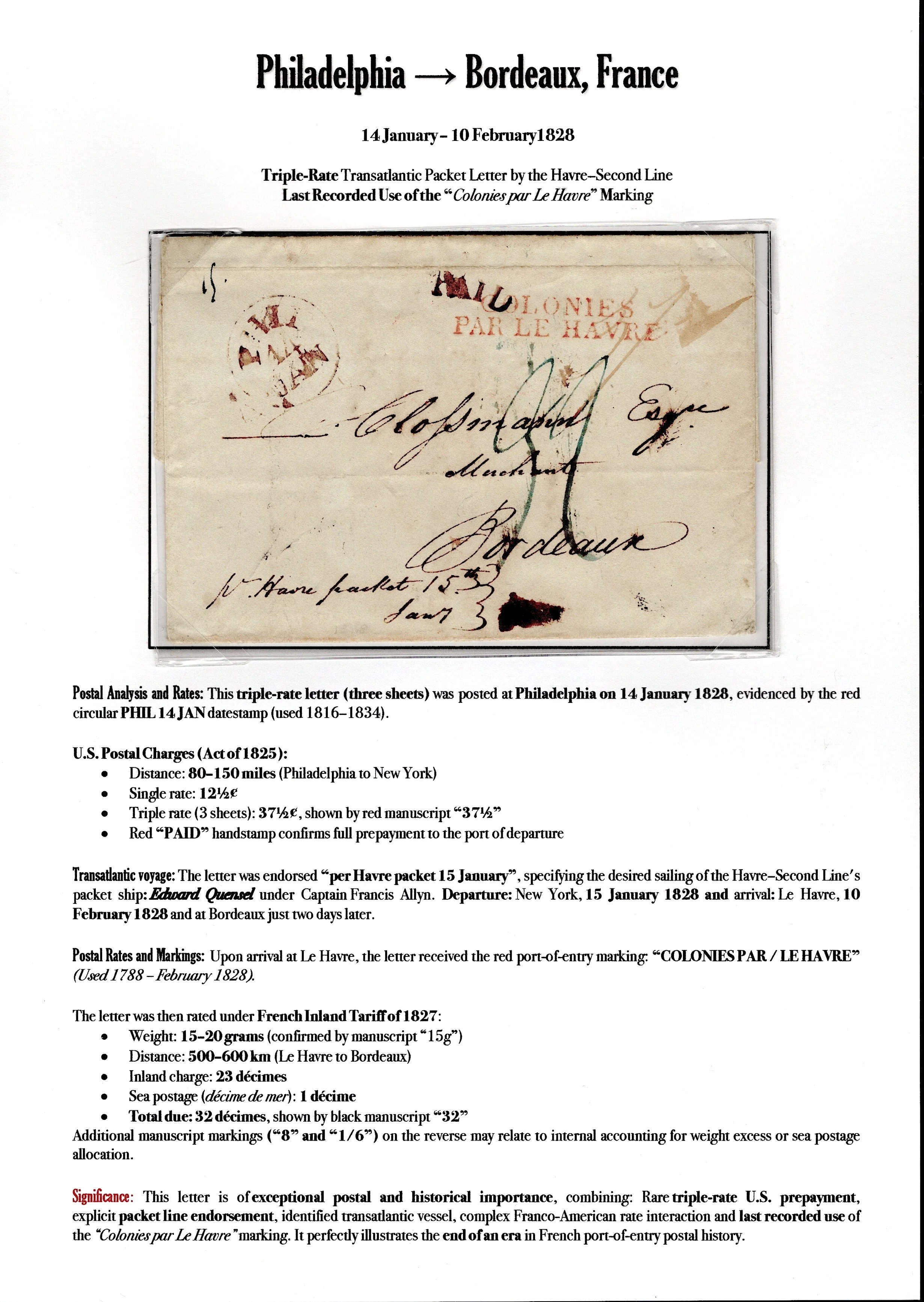
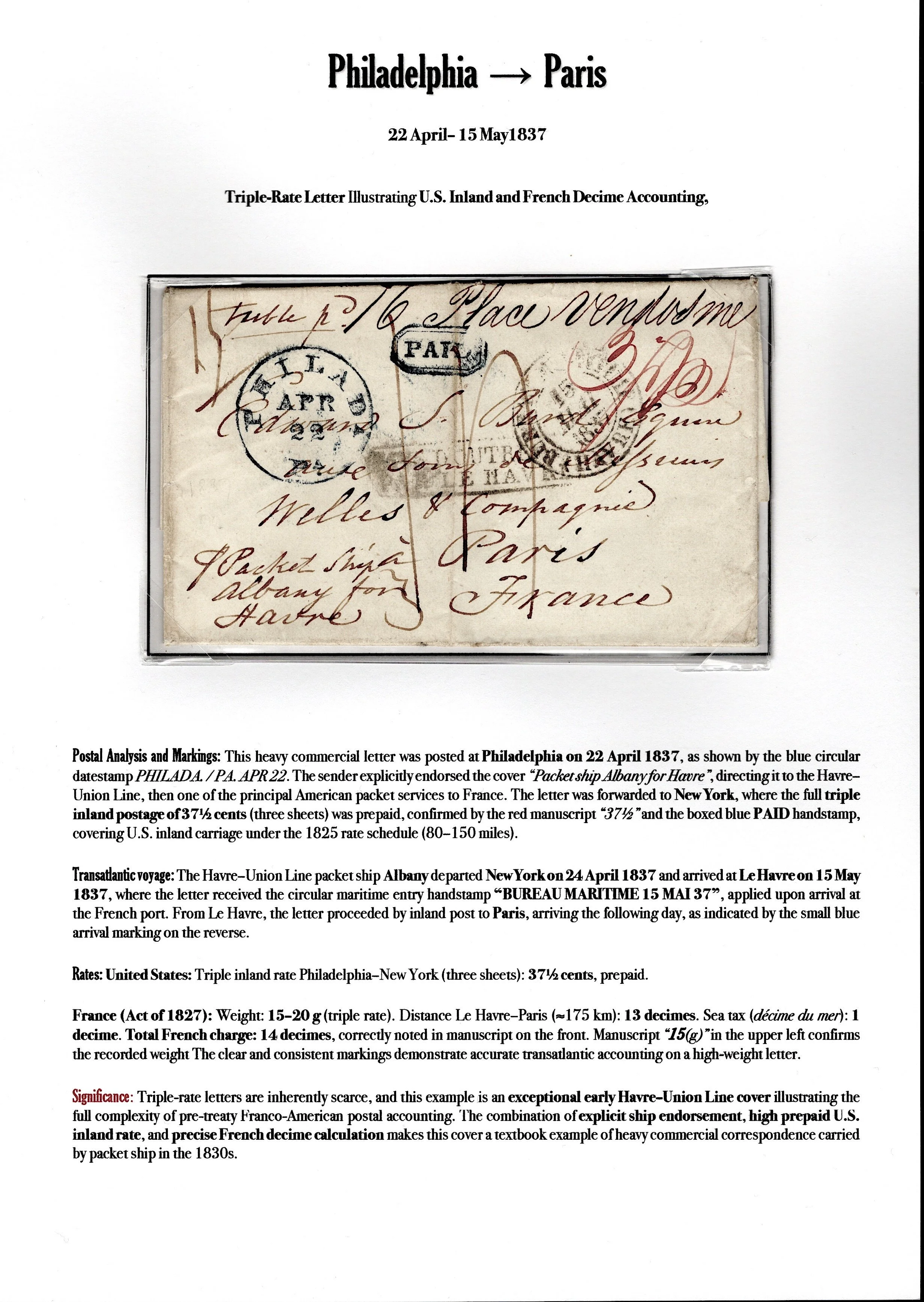
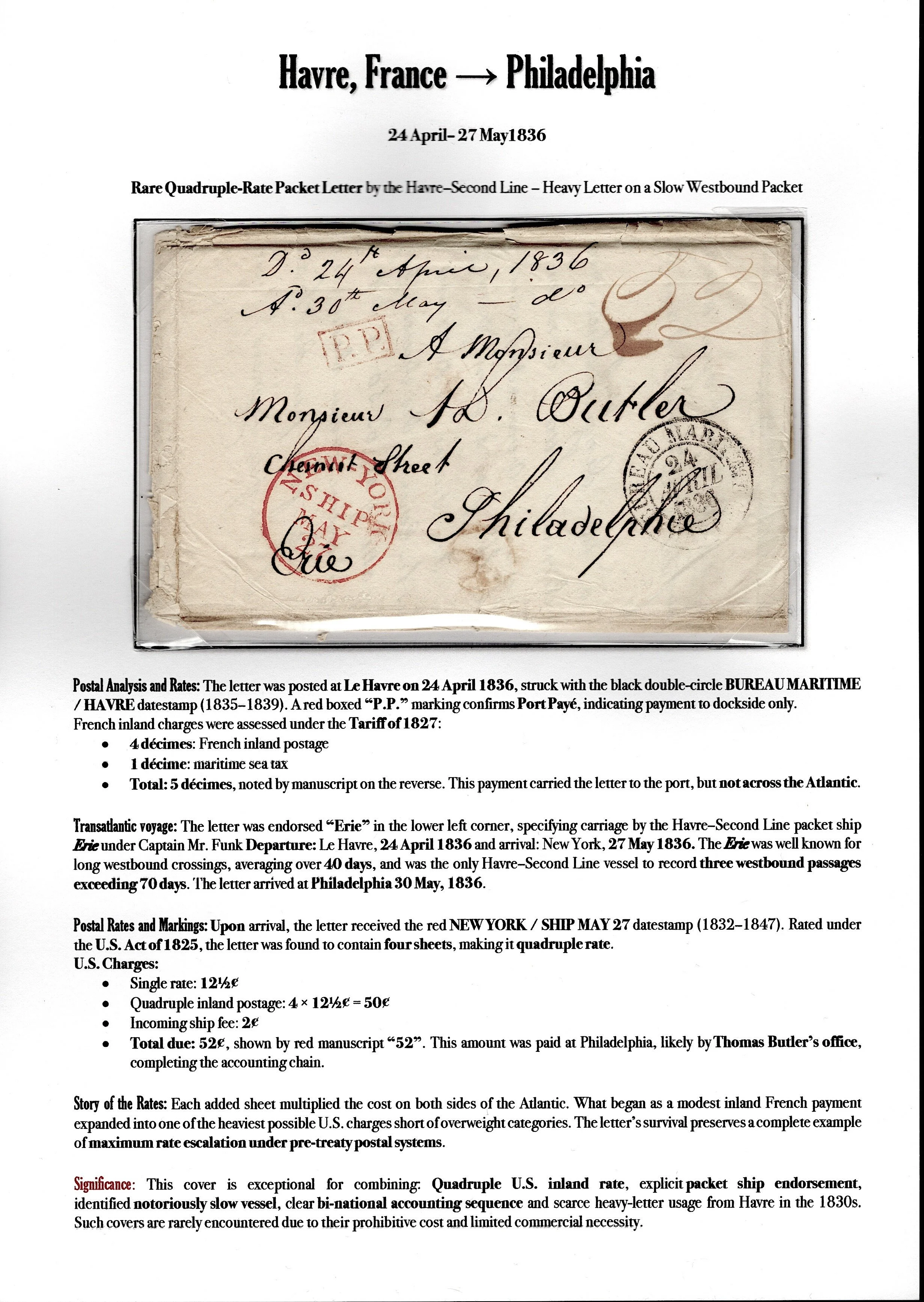
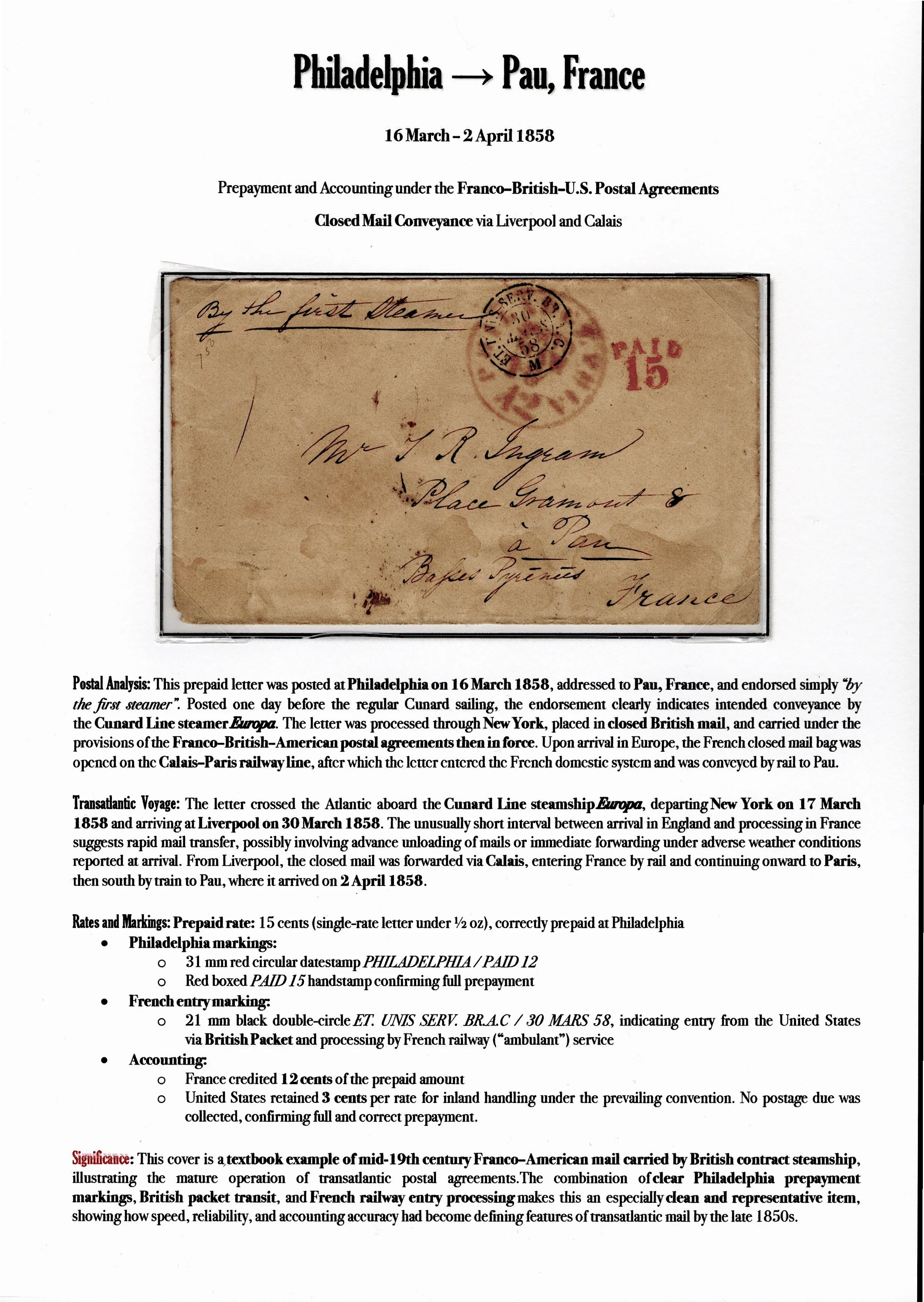
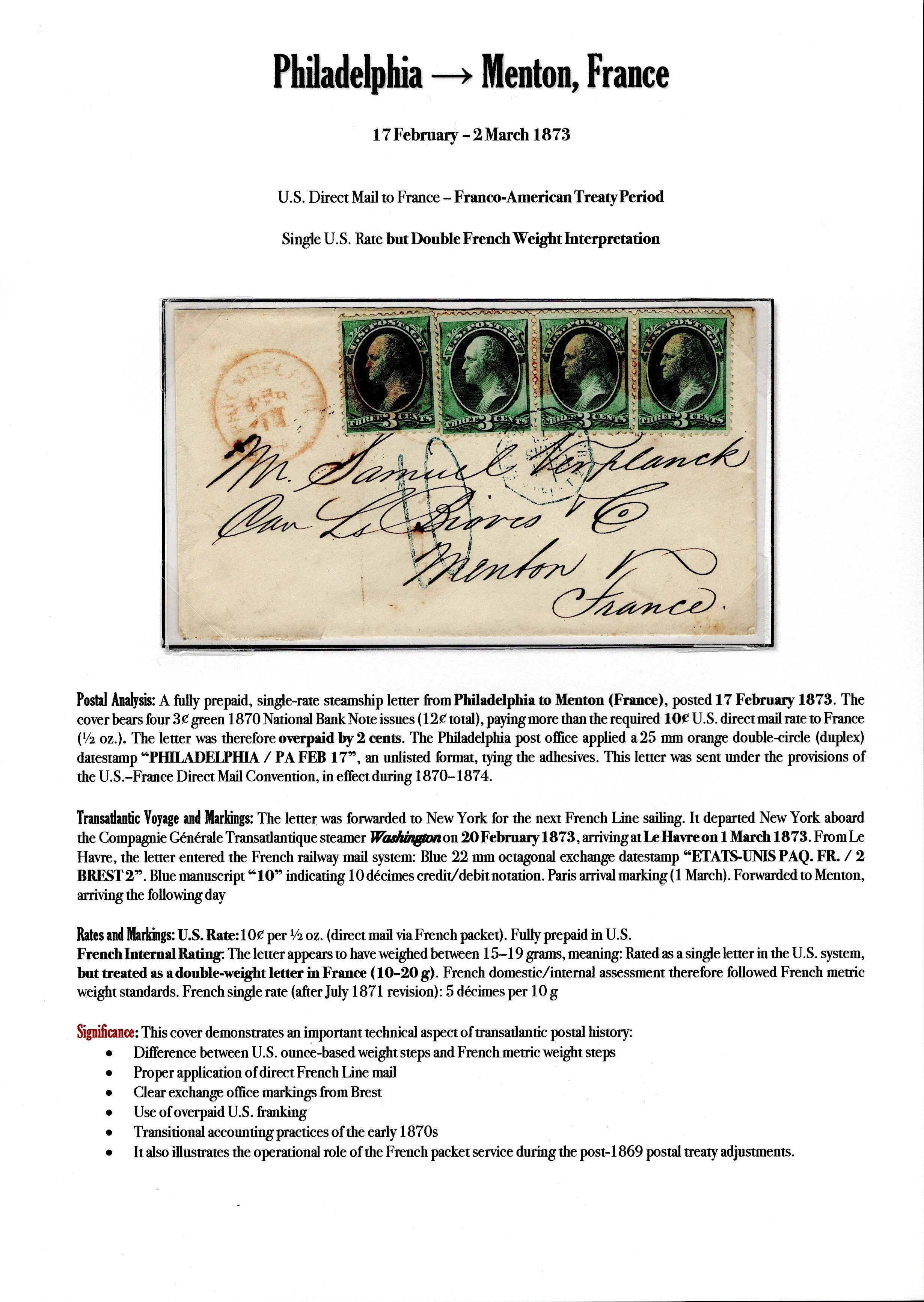
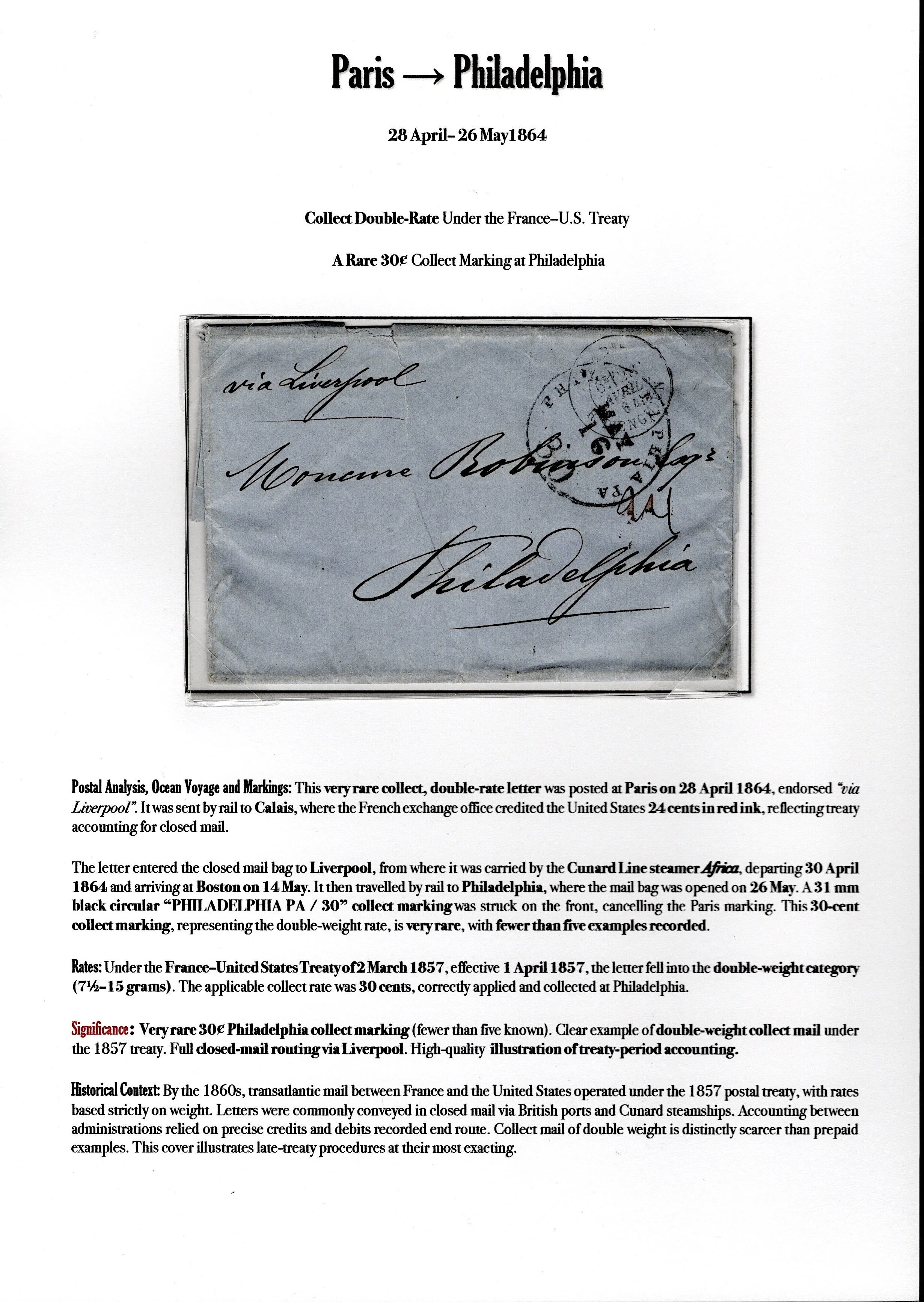
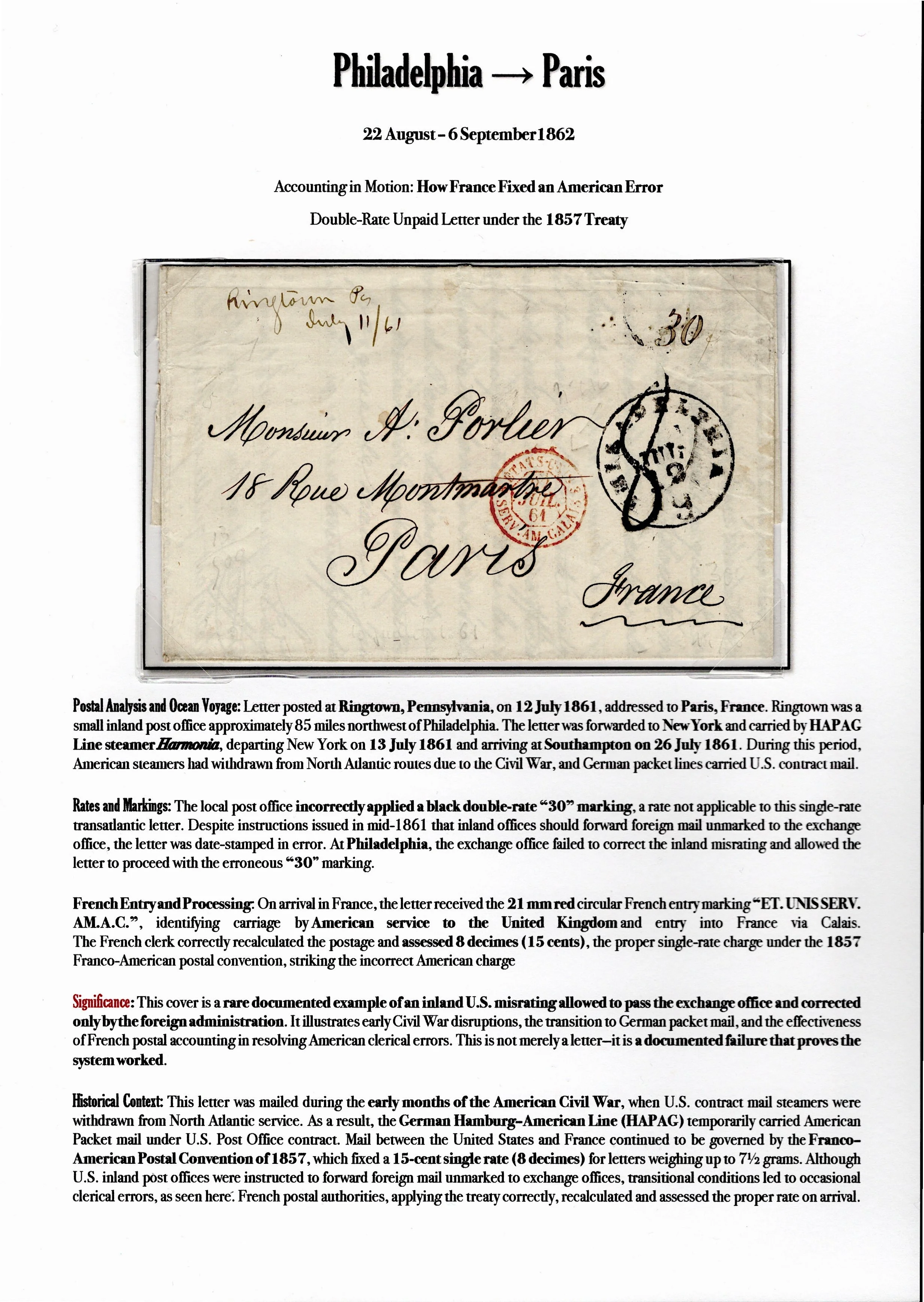
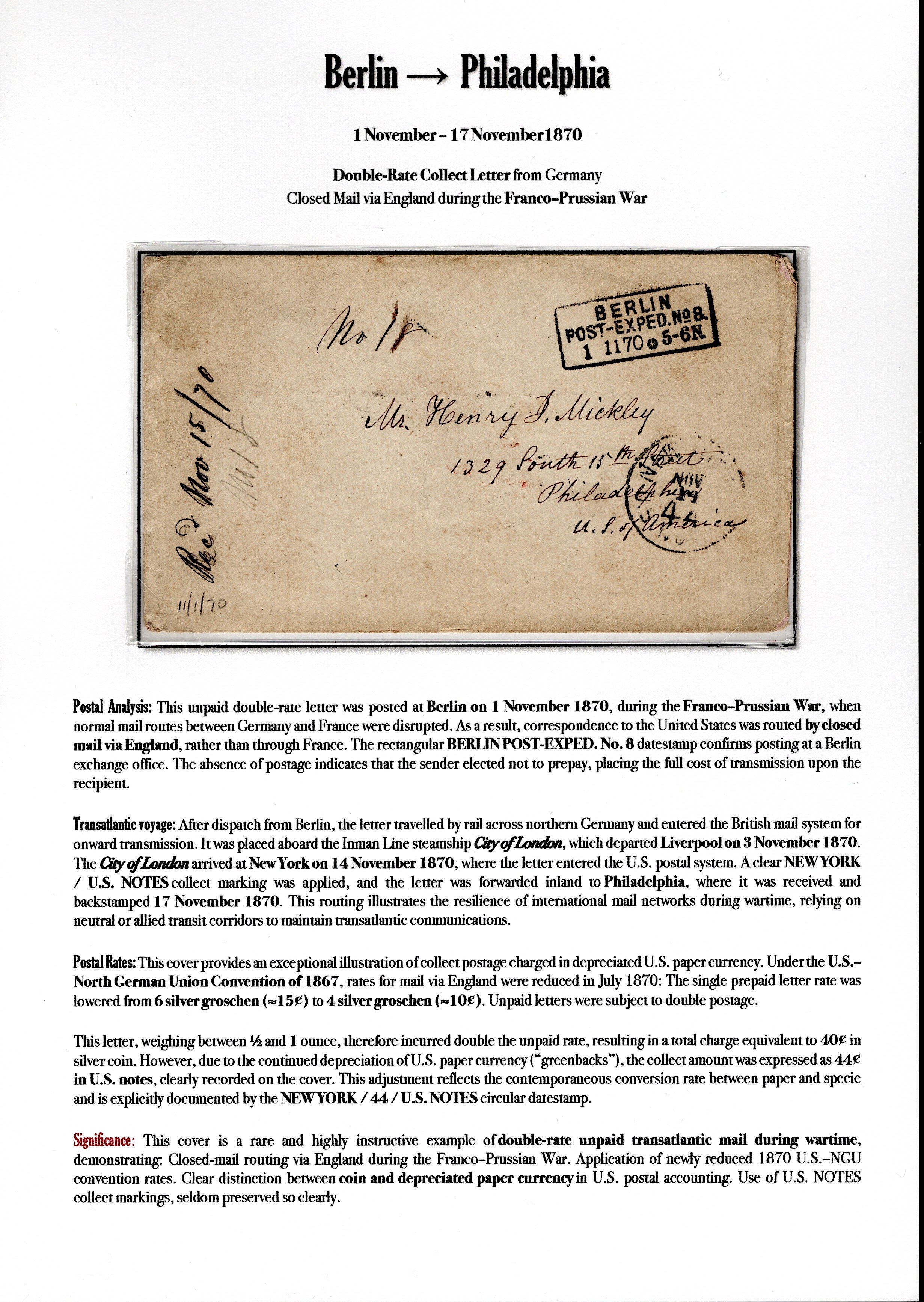
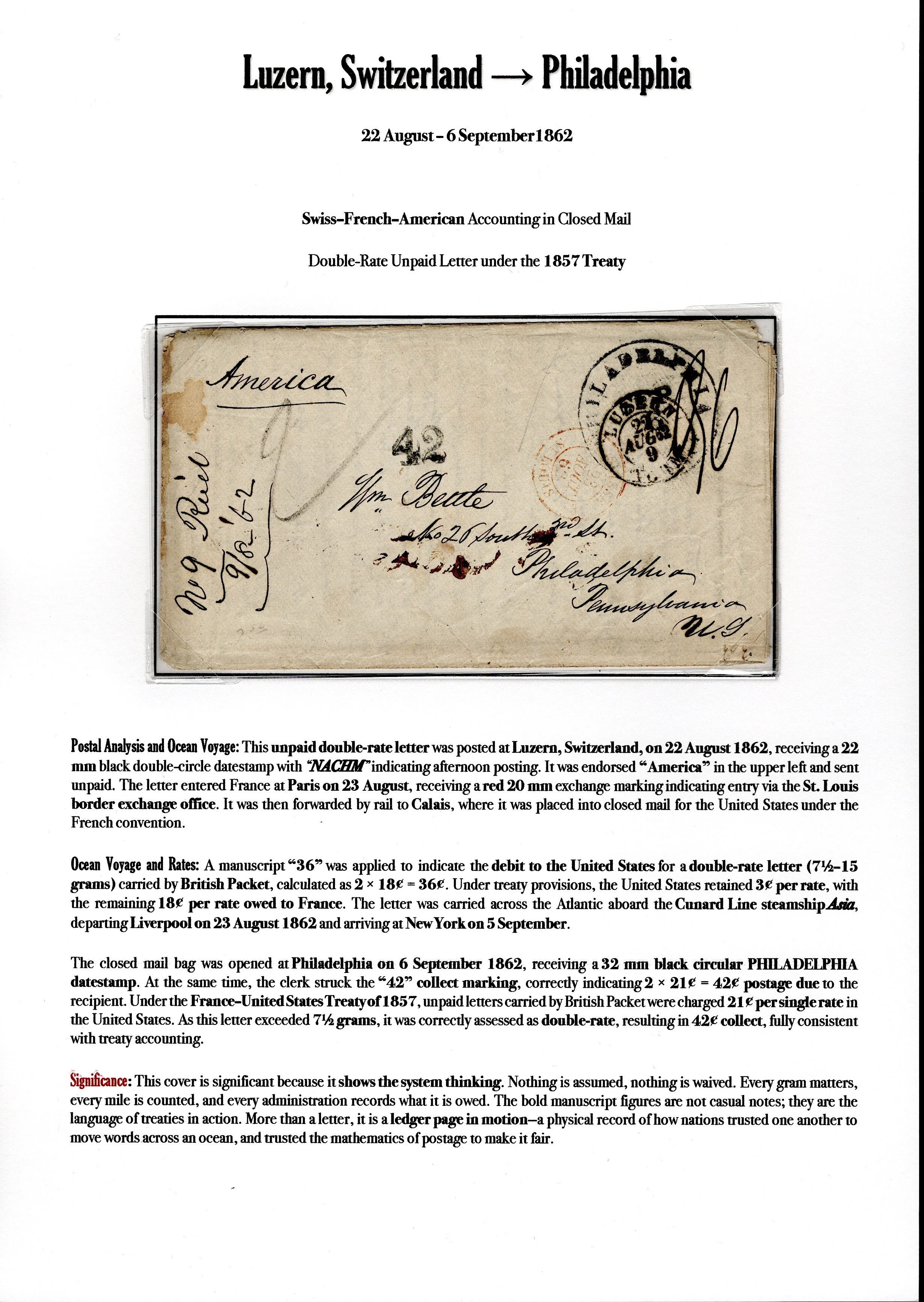
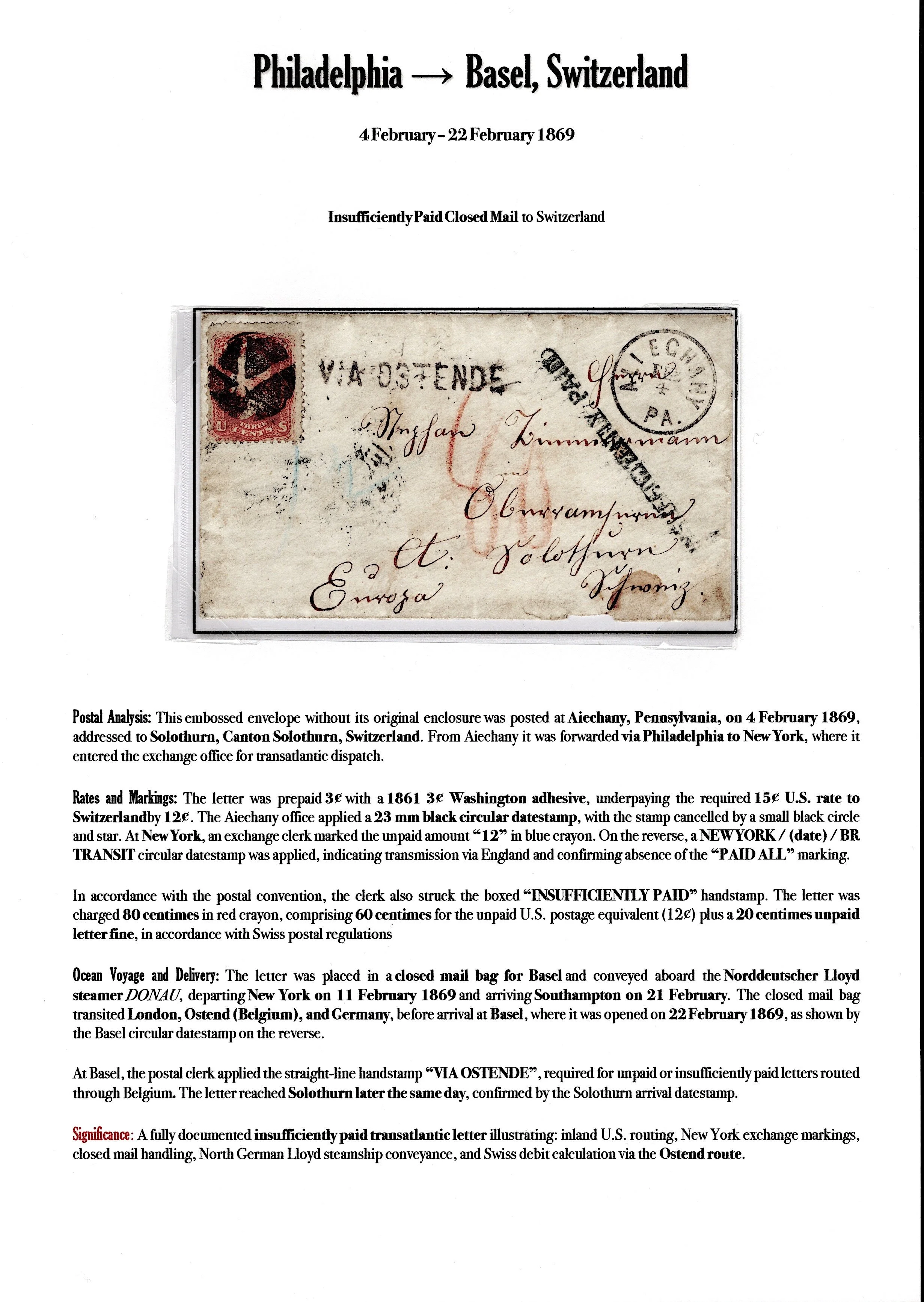
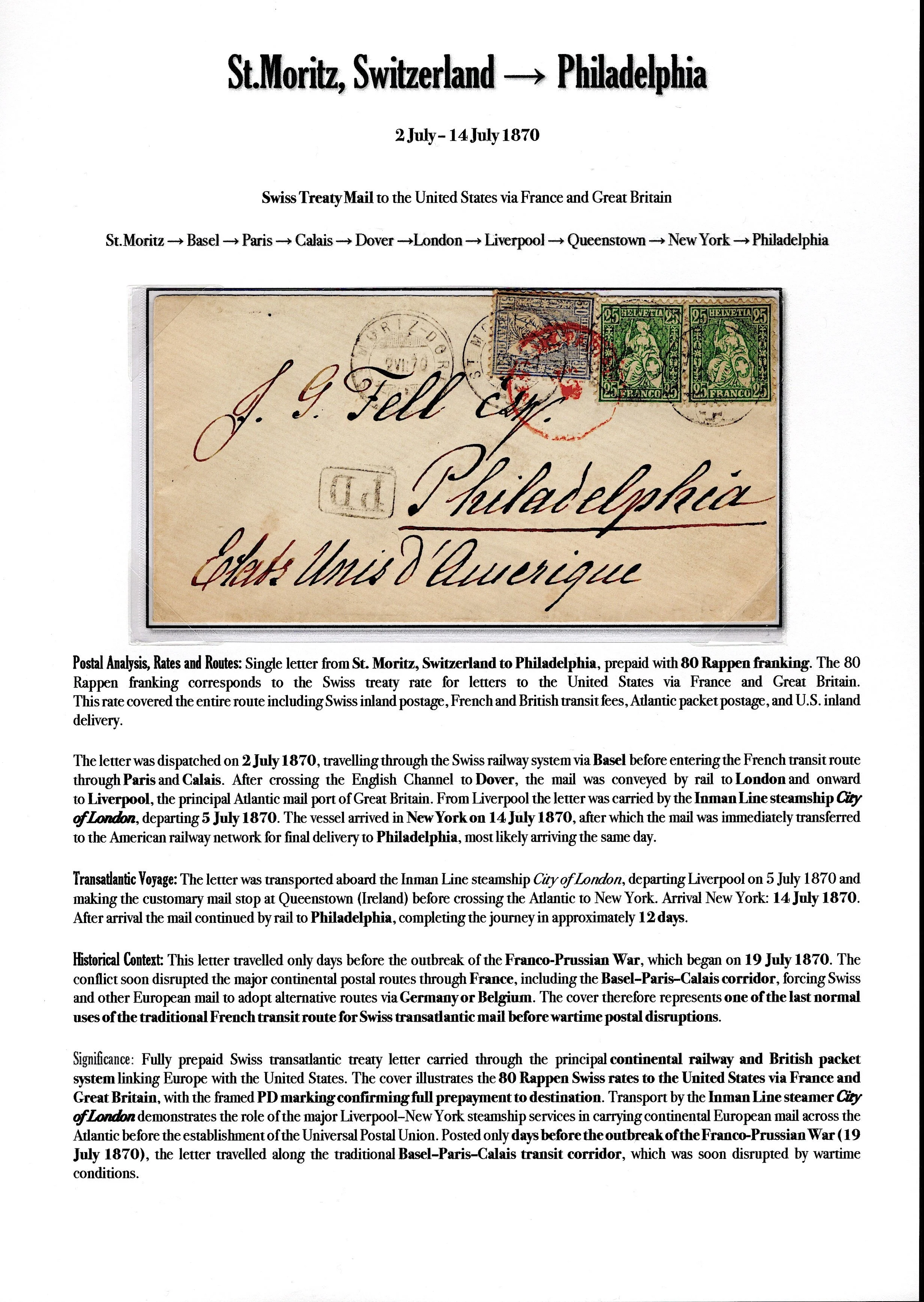
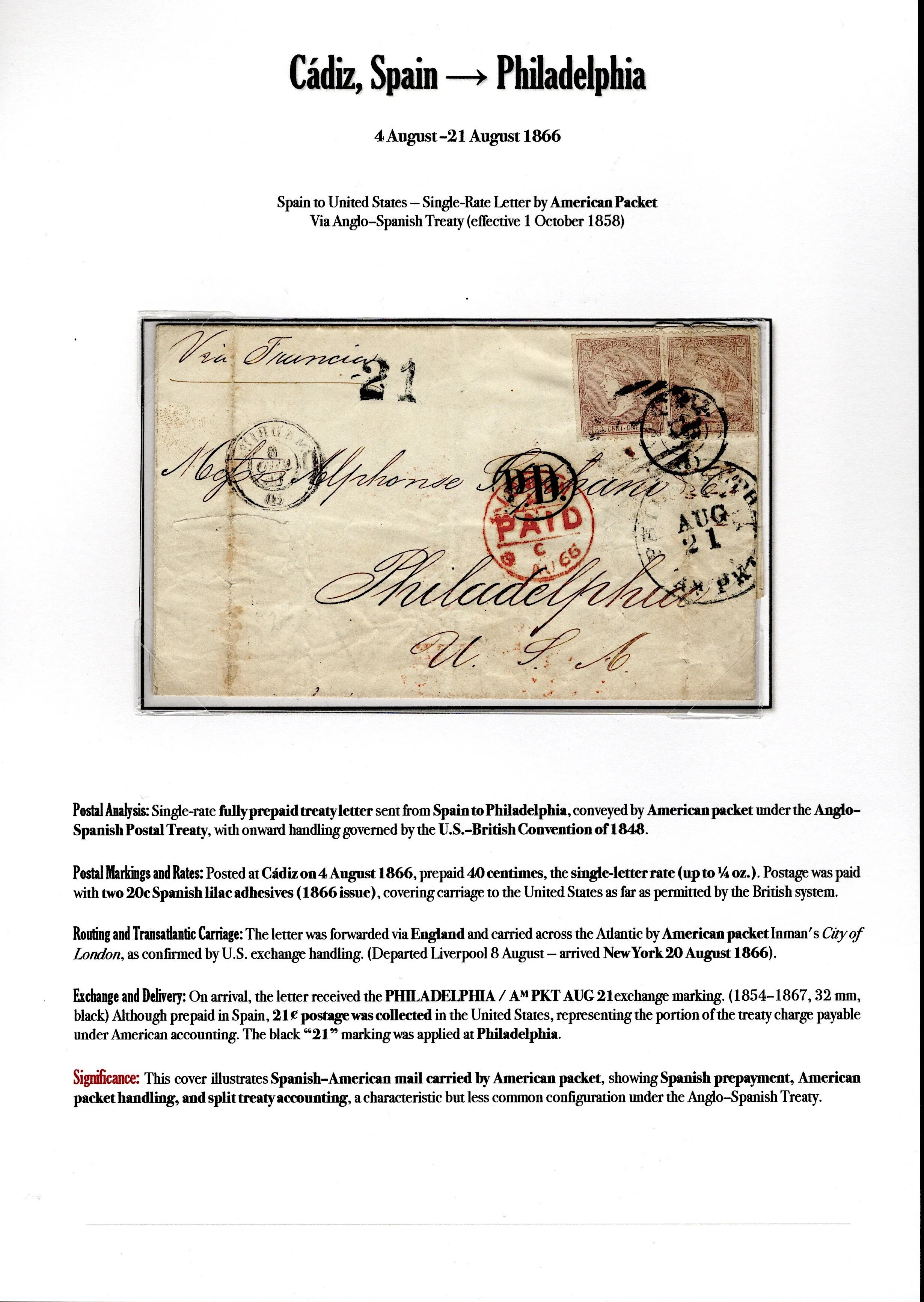
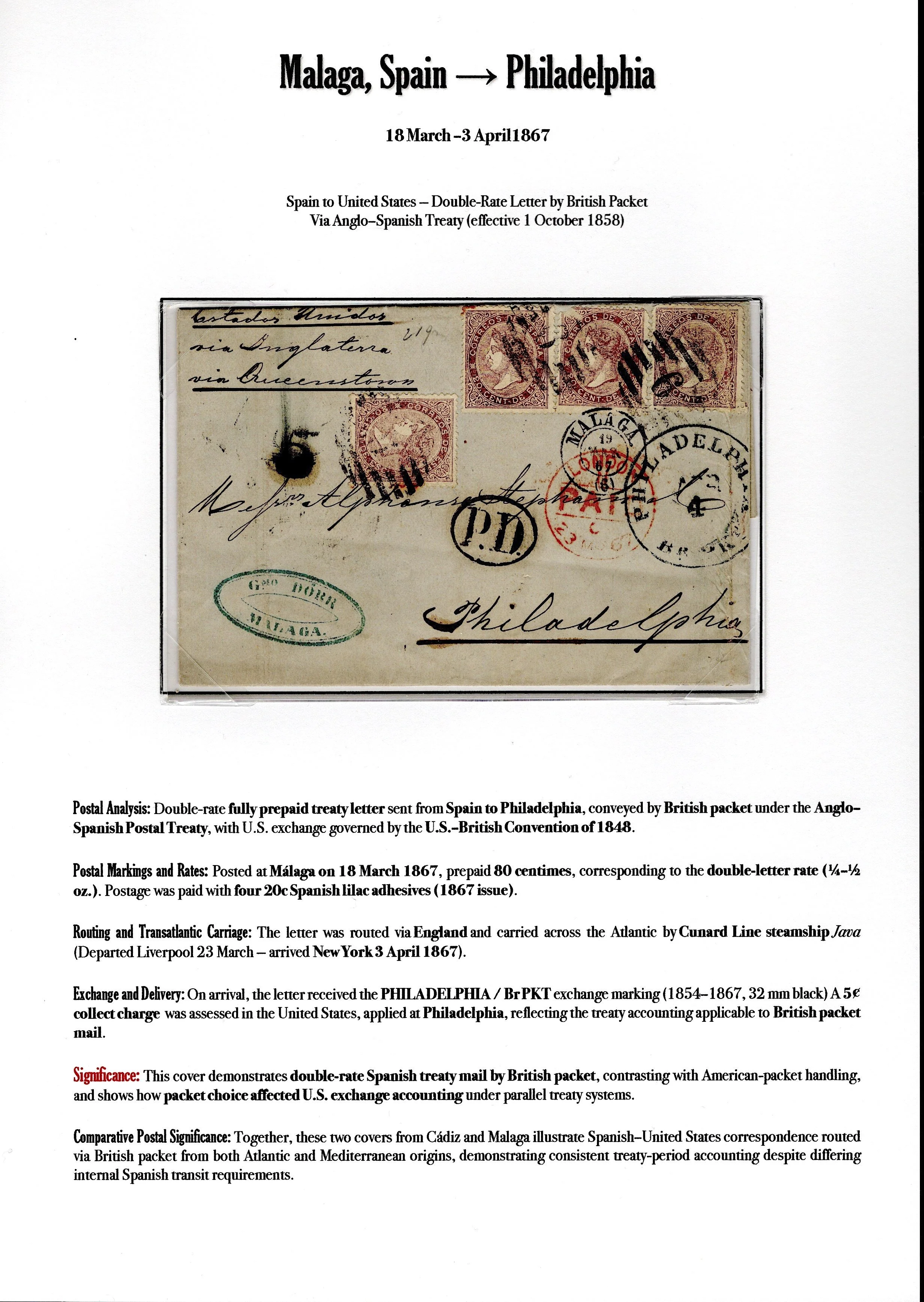
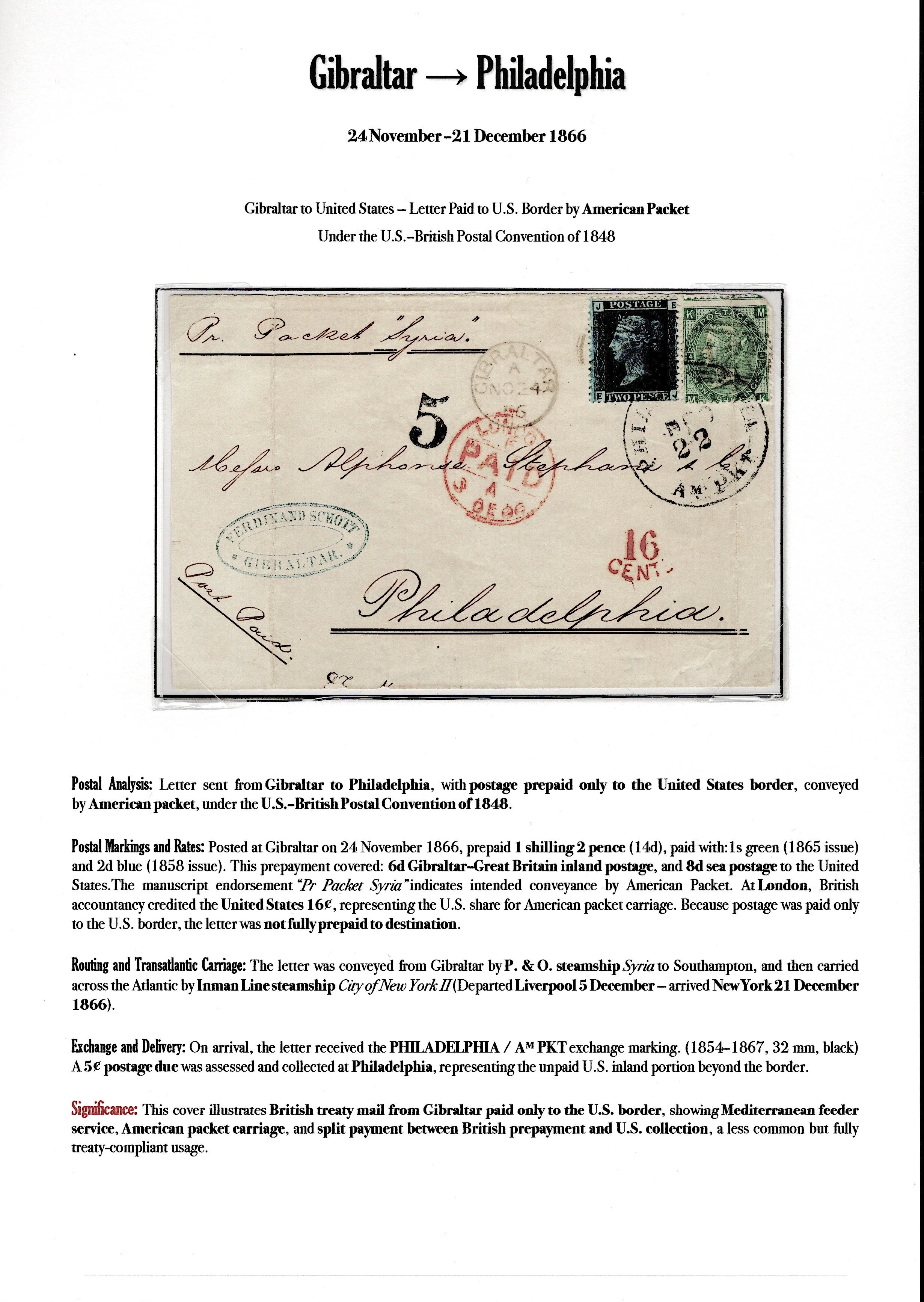
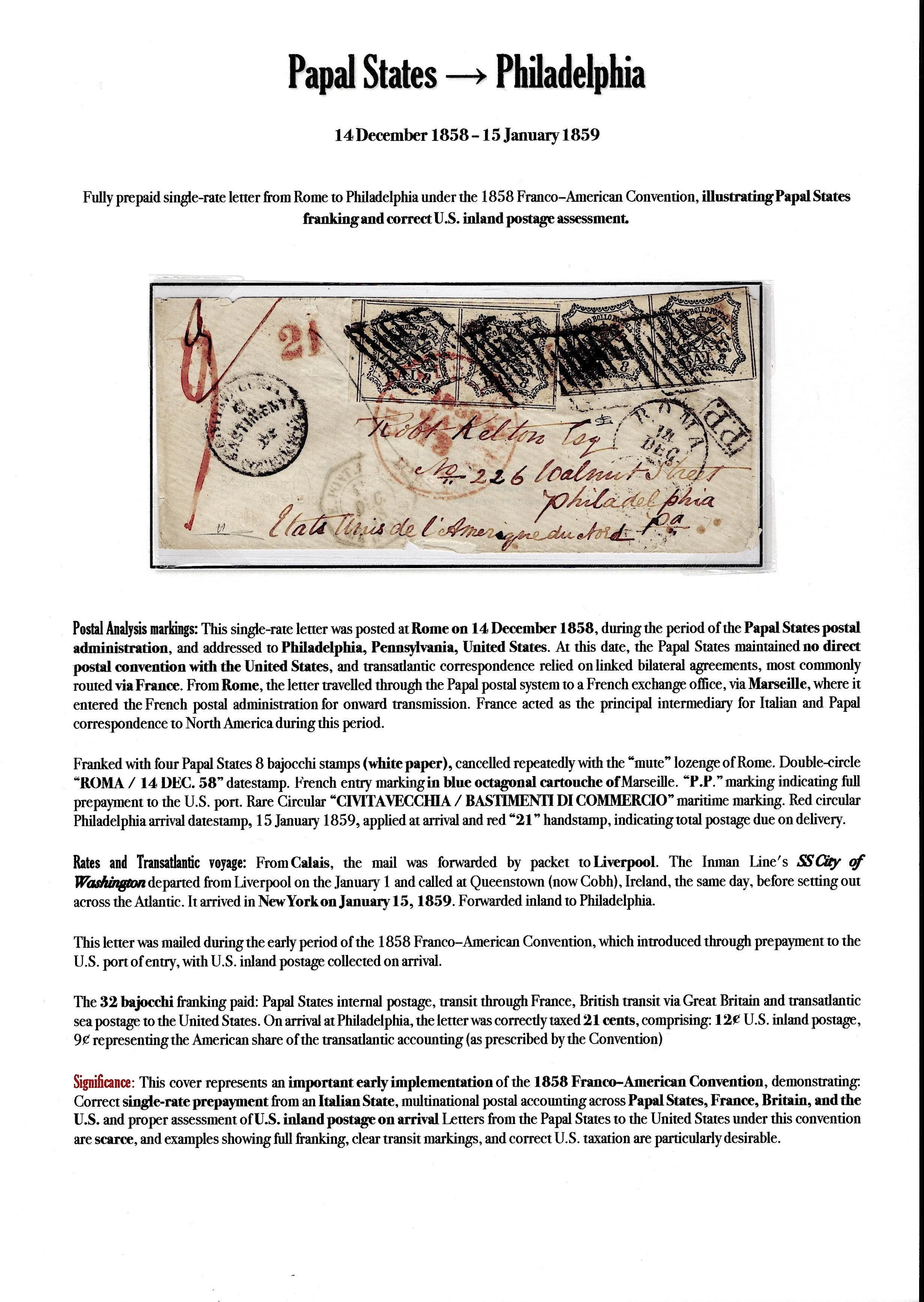
The Evolution of the Transatlantic Postal System:
Between Philadelphia and Europe, 1780–1900
This collection marks my fourth exhibition study on 'Transatlantic Mail' and is, by far, the definitive iteration of my work. Its strength lies in the depth of its postal history treatment and the rigor of the underlying research.
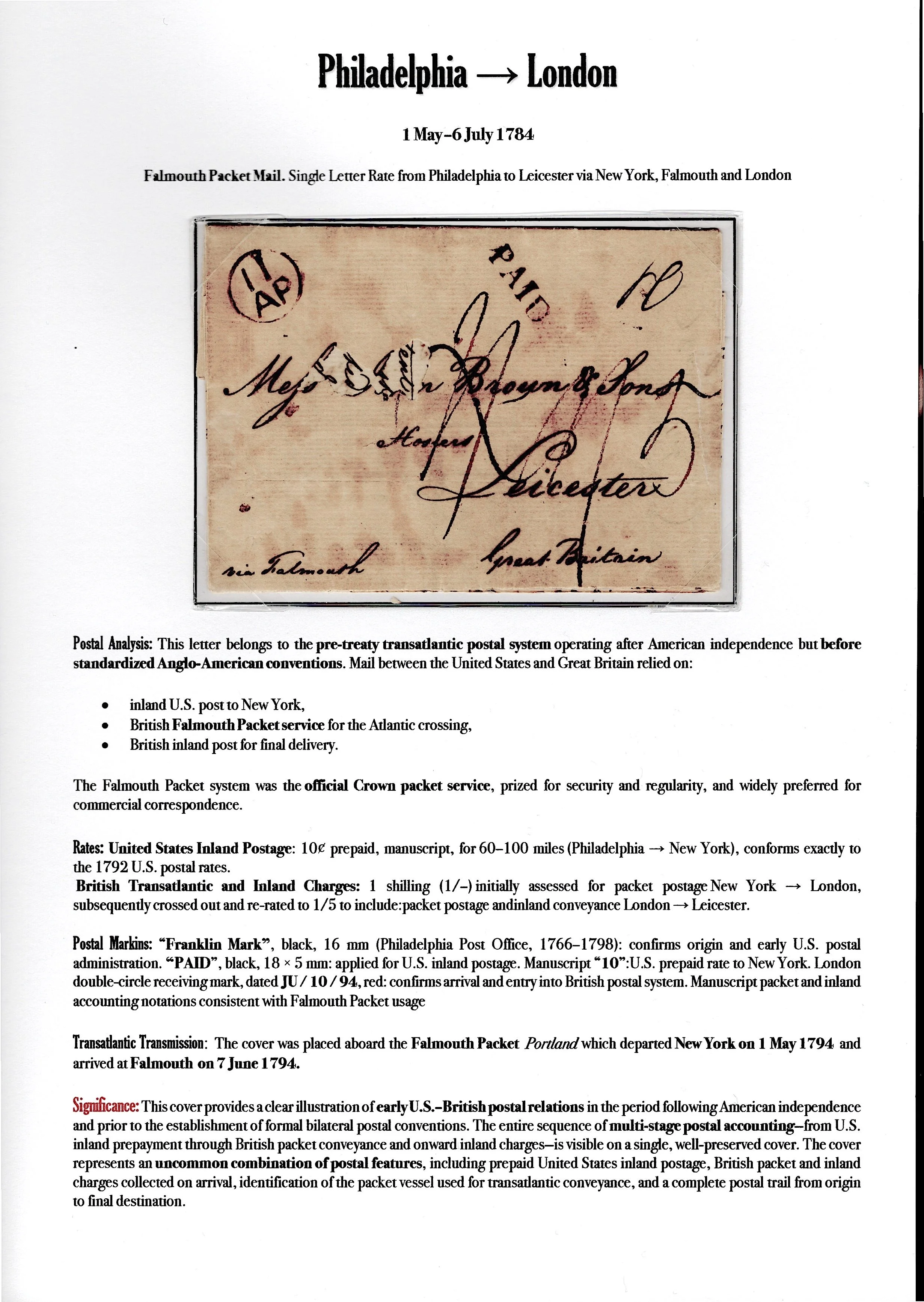
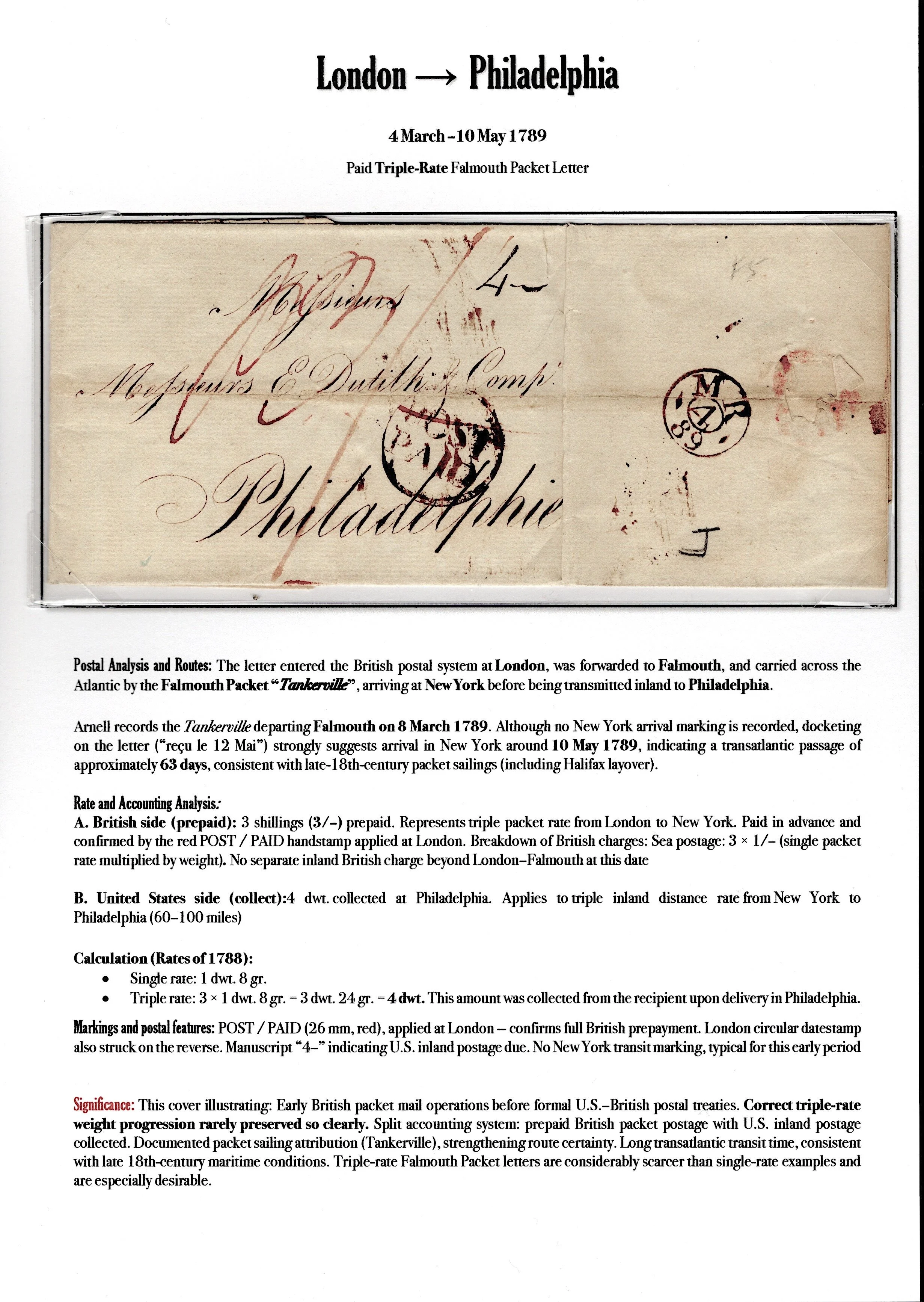
As evident in these pages, every significant detail relevant to the covers and the scope of the collection has been meticulously analyzed and accurately described. Furthermore, the 'Significance' of each individual item has been defined with precision, specifically addressed within the context of the broader transatlantic narrative.
Constructing this exhibit required an exhaustive analysis of dozens of primary sources, a thorough review of every available maritime mail collection, and extensive research into historical archives and databases. This was done to ensure that the significance, authenticity, and historical context of each item are presented to the highest possible standard. I would venture to claim that this is the most accurate and deeply researched philatelic collection ever assembled on this specific subject."
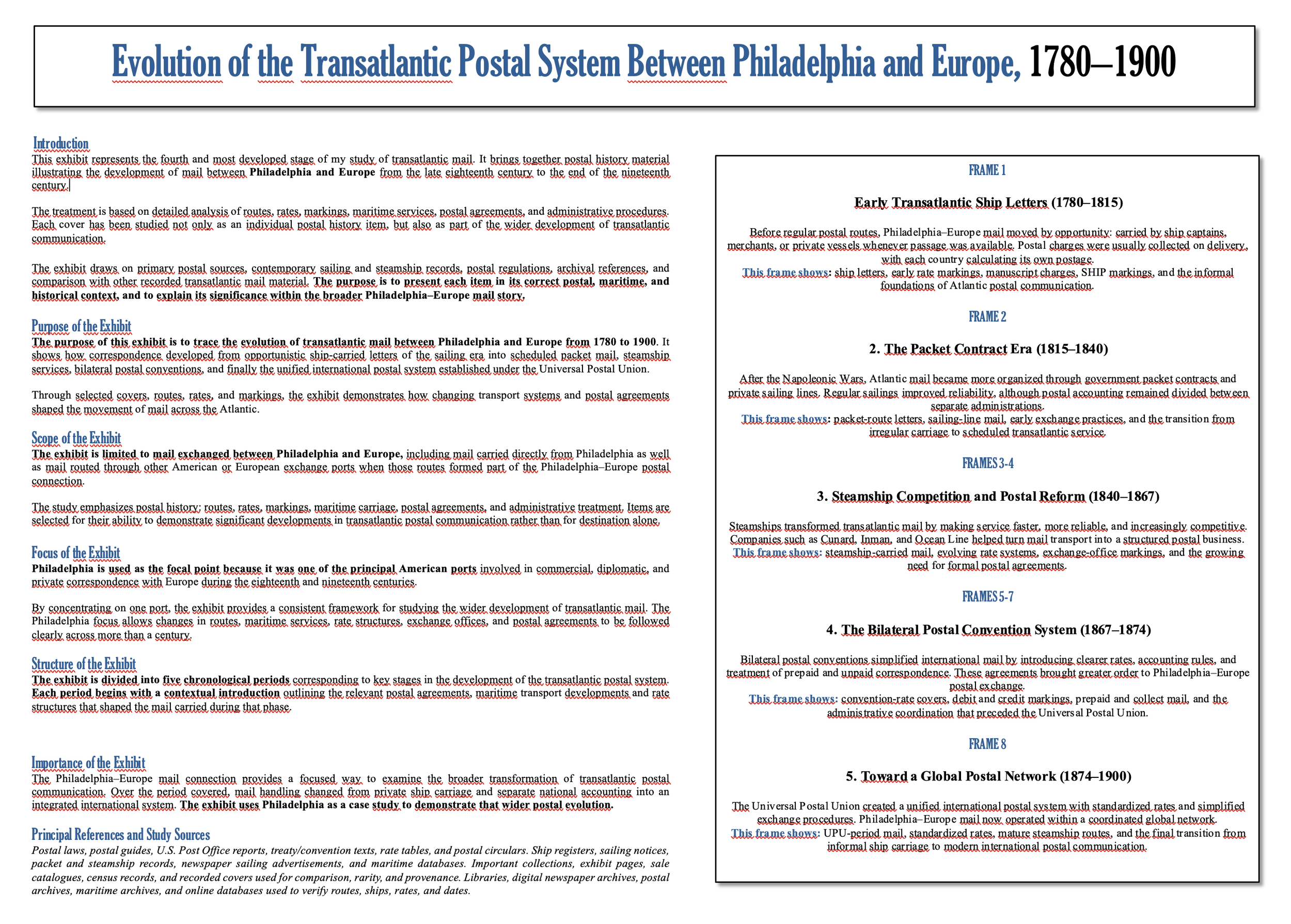
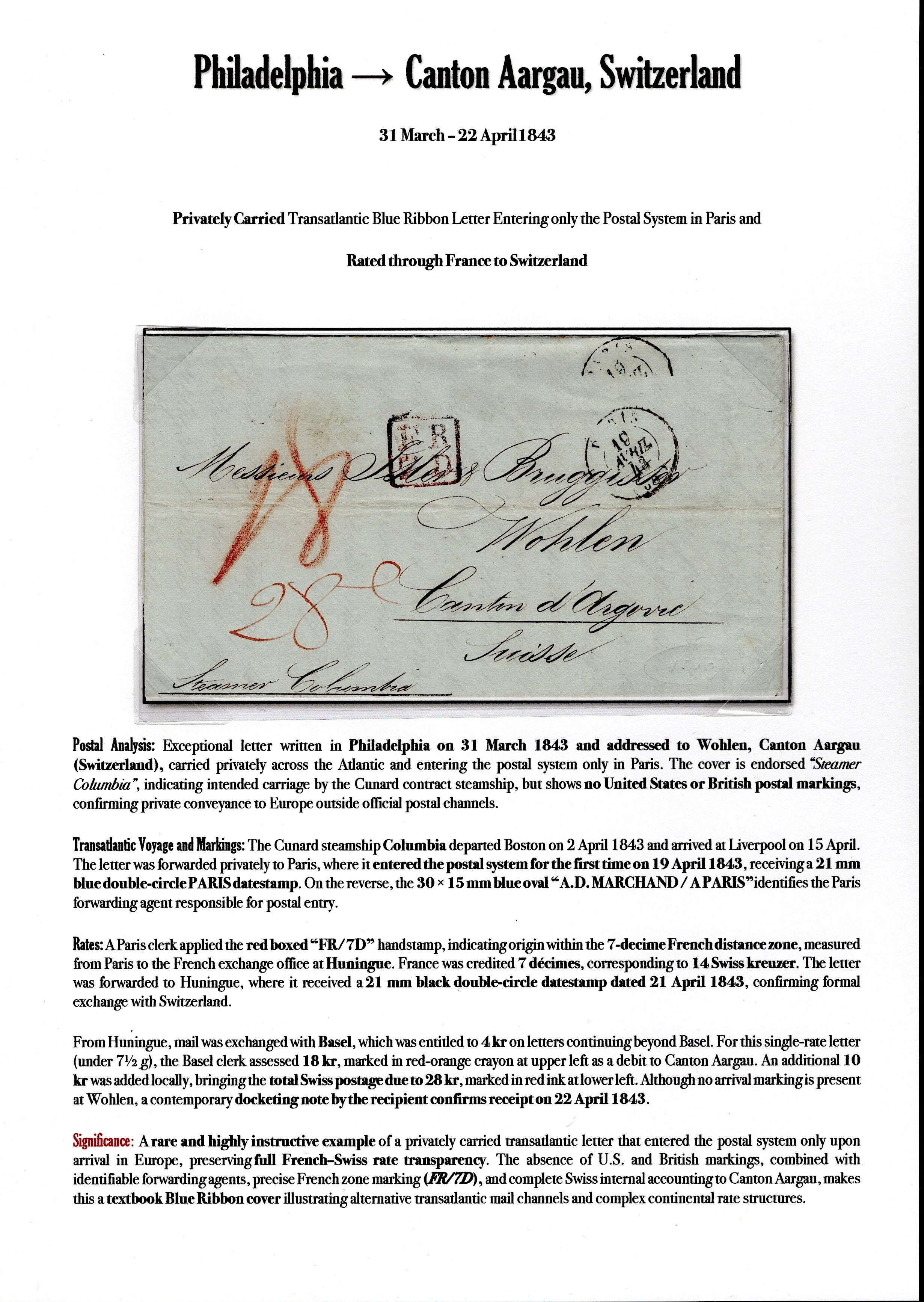
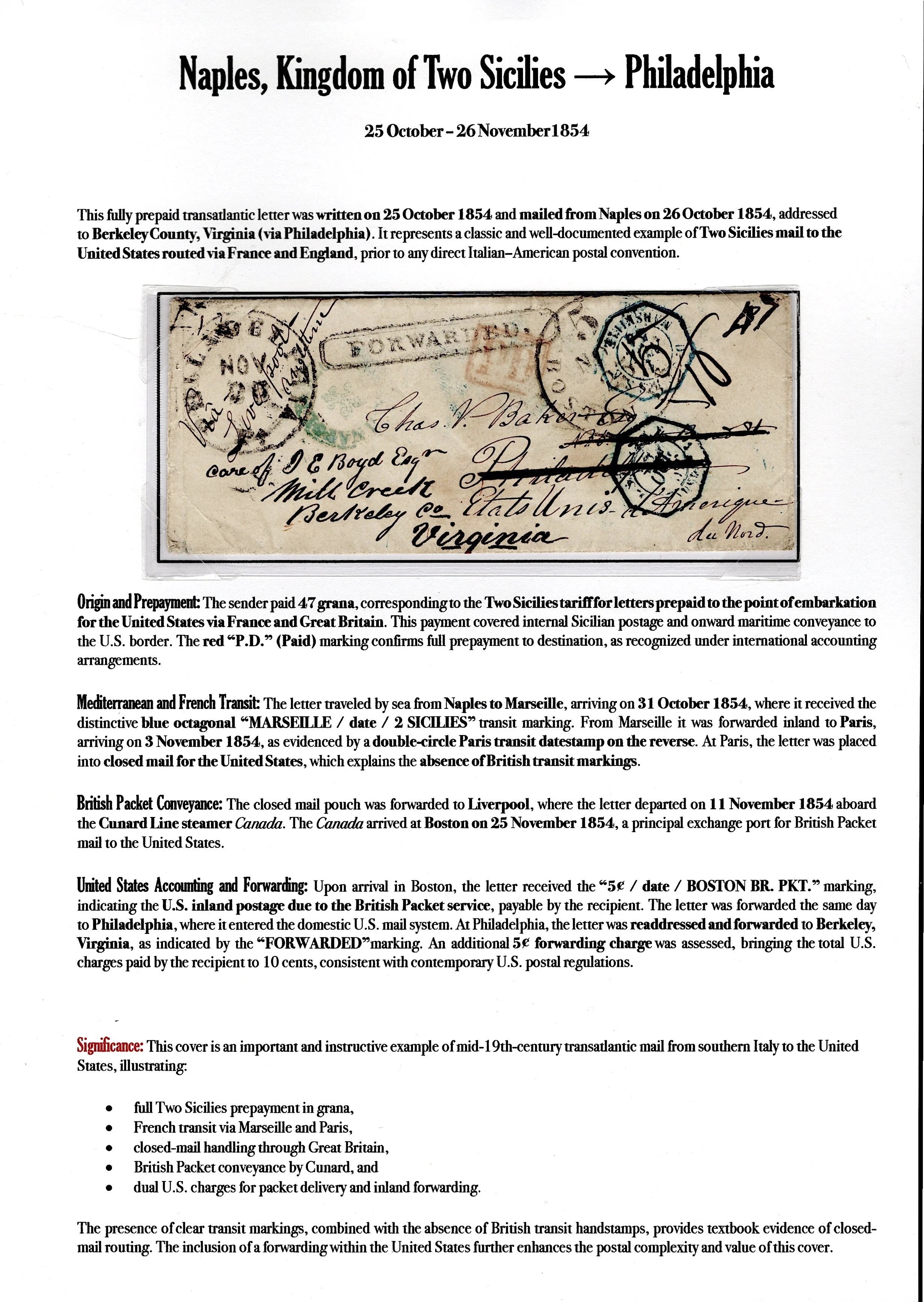
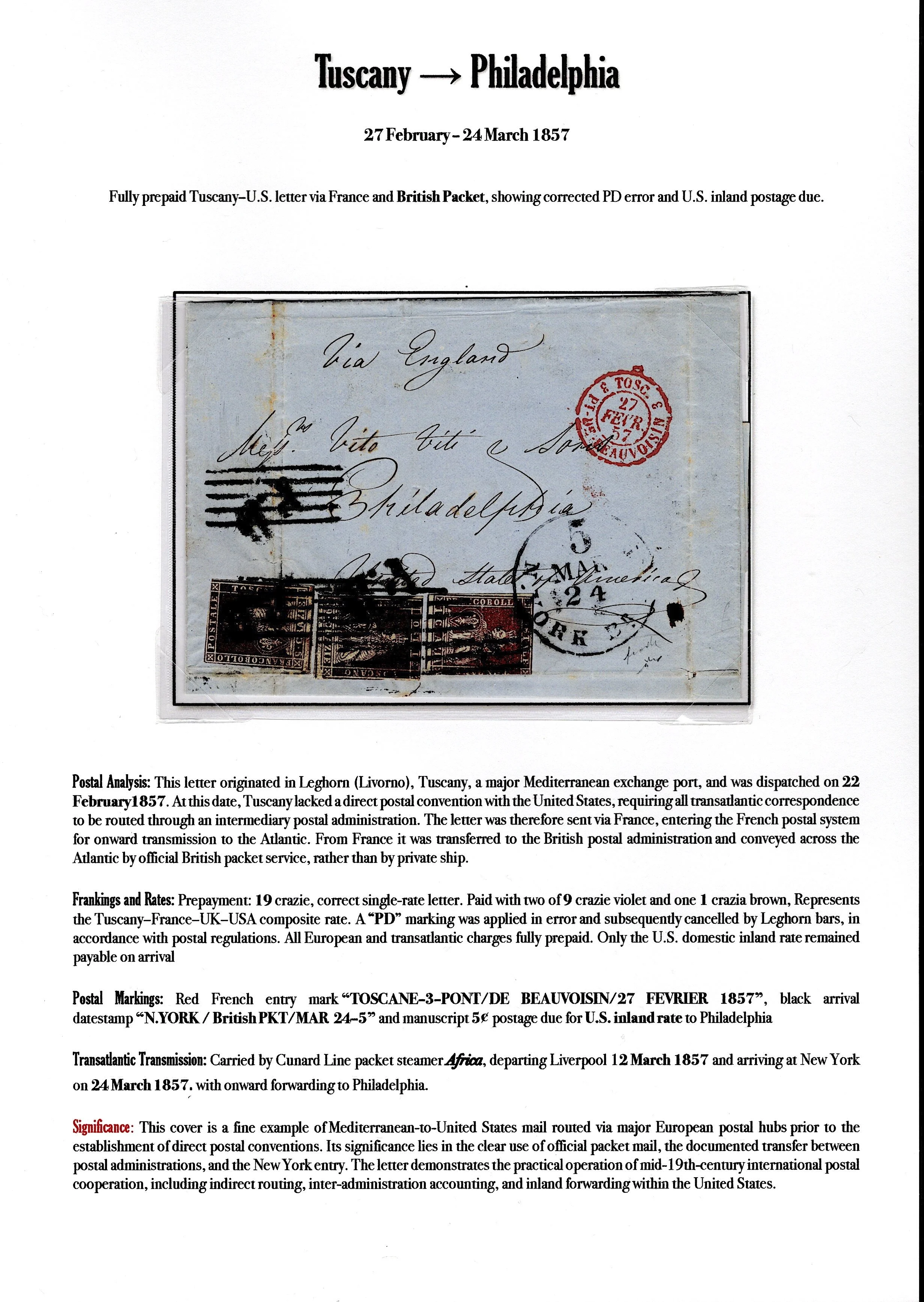
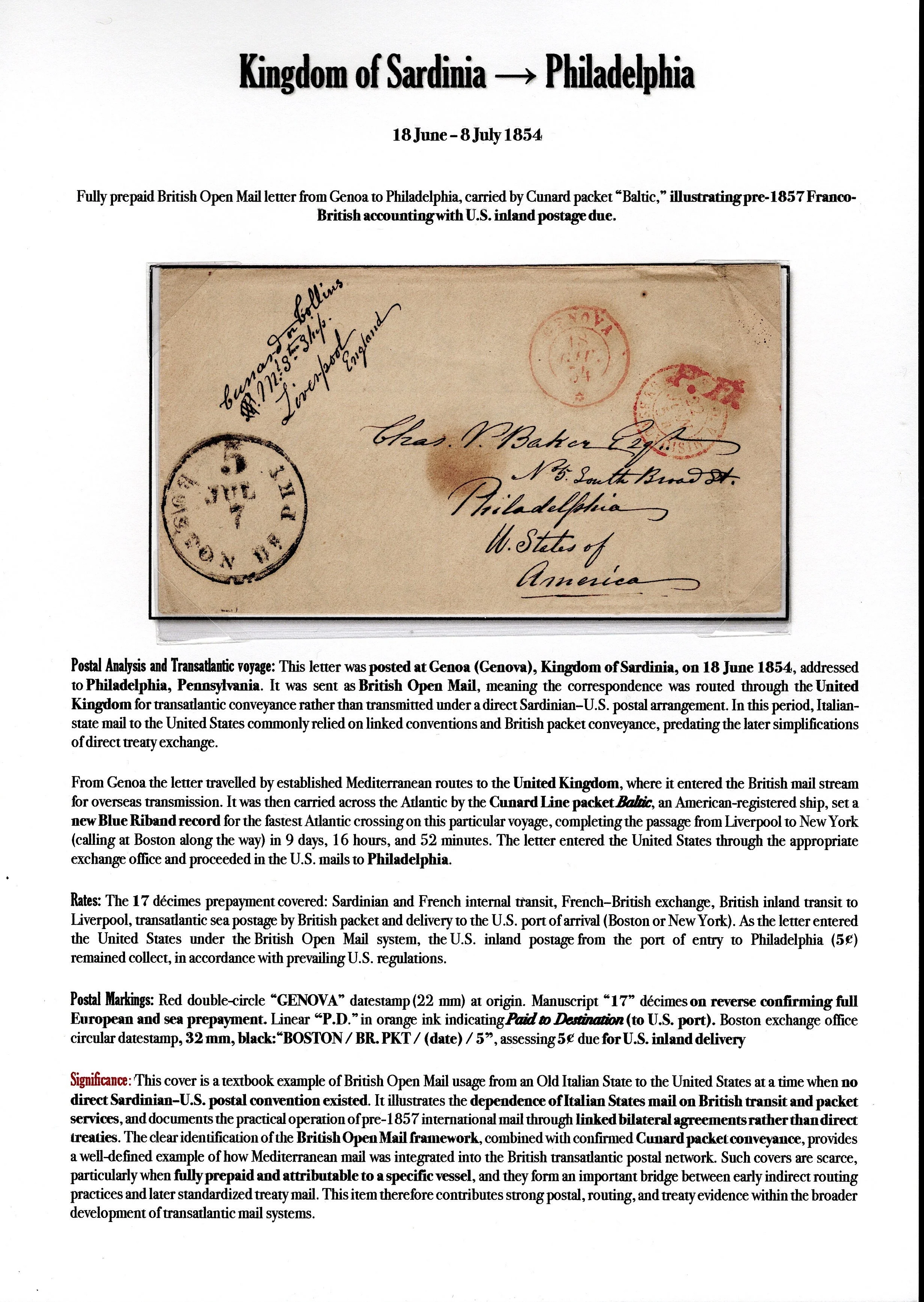
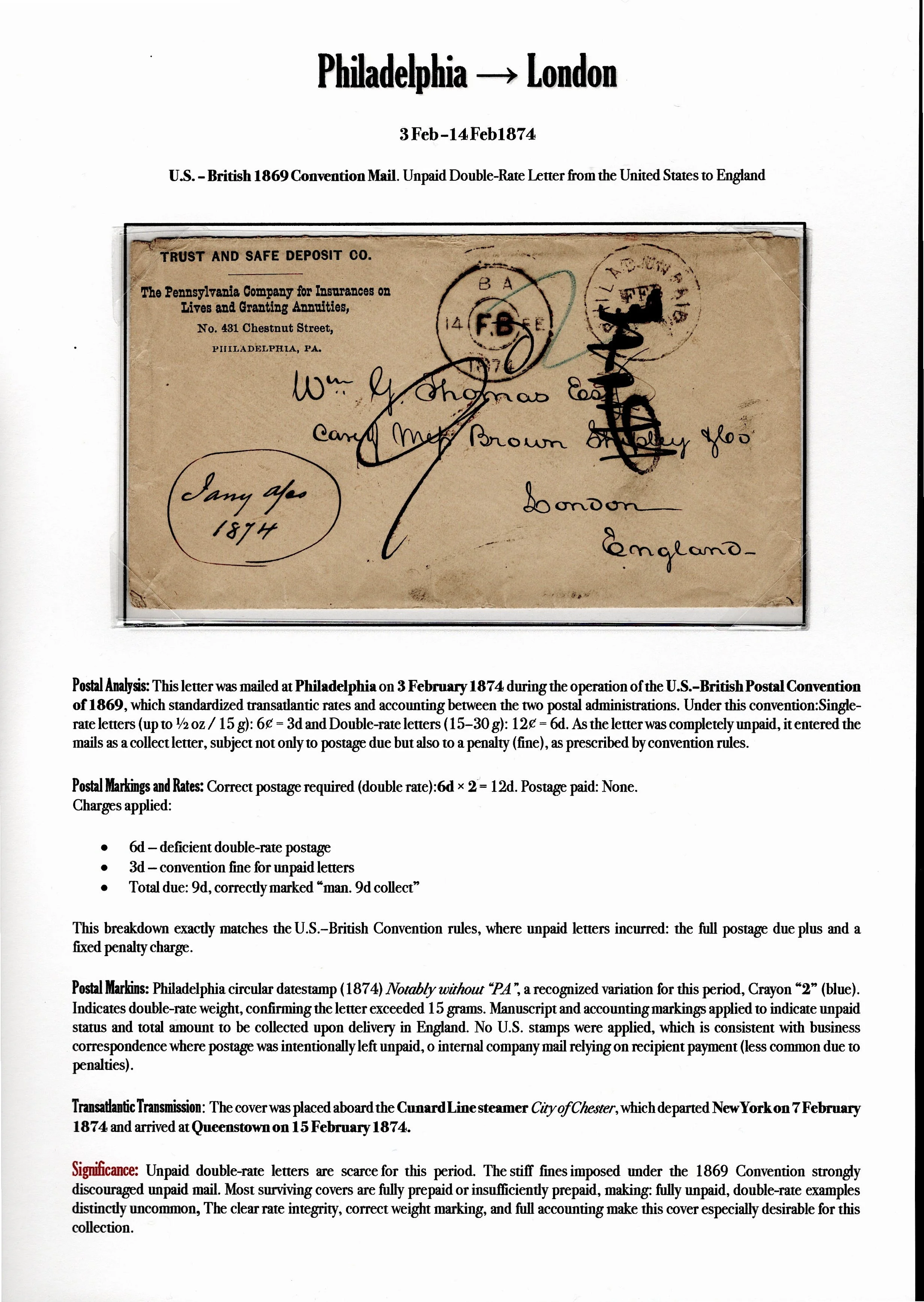
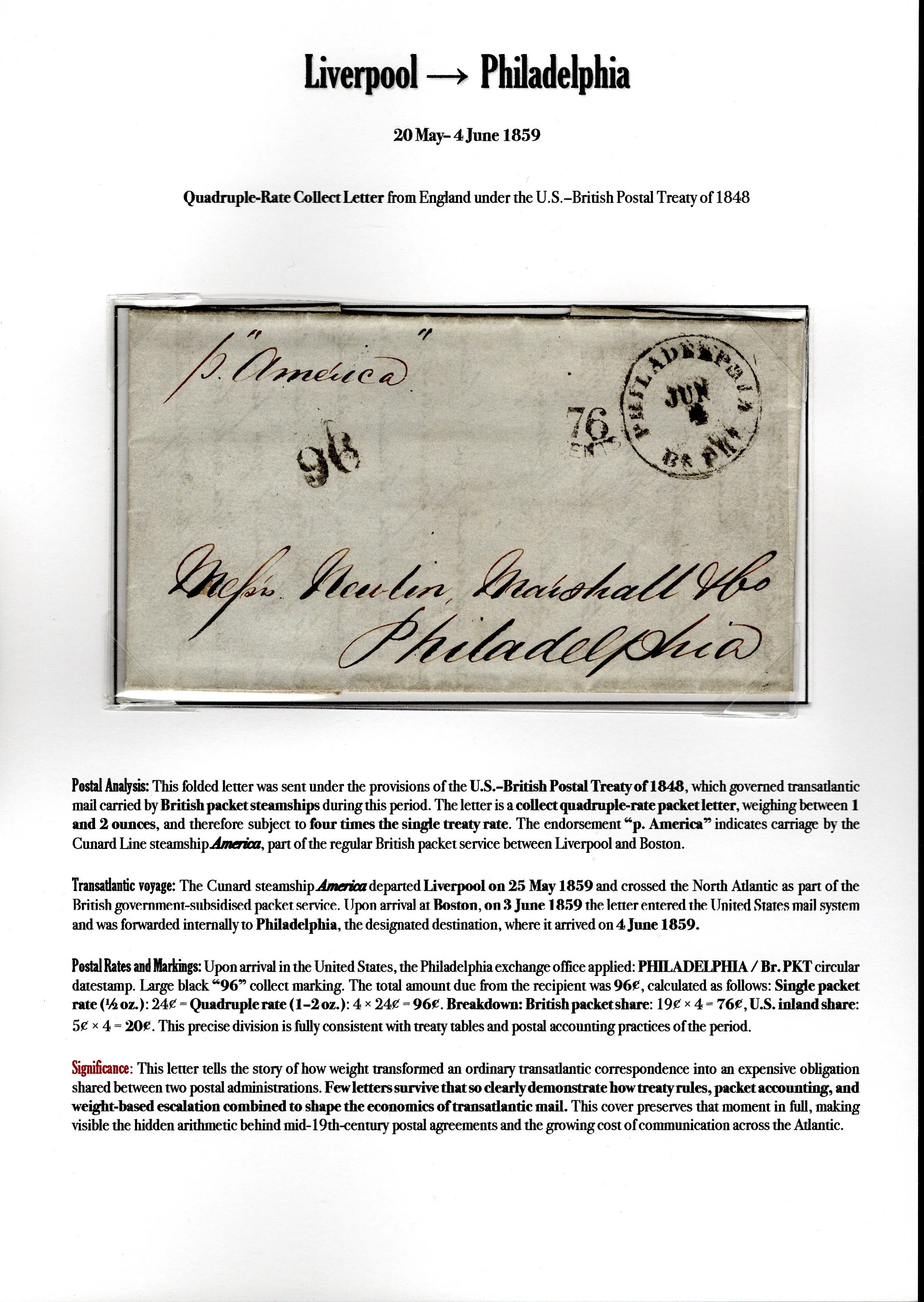
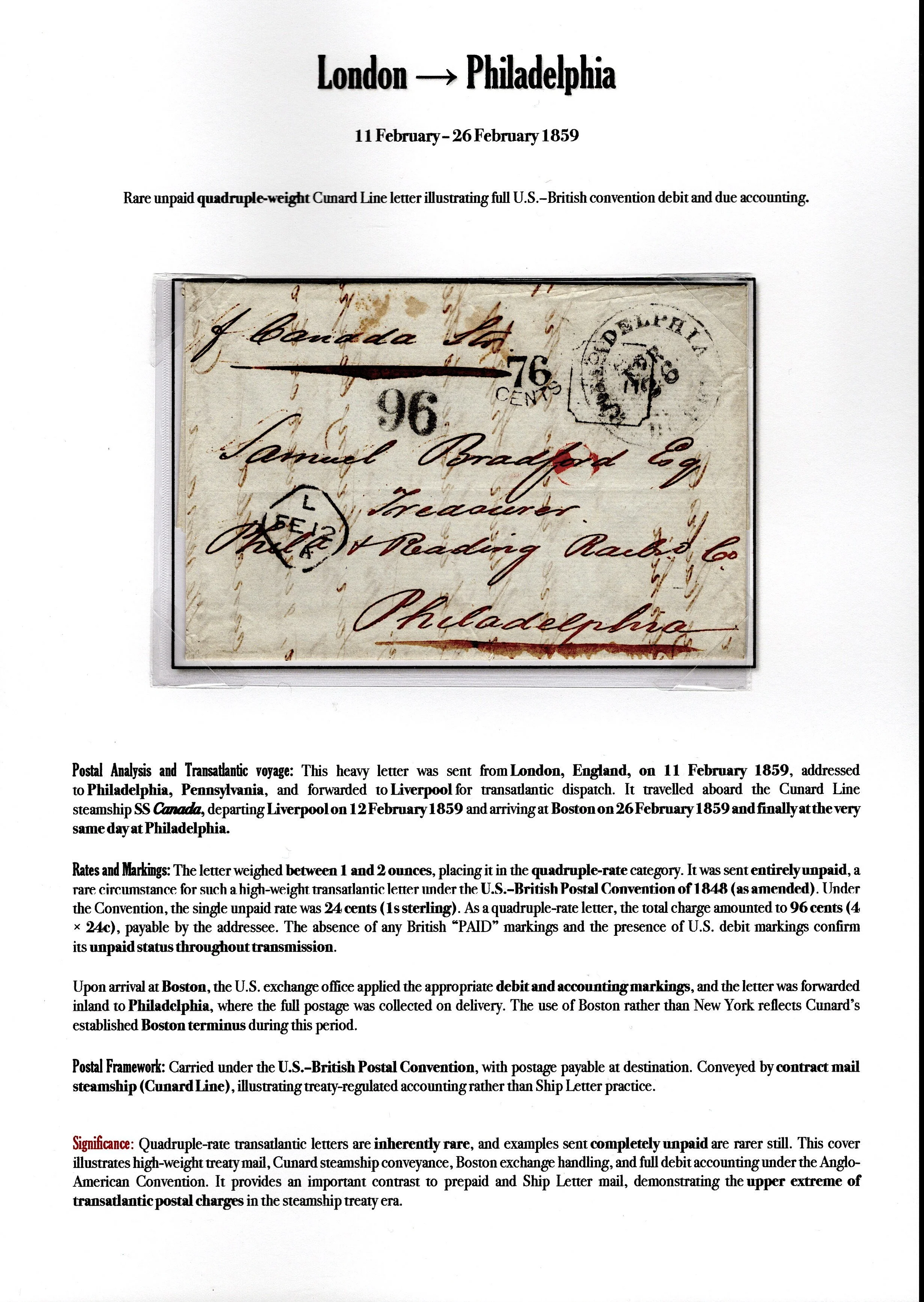
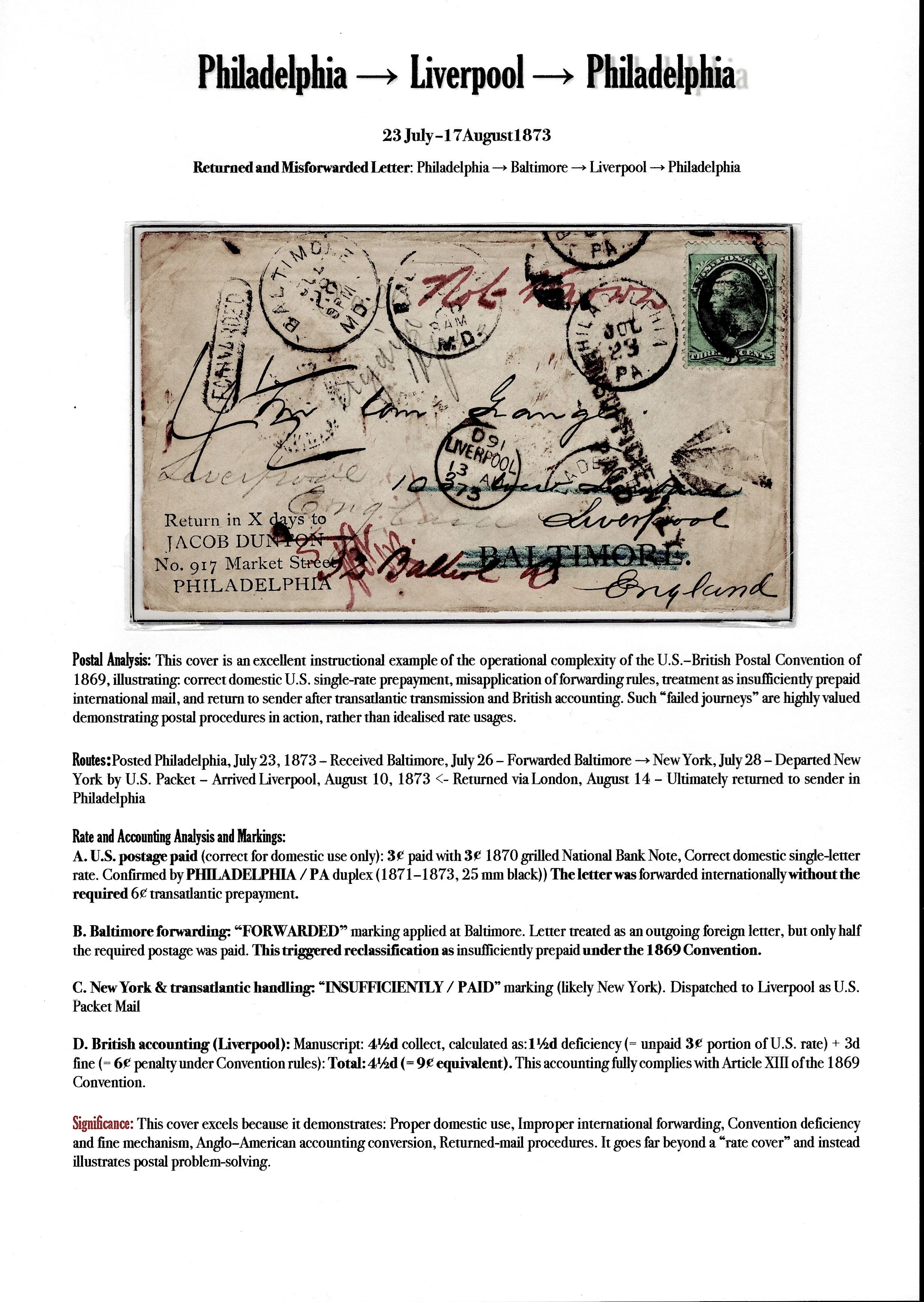
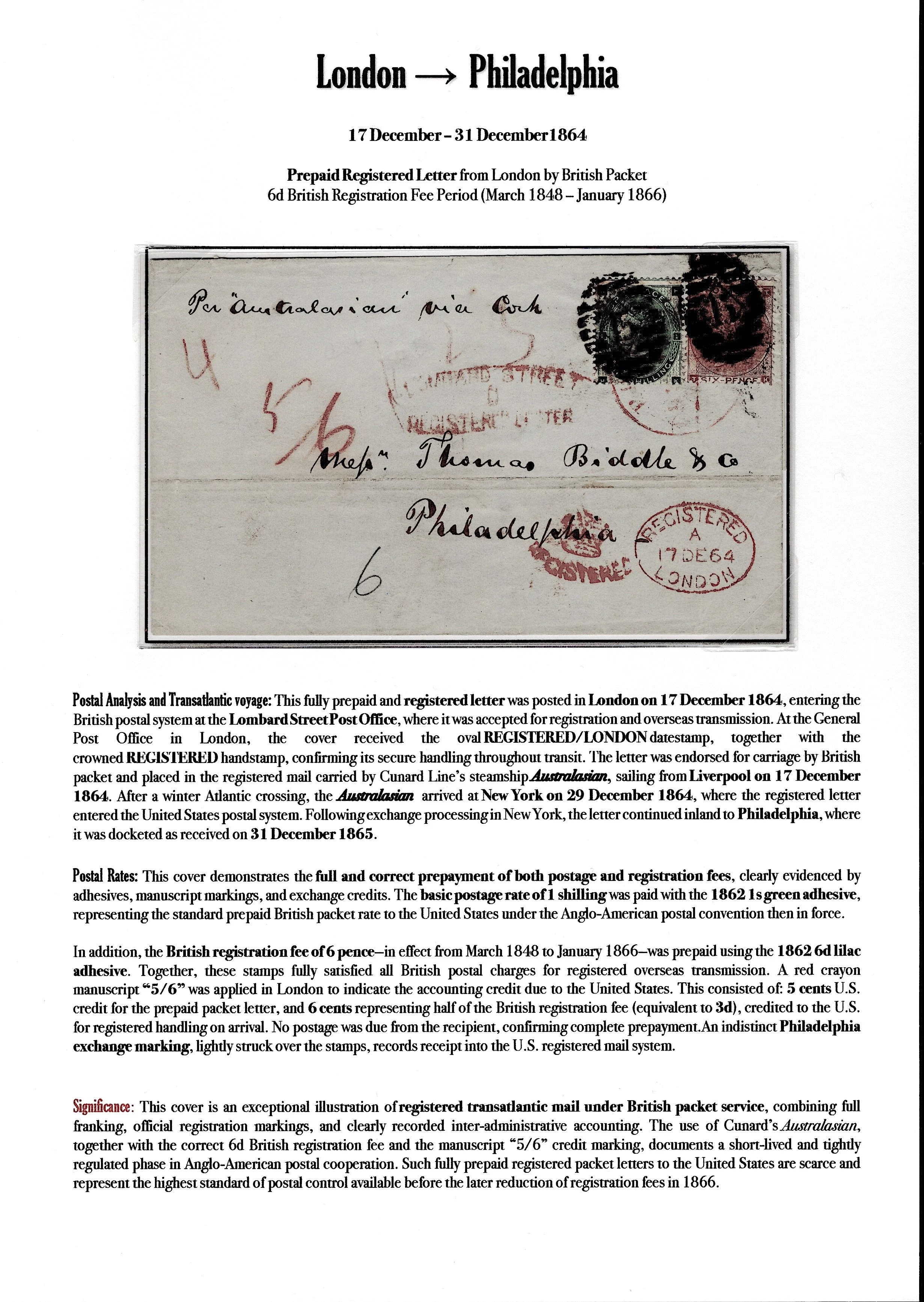
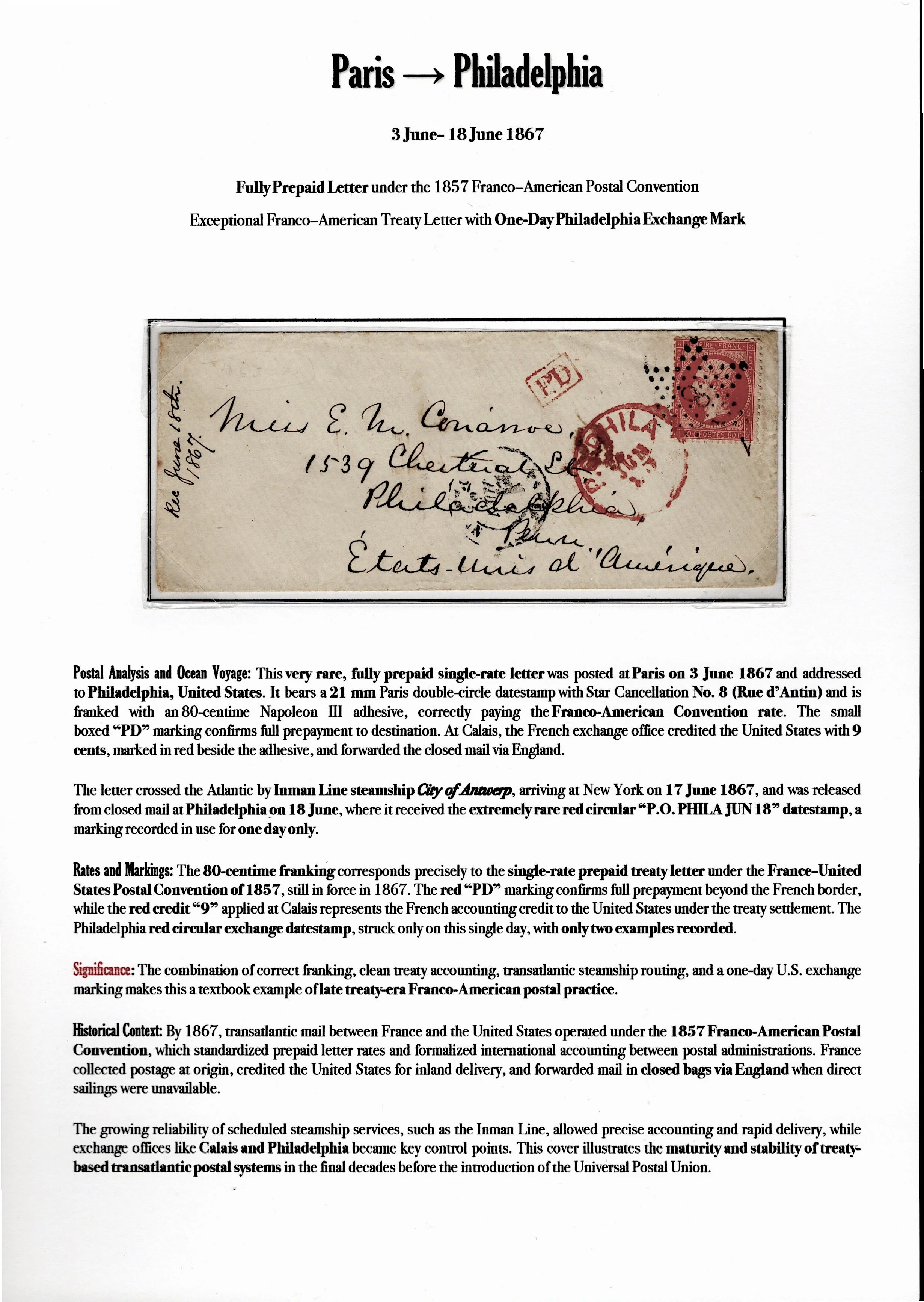
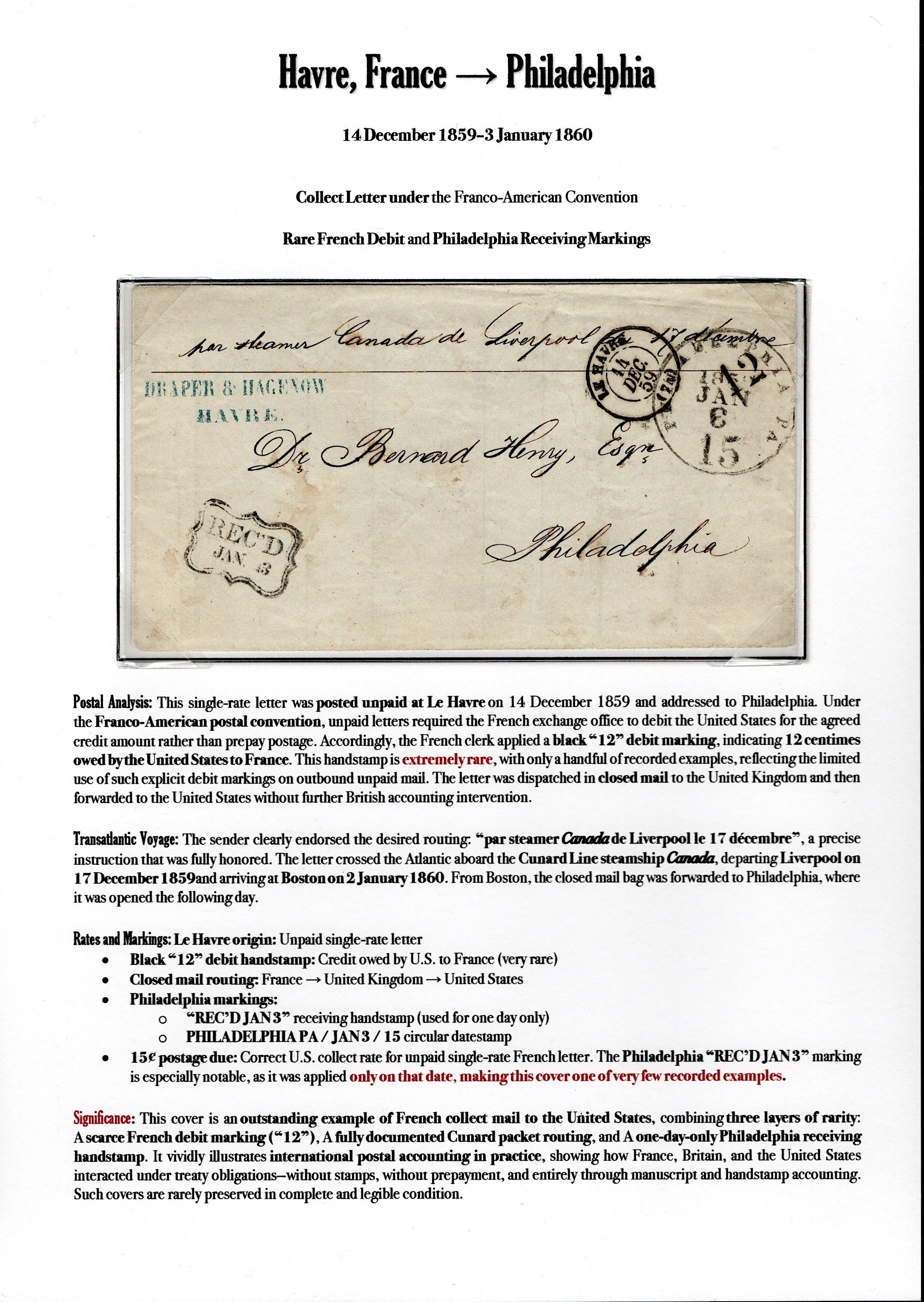
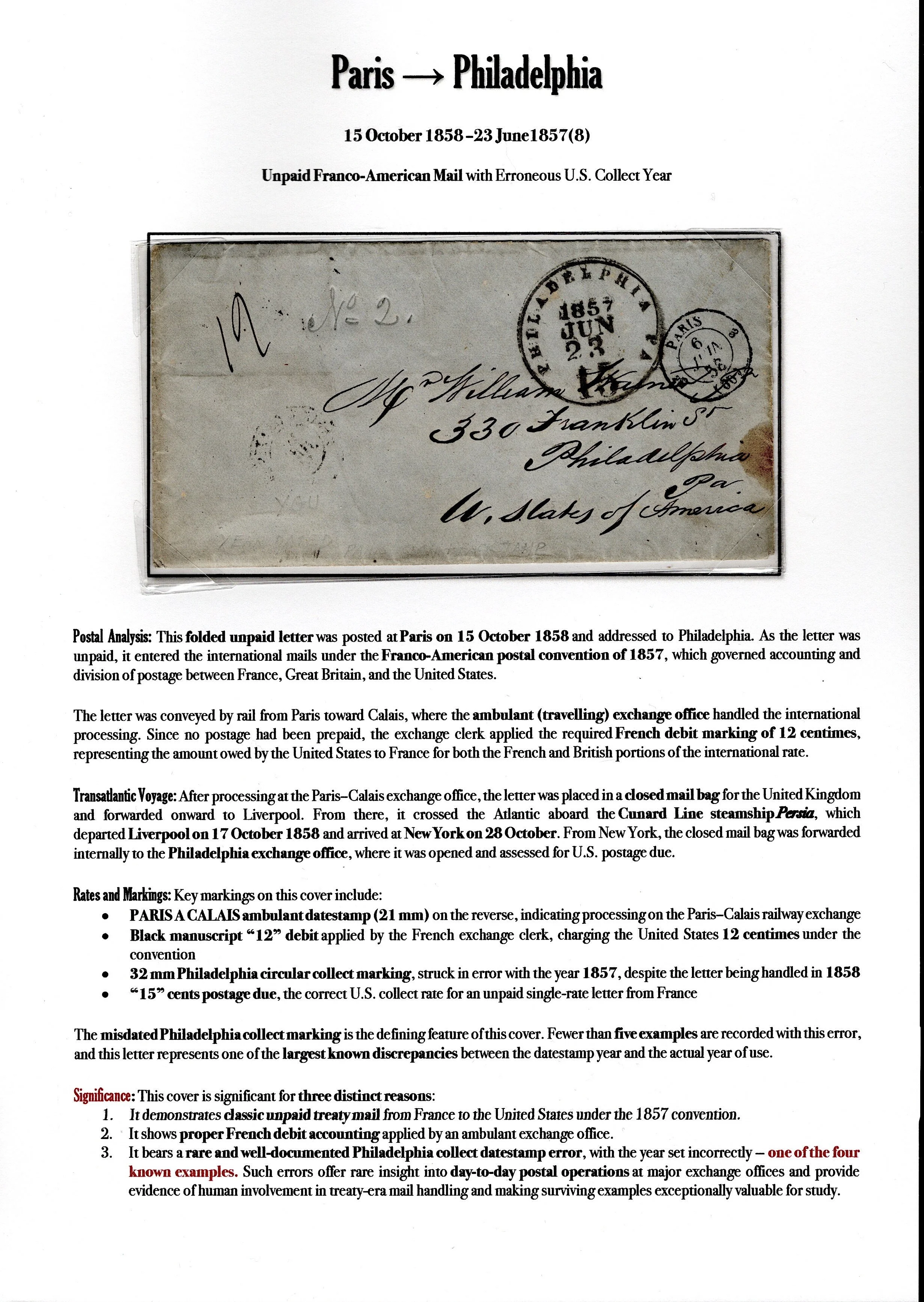
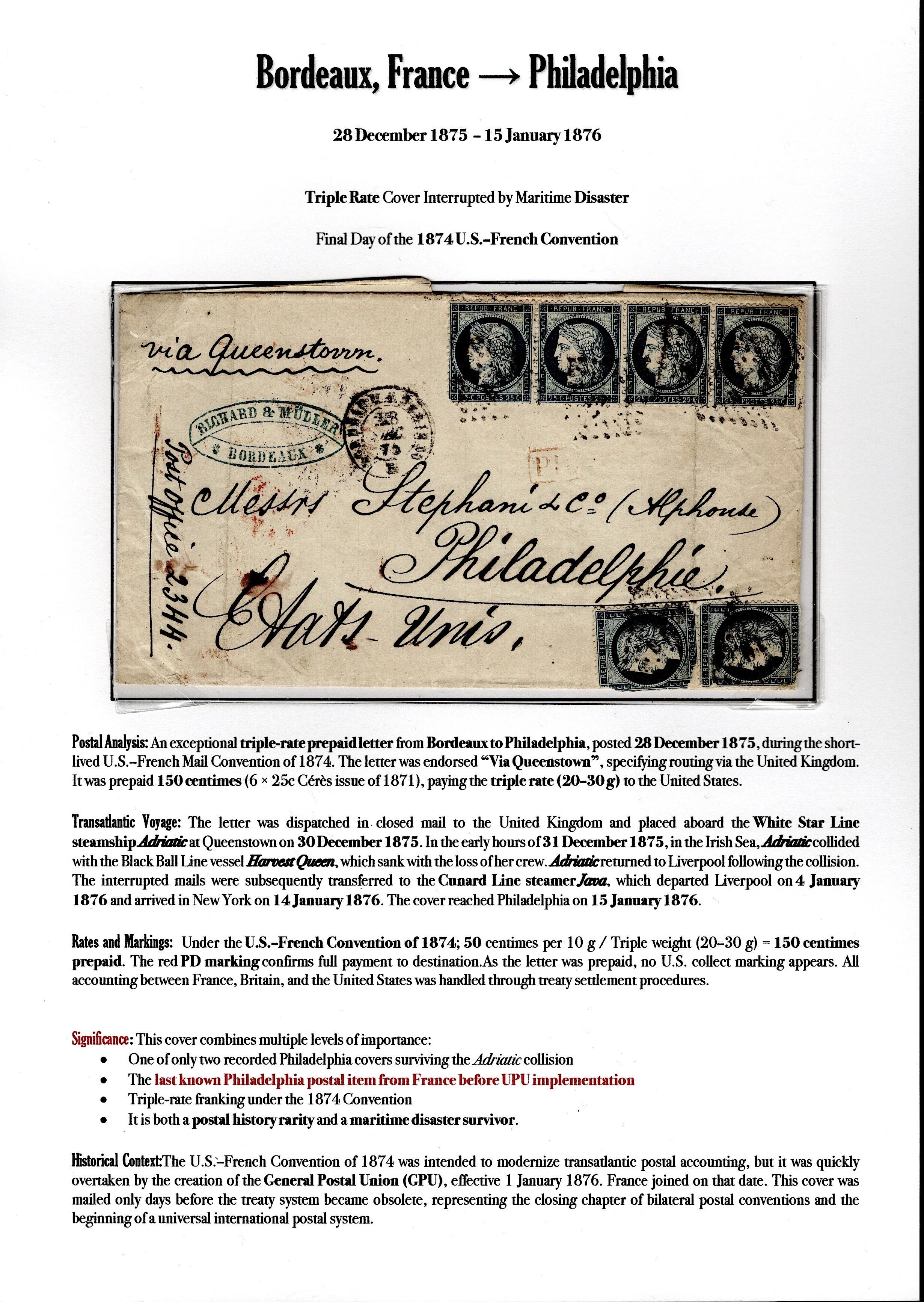
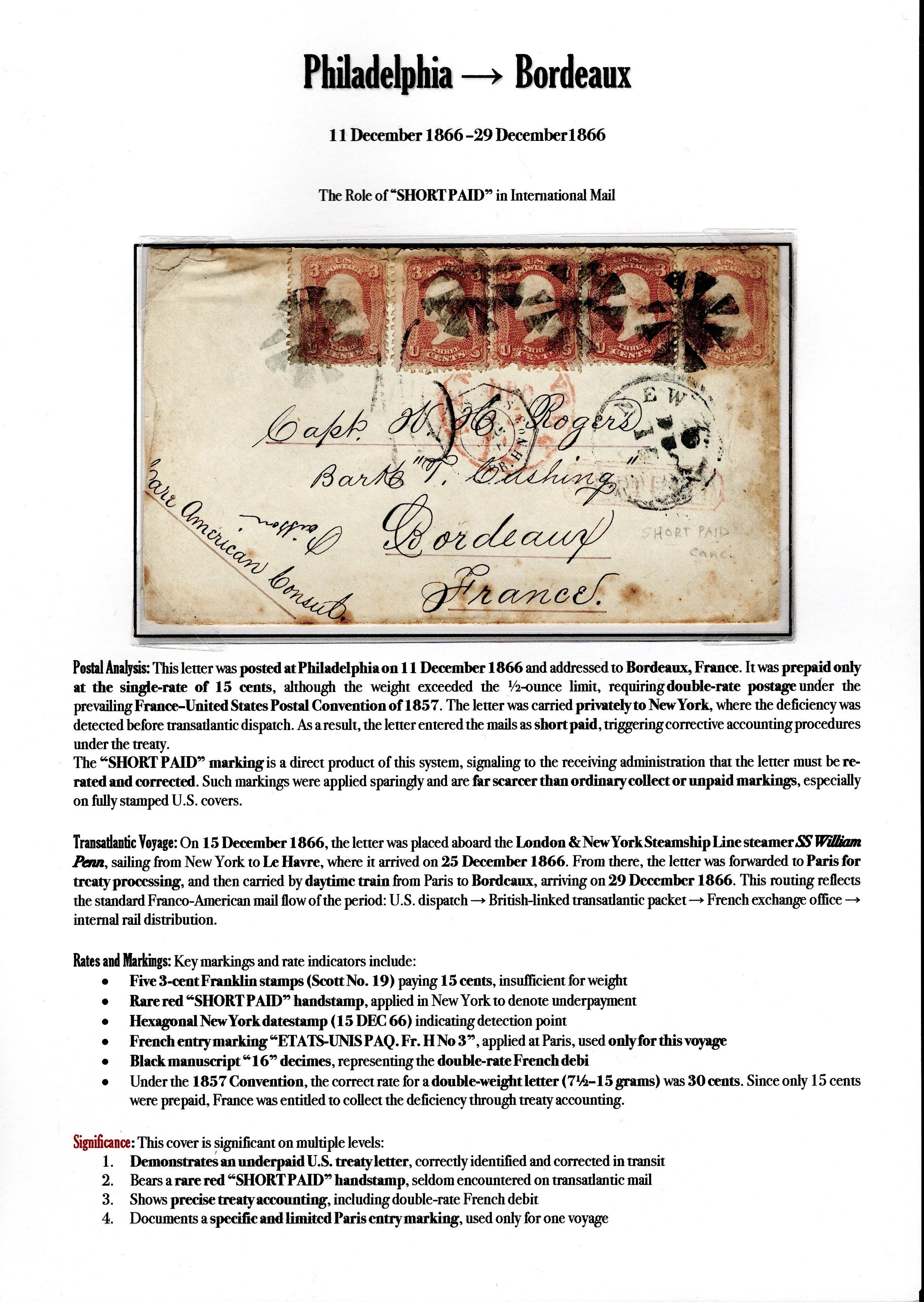
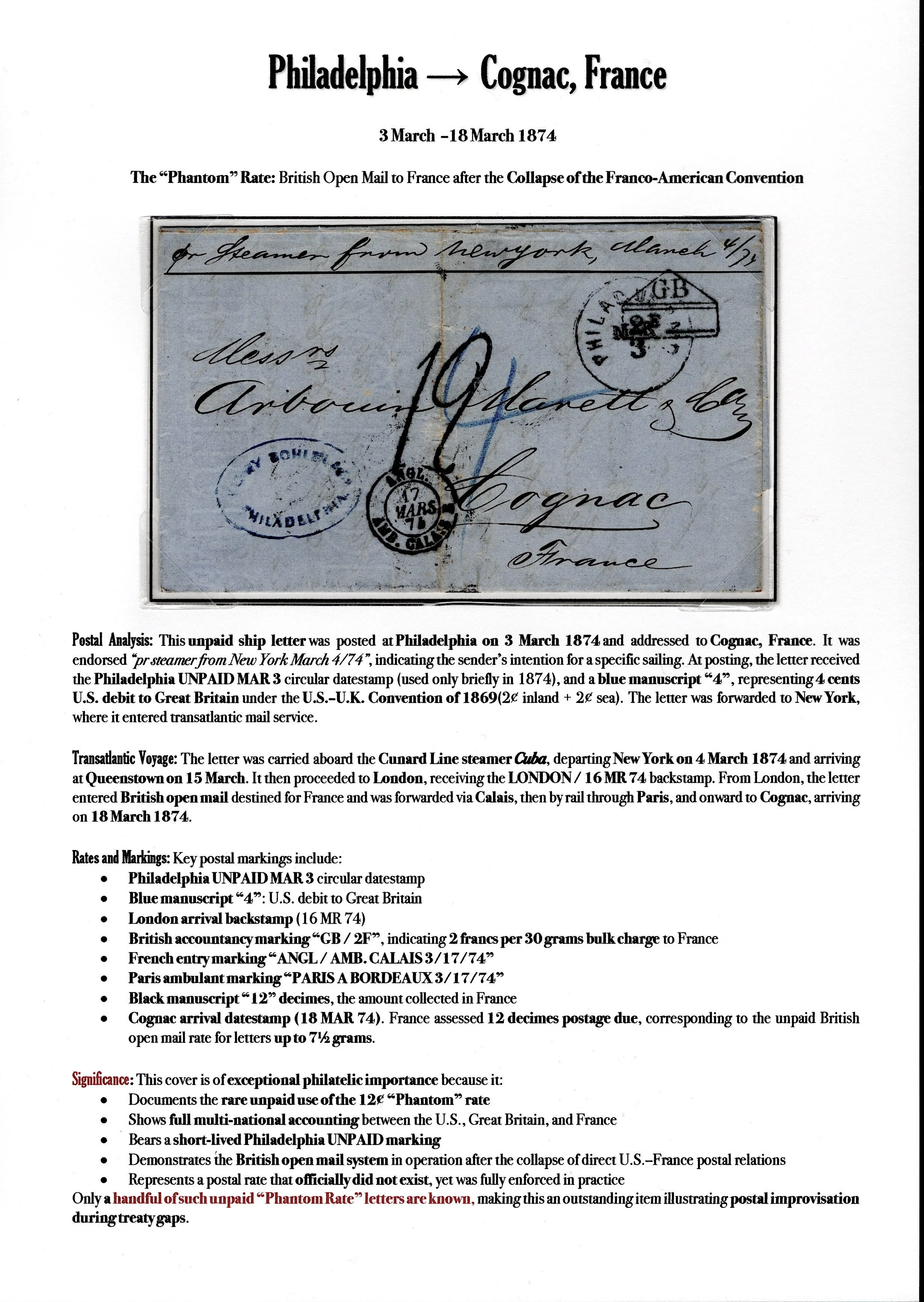
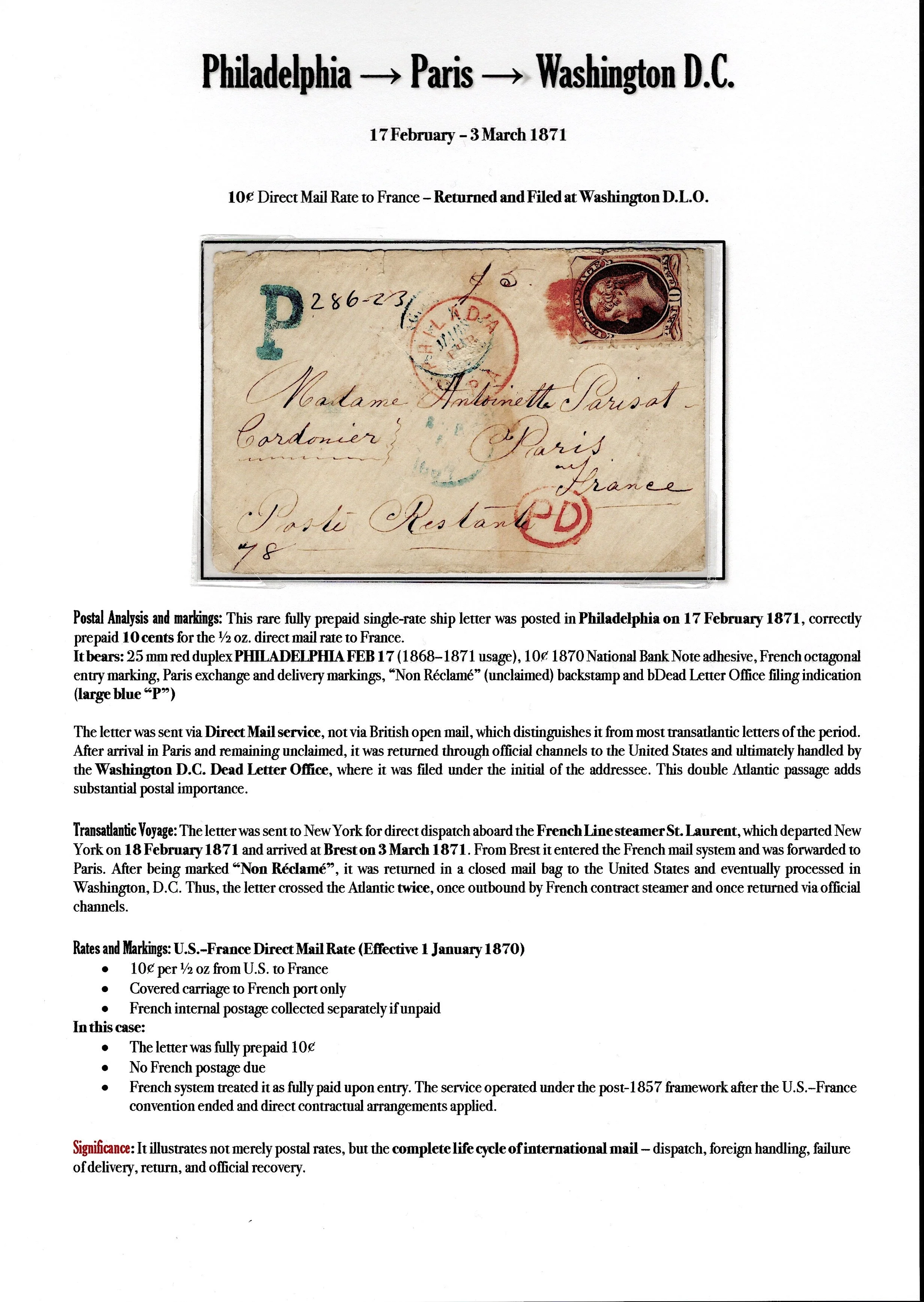
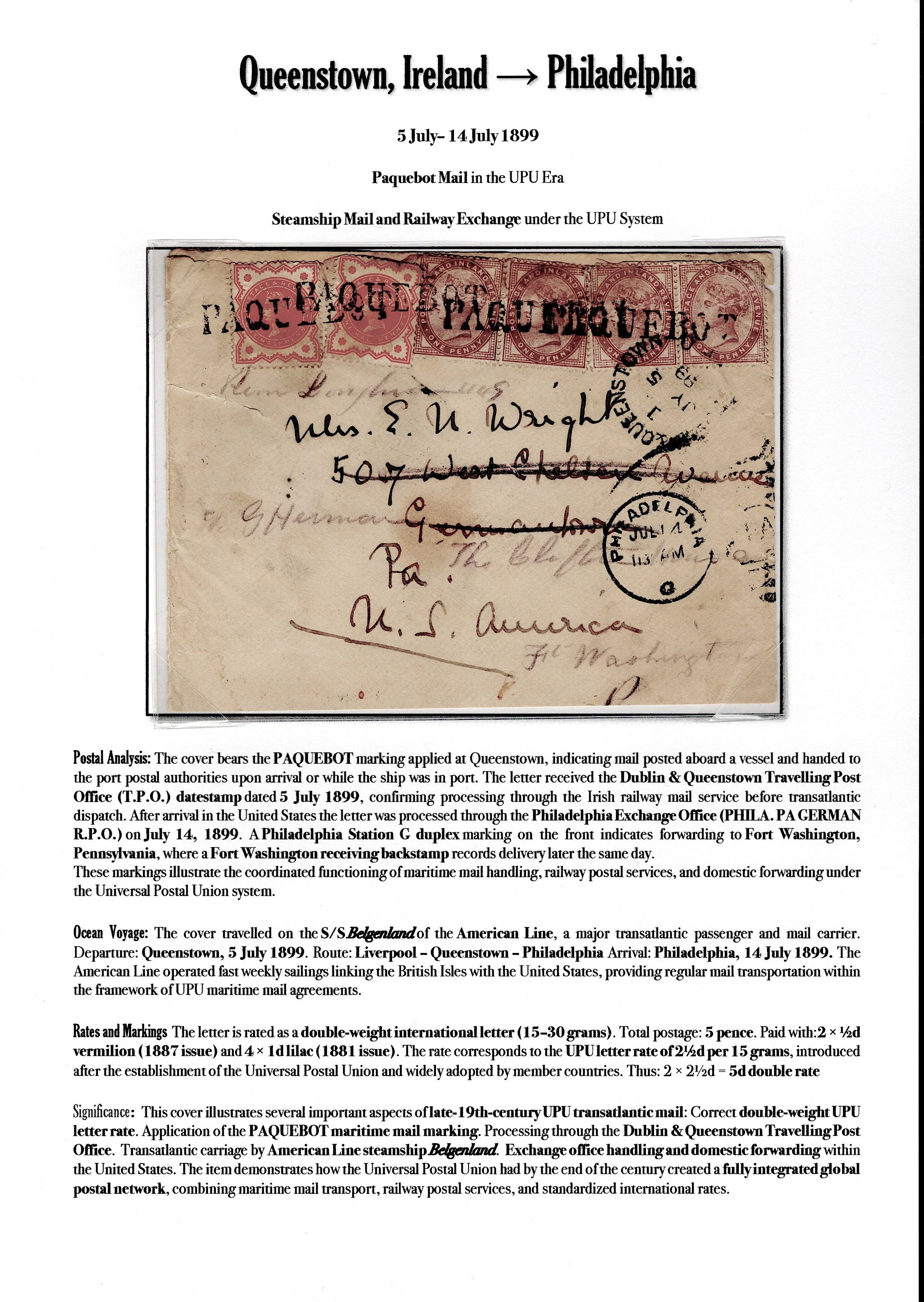
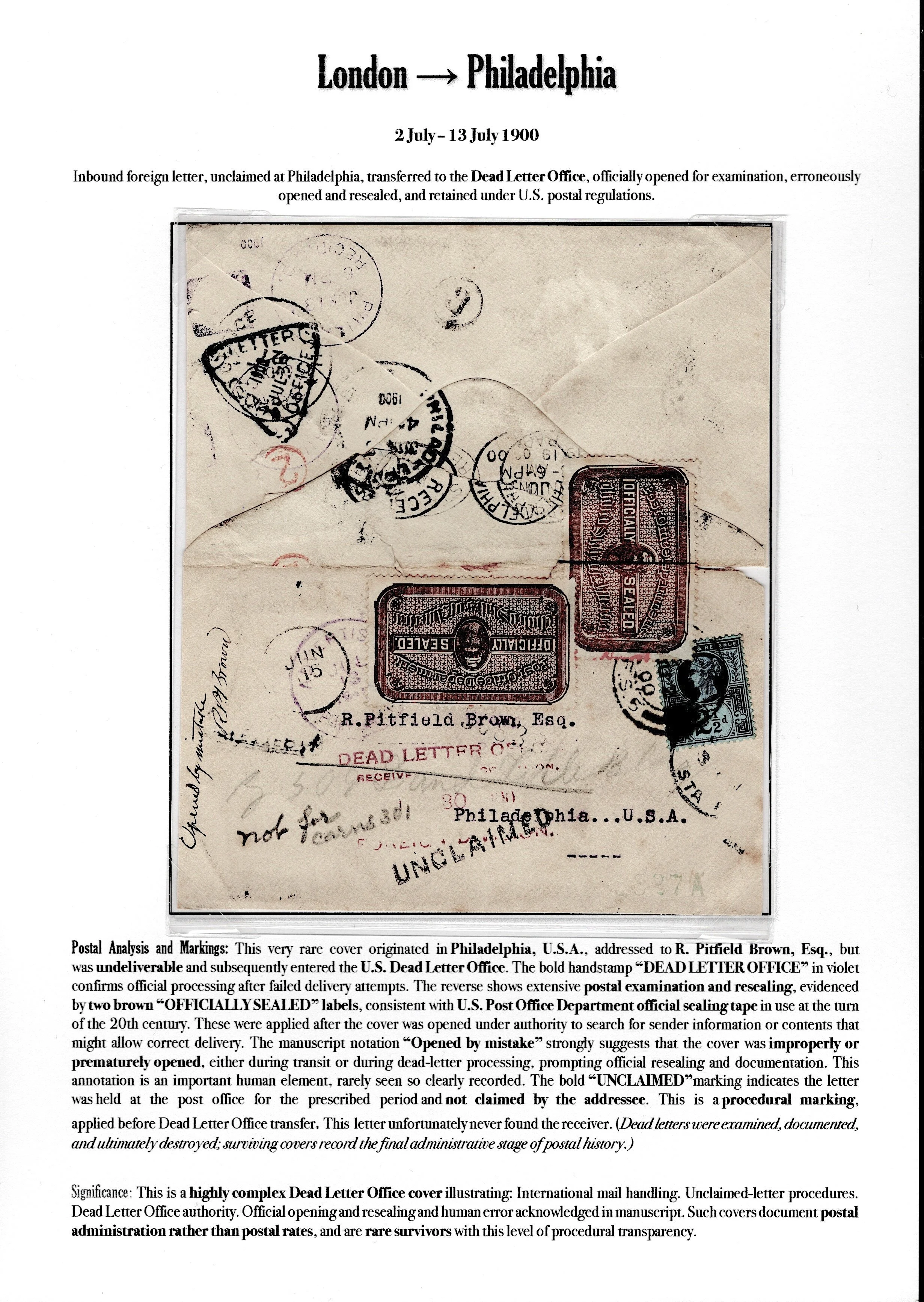
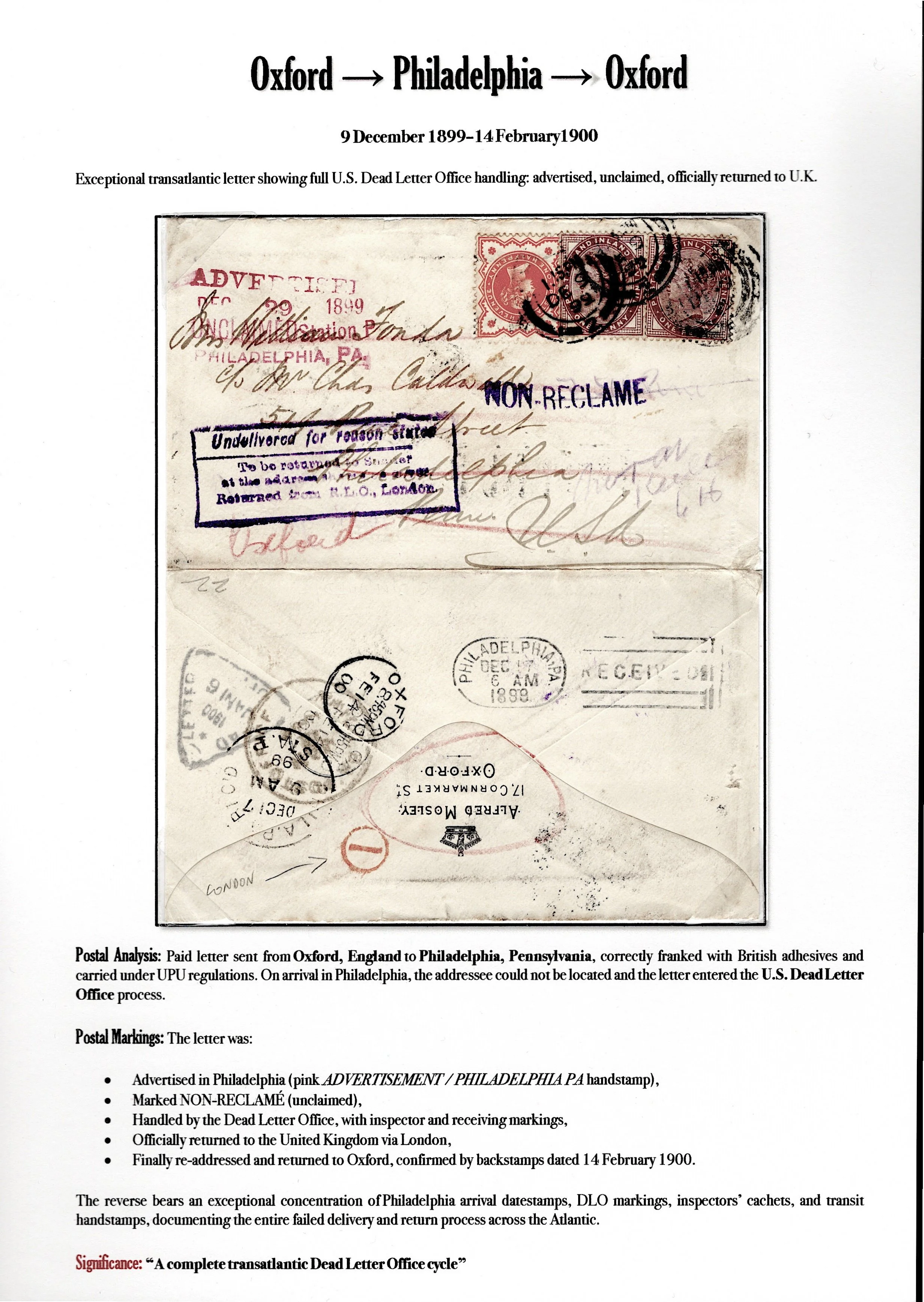
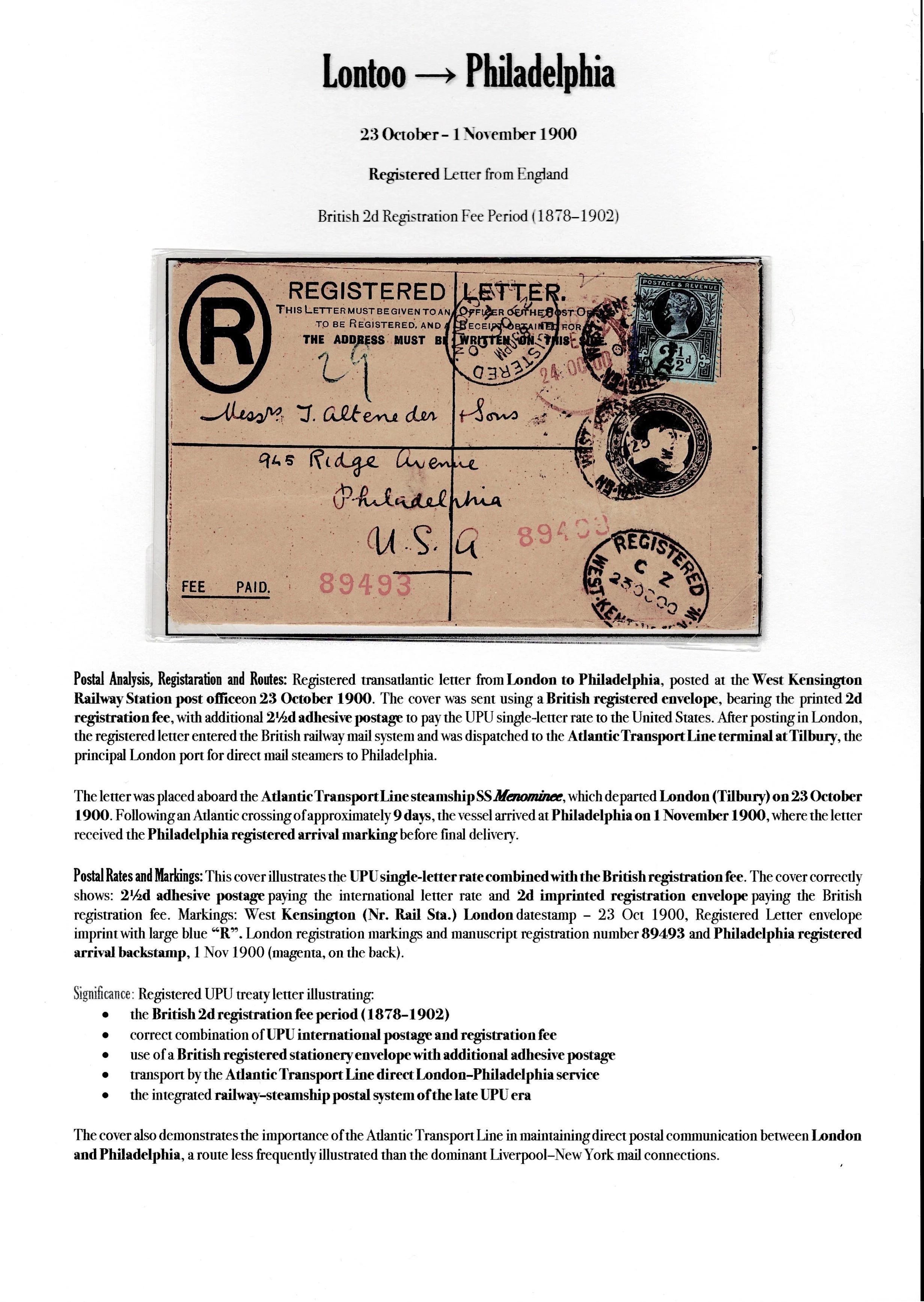
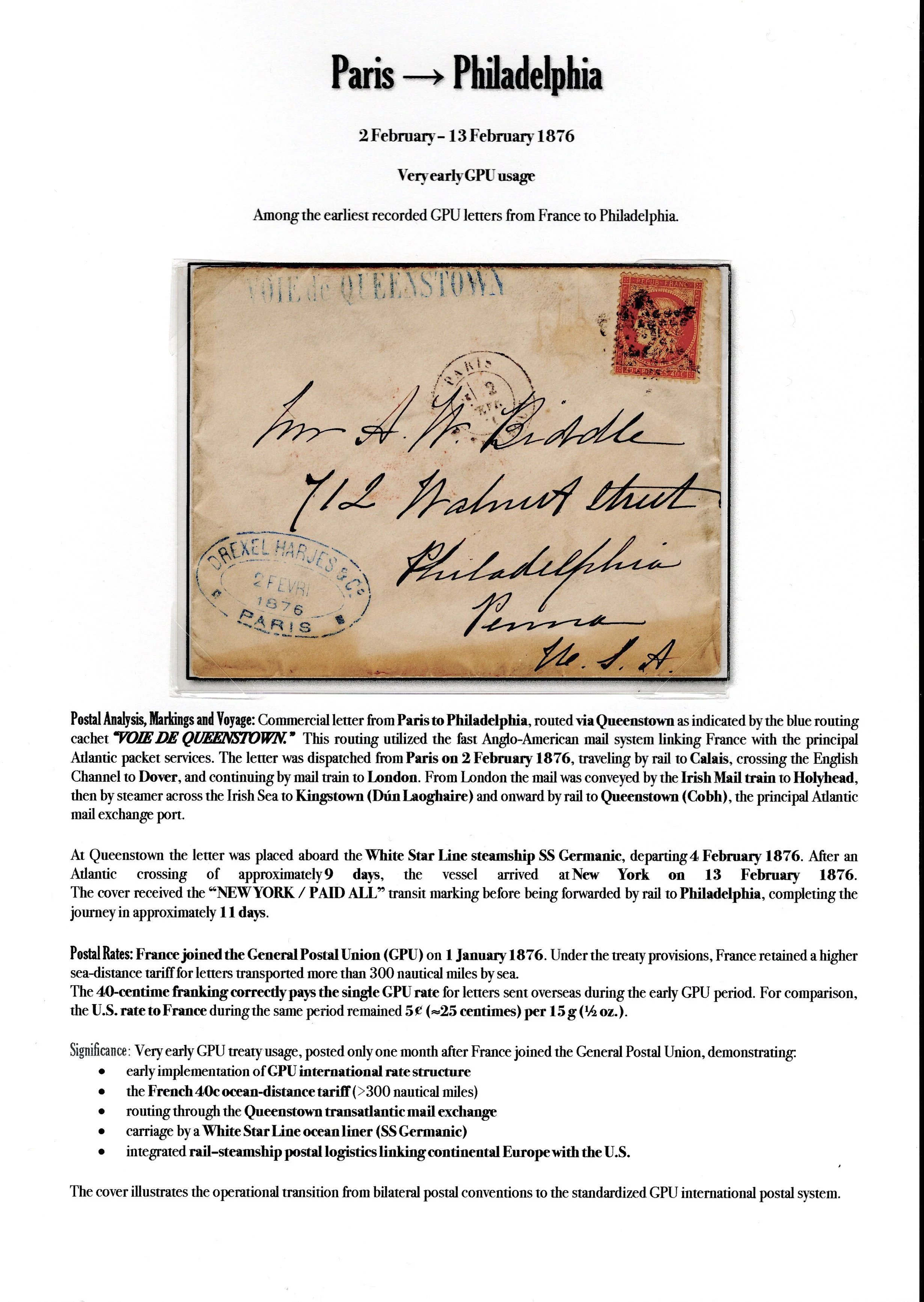
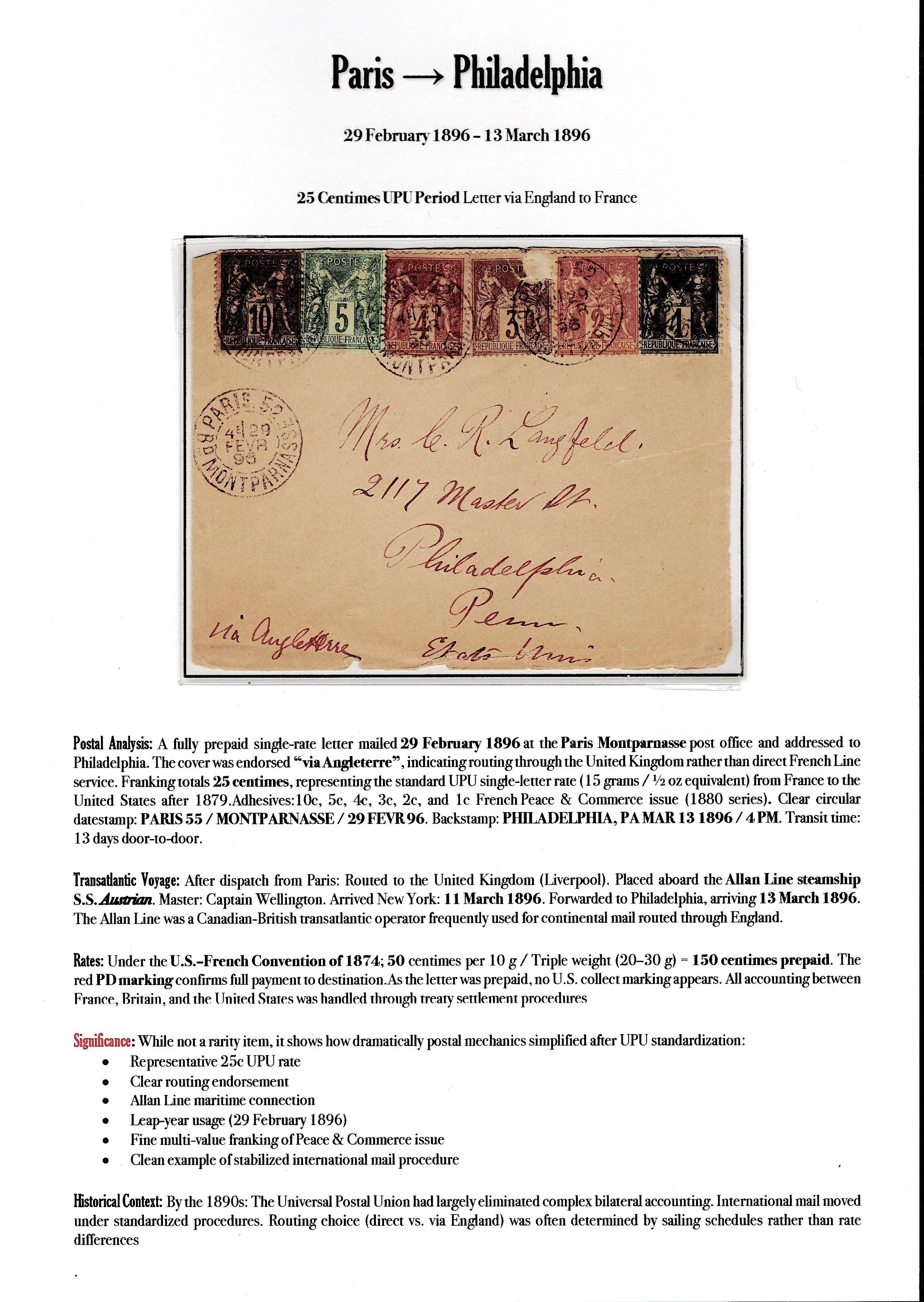
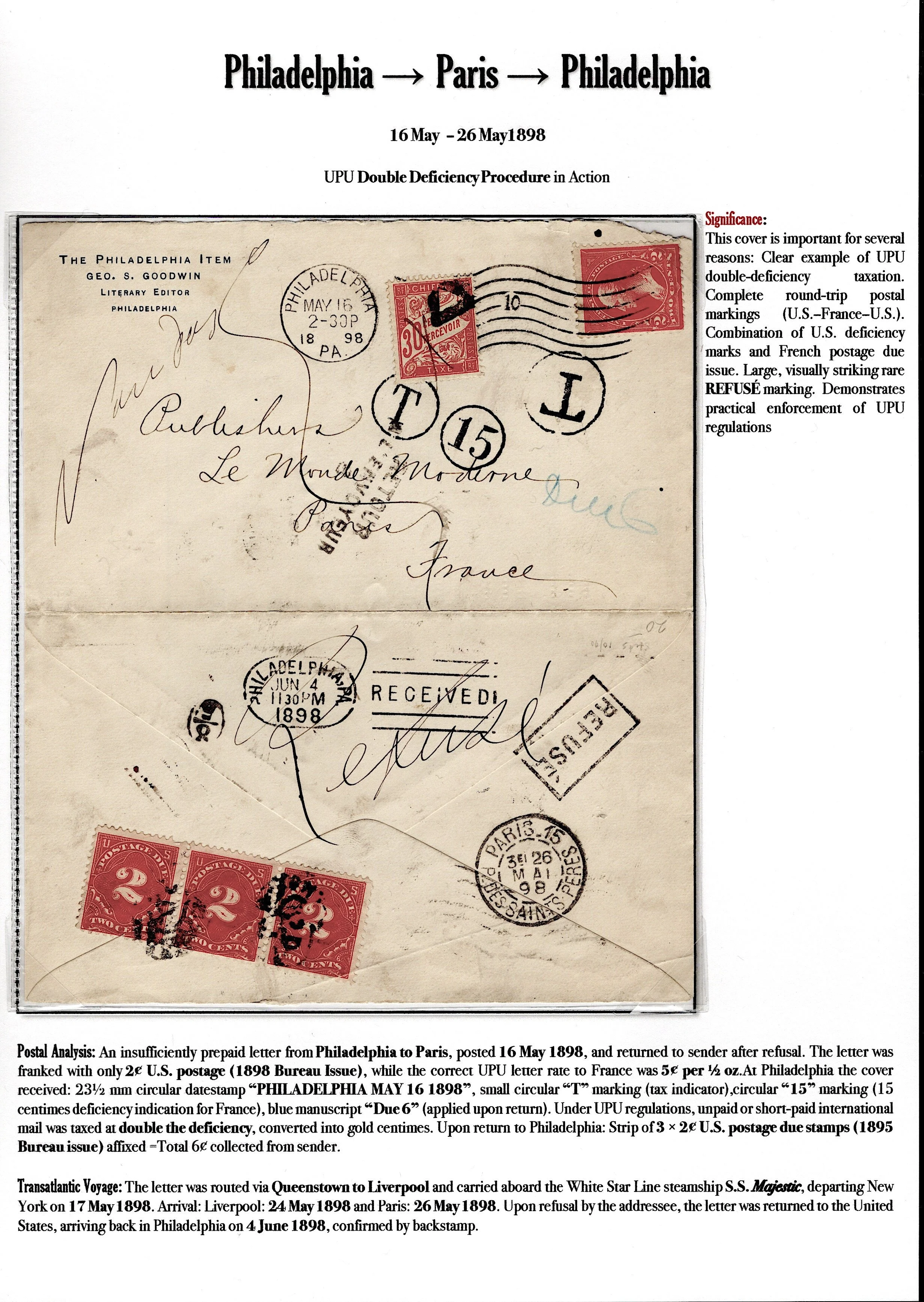
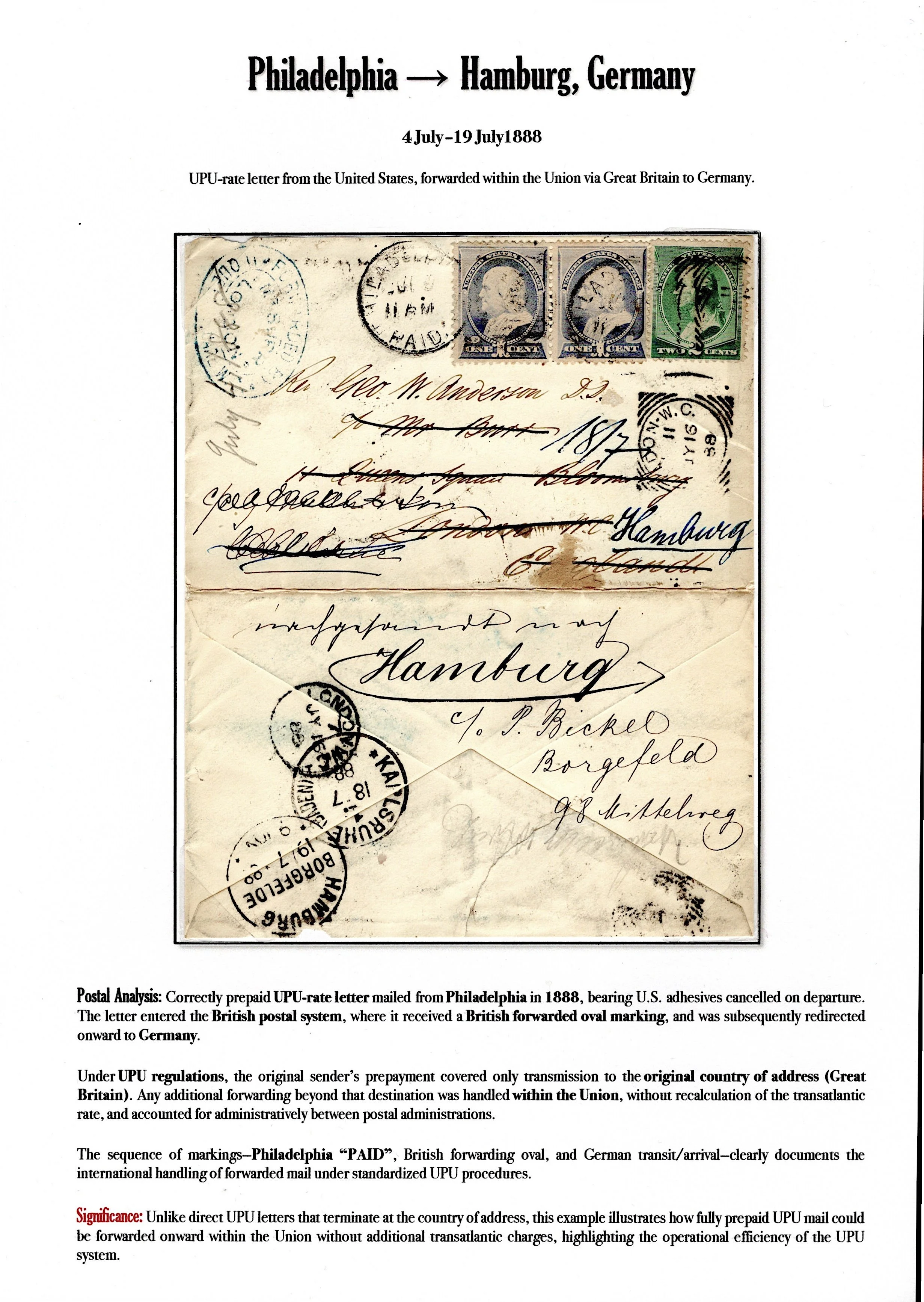
This exhibit examines how transatlantic postal communication between Philadelphia and Europe developed from irregular ship-carried correspondence into an organized international postal system. It explores how maritime transport, postal conventions and administrative cooperation gradually transformed Atlantic mail into the standardized global network established under the Universal Postal Union.
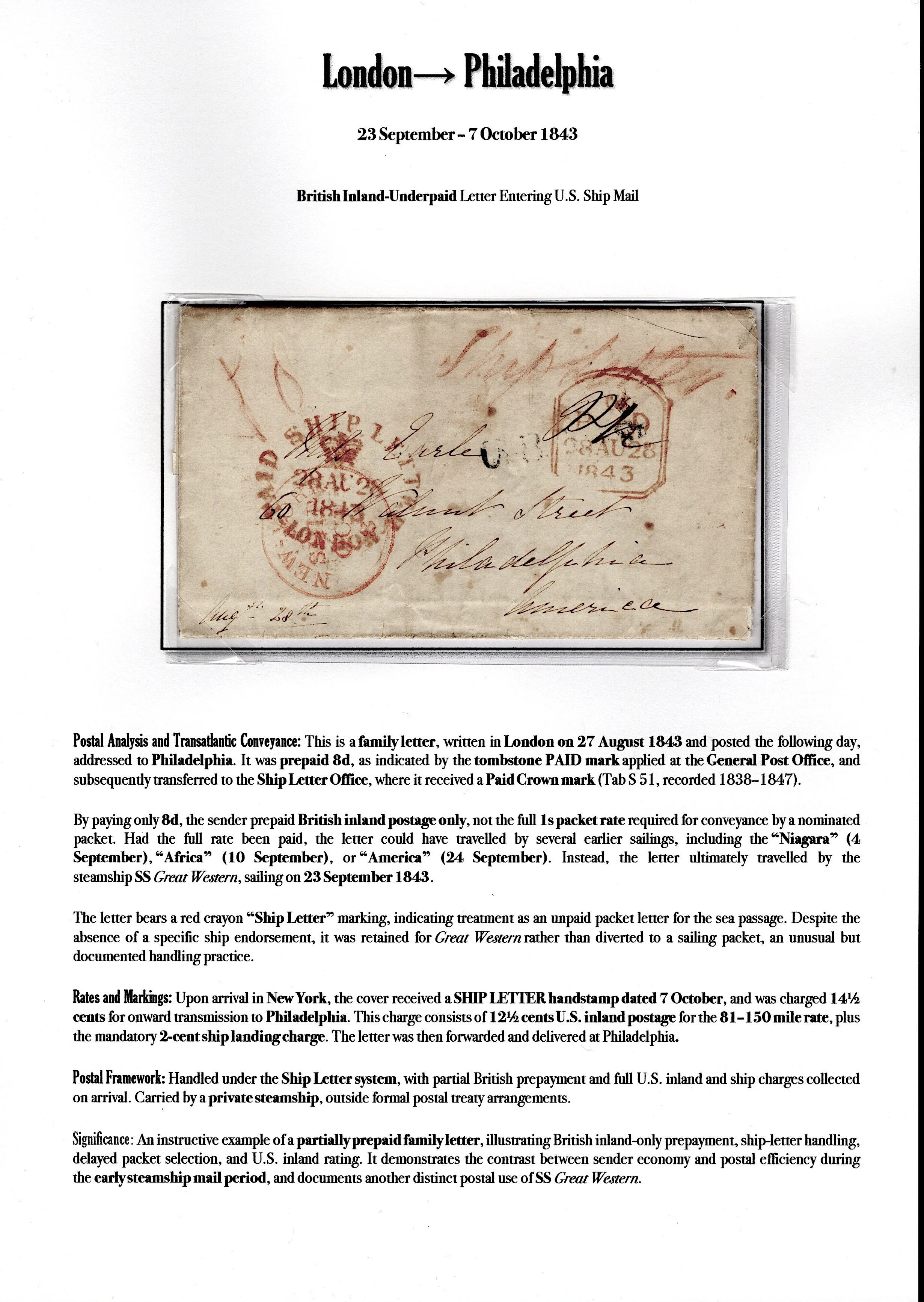
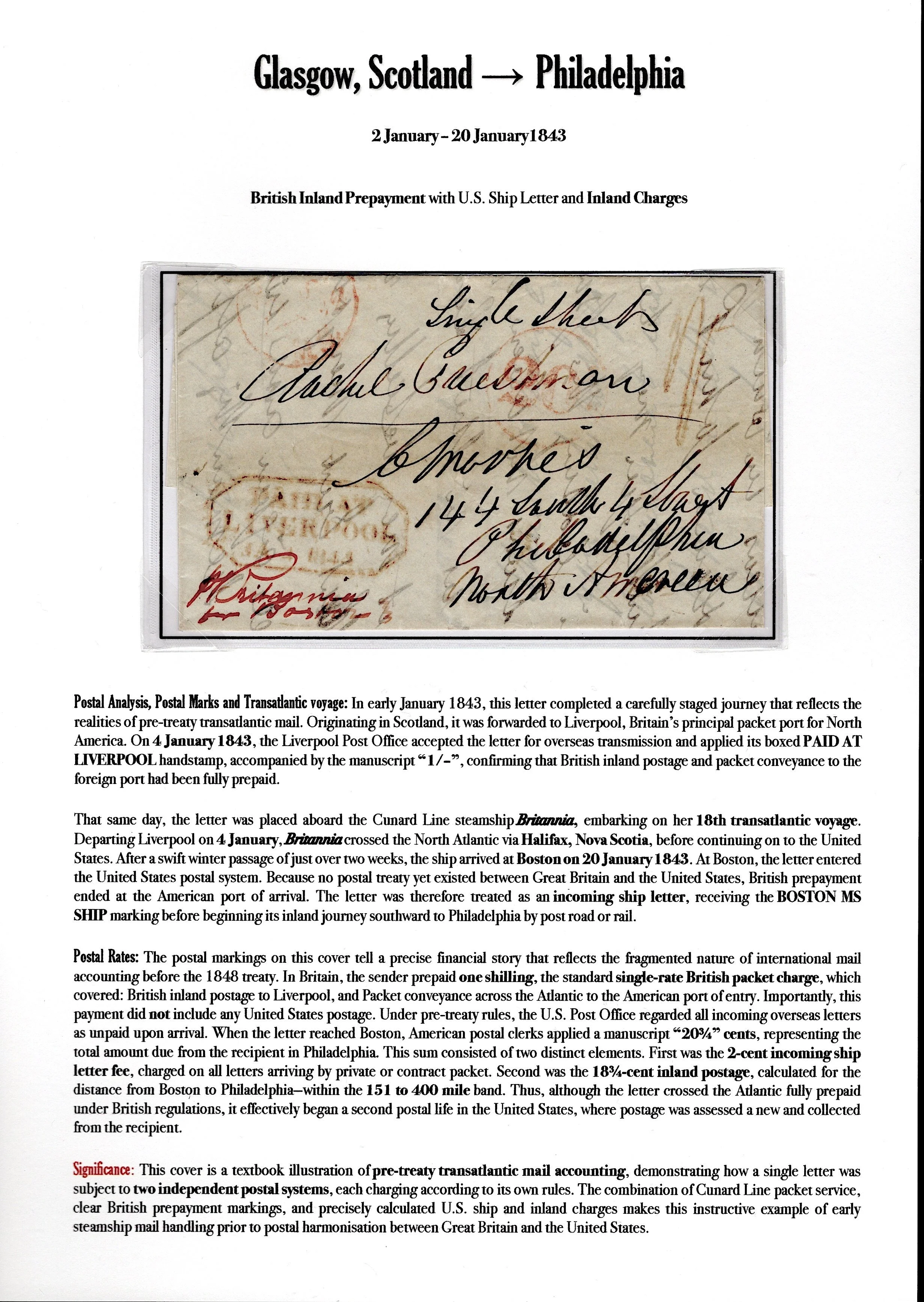
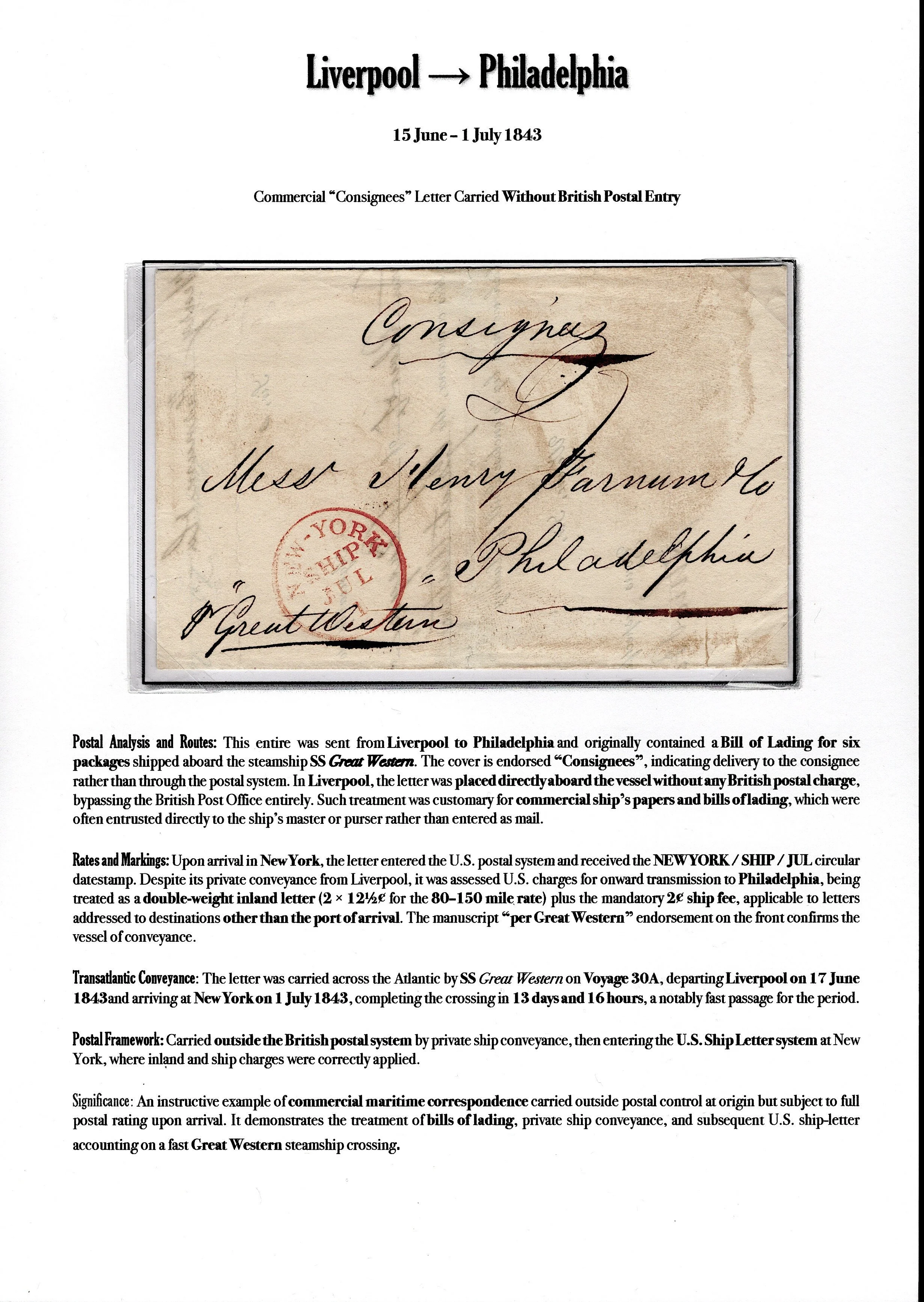
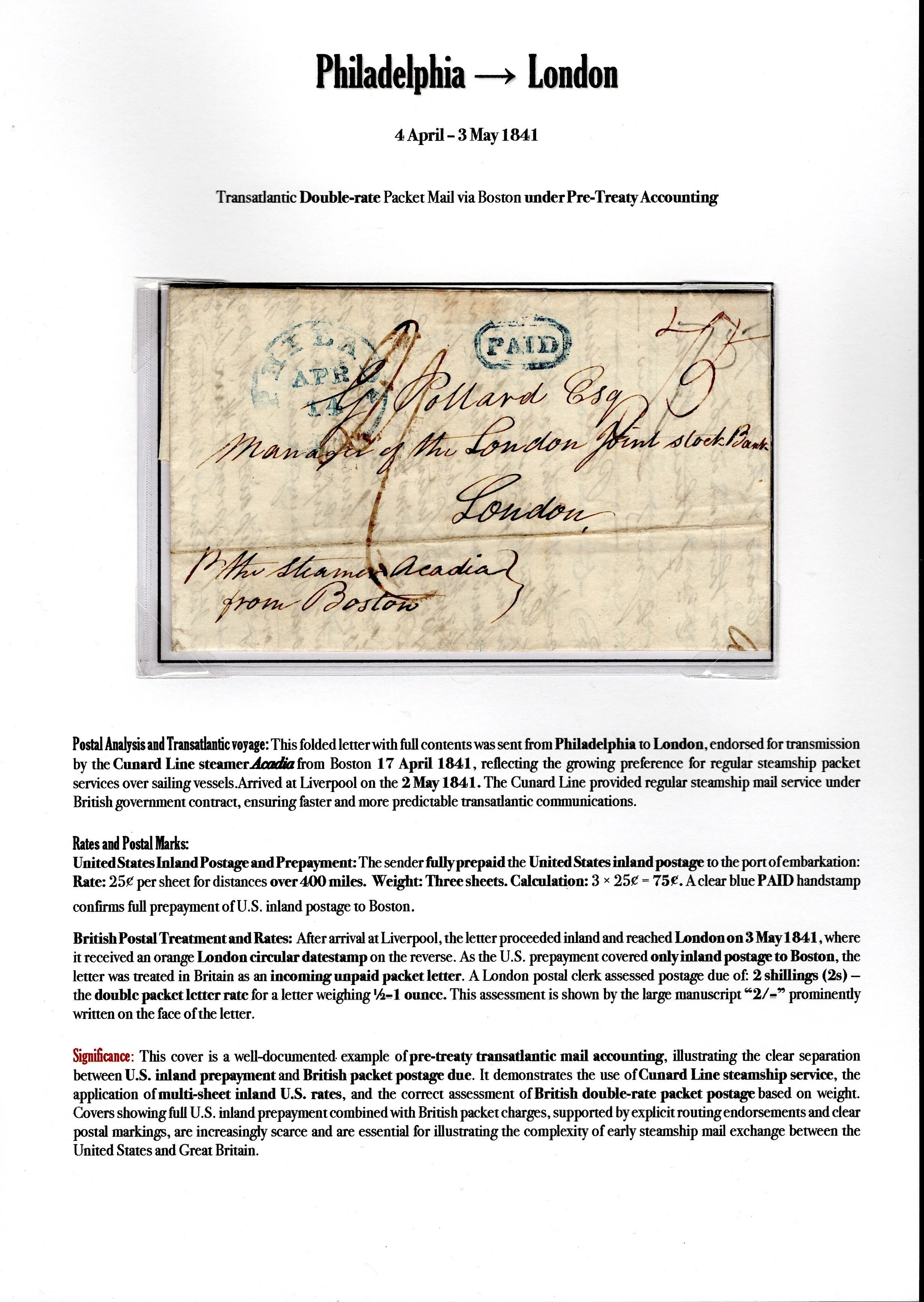
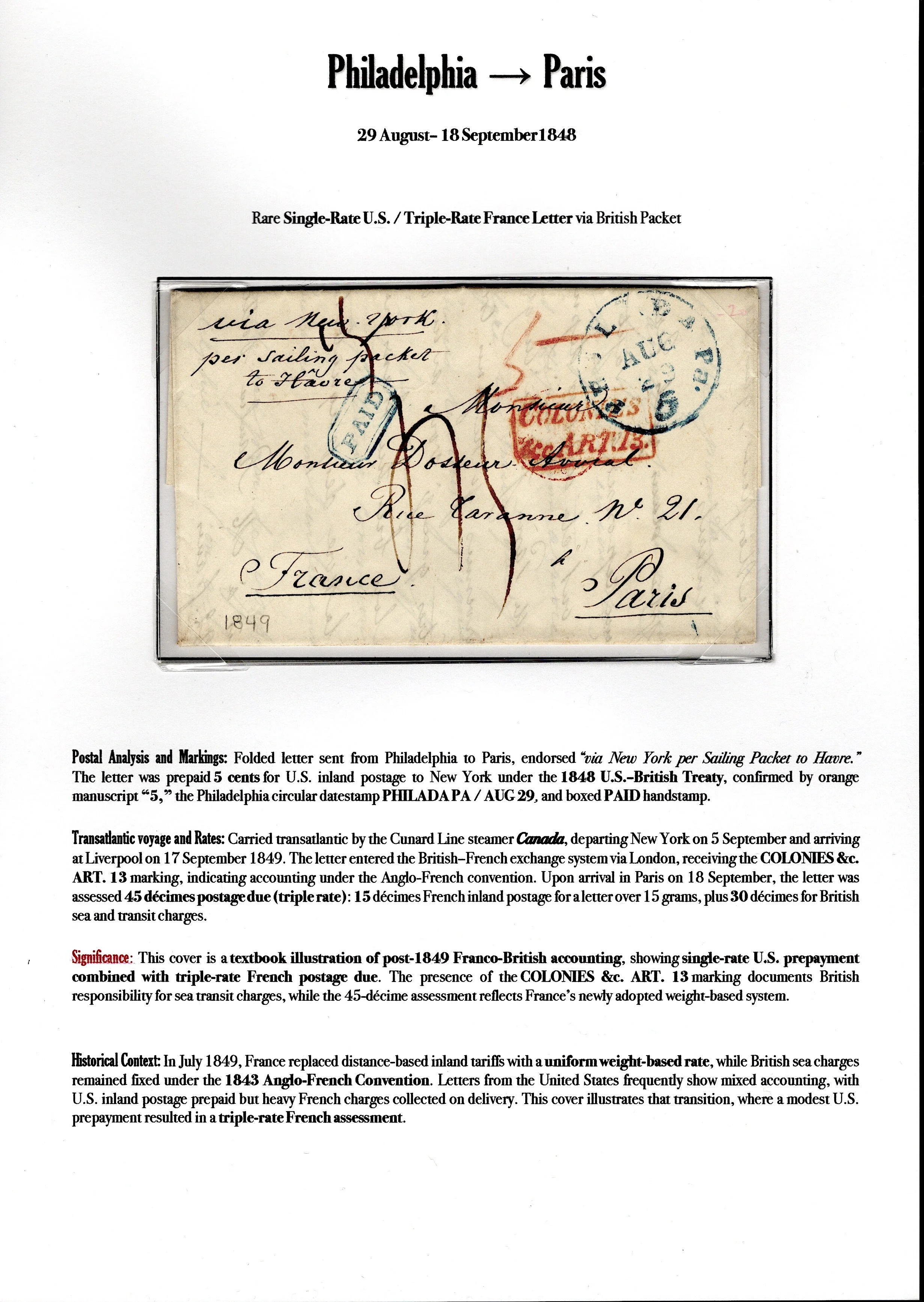
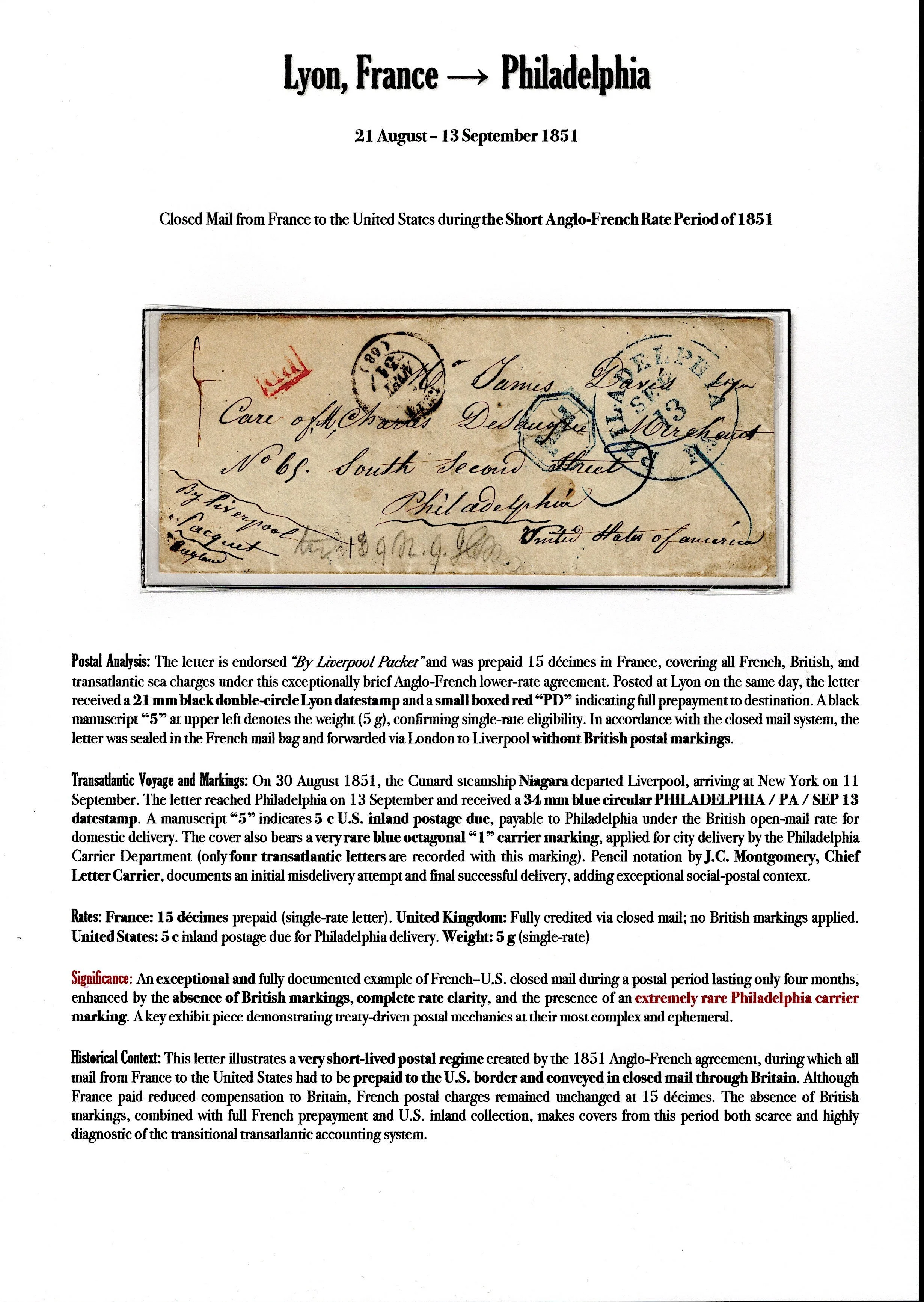
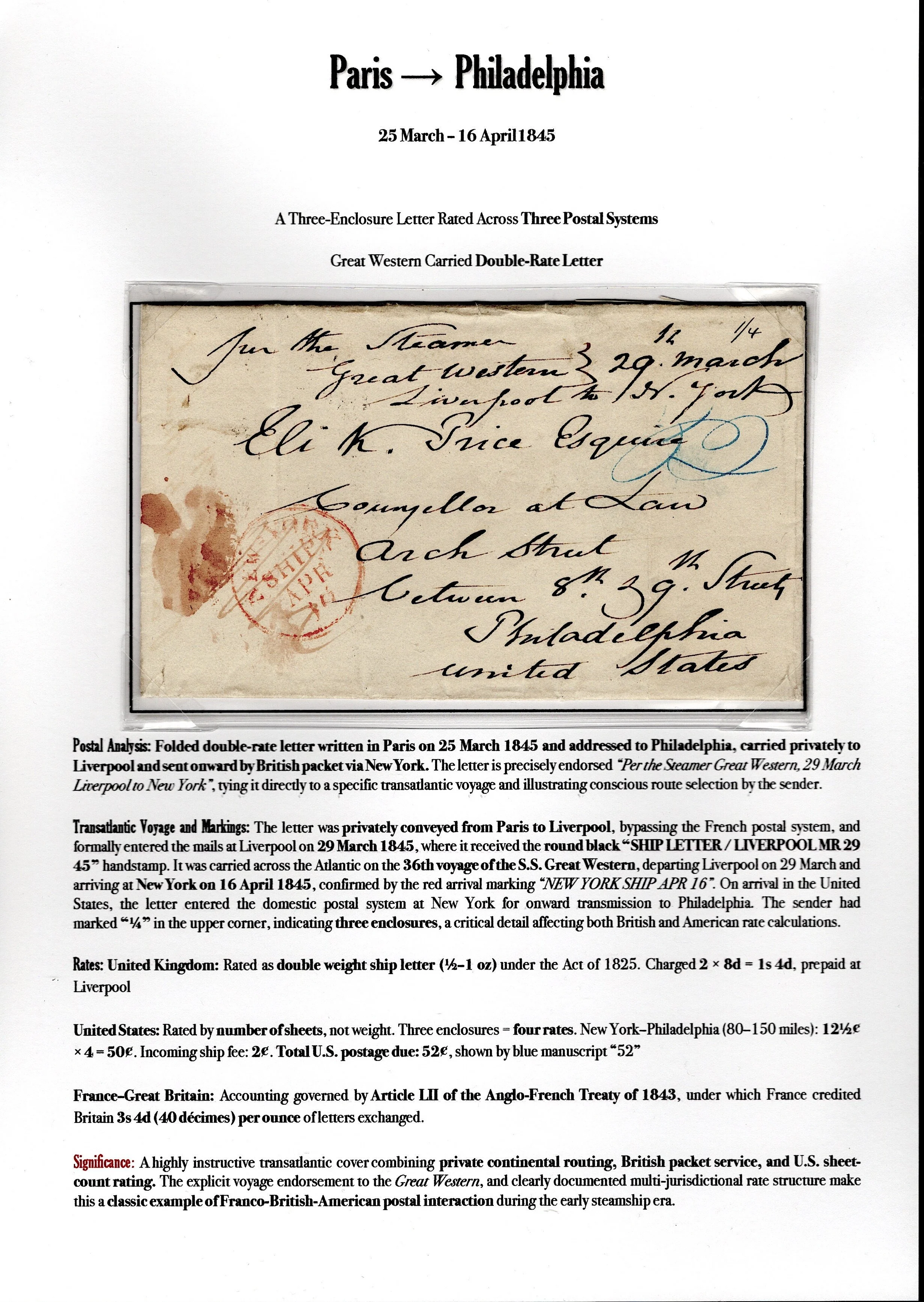
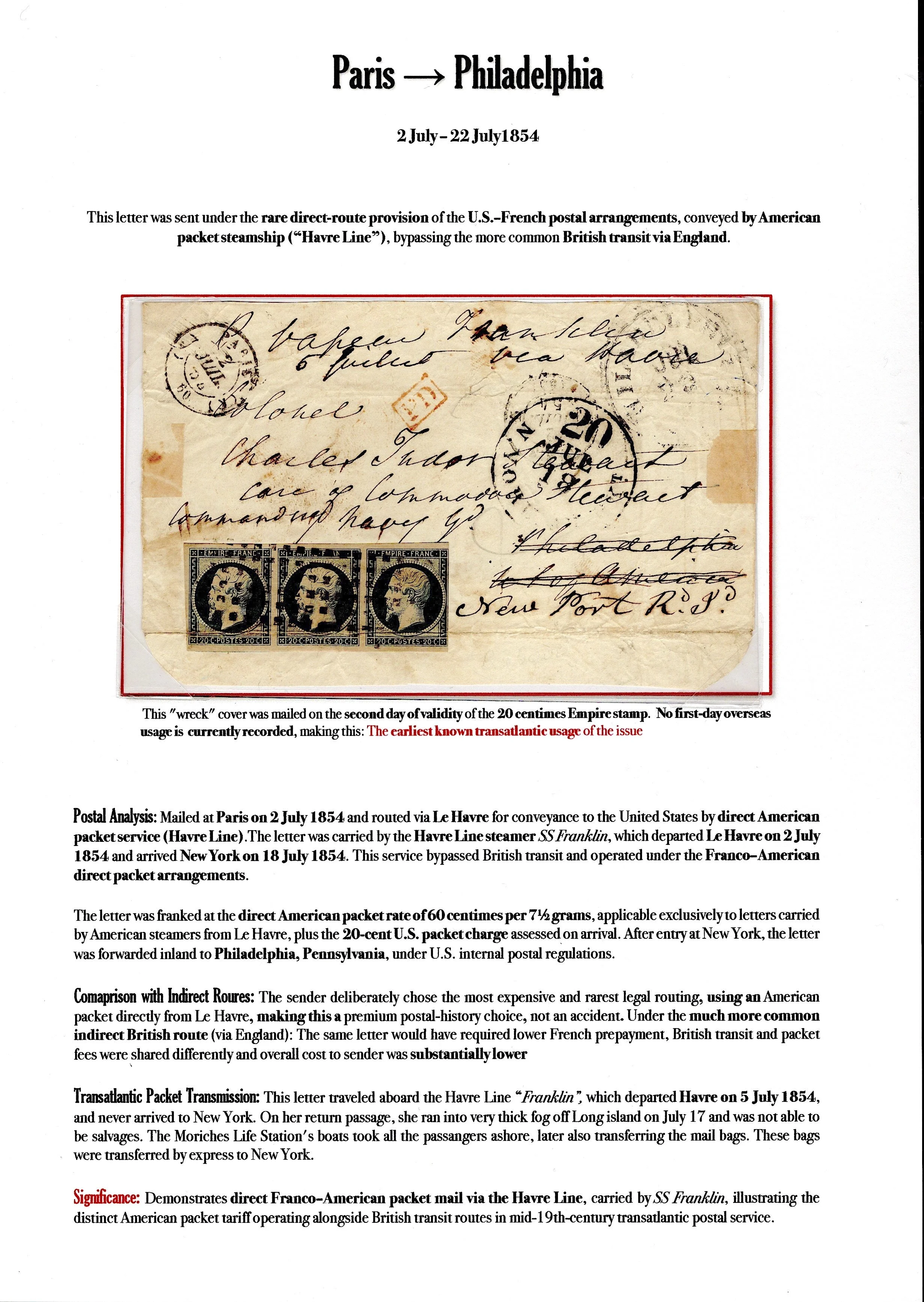
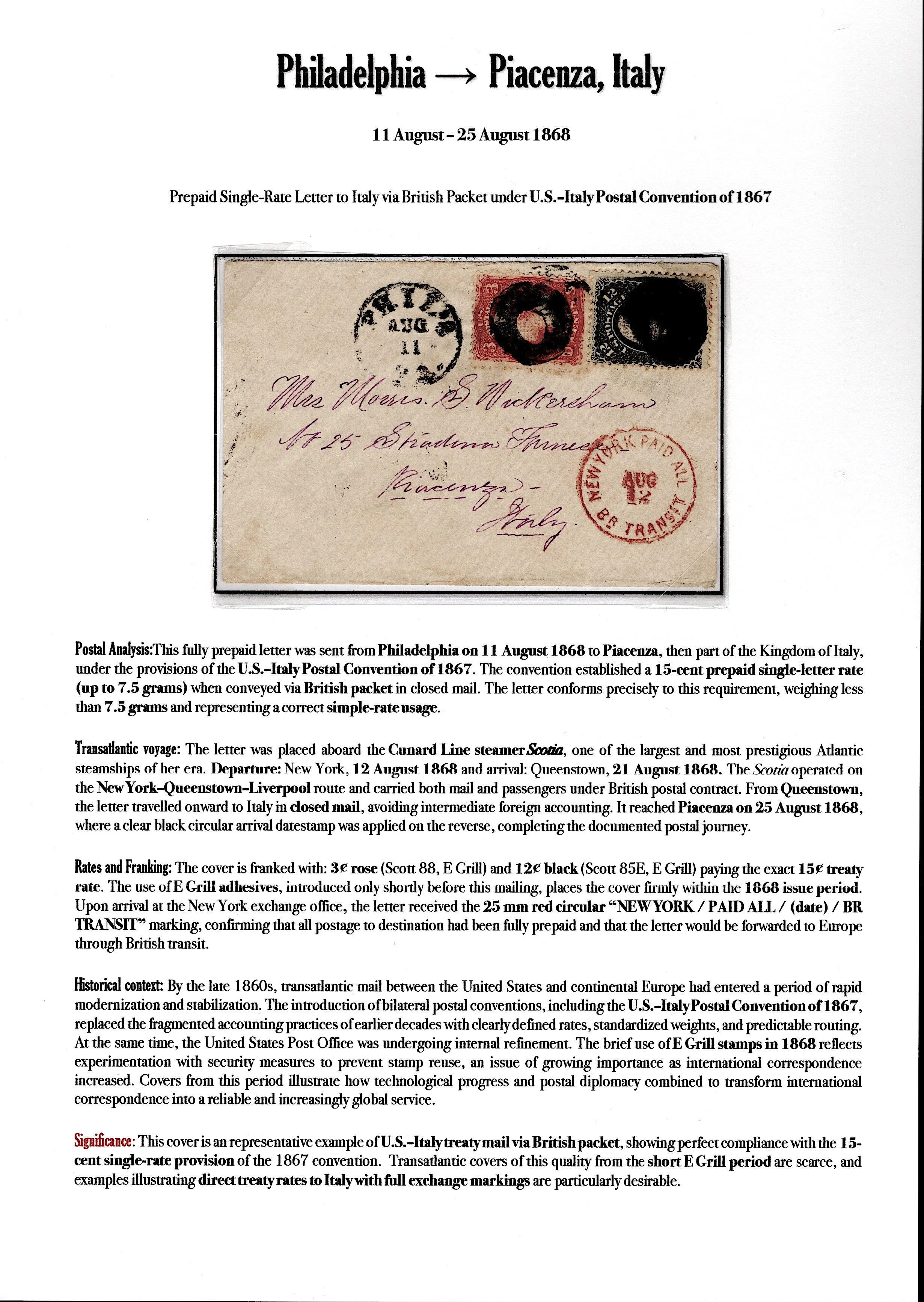
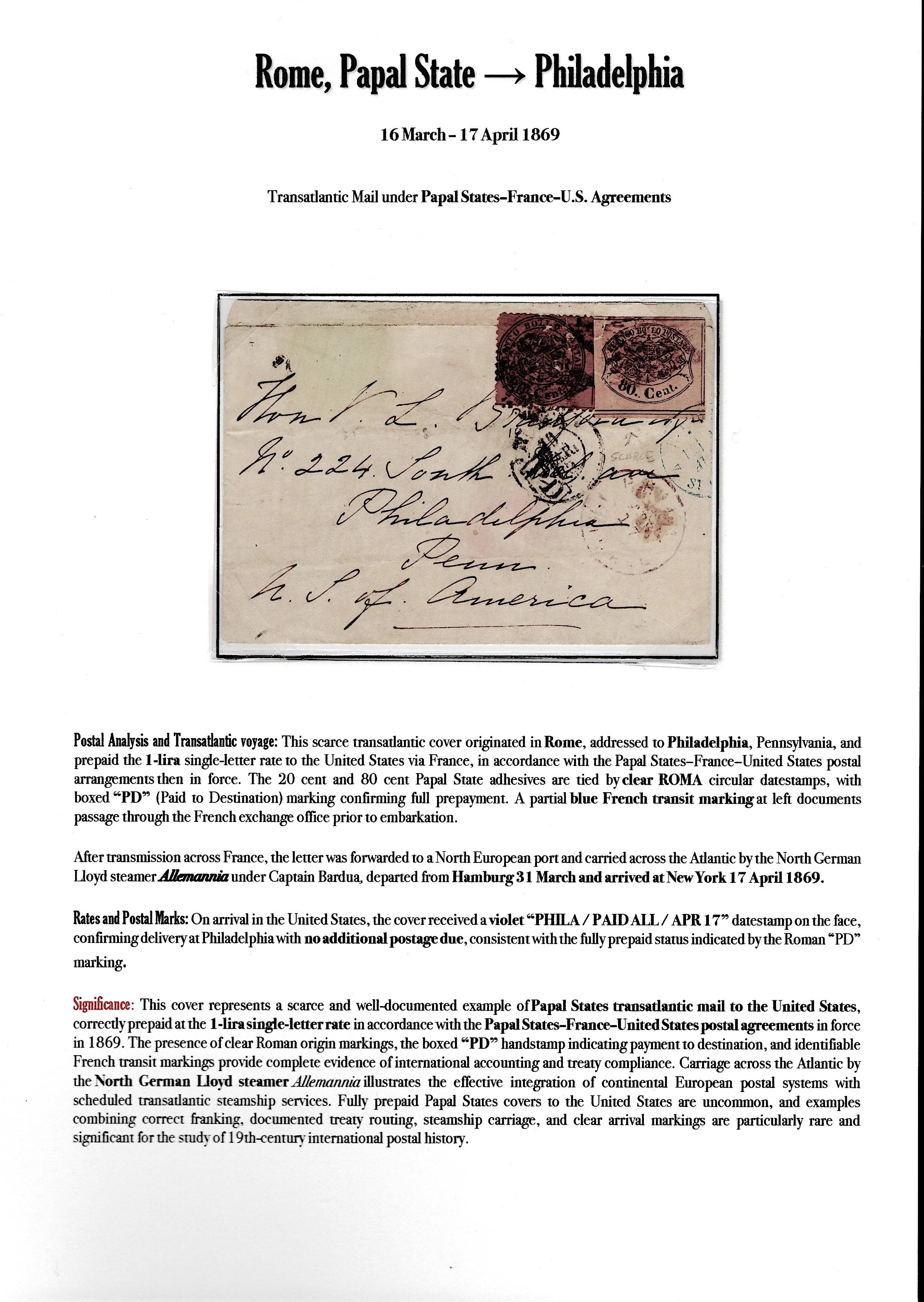
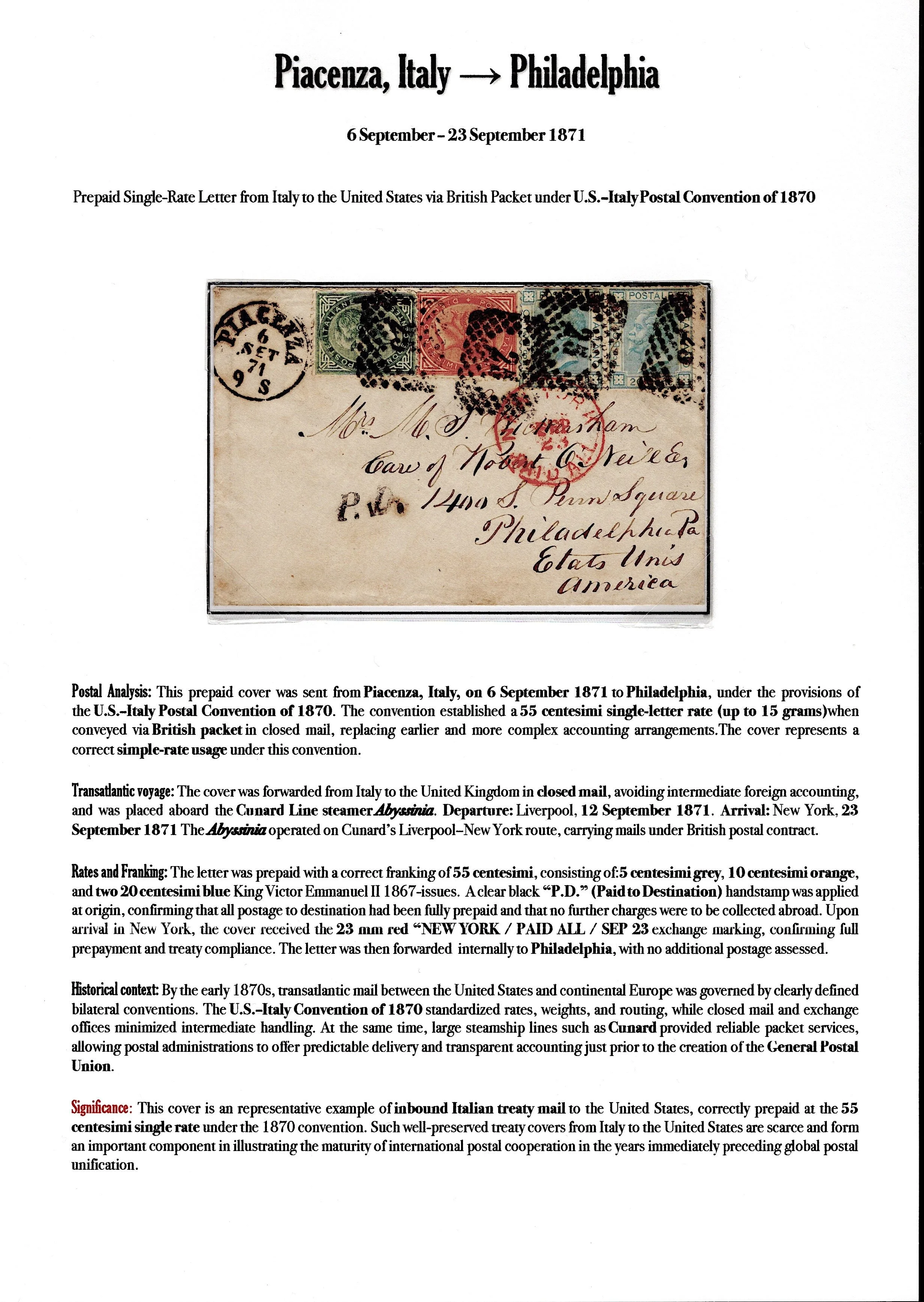
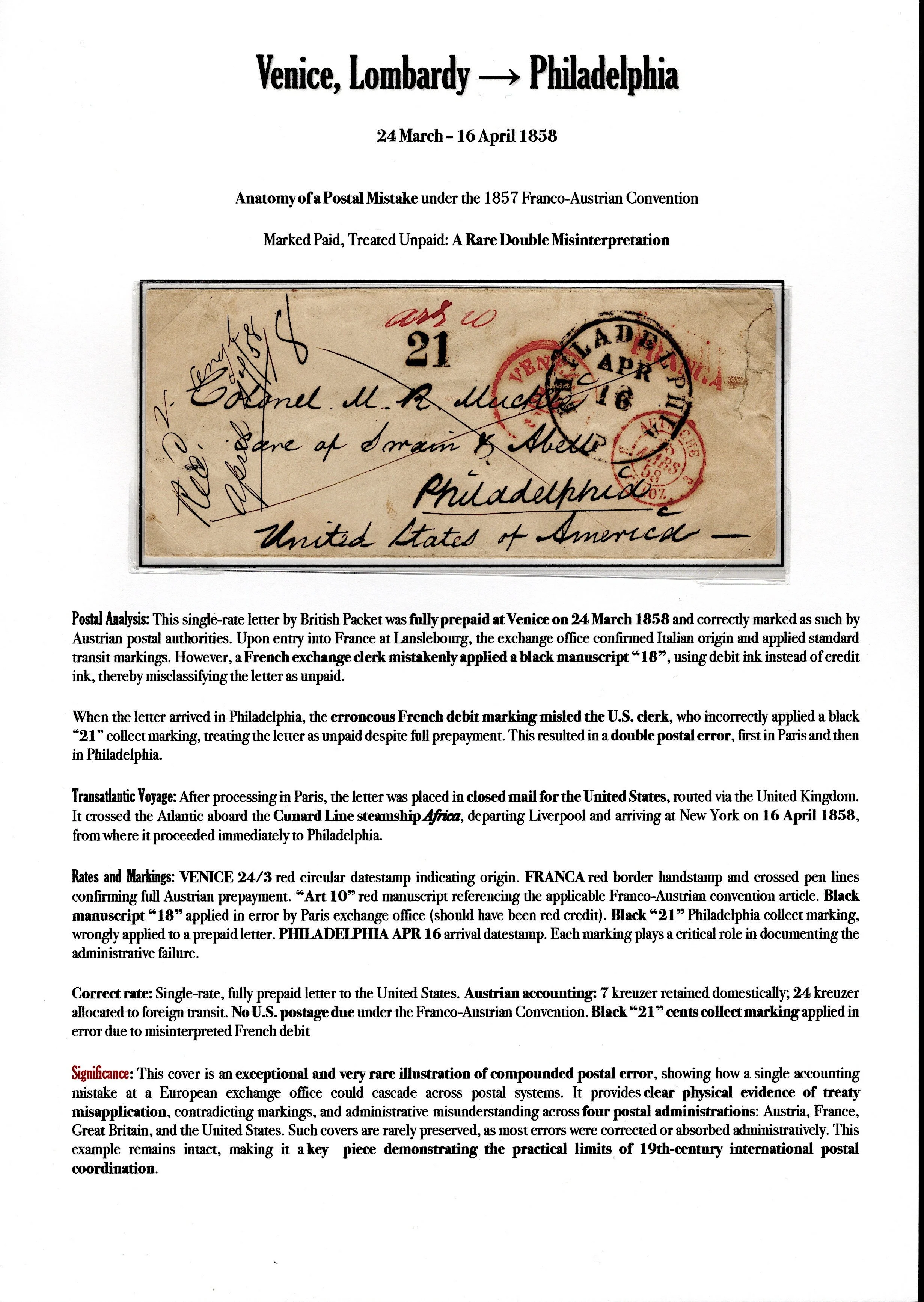
Purpose of the Exhibit: The purpose of this exhibit is to trace the evolution of transatlantic mail between Philadelphia and Europe from 1780 to 1900. It shows how correspondence developed from opportunistic ship-carried letters of the sailing era into scheduled packet mail, steamship services, bilateral postal conventions, and finally the unified international postal system established under the Universal Postal Union.
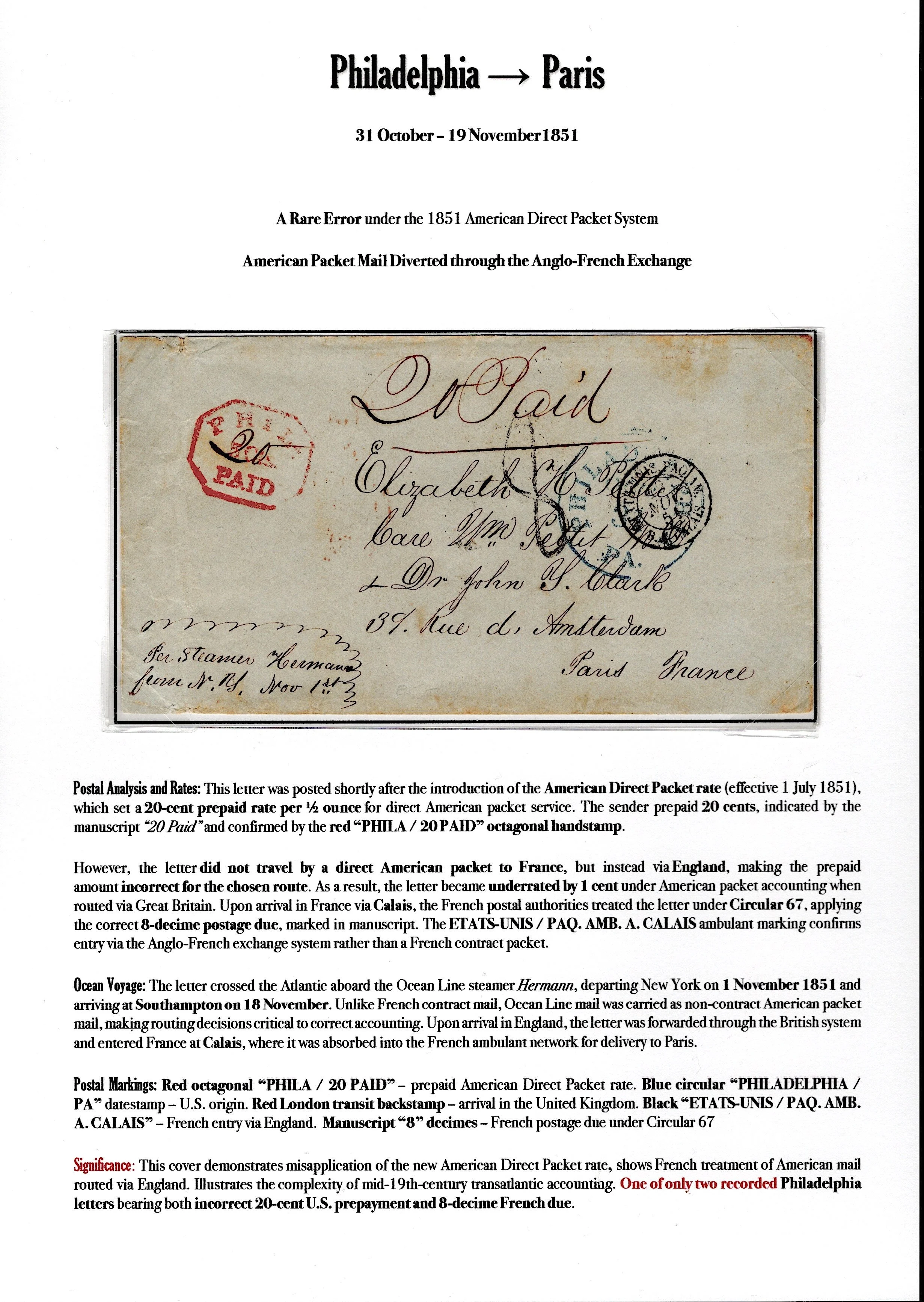
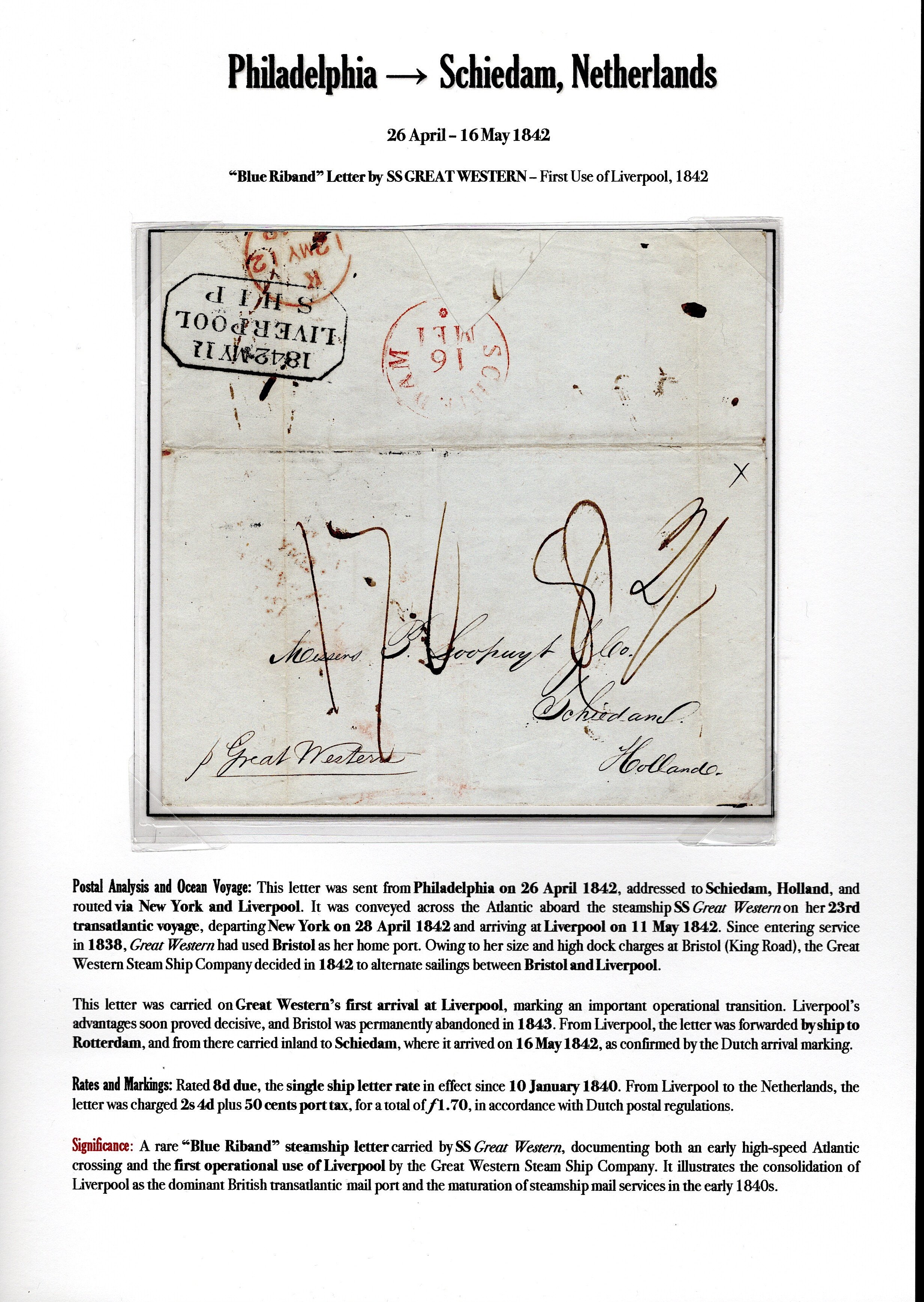
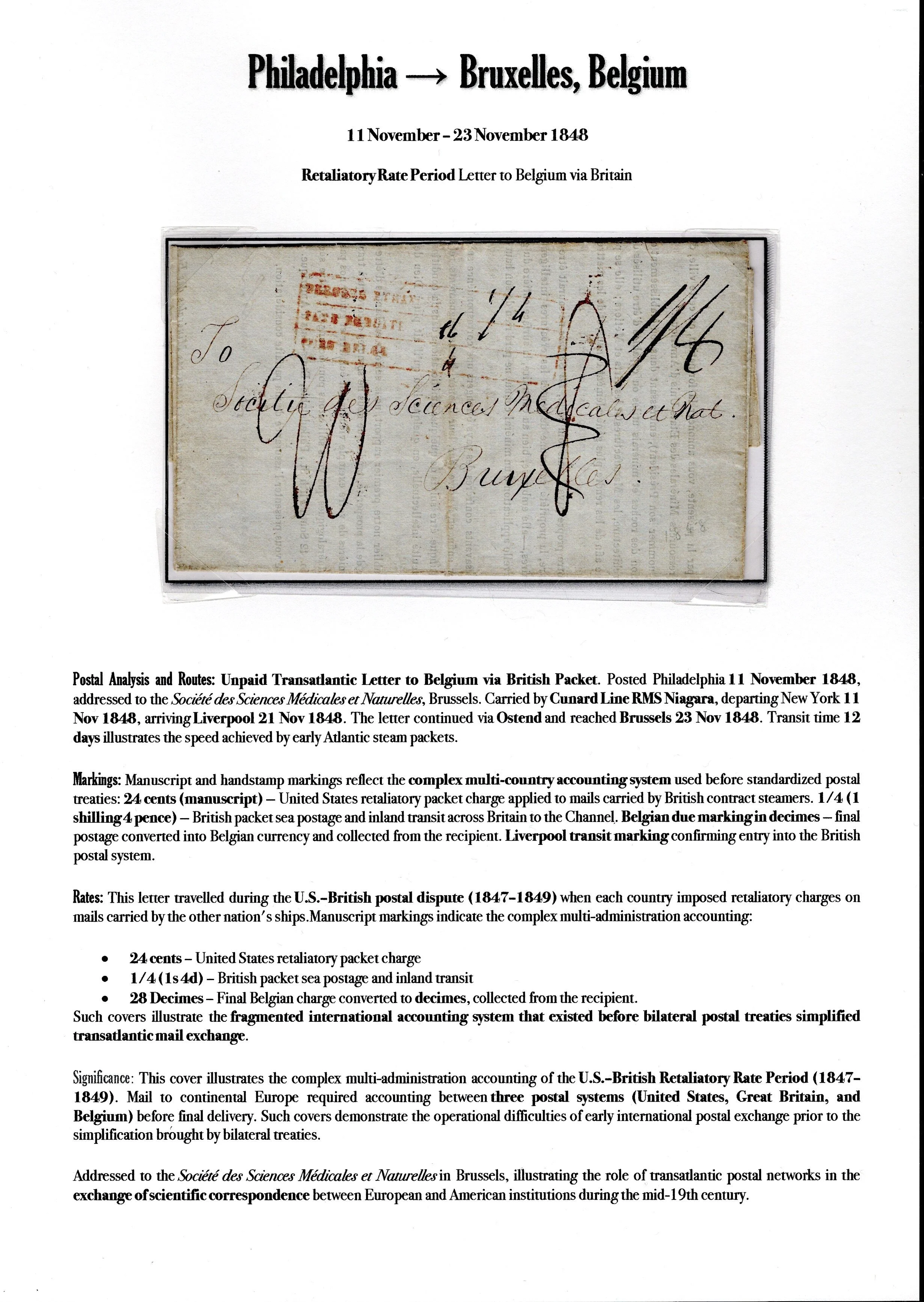
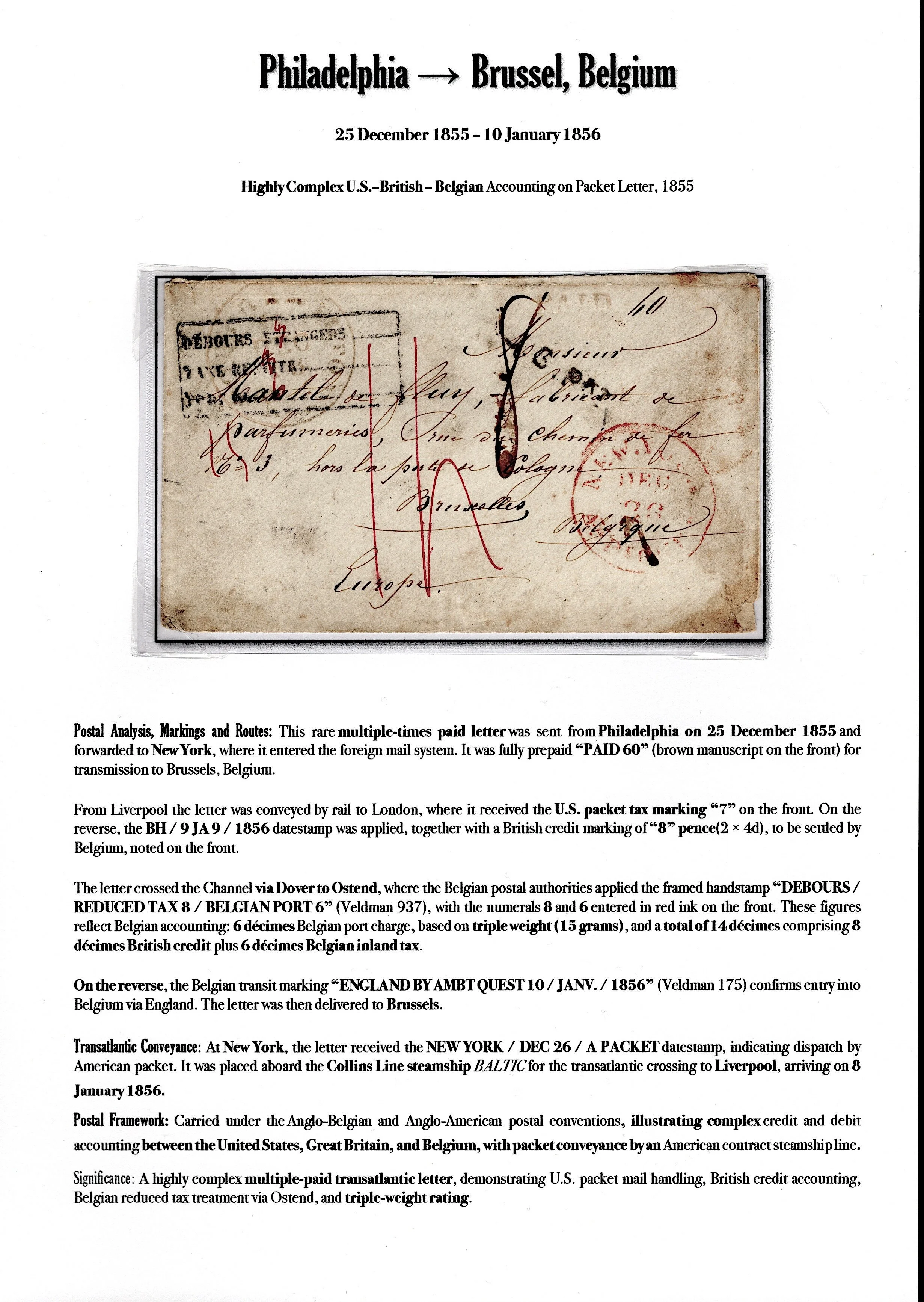
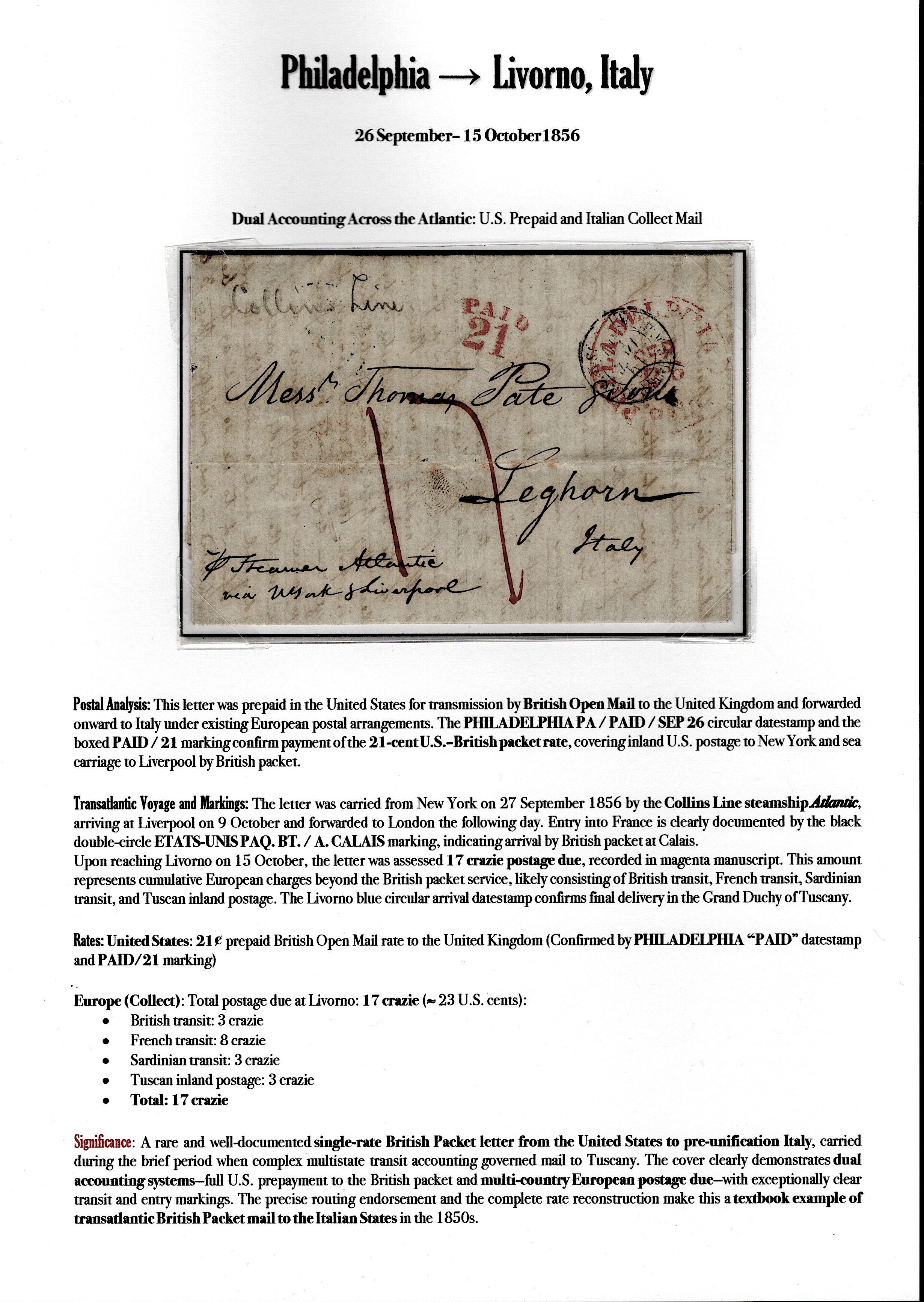
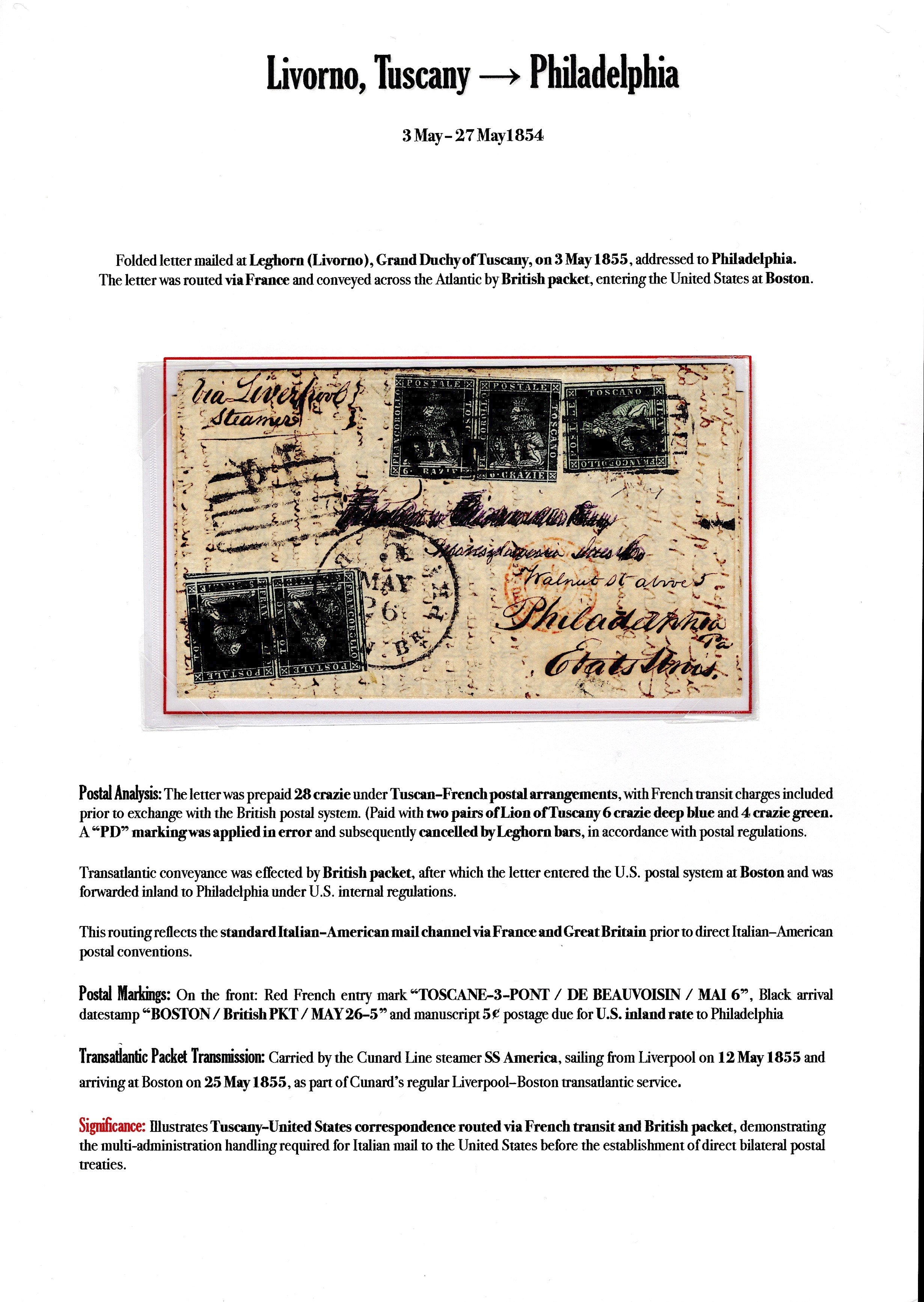
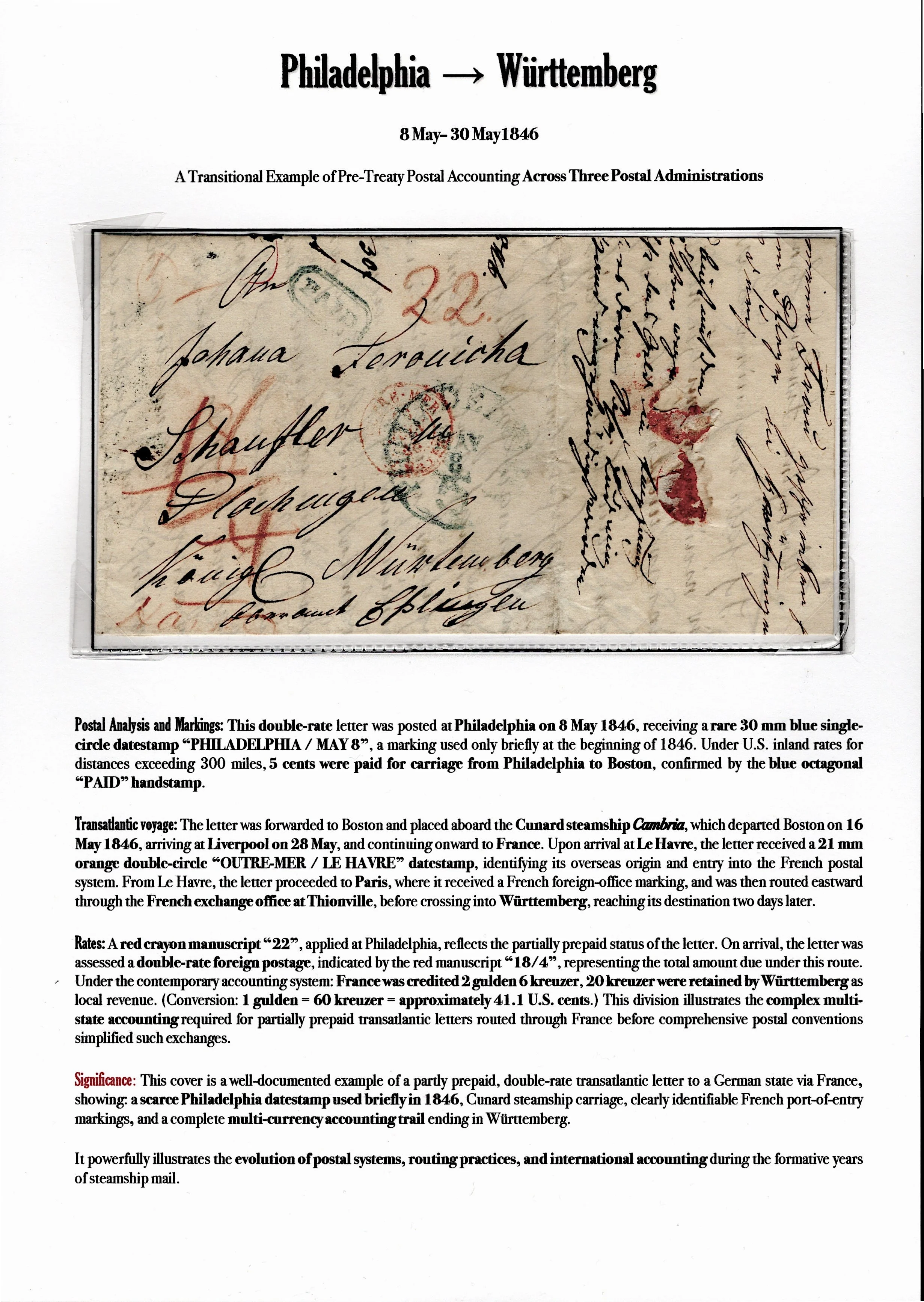
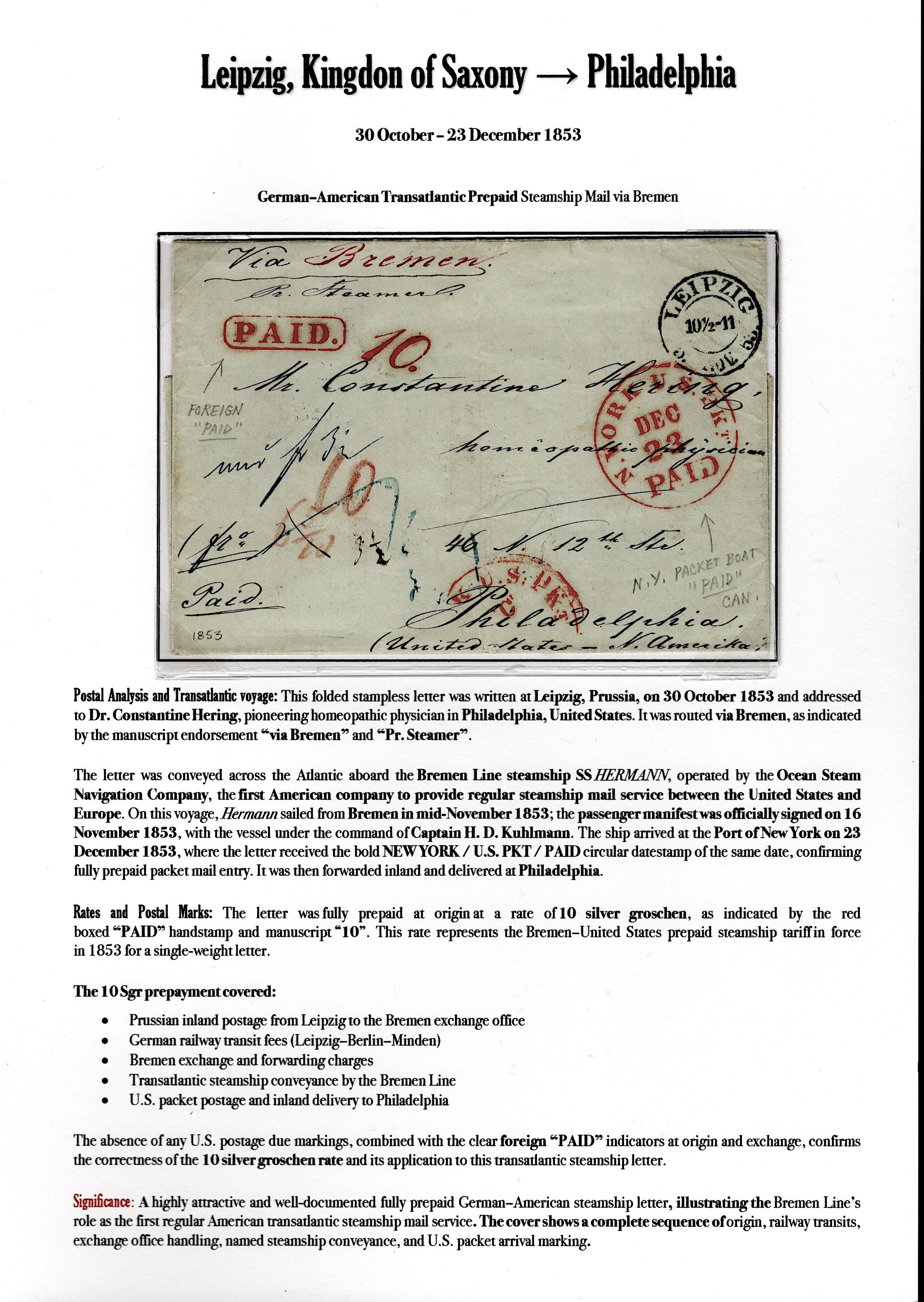
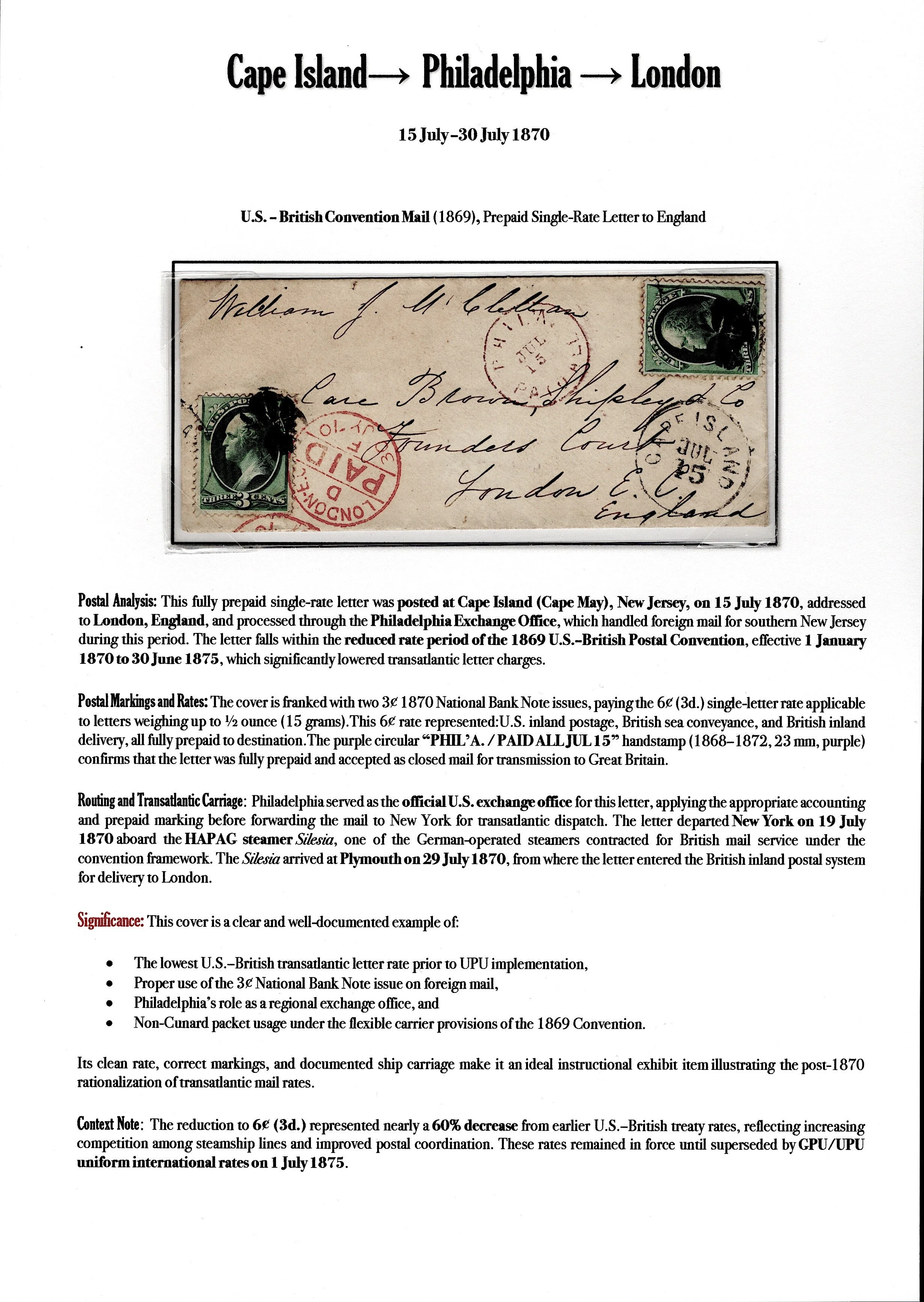
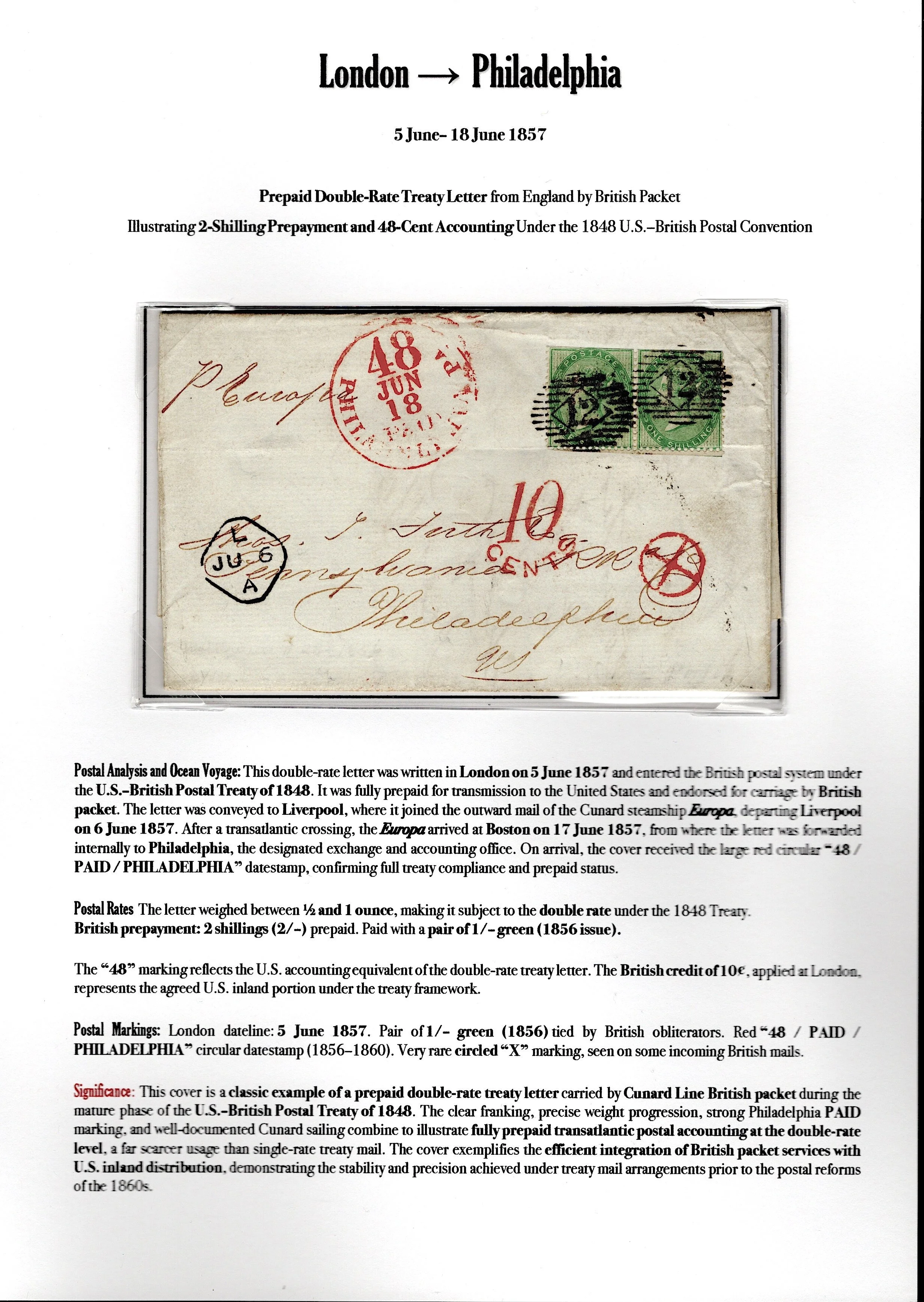
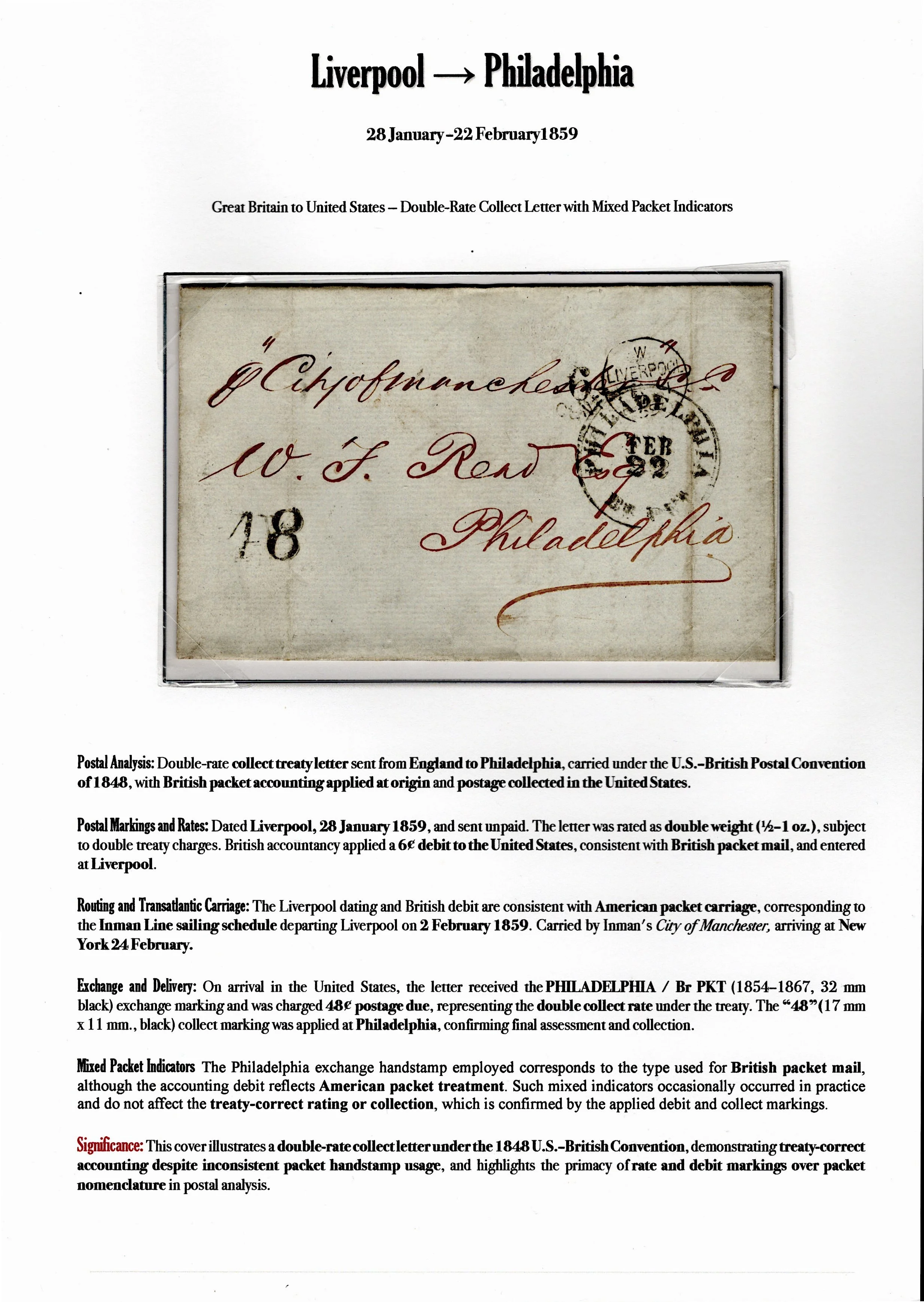
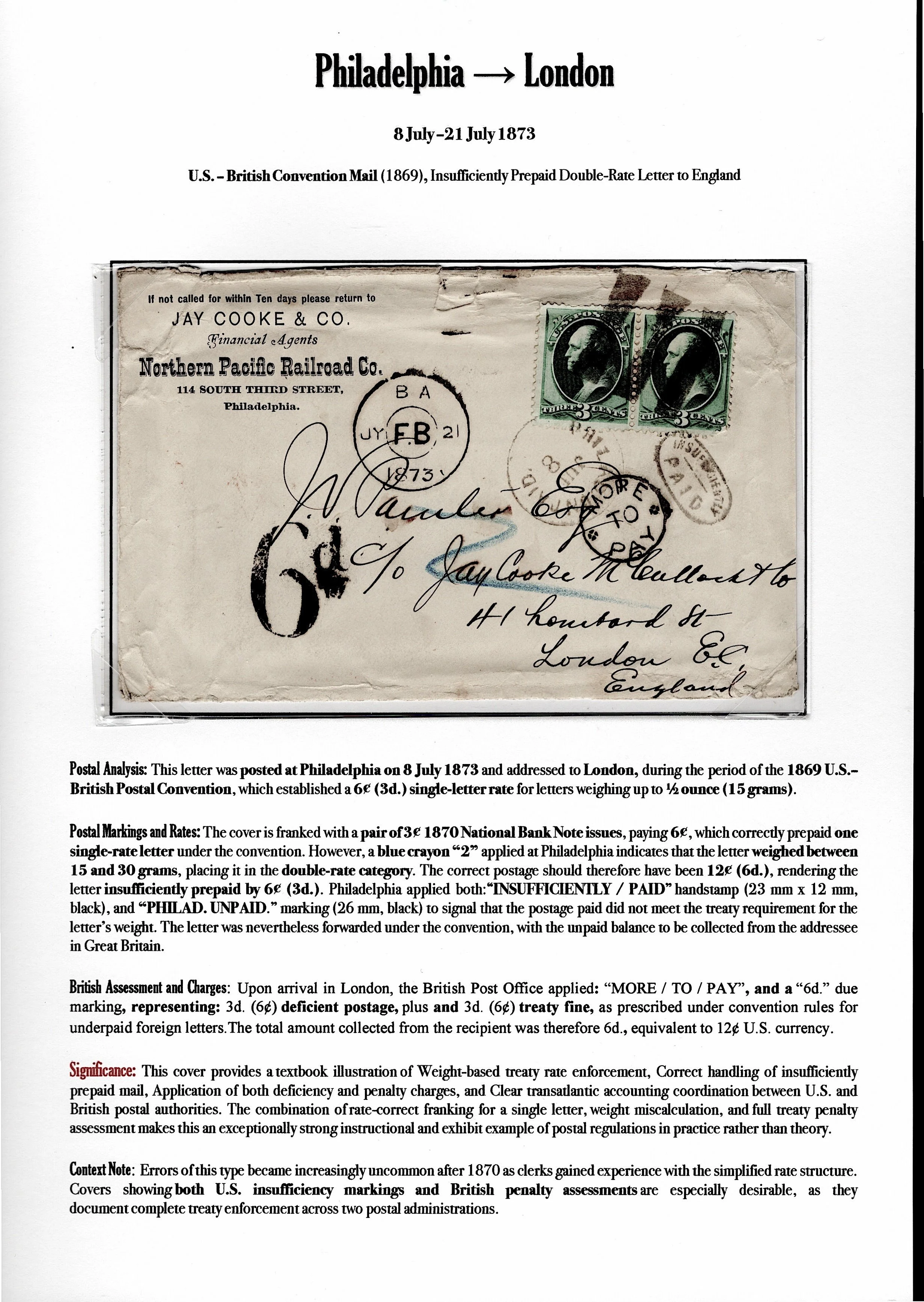
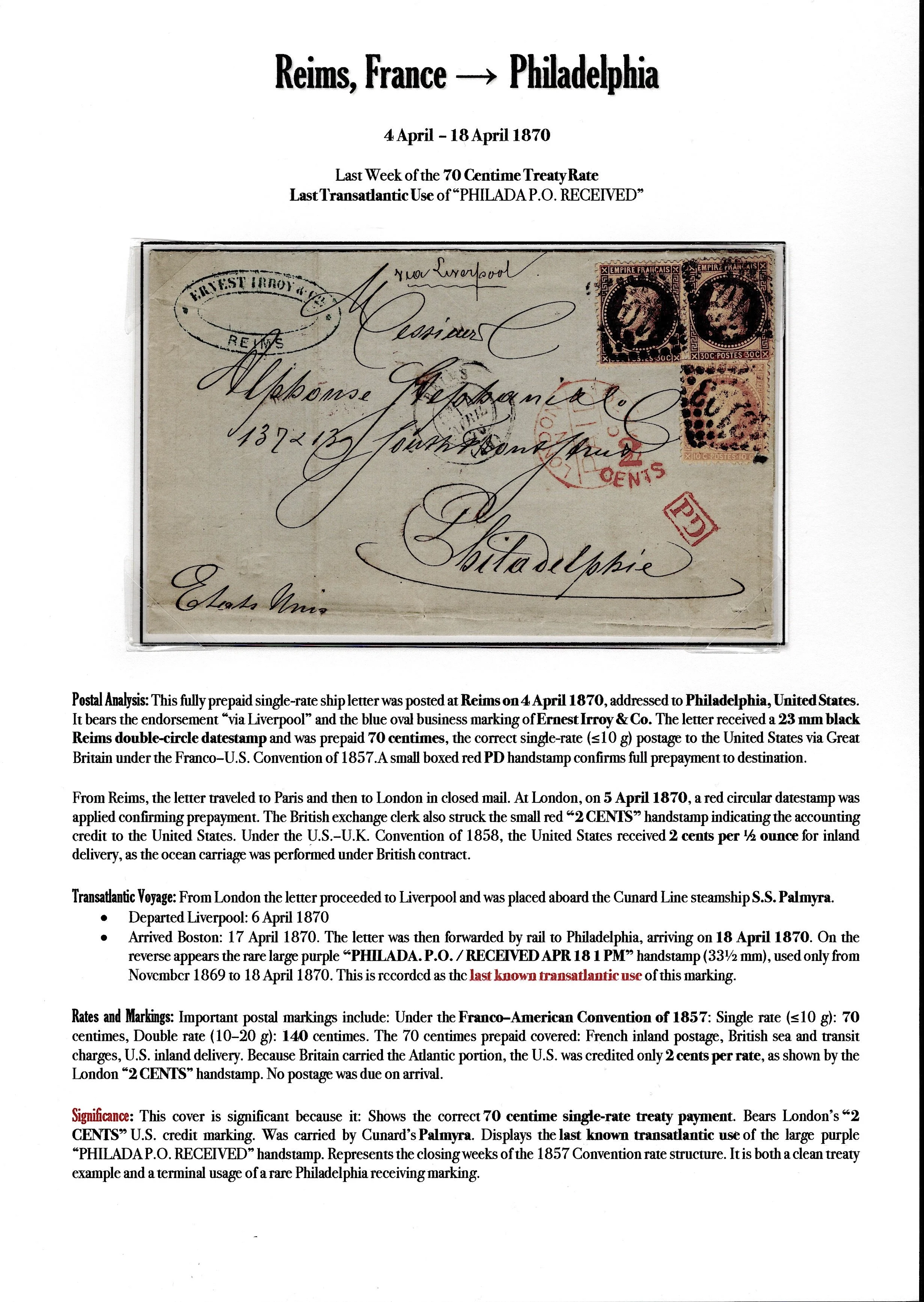
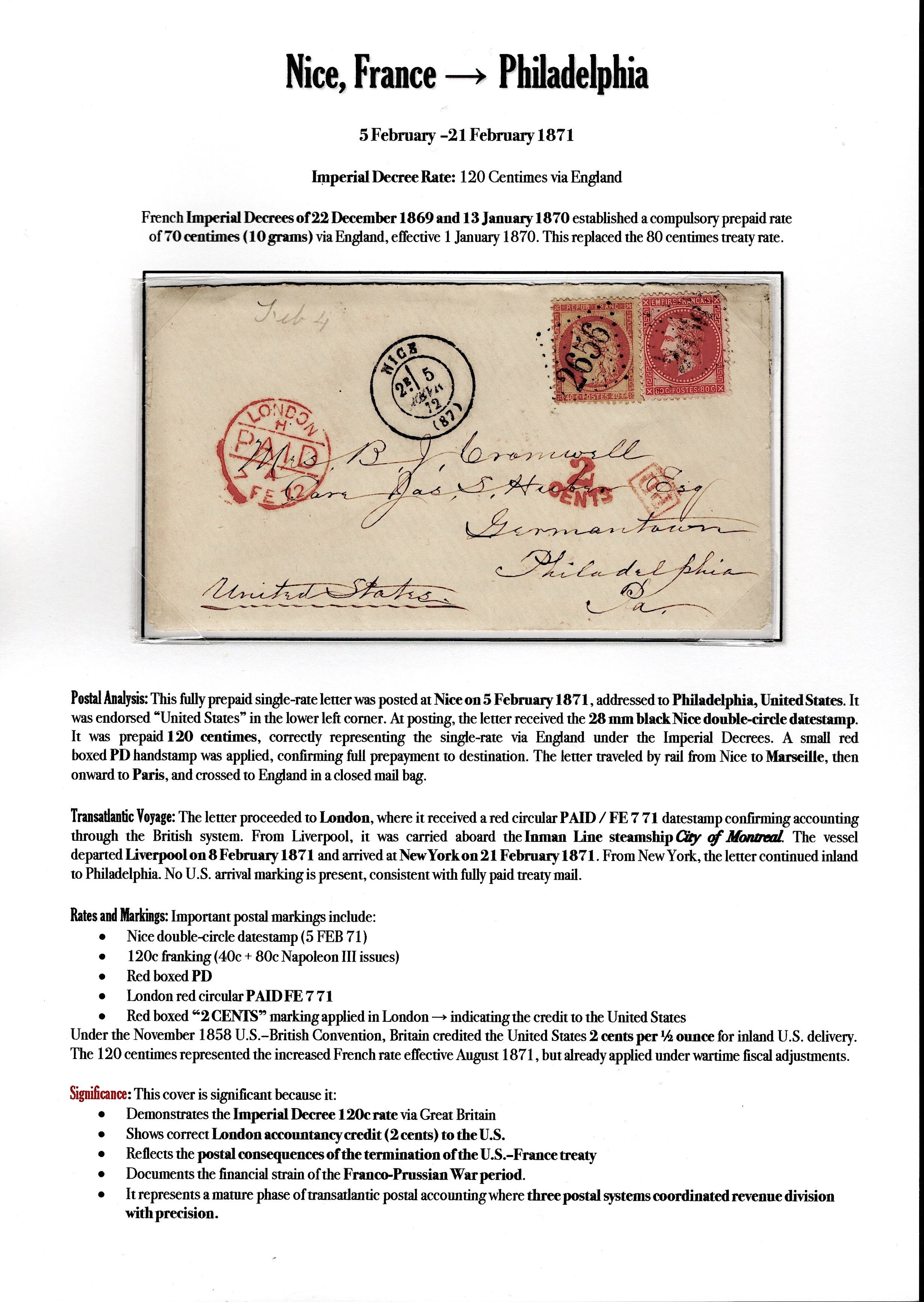
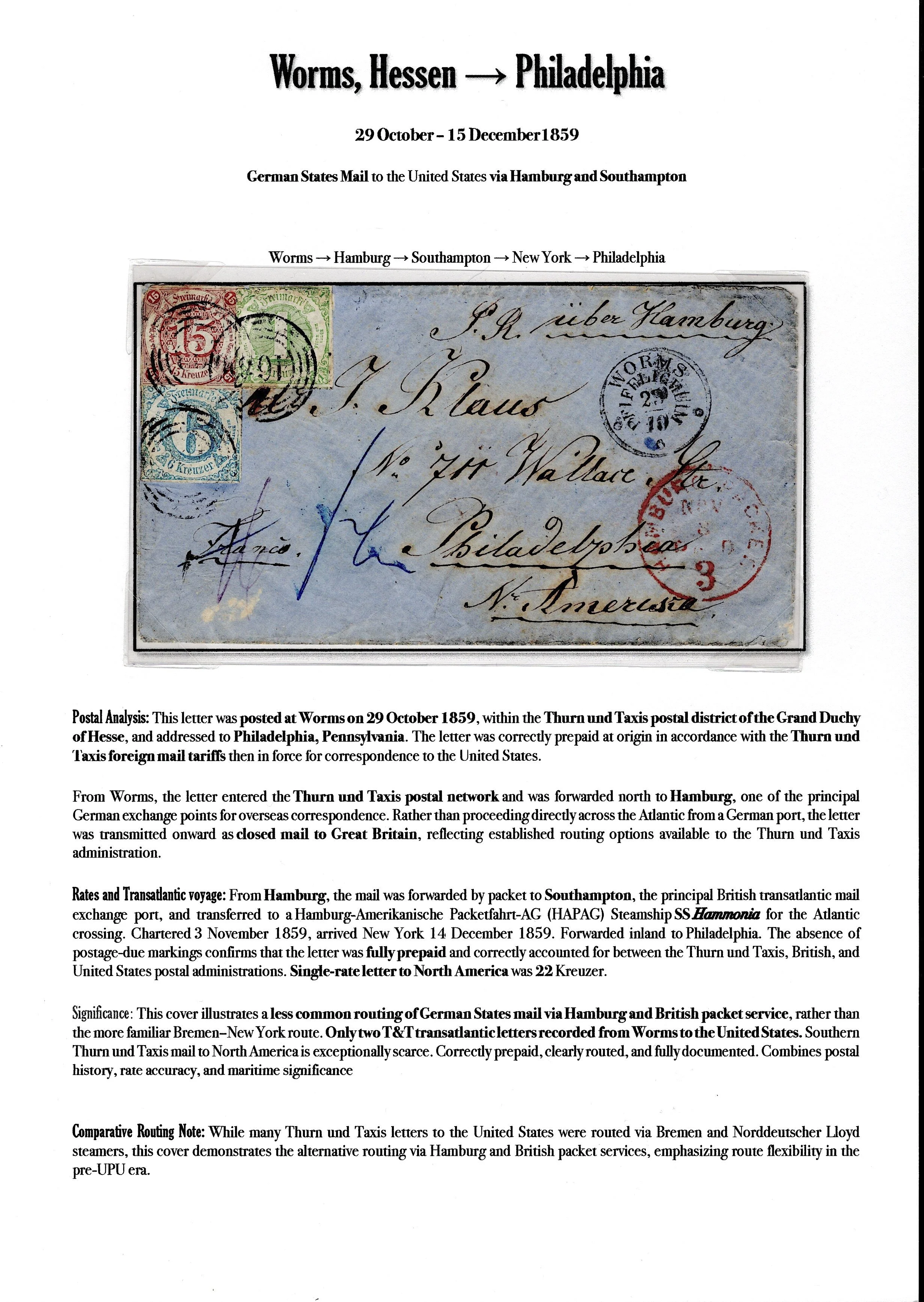
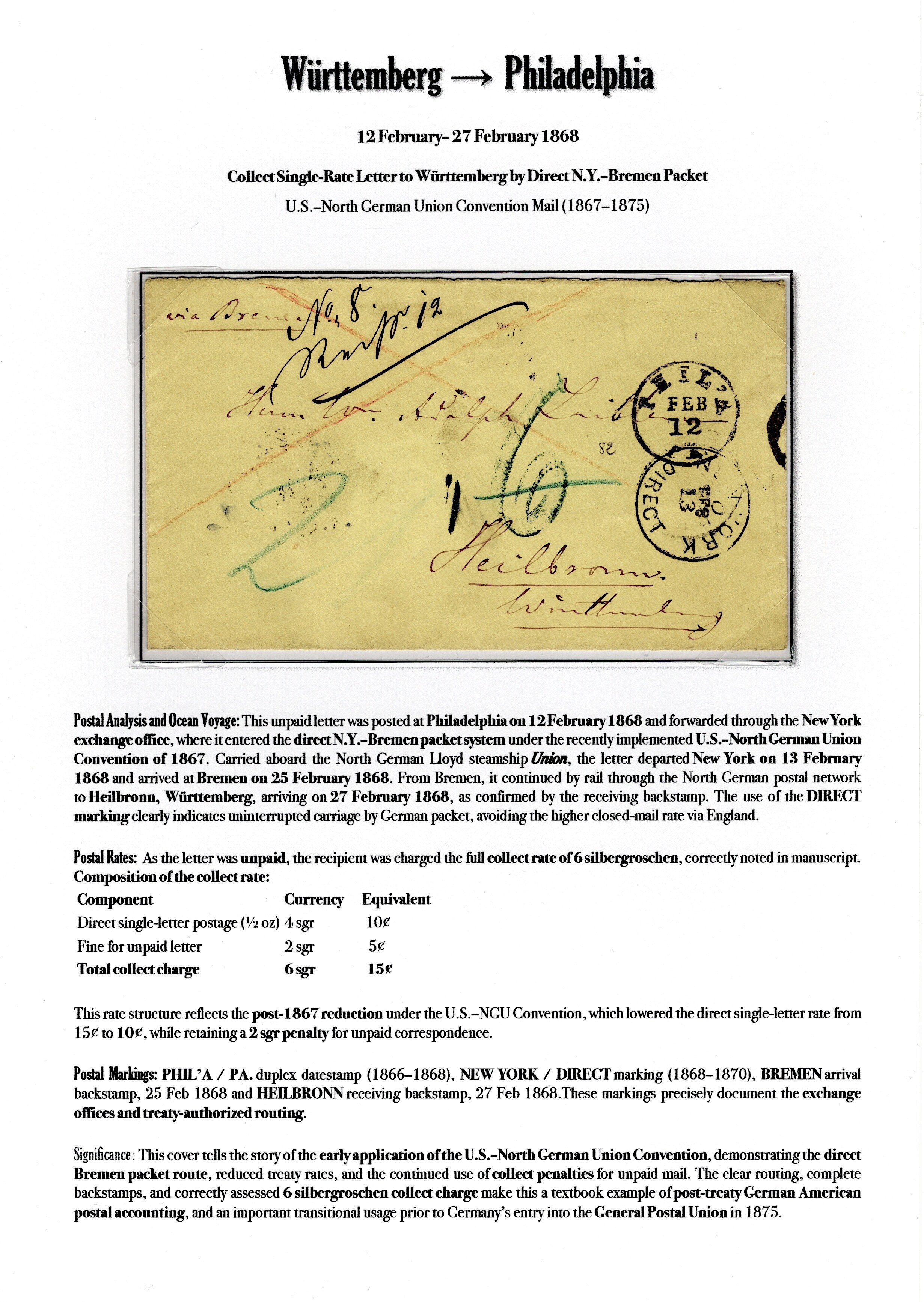
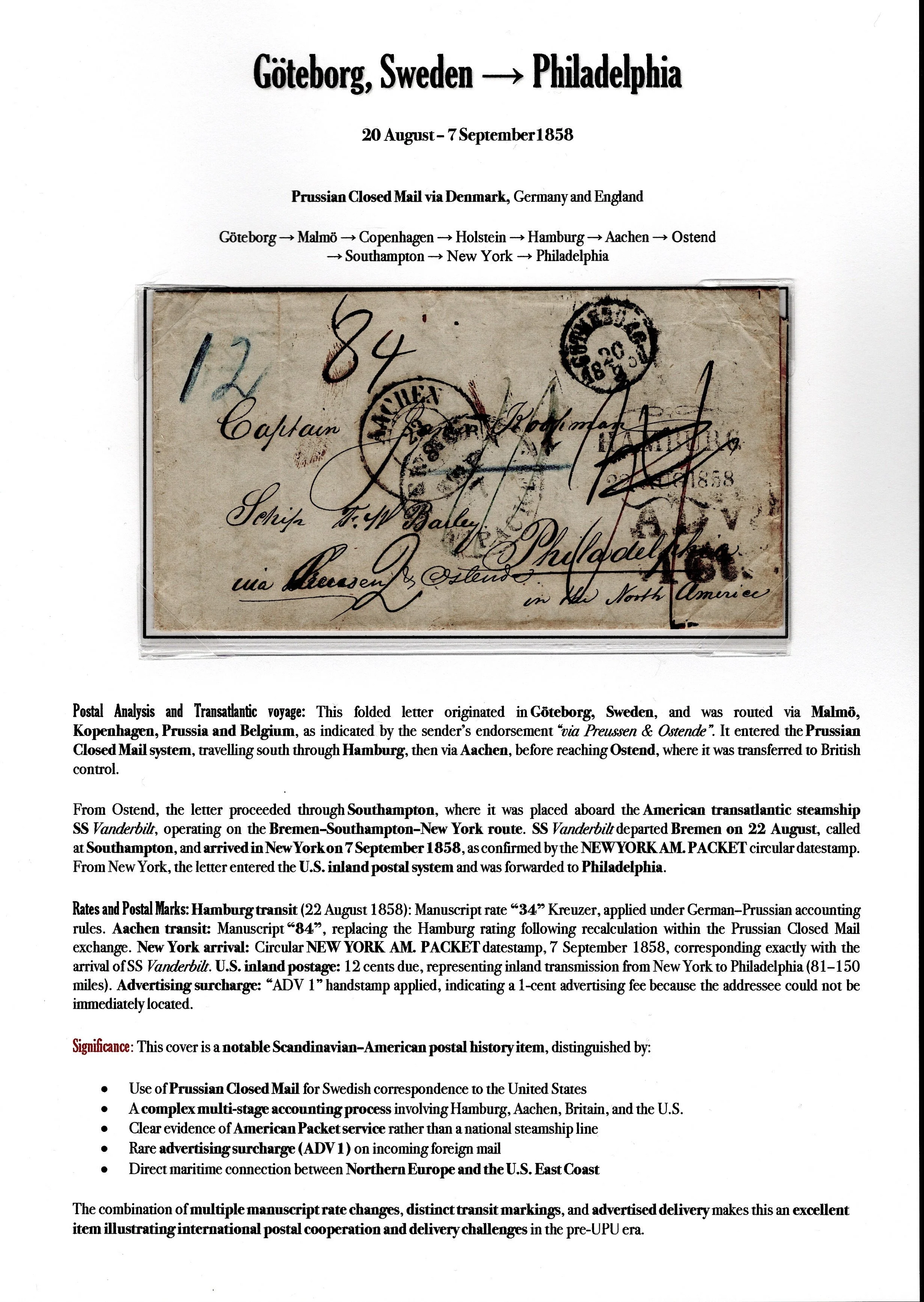
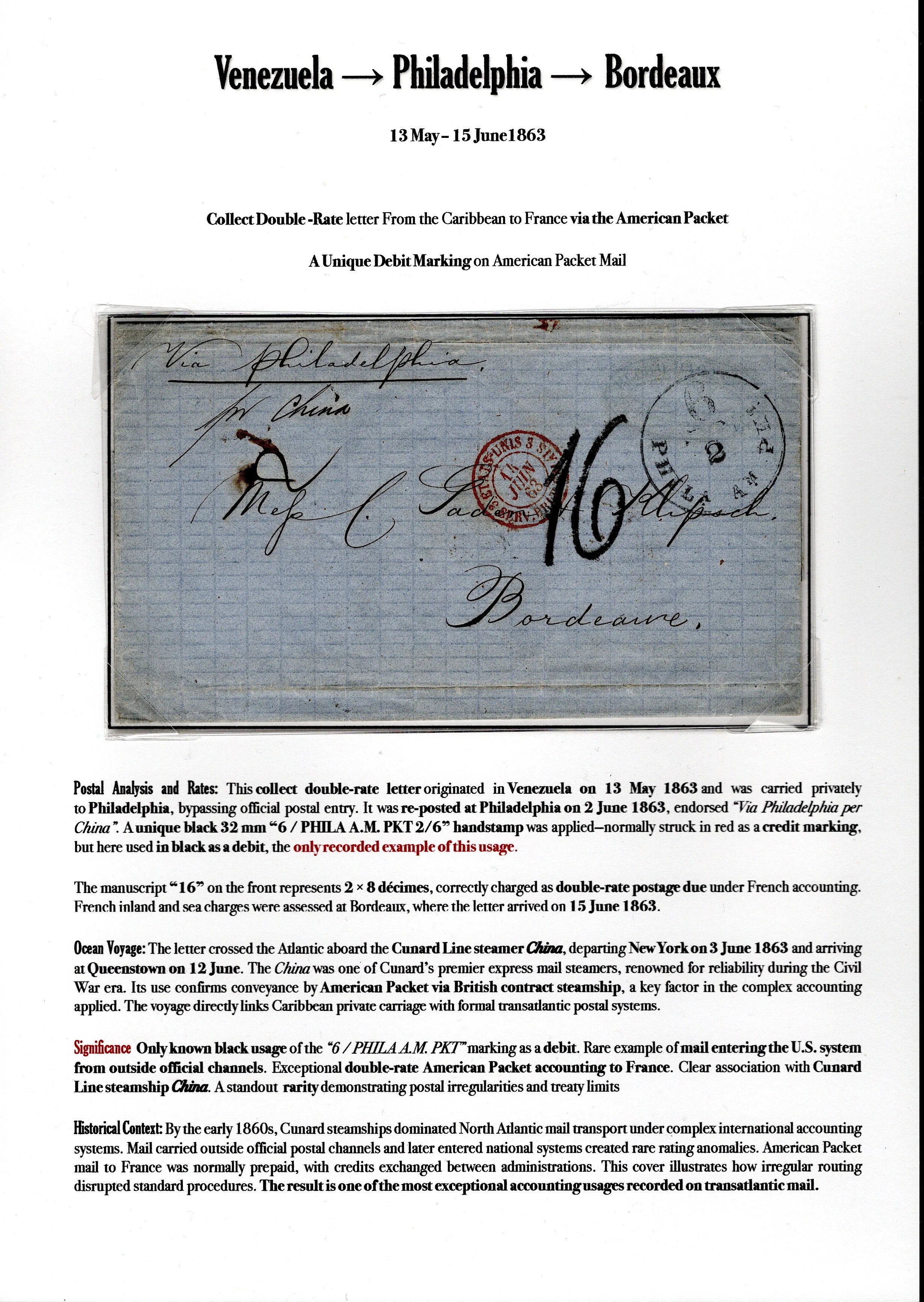
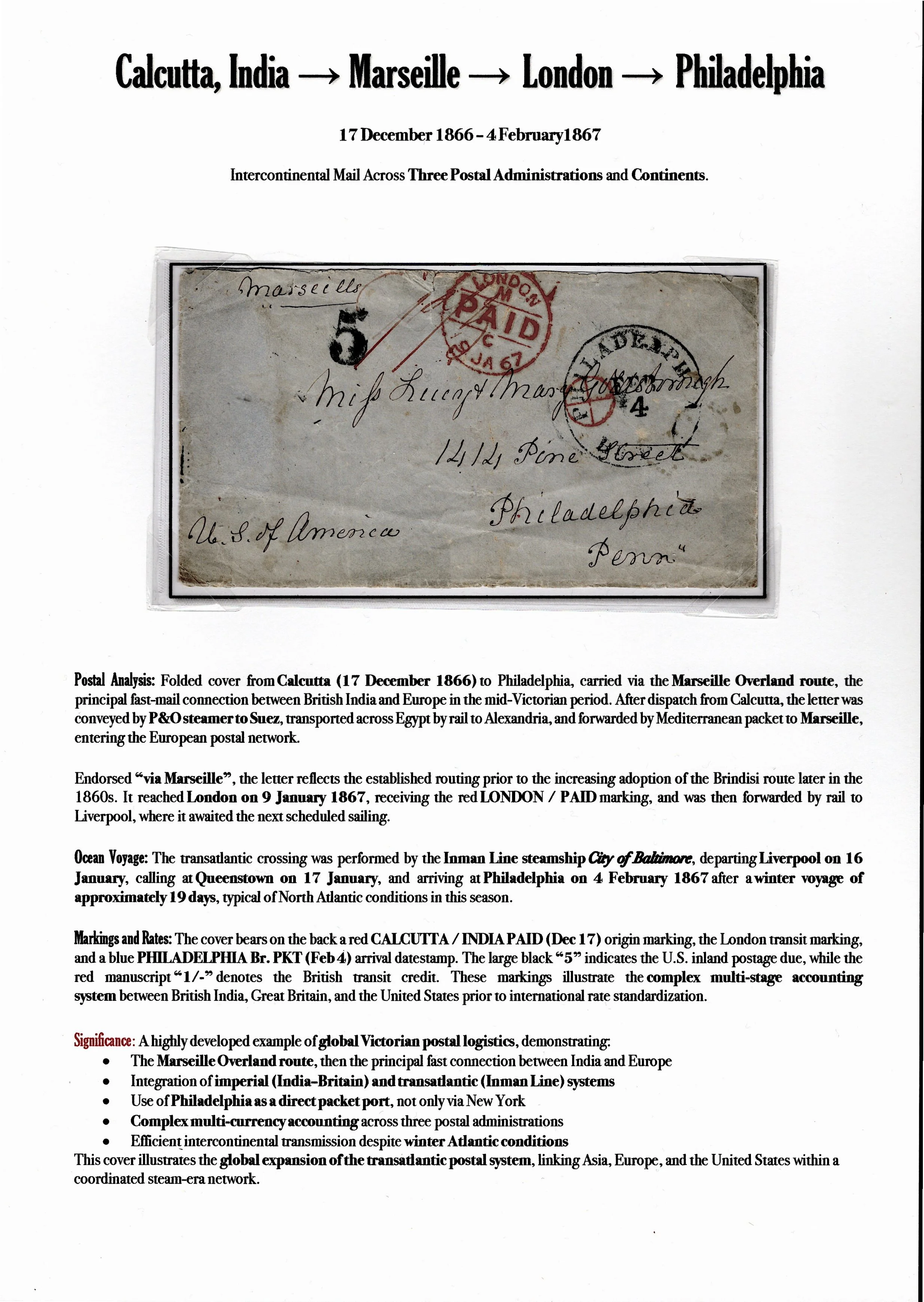
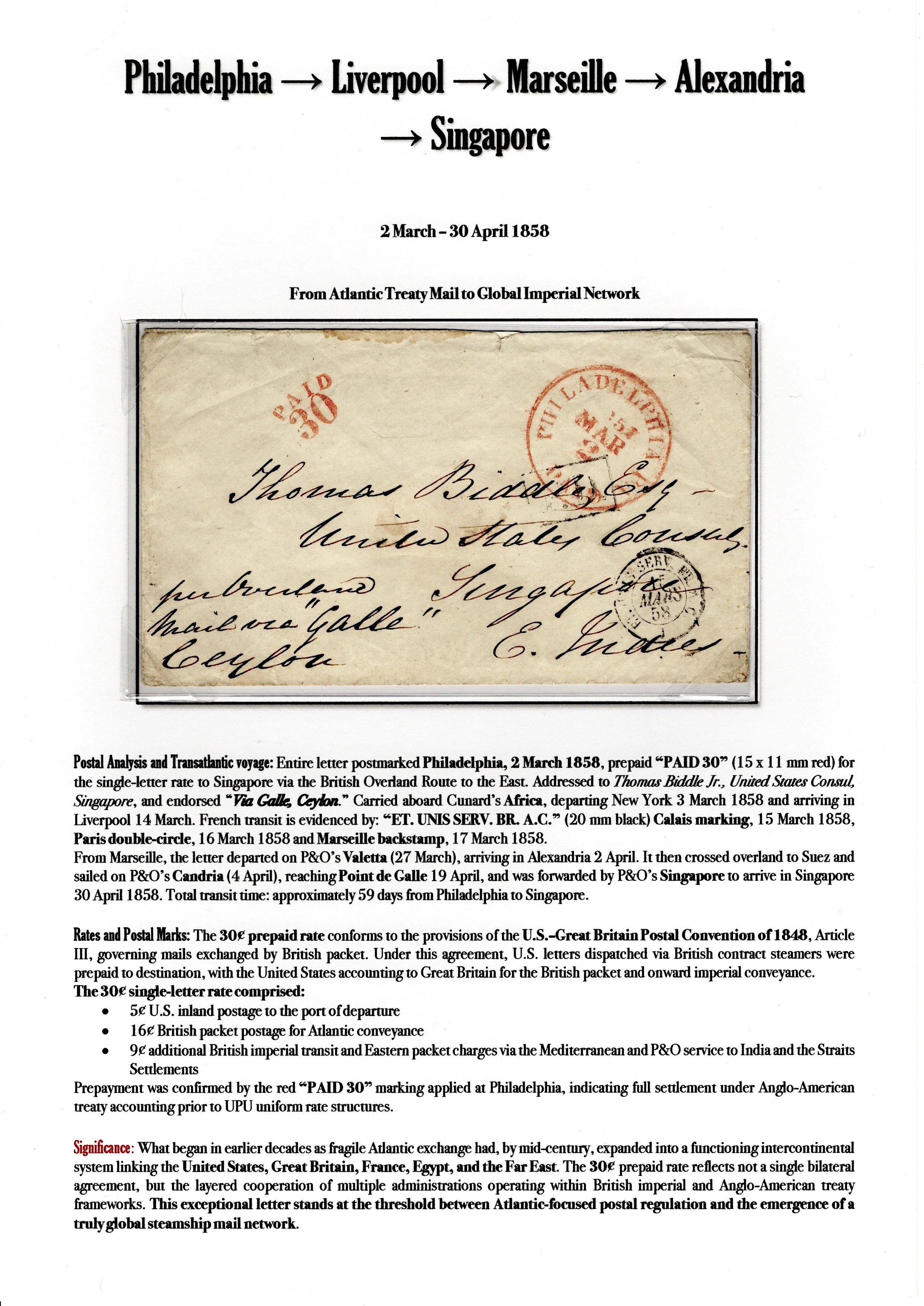
Through selected covers, routes, rates, and markings, the exhibit demonstrates how changing transport systems and postal agreements shaped the movement of mail across the Atlantic.
Scope of the Exhibit: The exhibit is limited to mail exchanged between Philadelphia and Europe, including mail carried directly from Philadelphia as well as mail routed through other American or European exchange ports when those routes formed part of the Philadelphia–Europe postal connection.
The study emphasizes postal history: routes, rates, markings, maritime carriage, postal agreements, and administrative treatment. Items are selected for their ability to demonstrate significant developments in transatlantic postal communication rather than for destination alone.
Focus of the Exhibit: Philadelphia is used as the focal point because it was one of the principal American ports involved in commercial, diplomatic, and private correspondence with Europe during the eighteenth and nineteenth centuries.
By concentrating on one port, the exhibit provides a consistent framework for studying the wider development of transatlantic mail. The Philadelphia focus allows changes in routes, maritime services, rate structures, exchange offices, and postal agreements to be followed clearly across more than a century.
Structure of the Exhibit: The exhibit is arranged chronologically in five sections, each representing a key stage in the development of the transatlantic postal system. Each section begins A3 page with a short contextual introduction explaining the postal agreements, maritime transport developments, rate structures, and exchange procedures relevant to that period and then continue with A4 pages.
Together, the five sections show the transition from informal ship carriage to a coordinated international postal network:
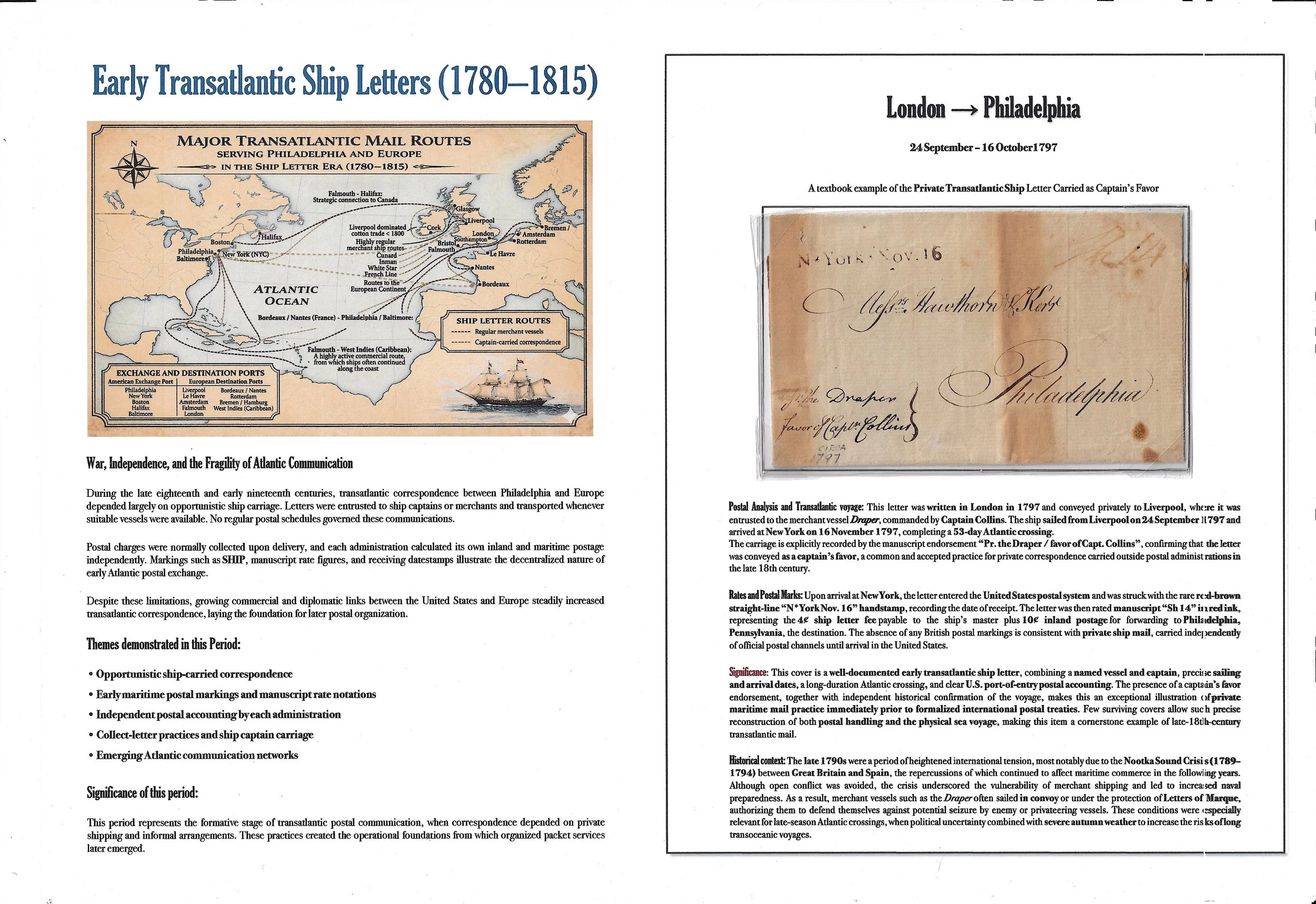
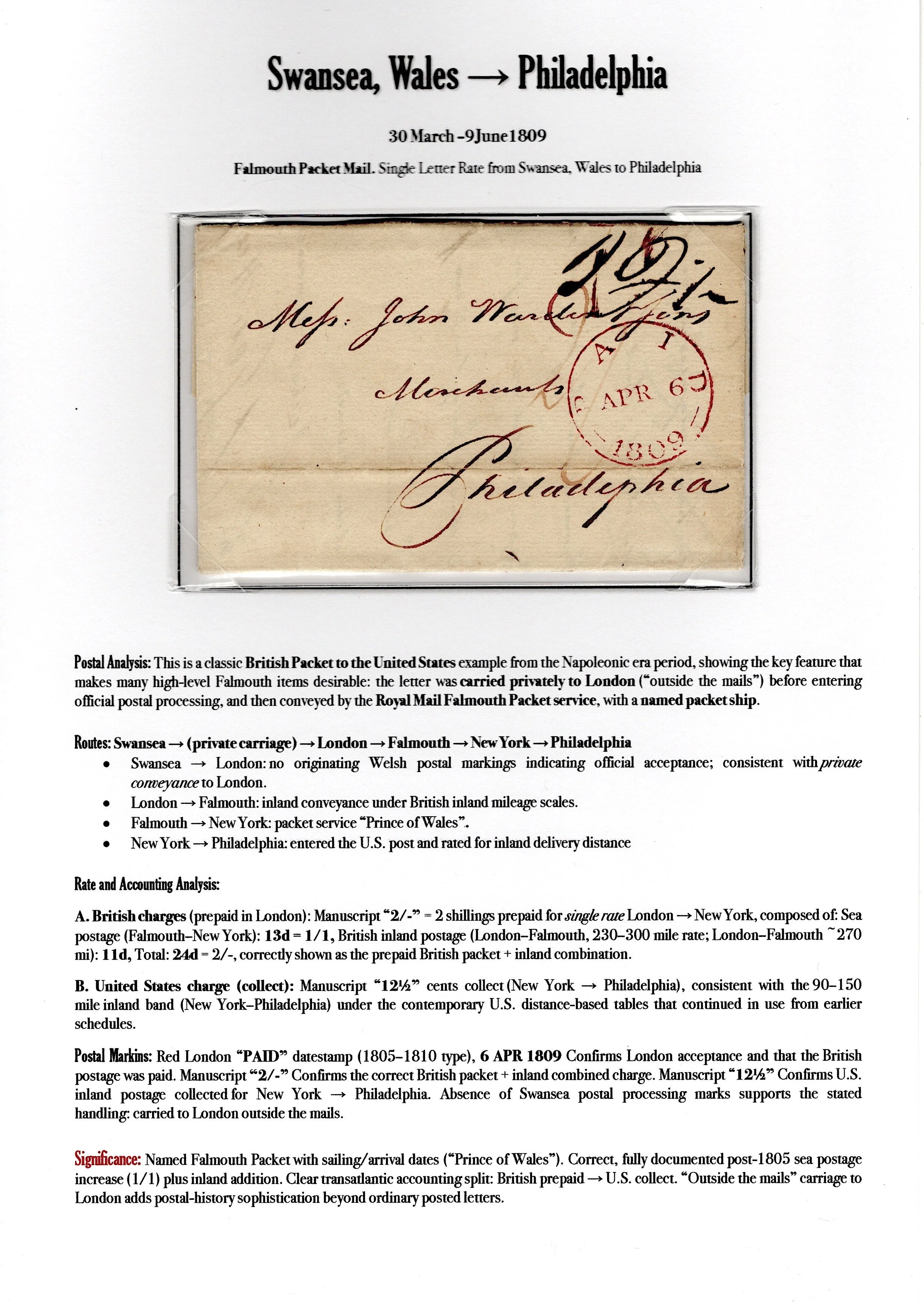
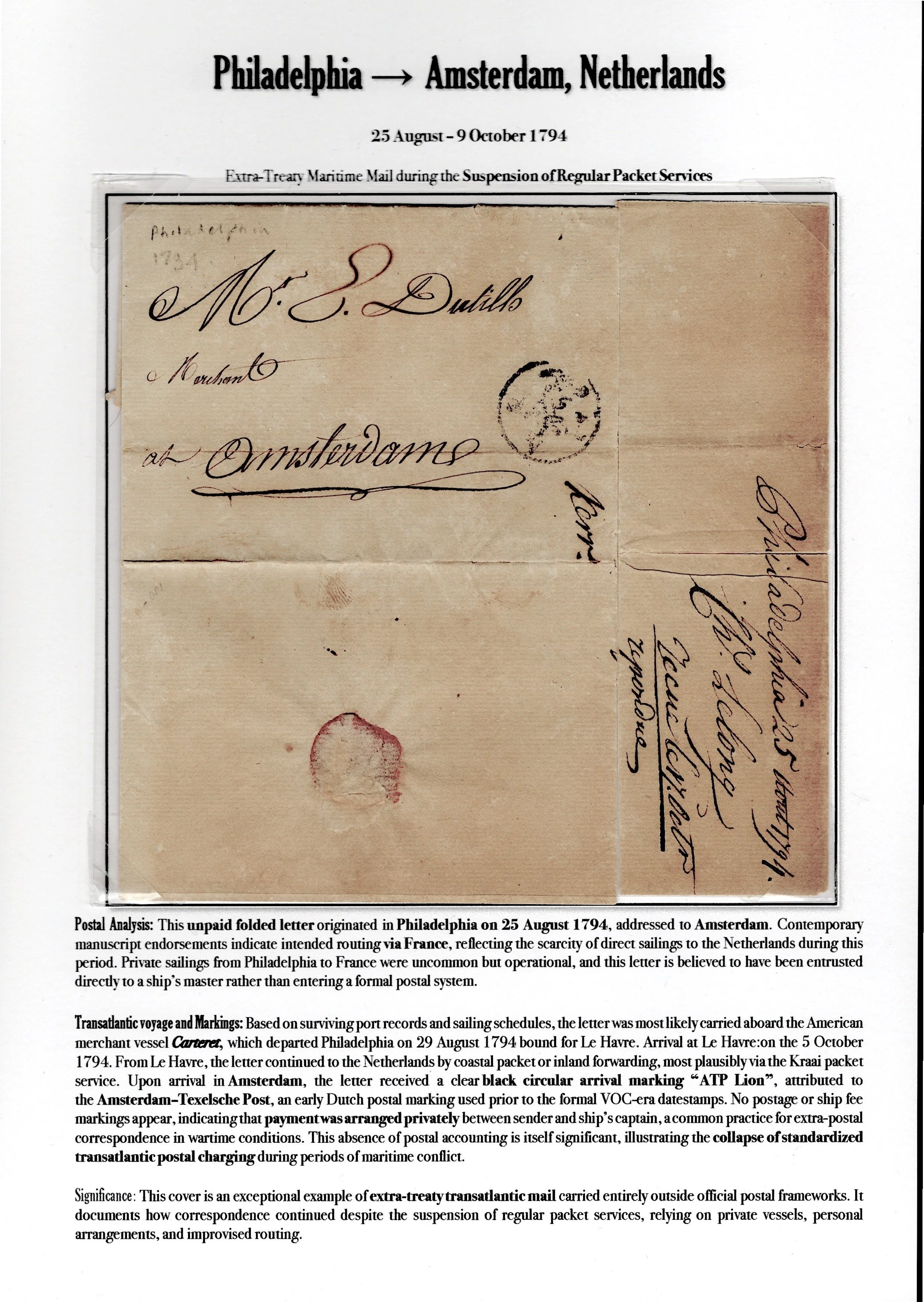
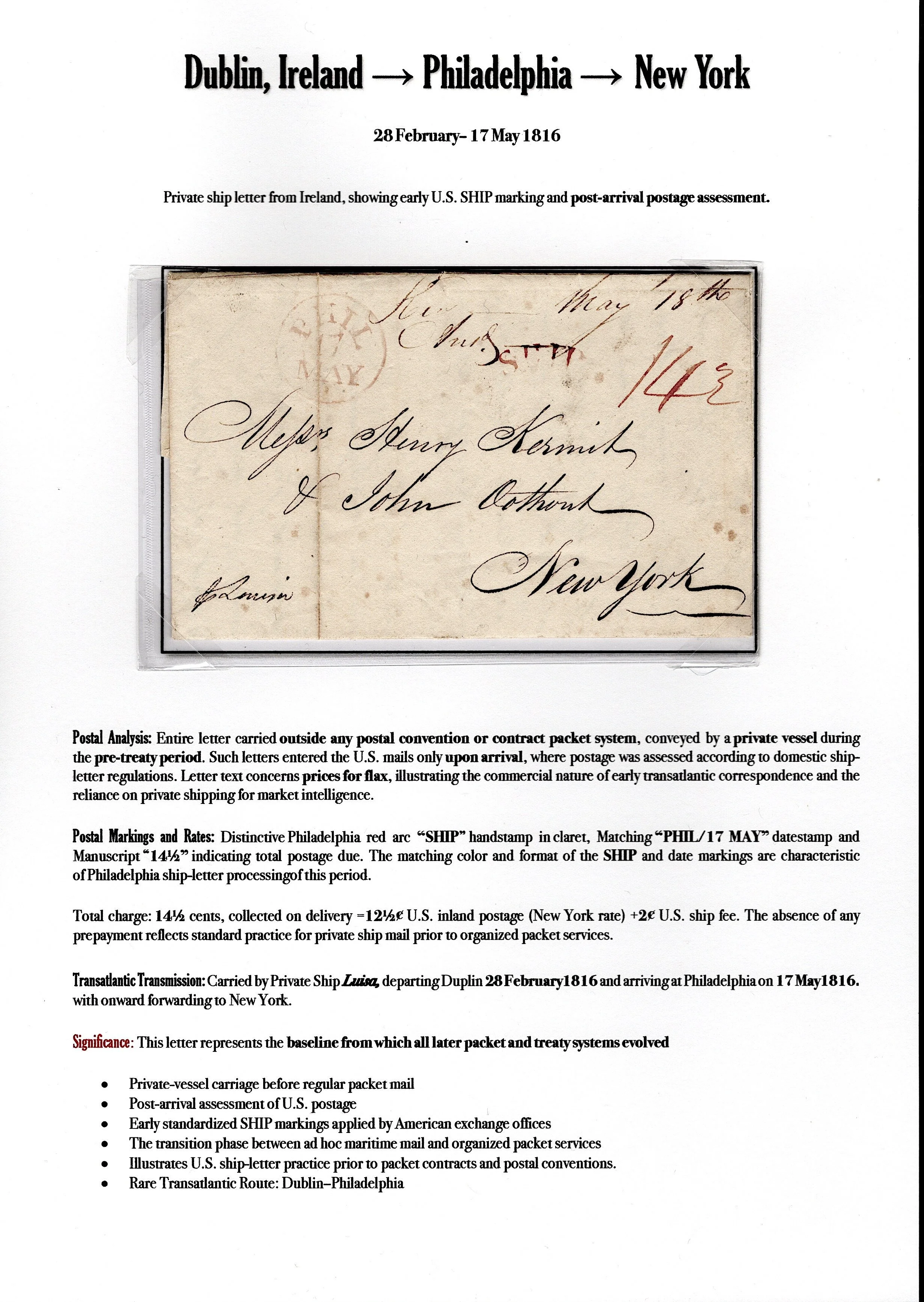
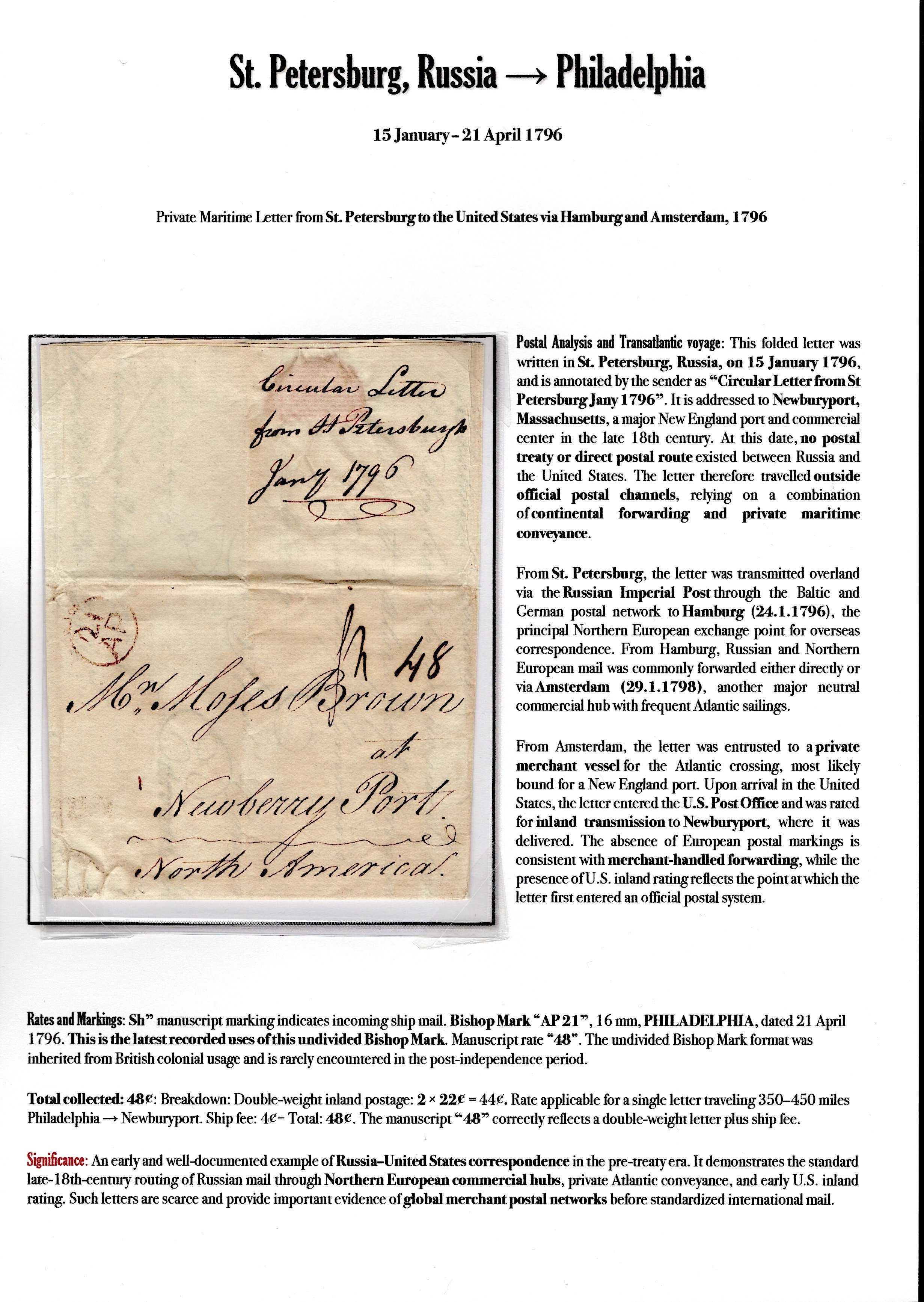
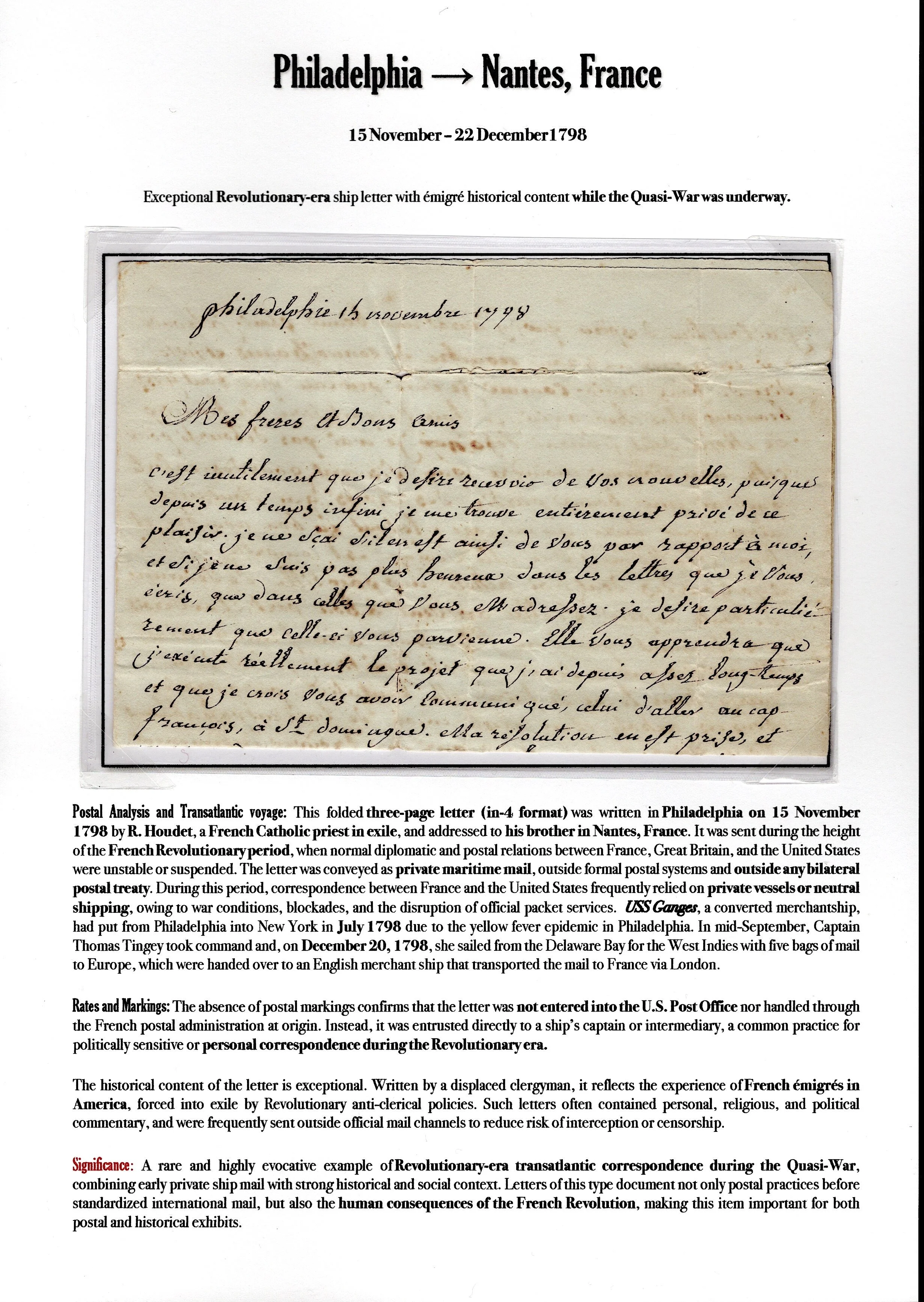
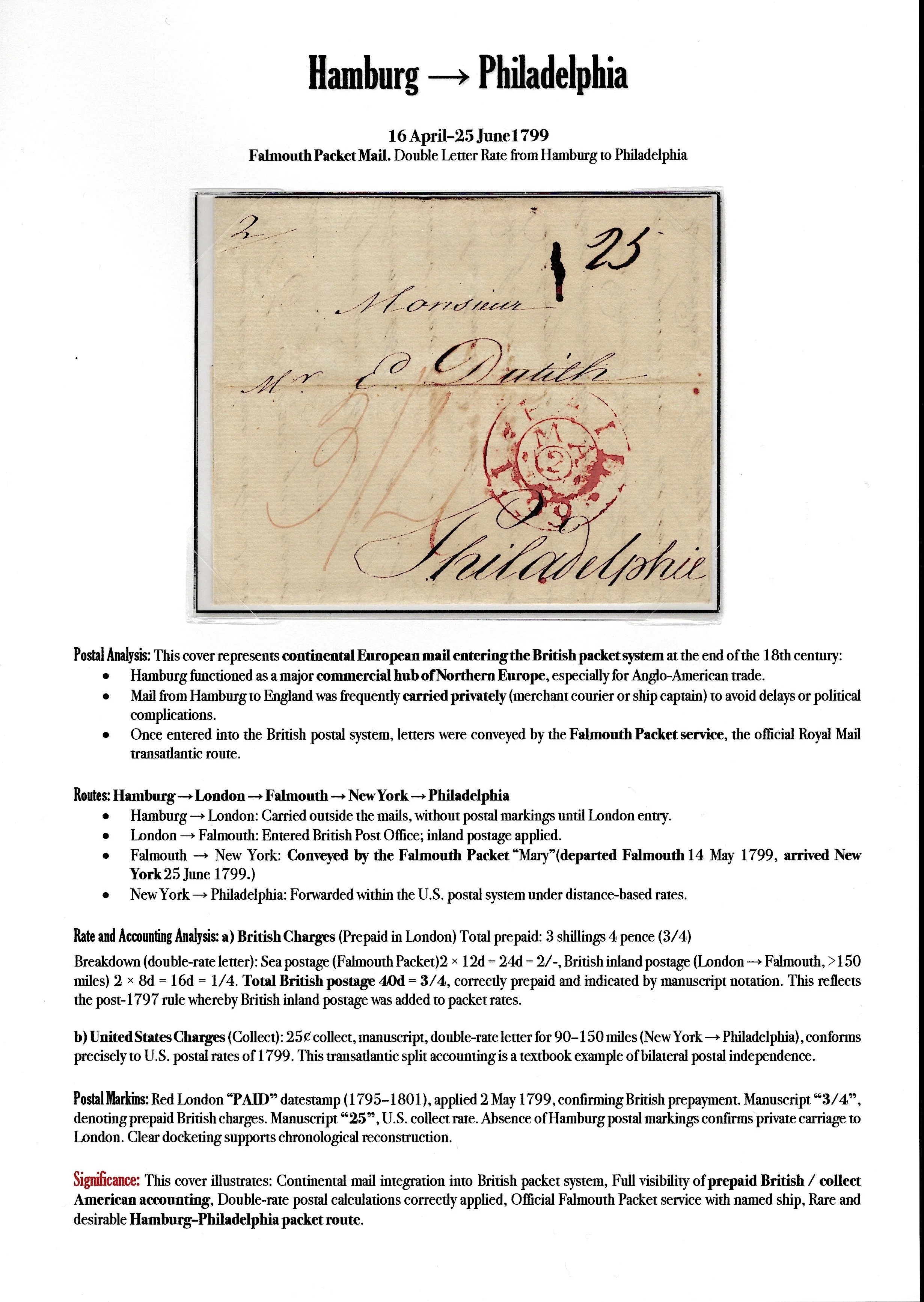
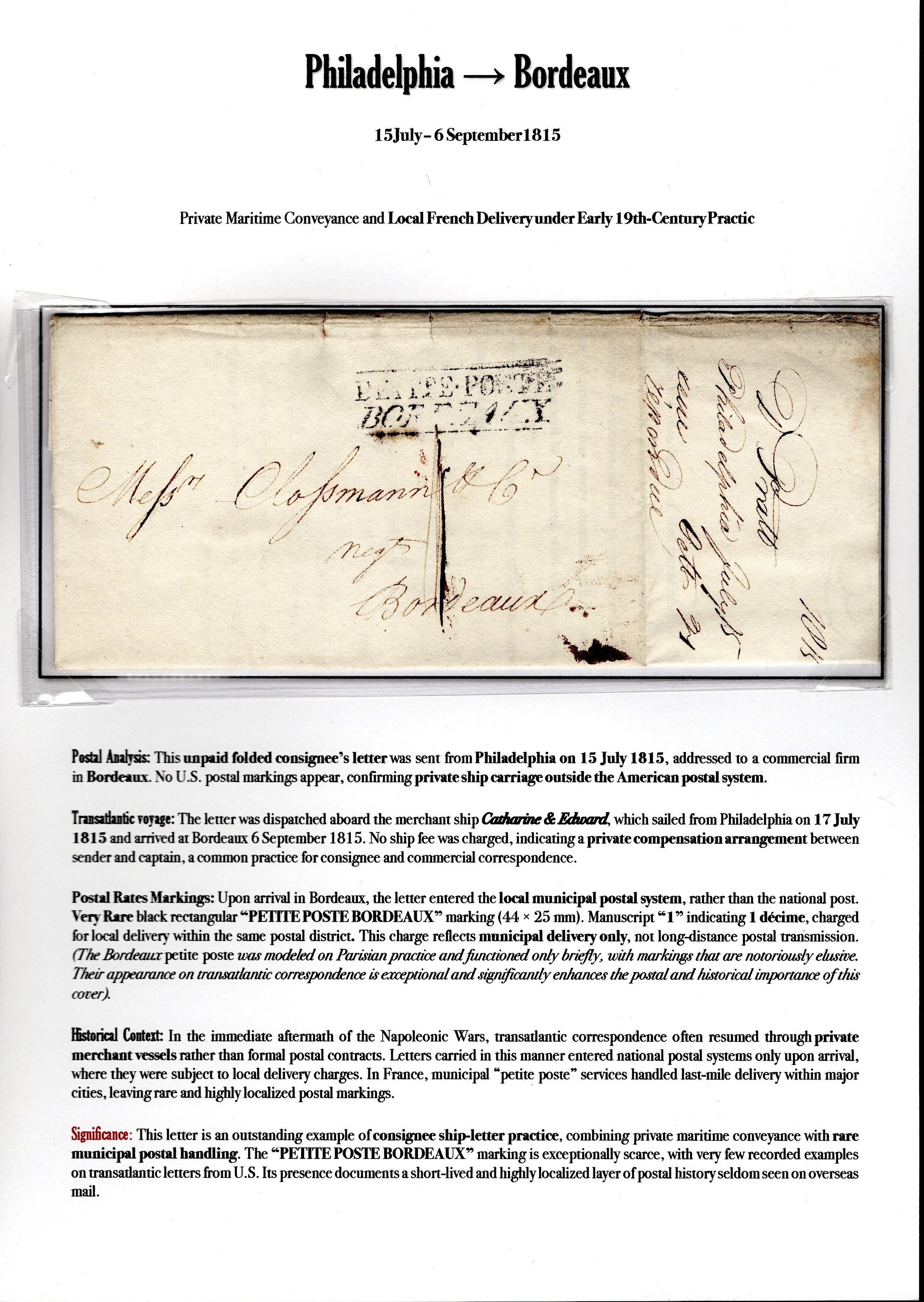
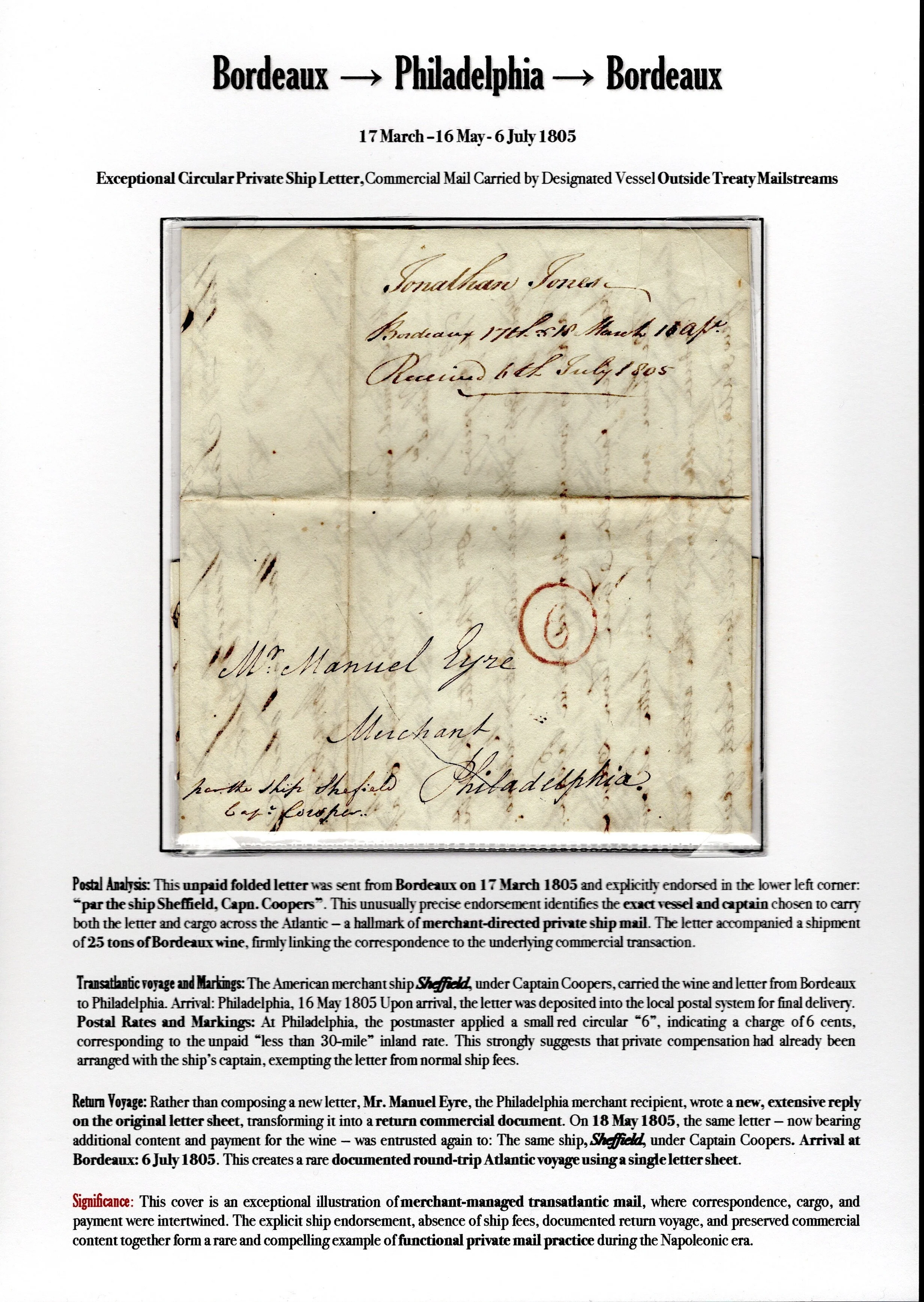
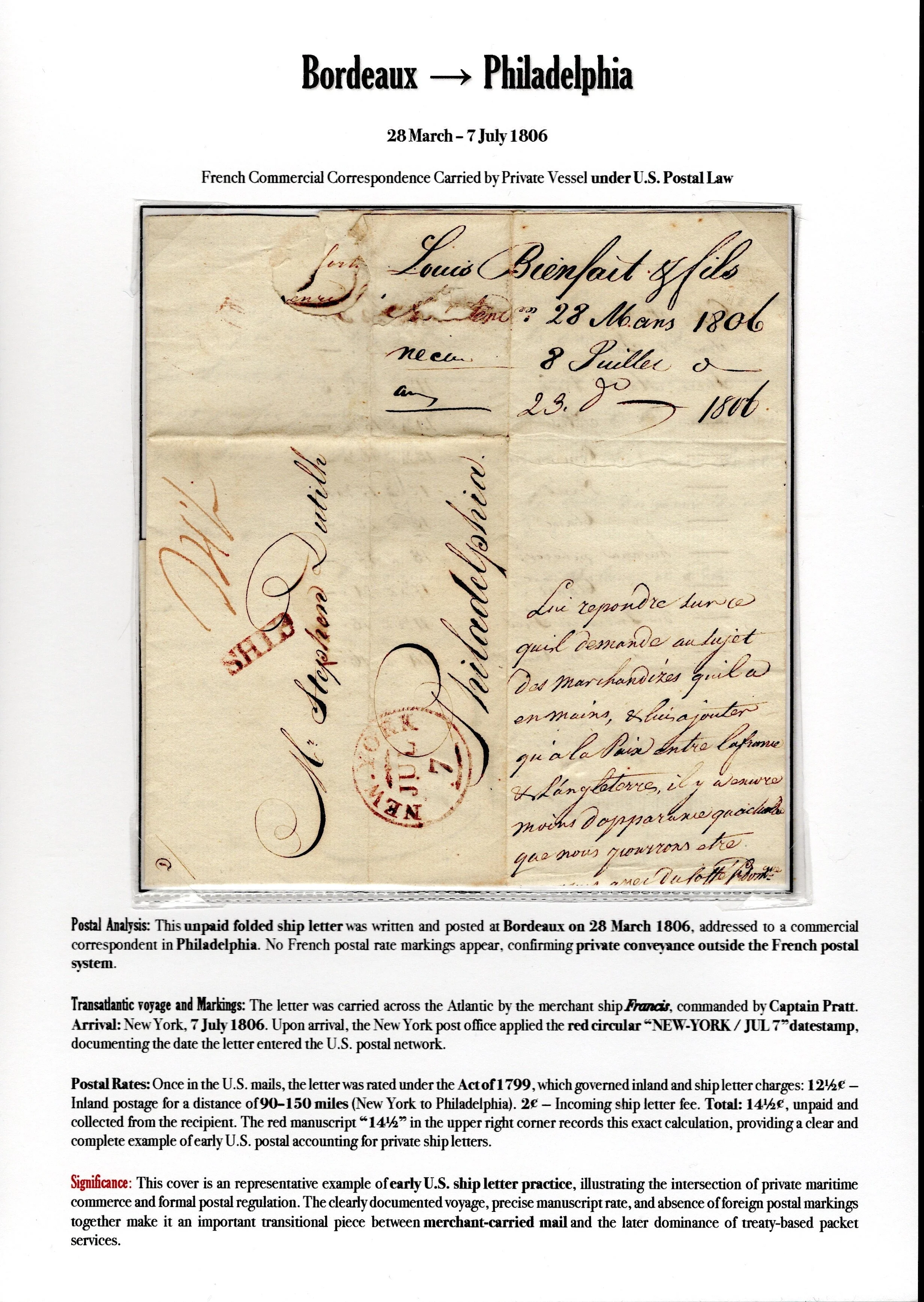
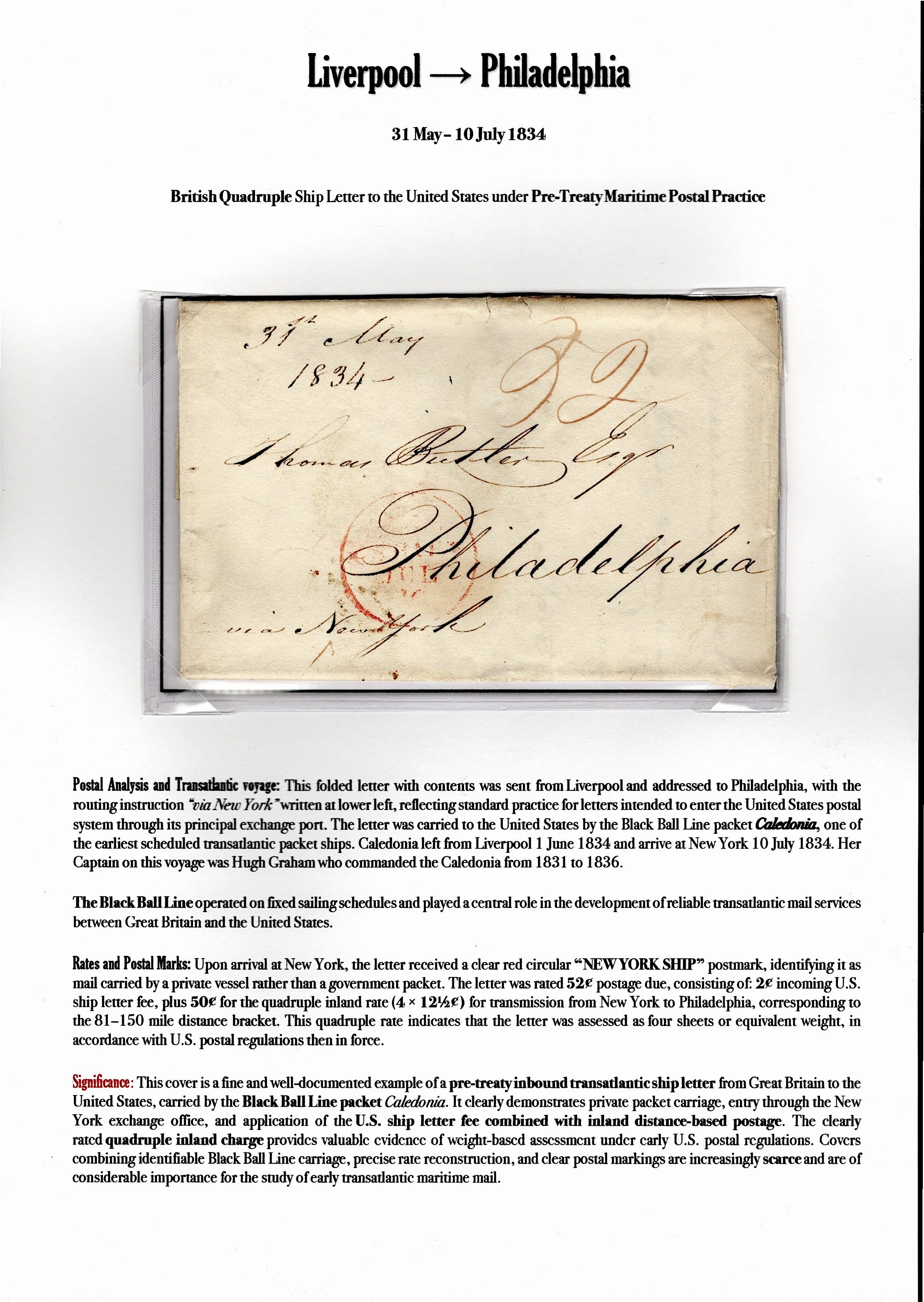
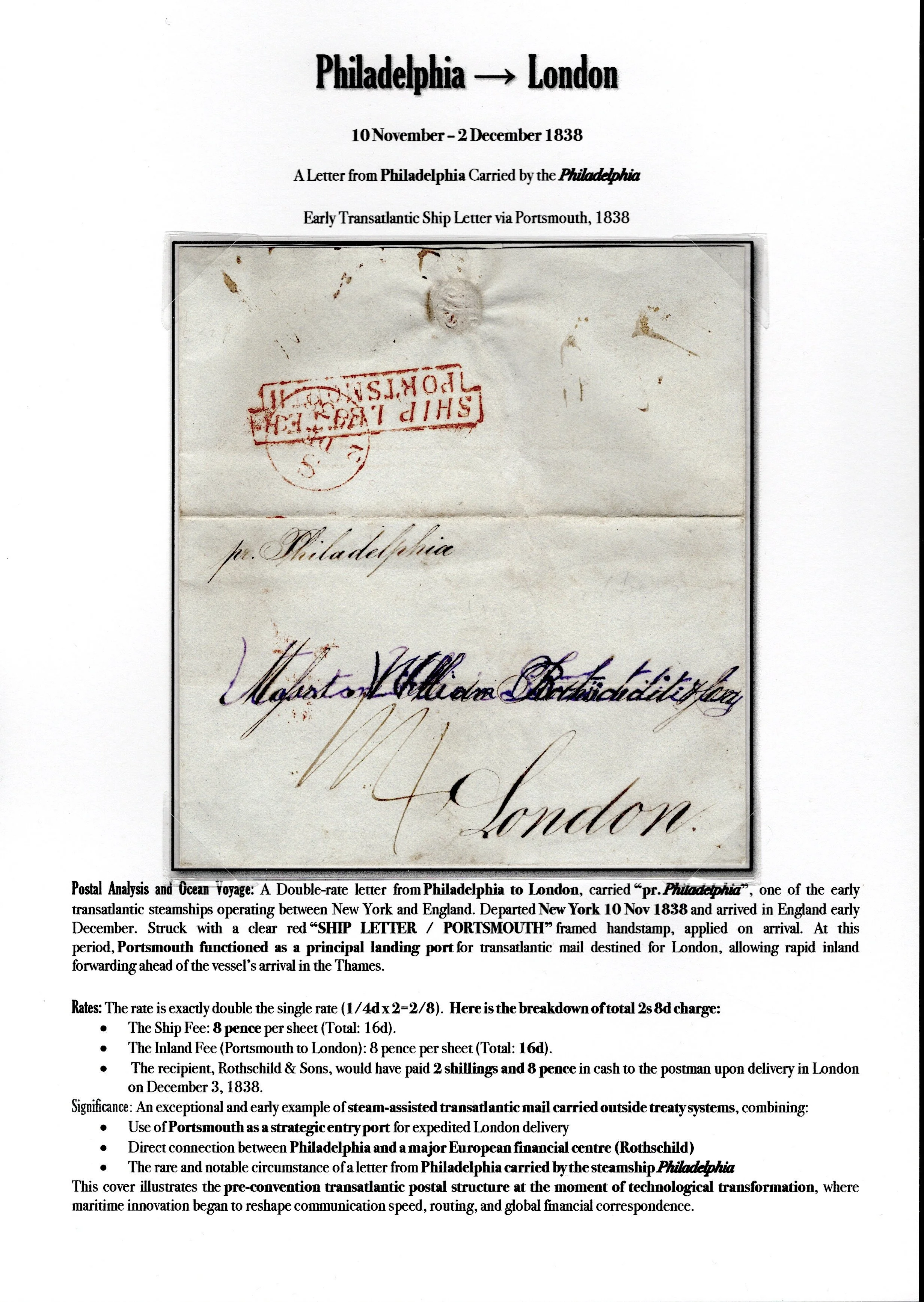
Early Transatlantic Ship Letters, 1780–1815
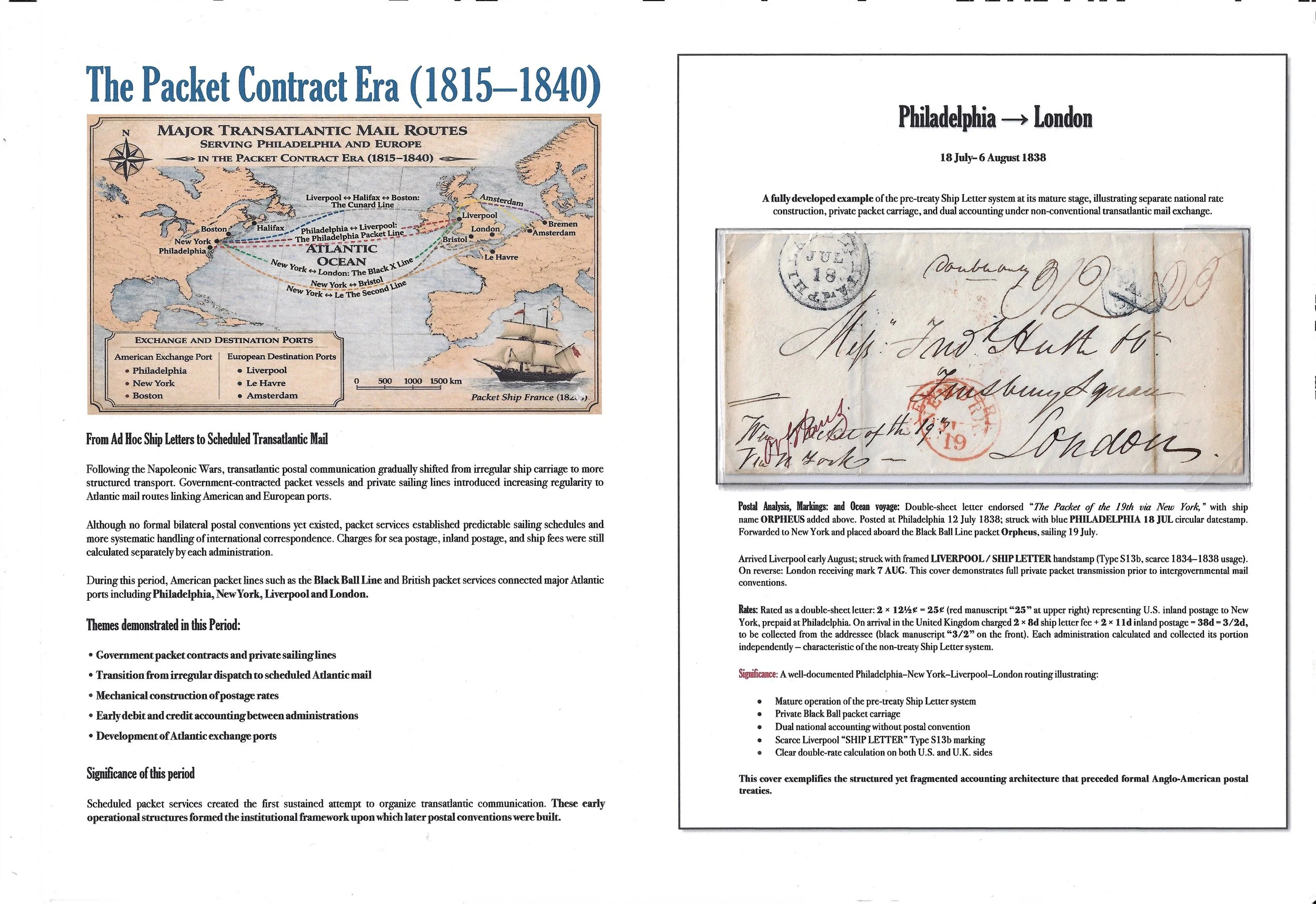
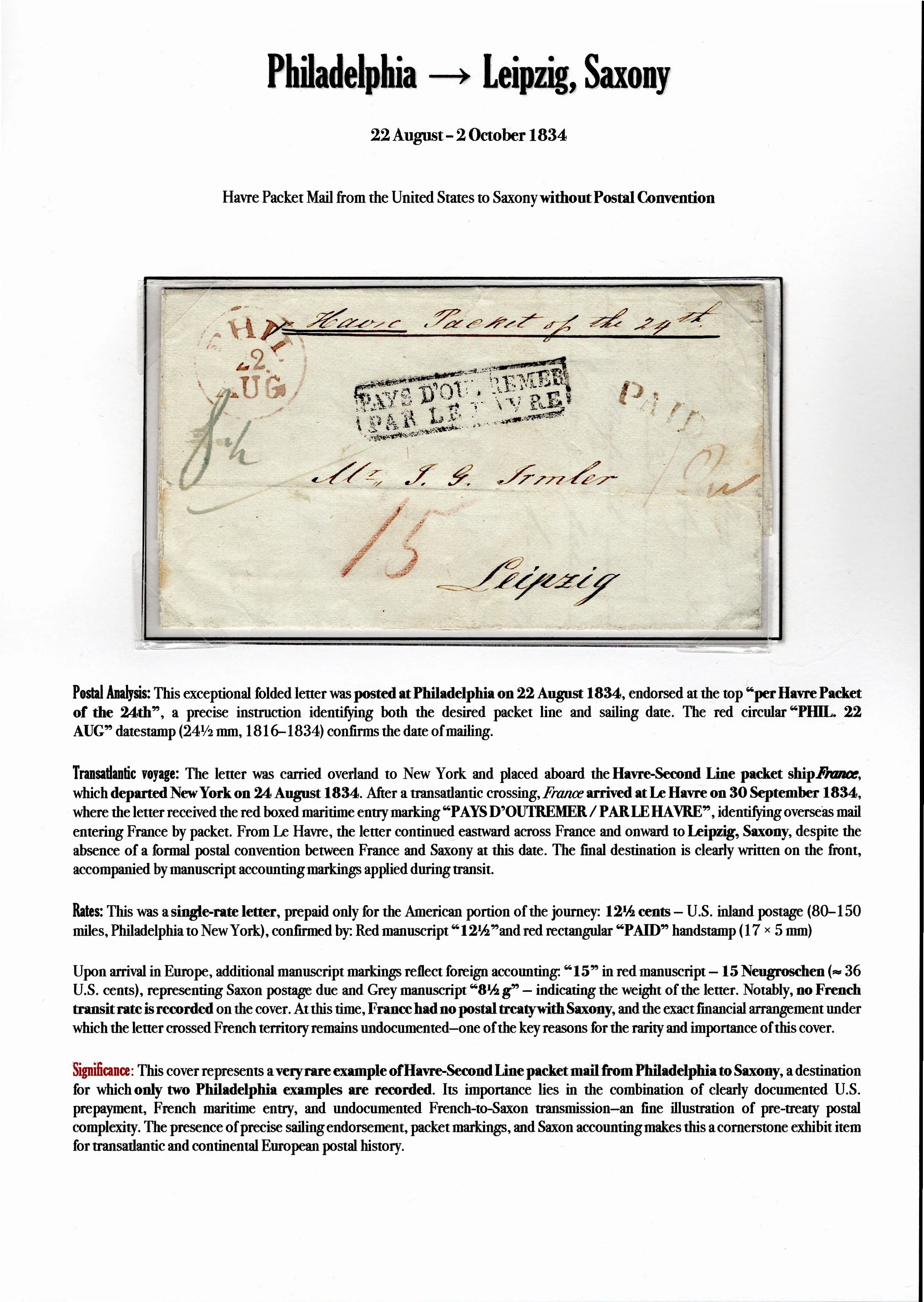
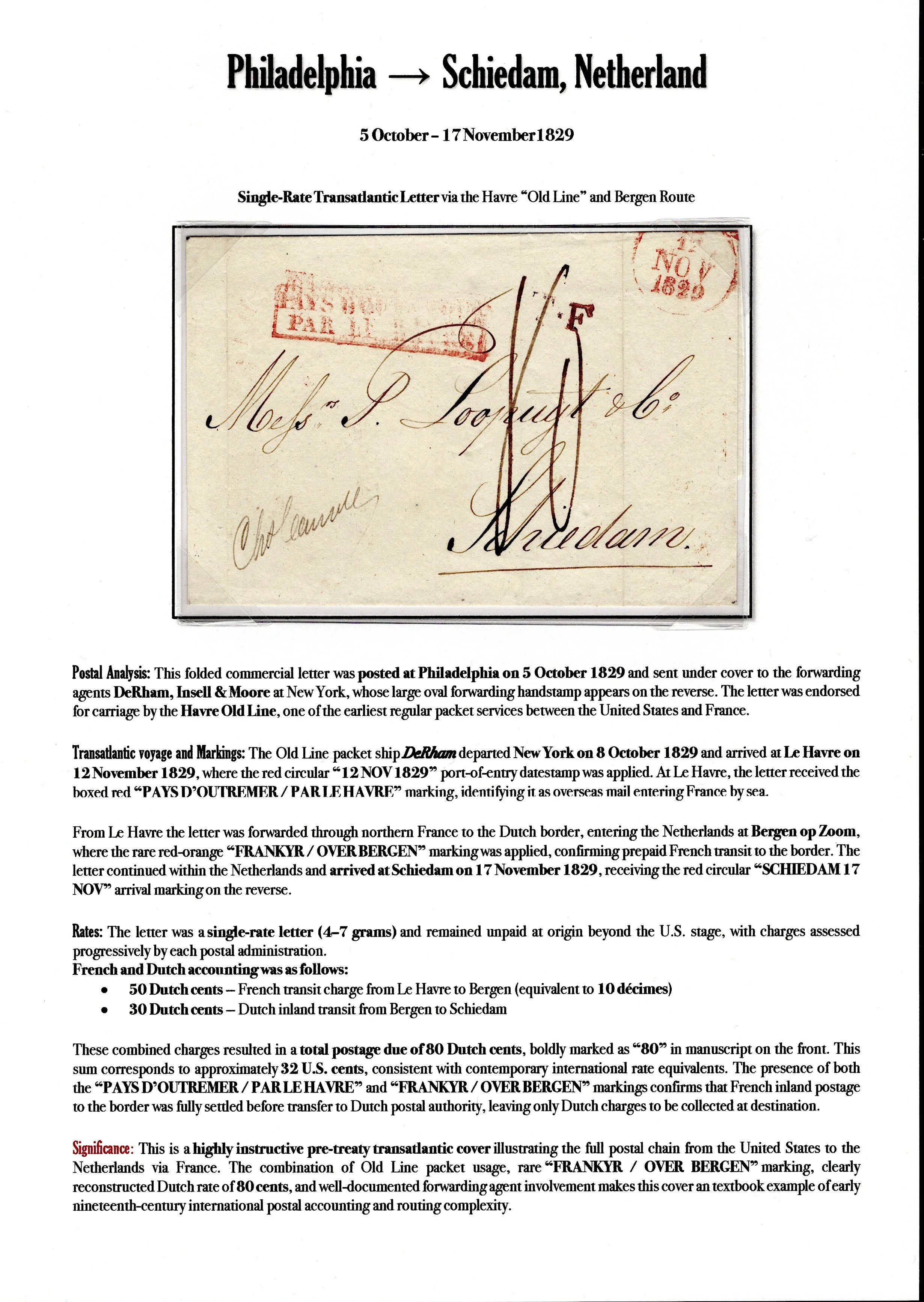
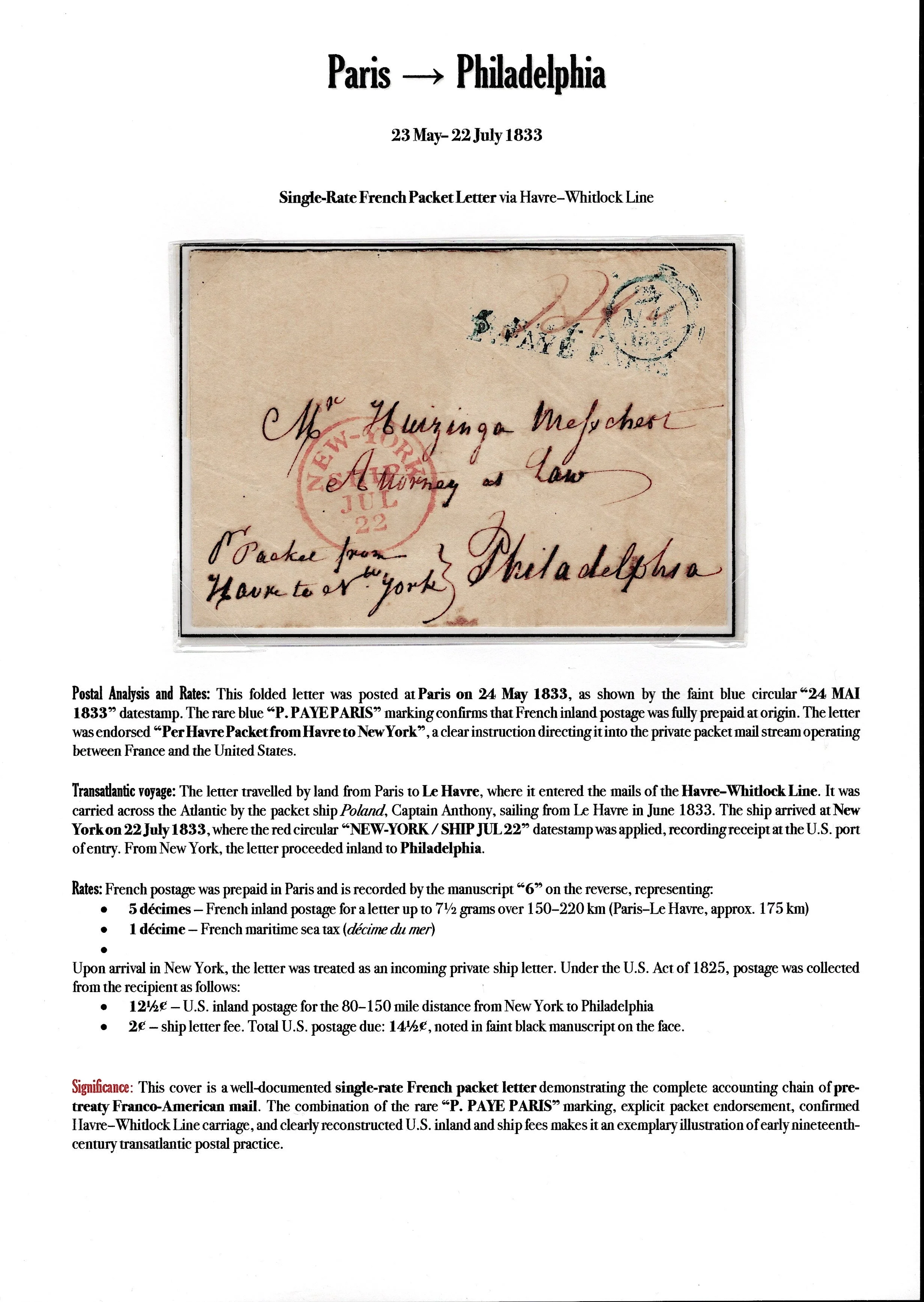
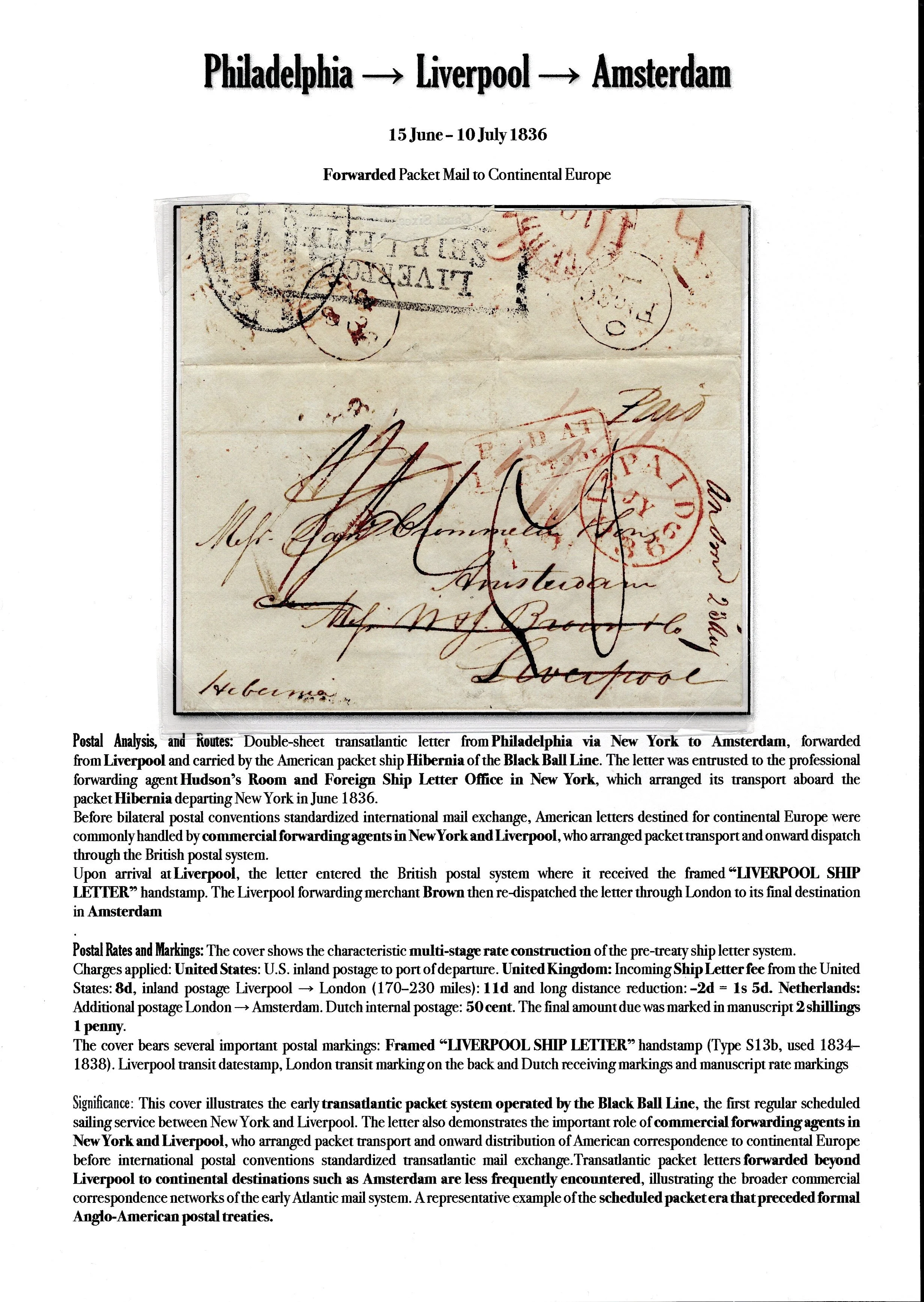
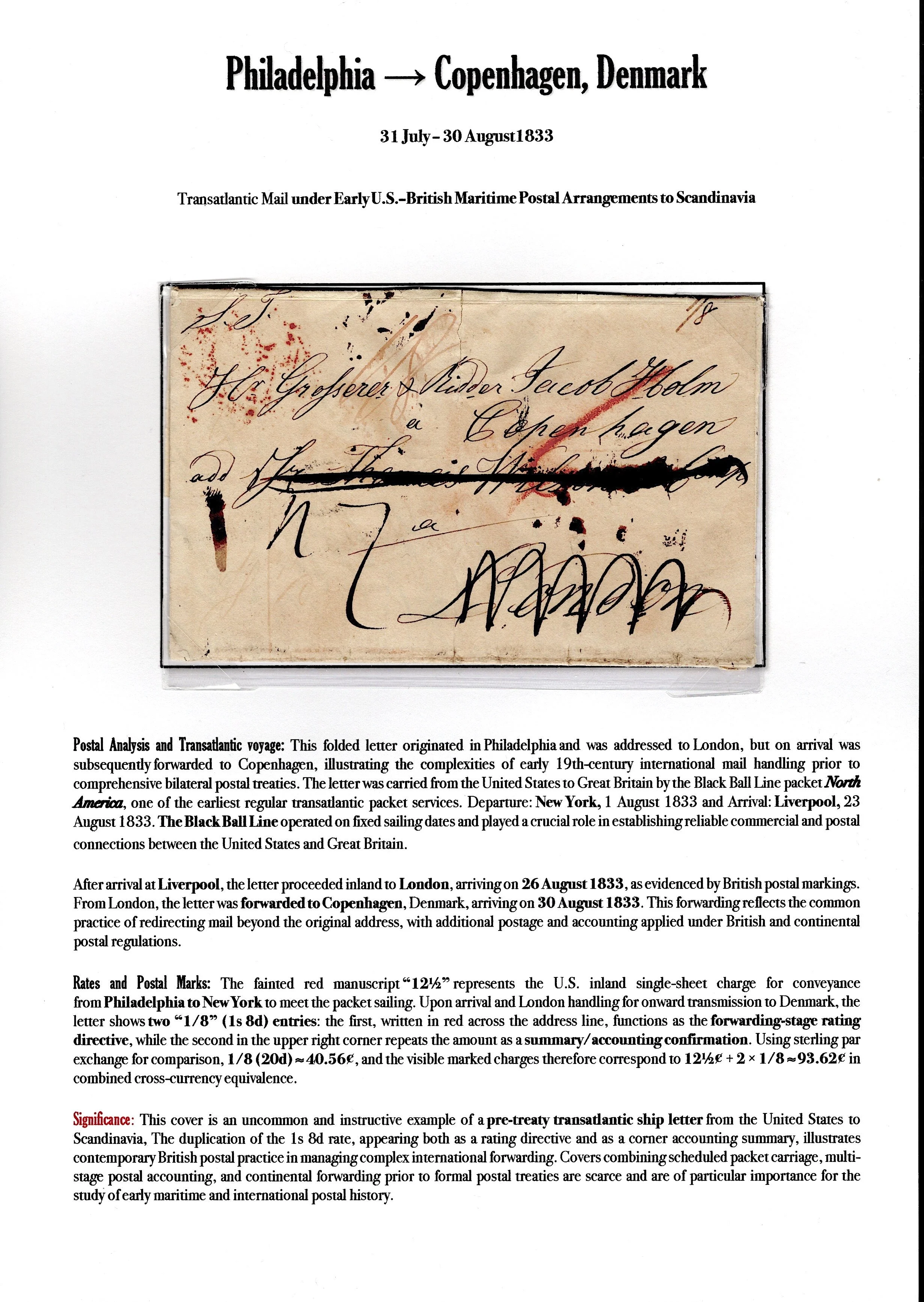
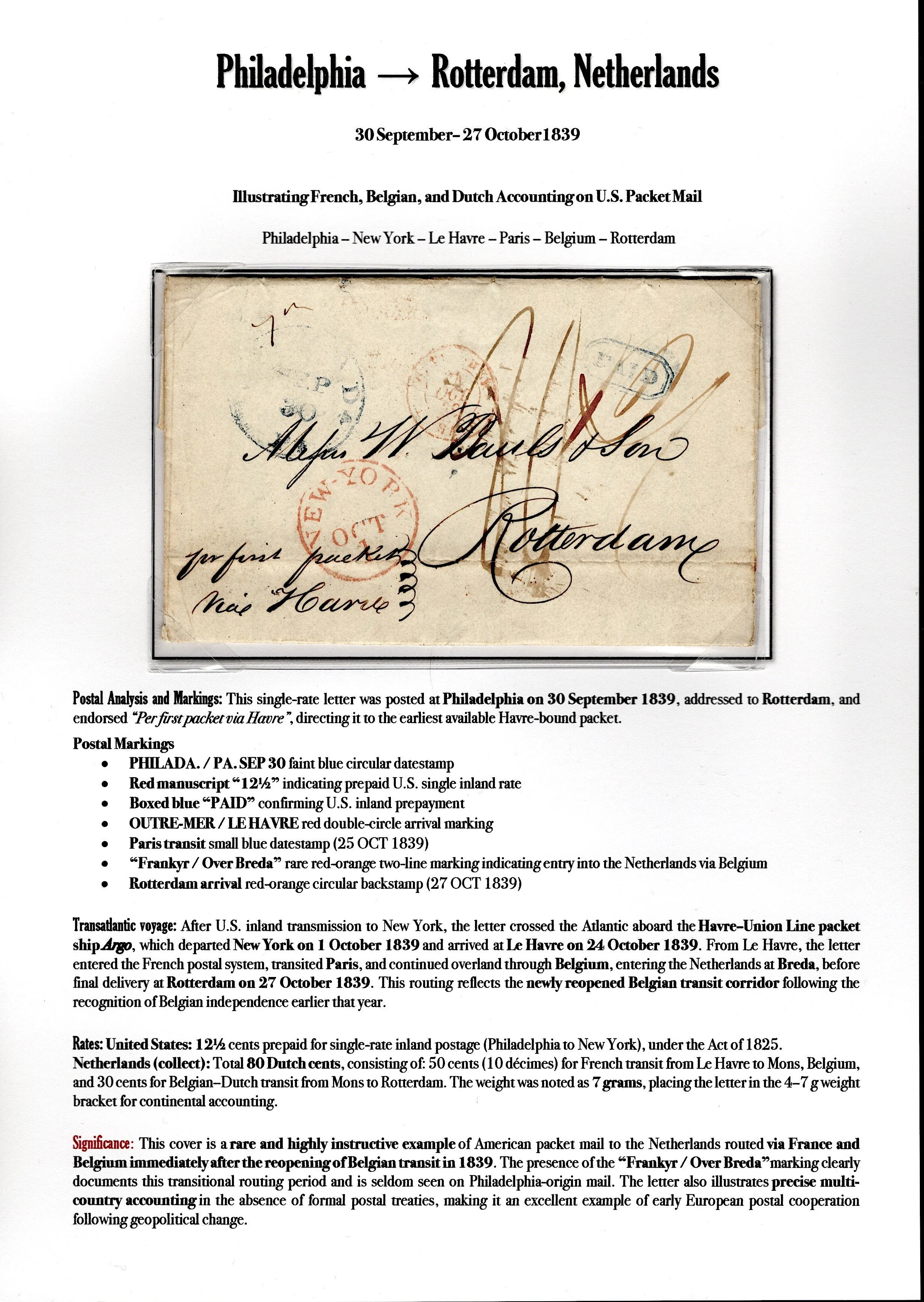
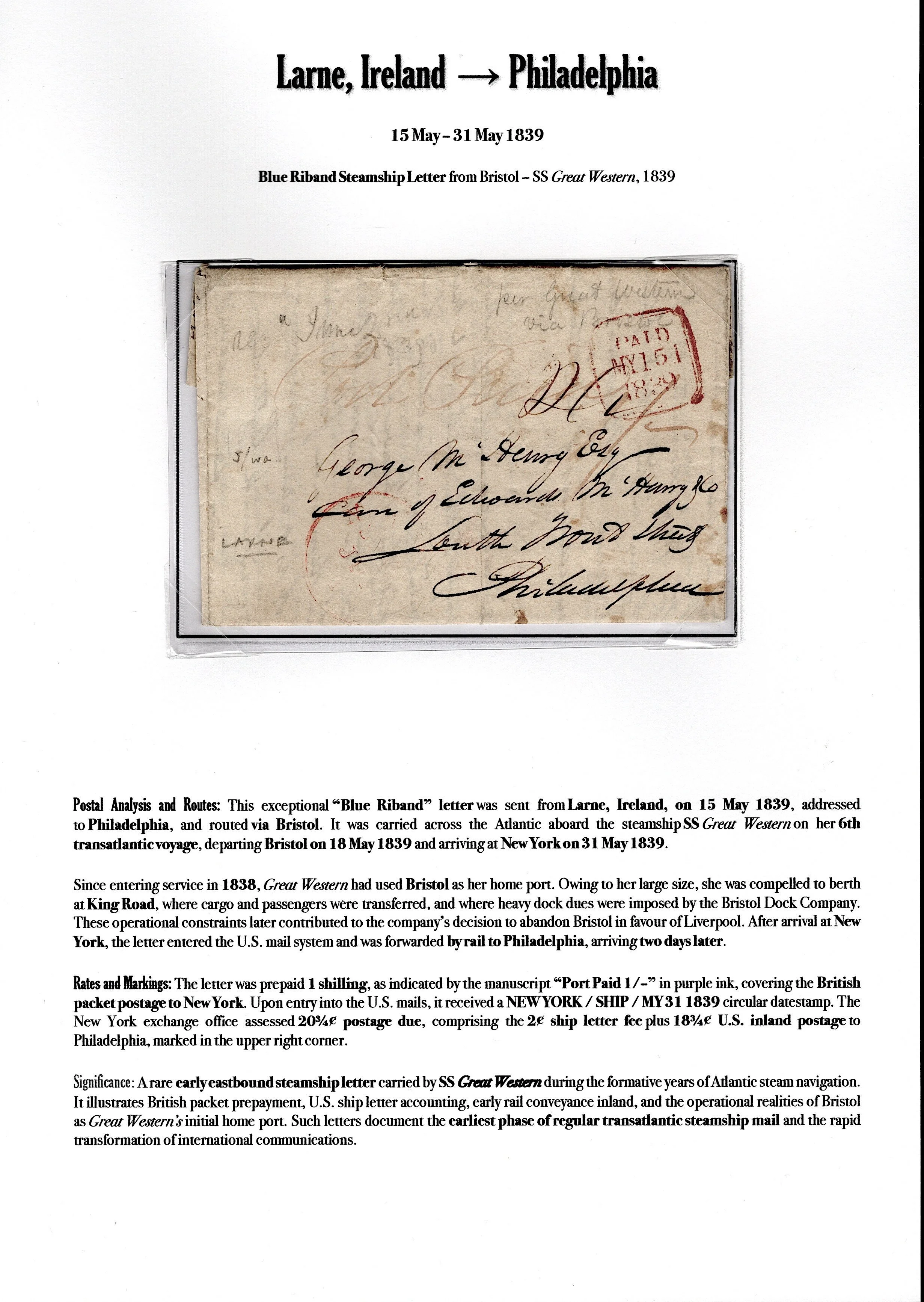
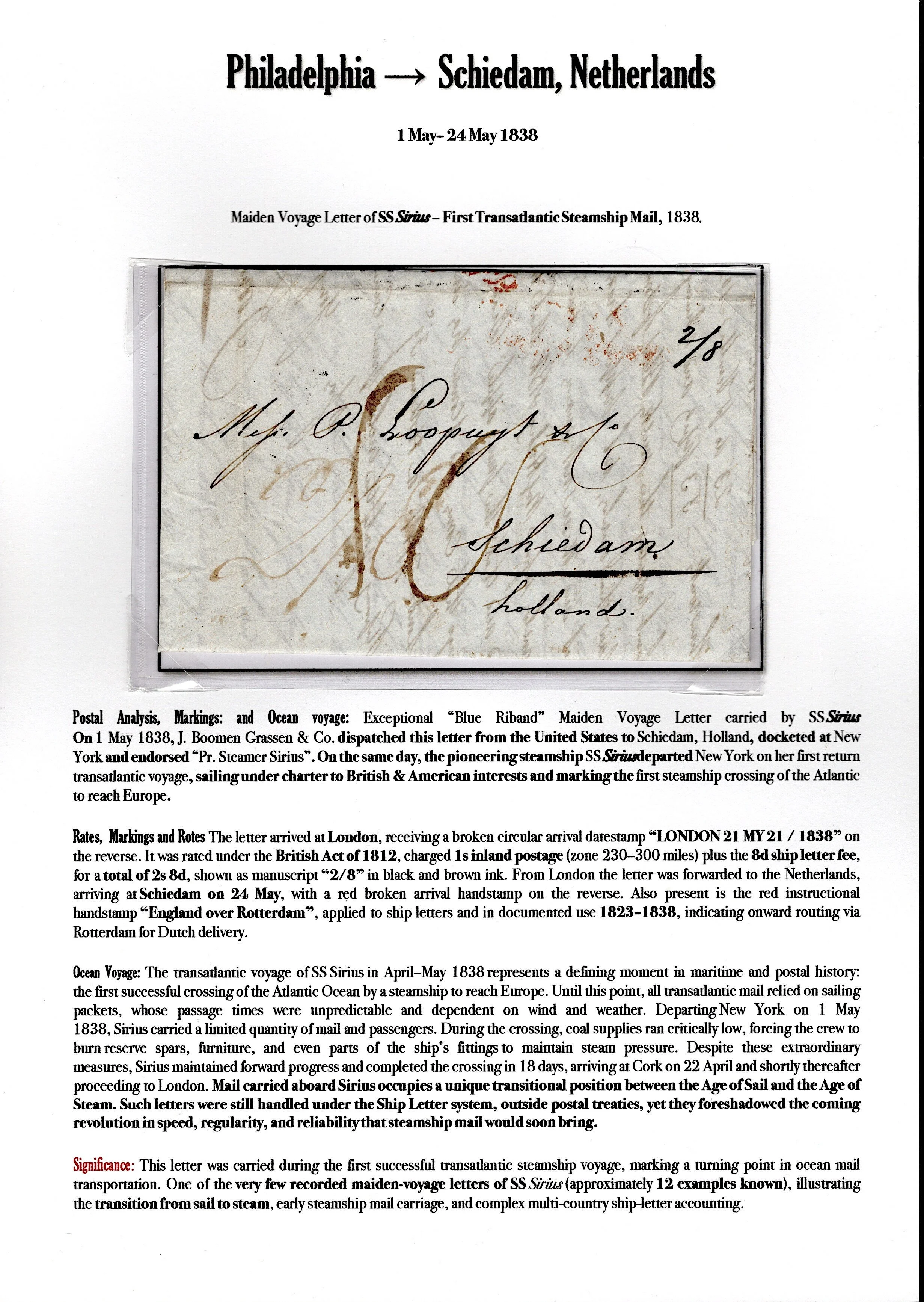
The Packet Contract Era, 1815–1840
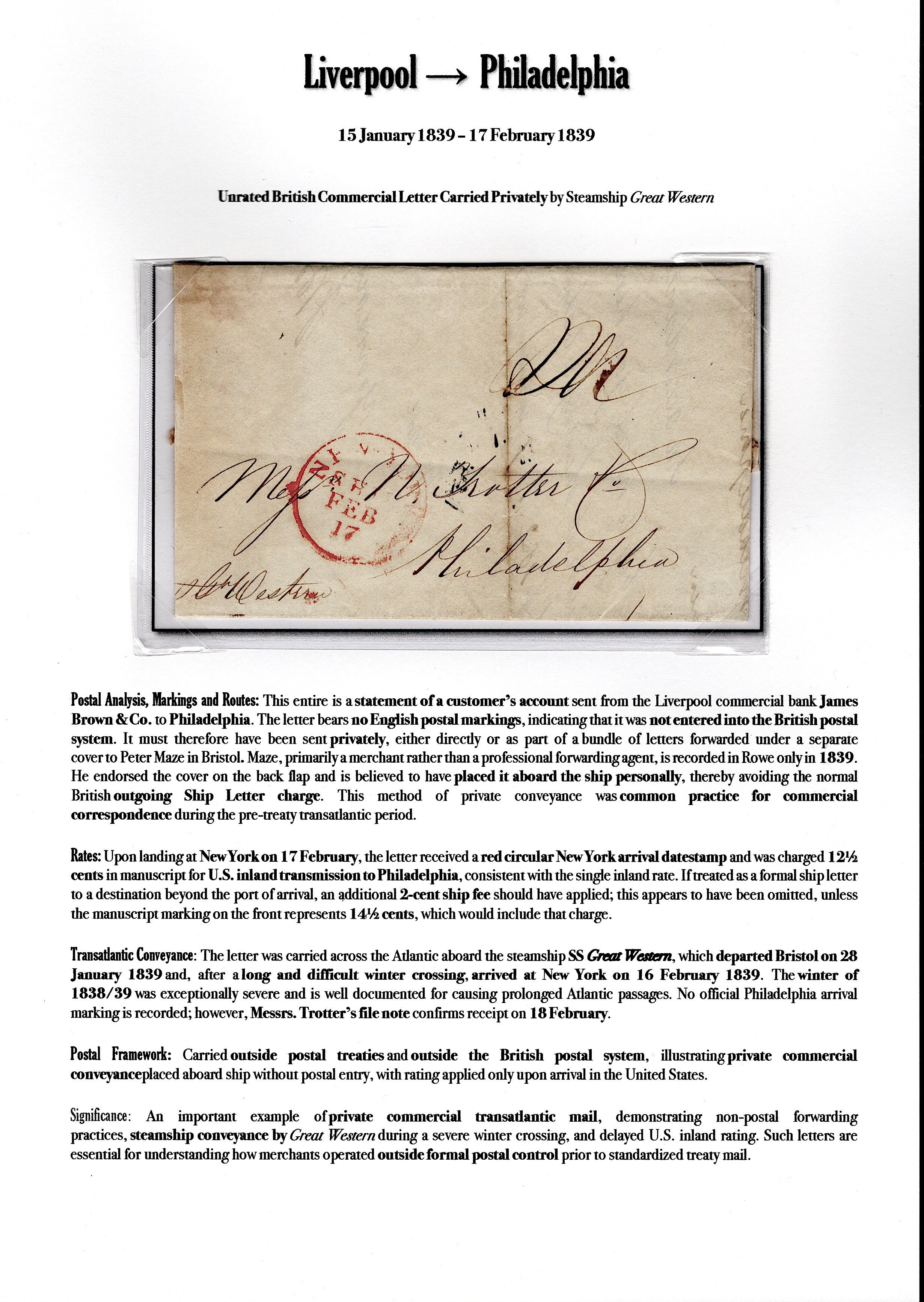
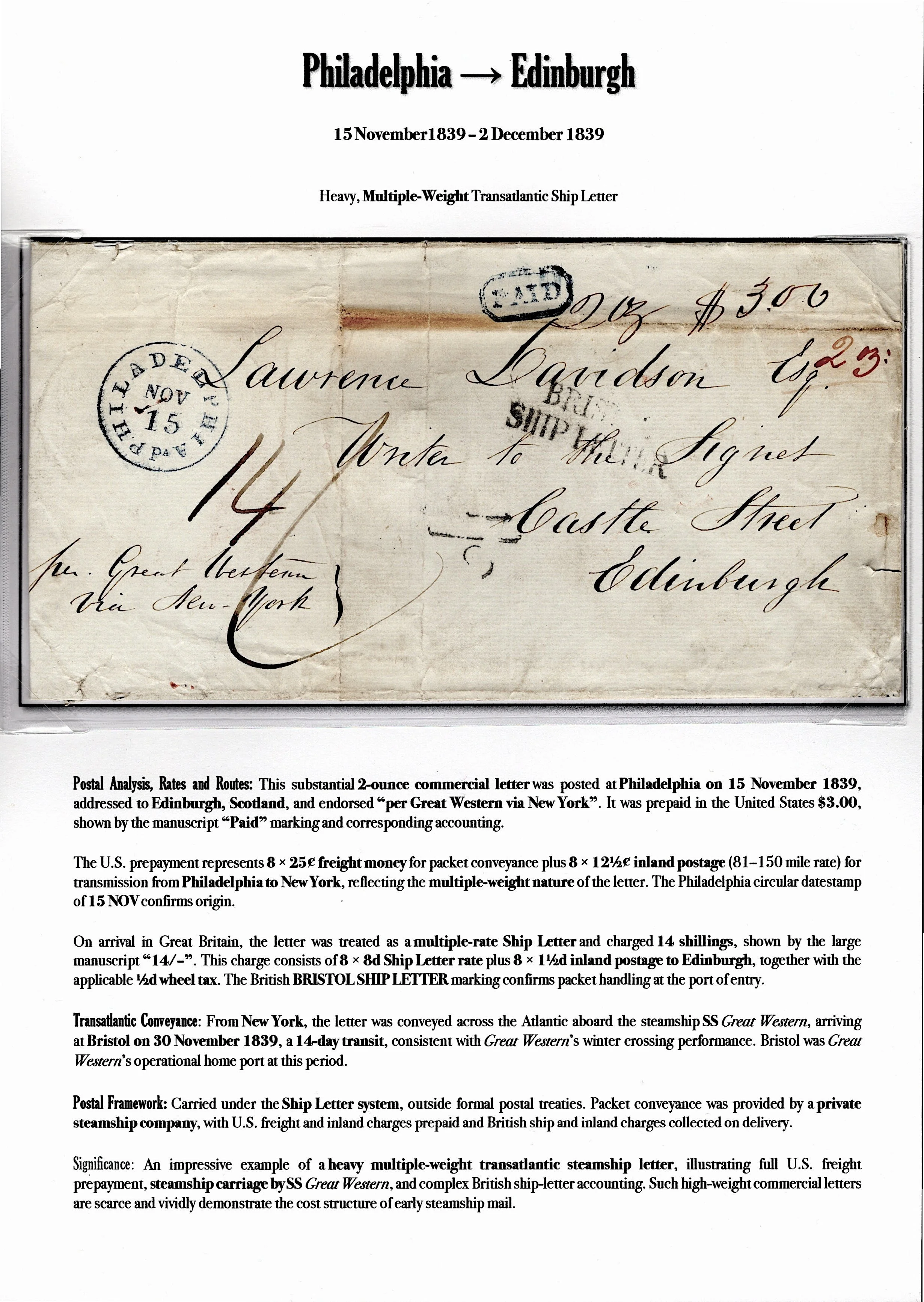
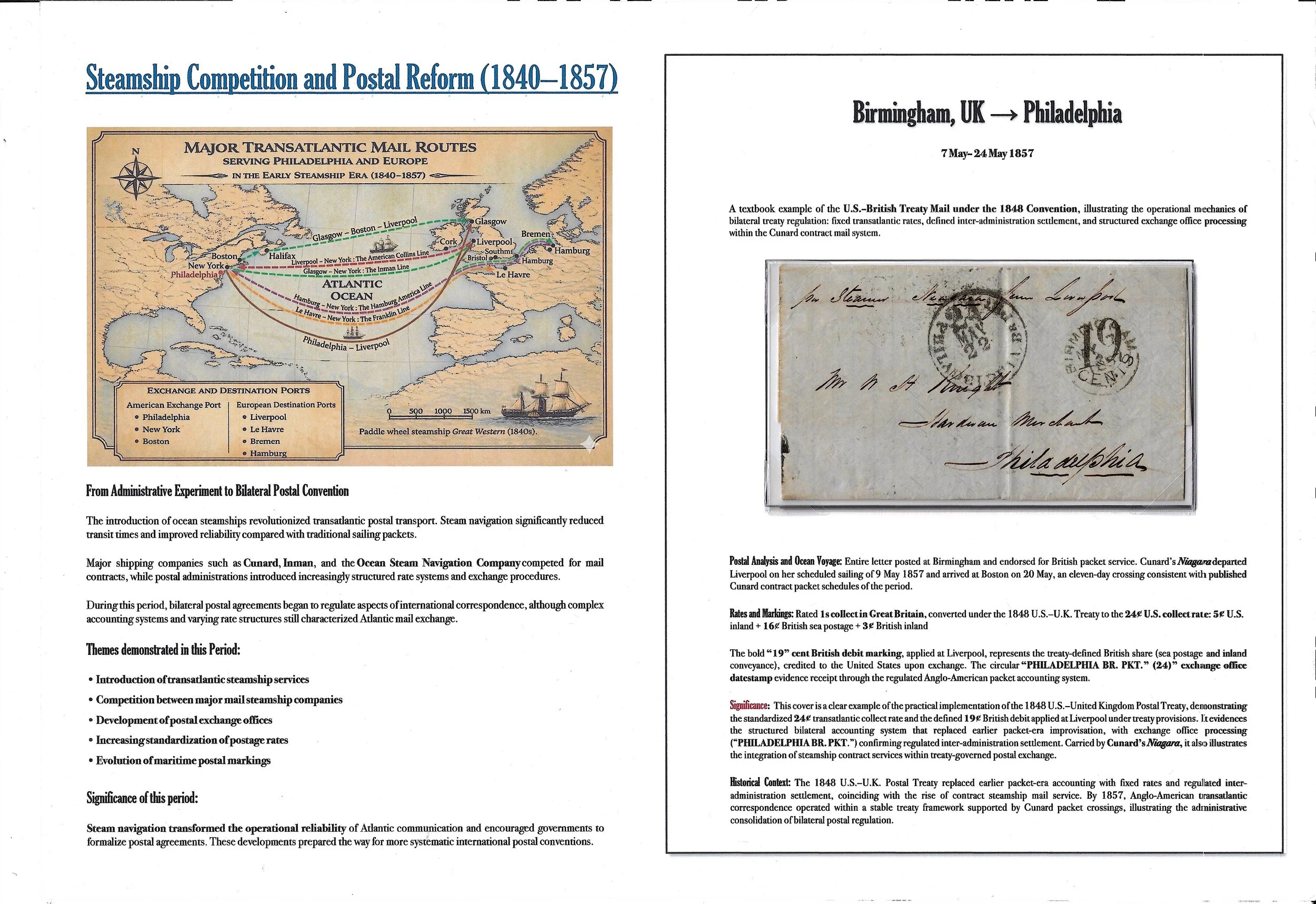
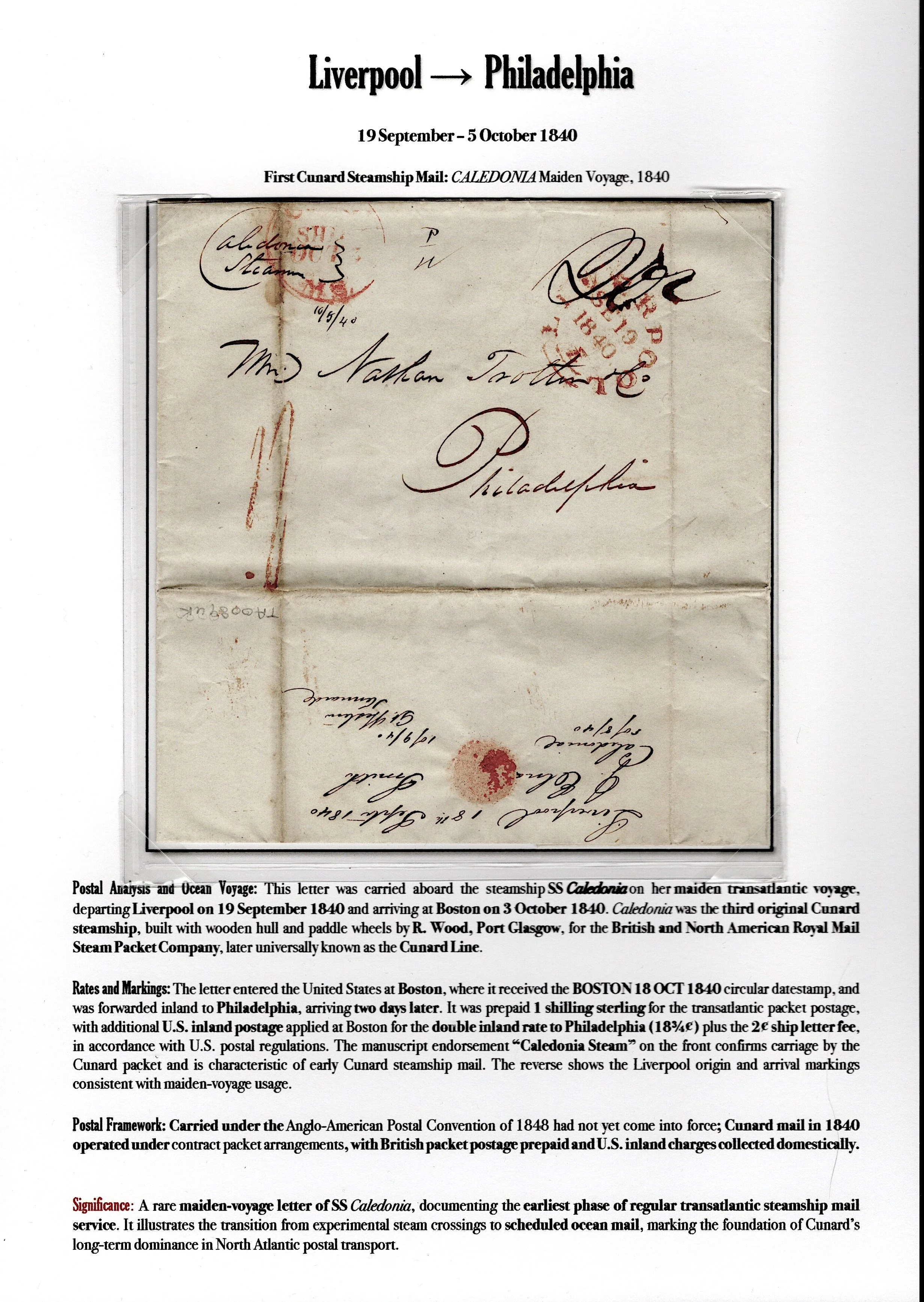
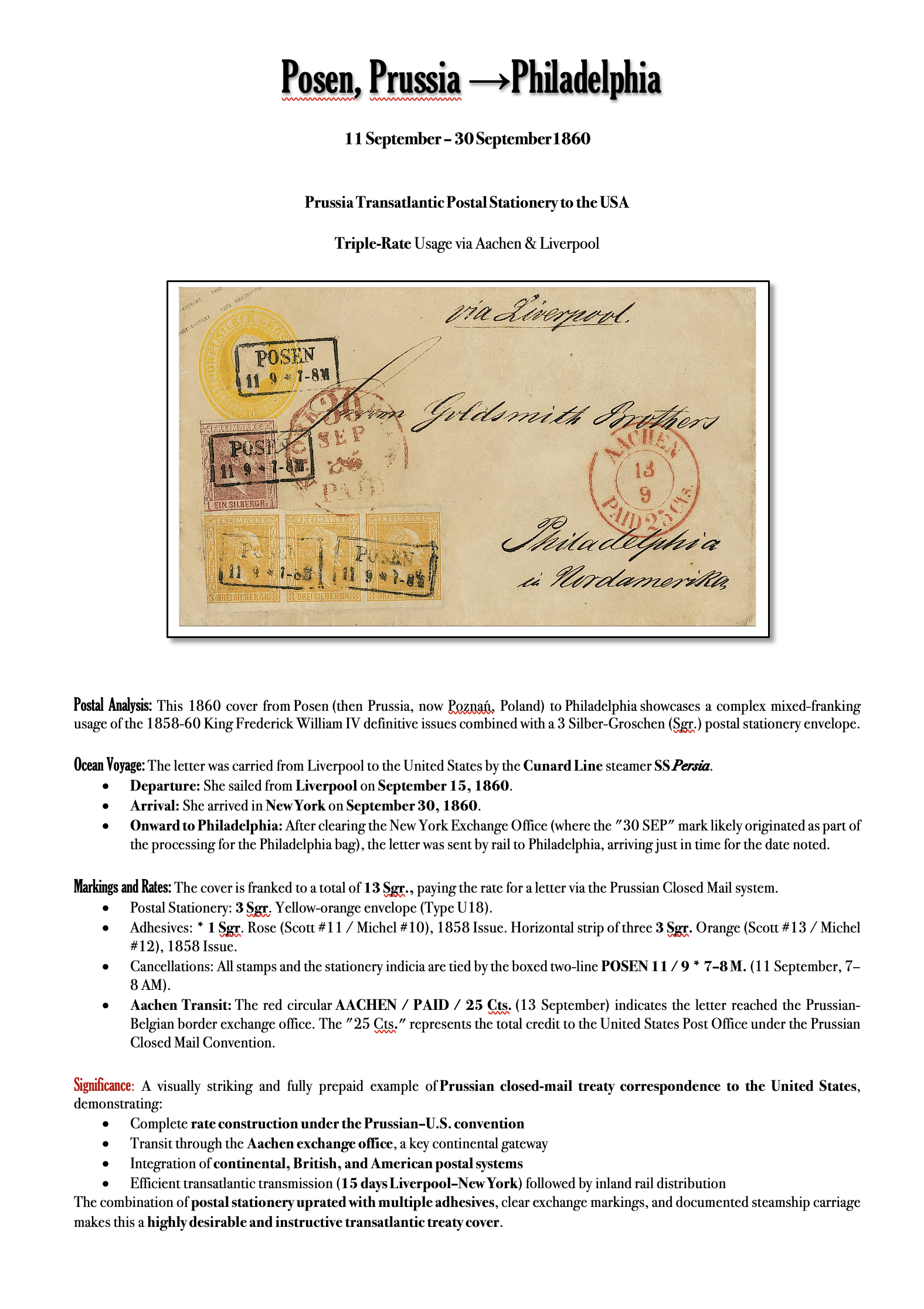
Steamship Competition and Postal Reform, 1840–1867
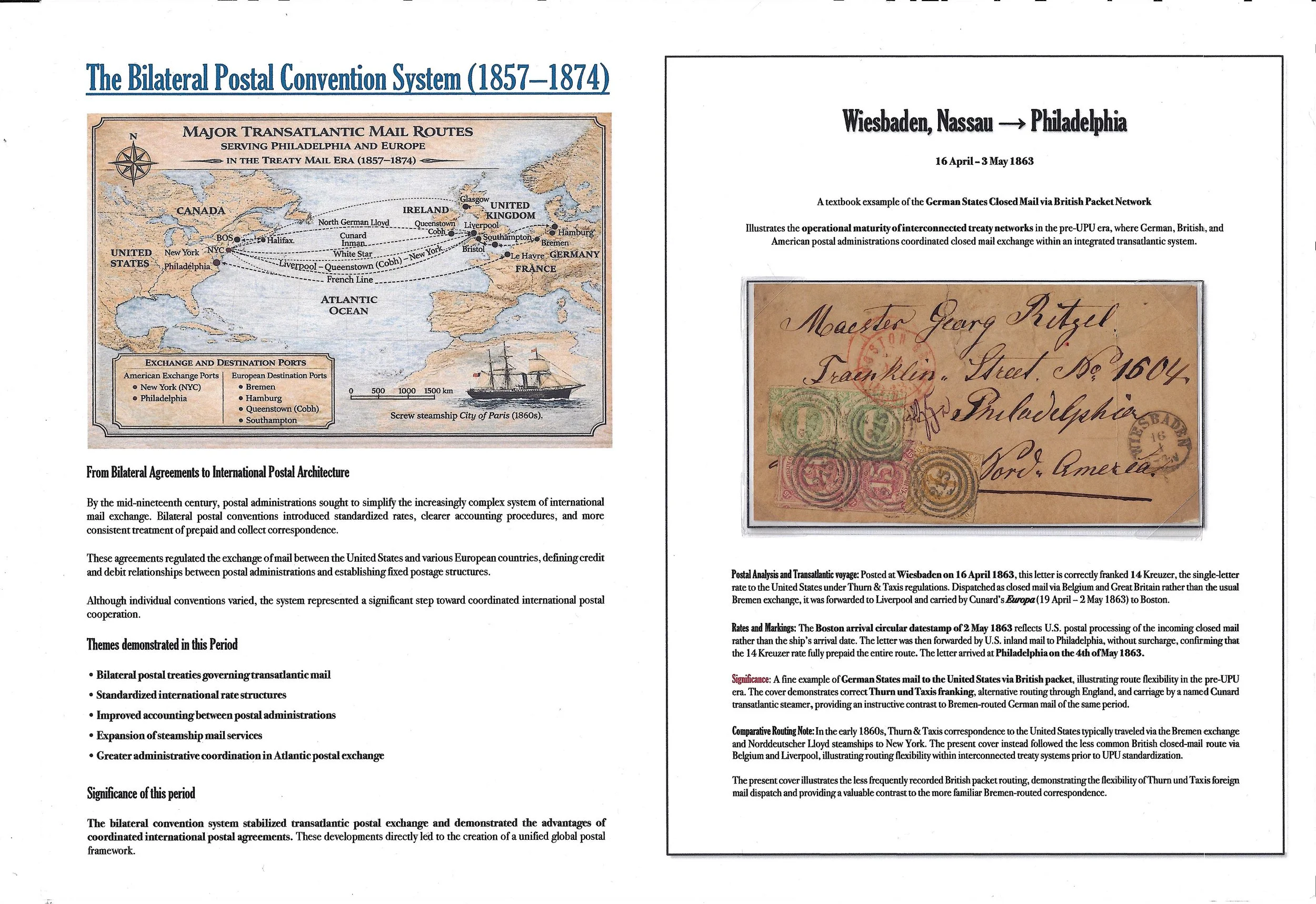
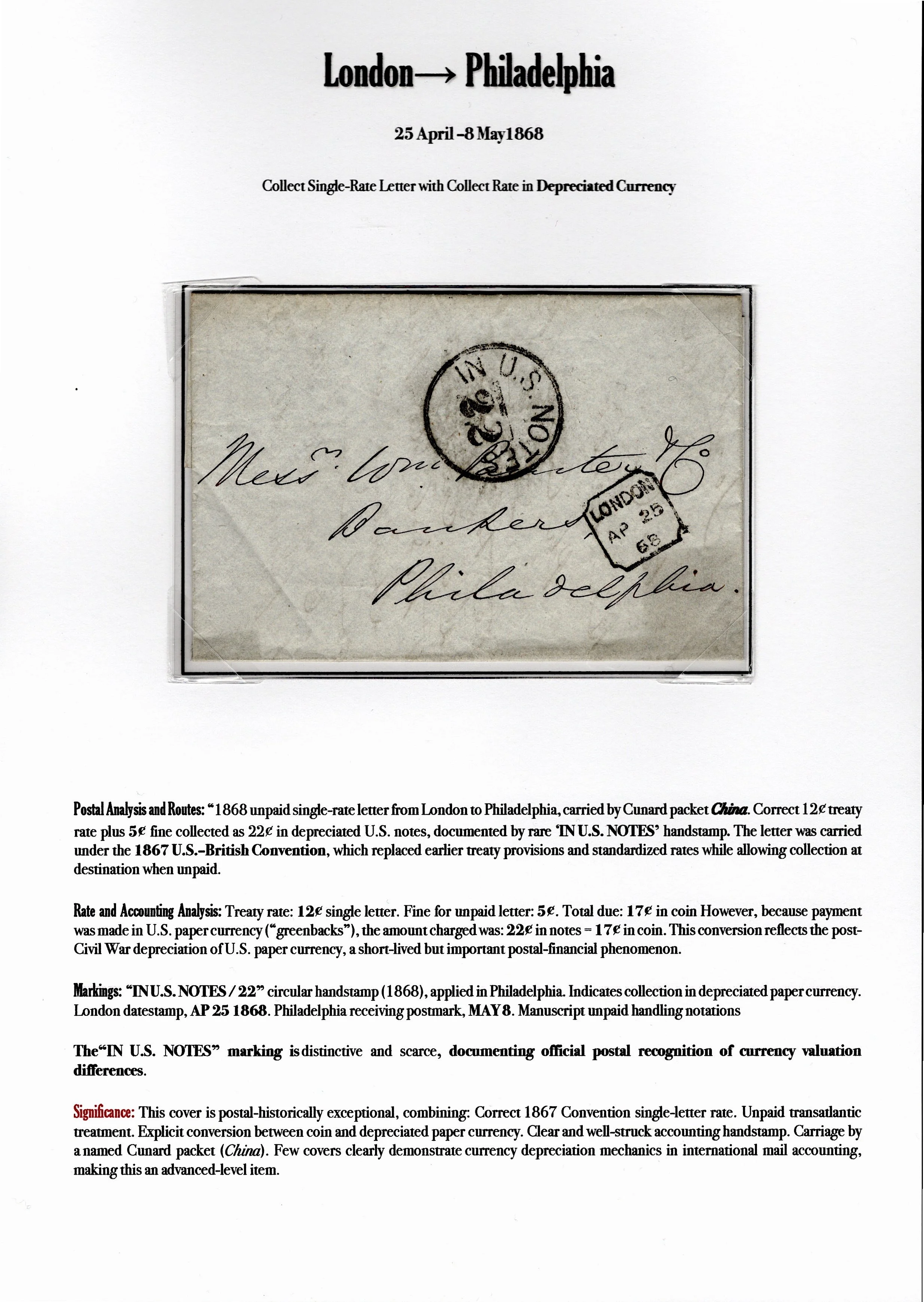
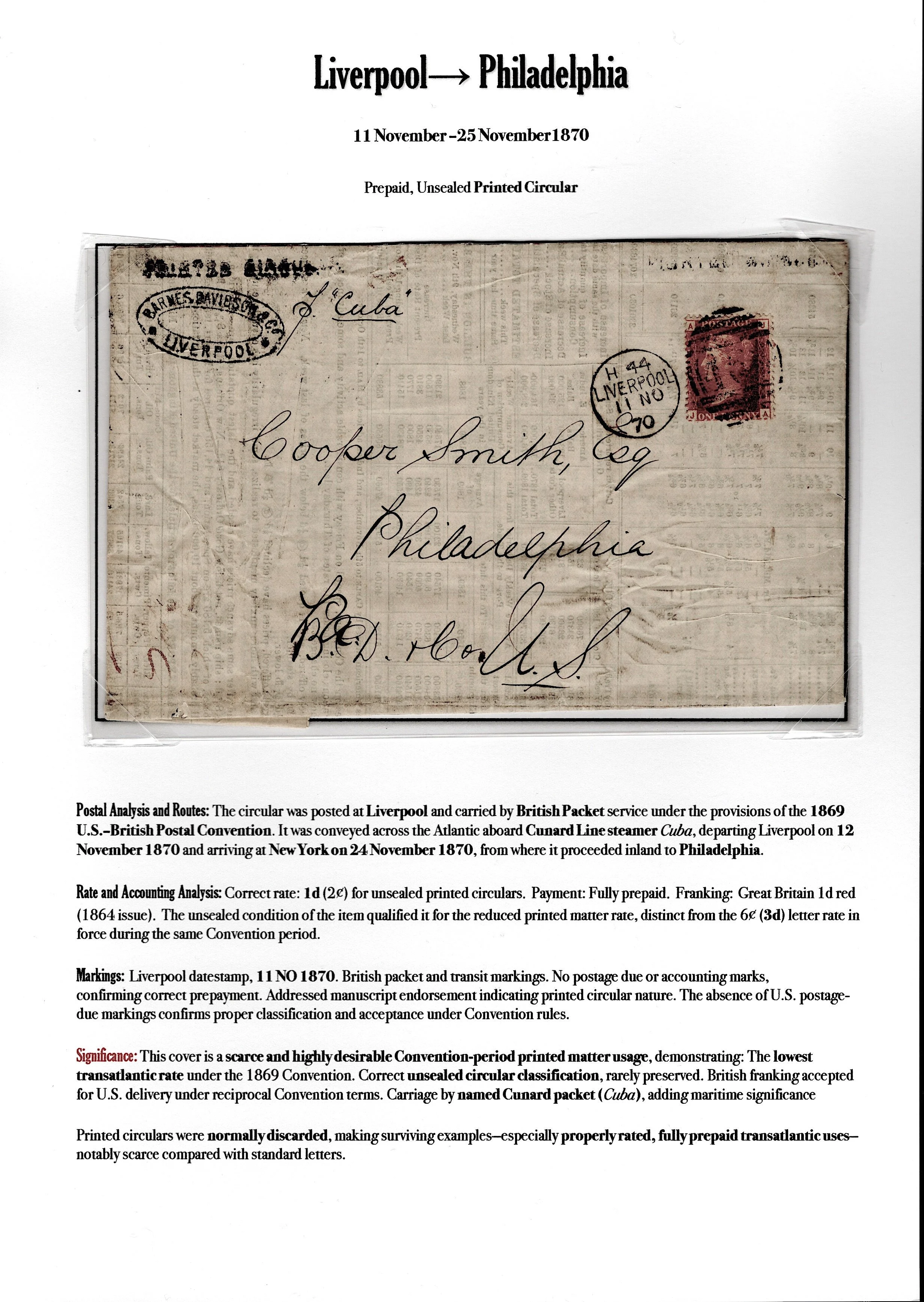
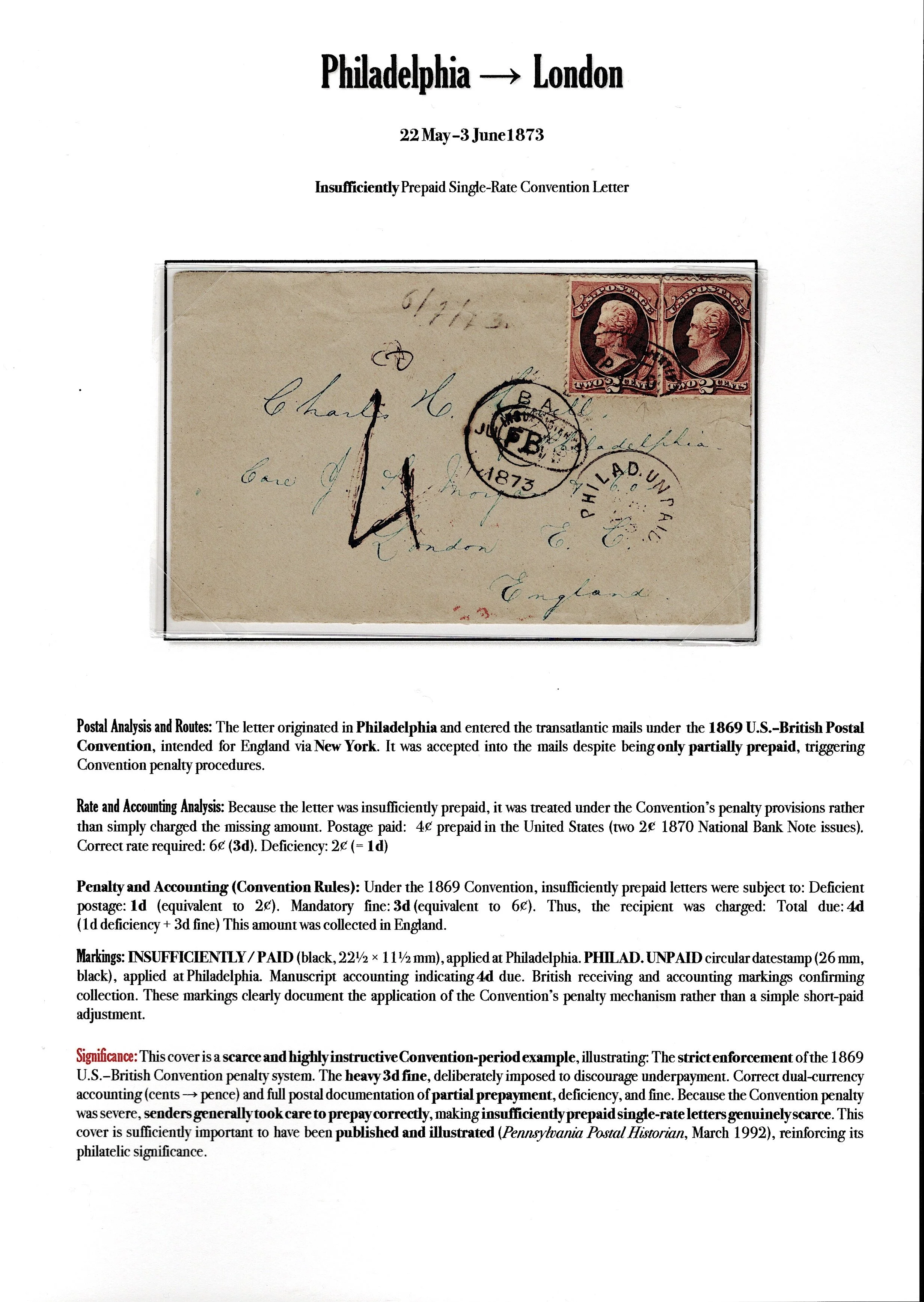
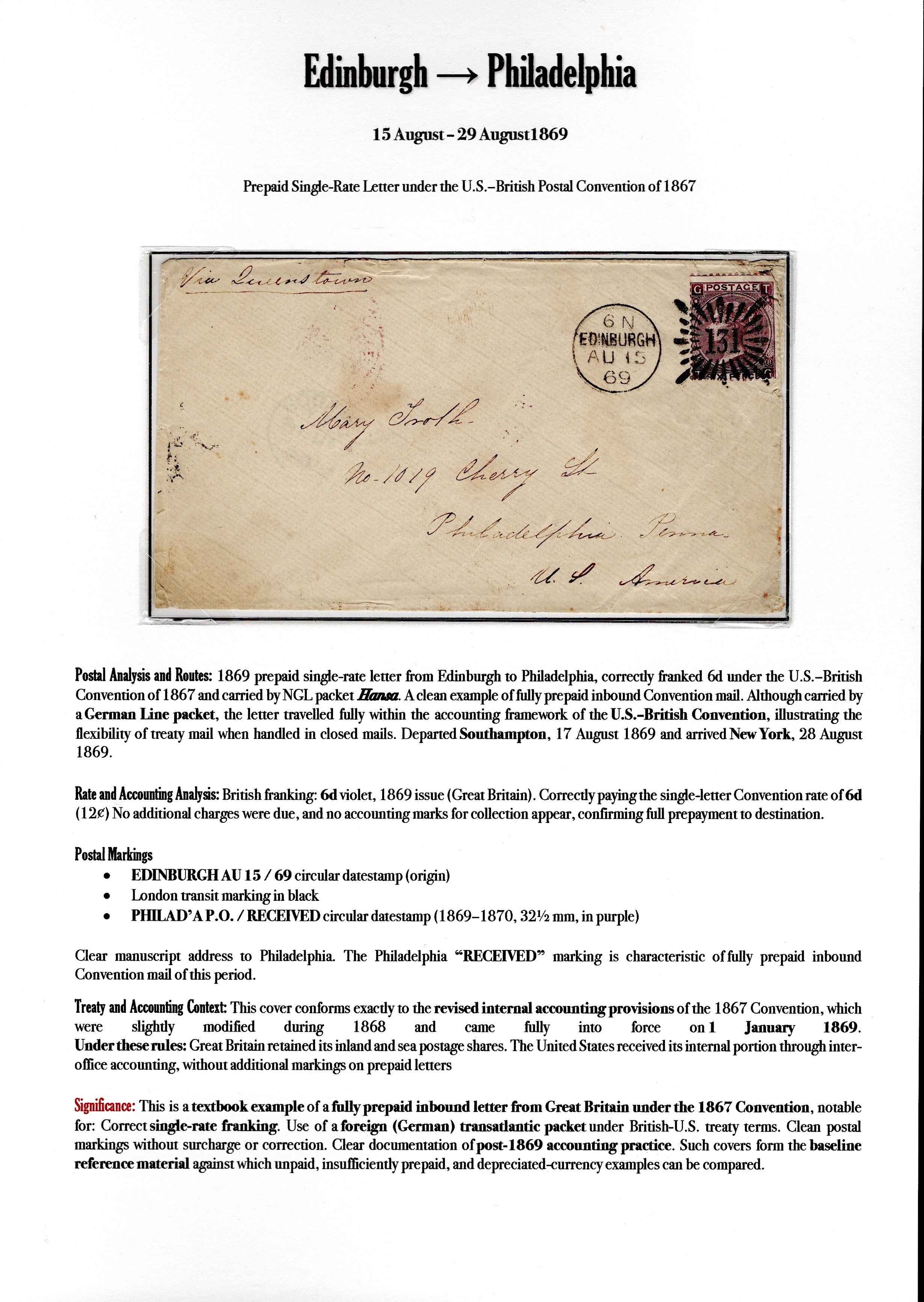
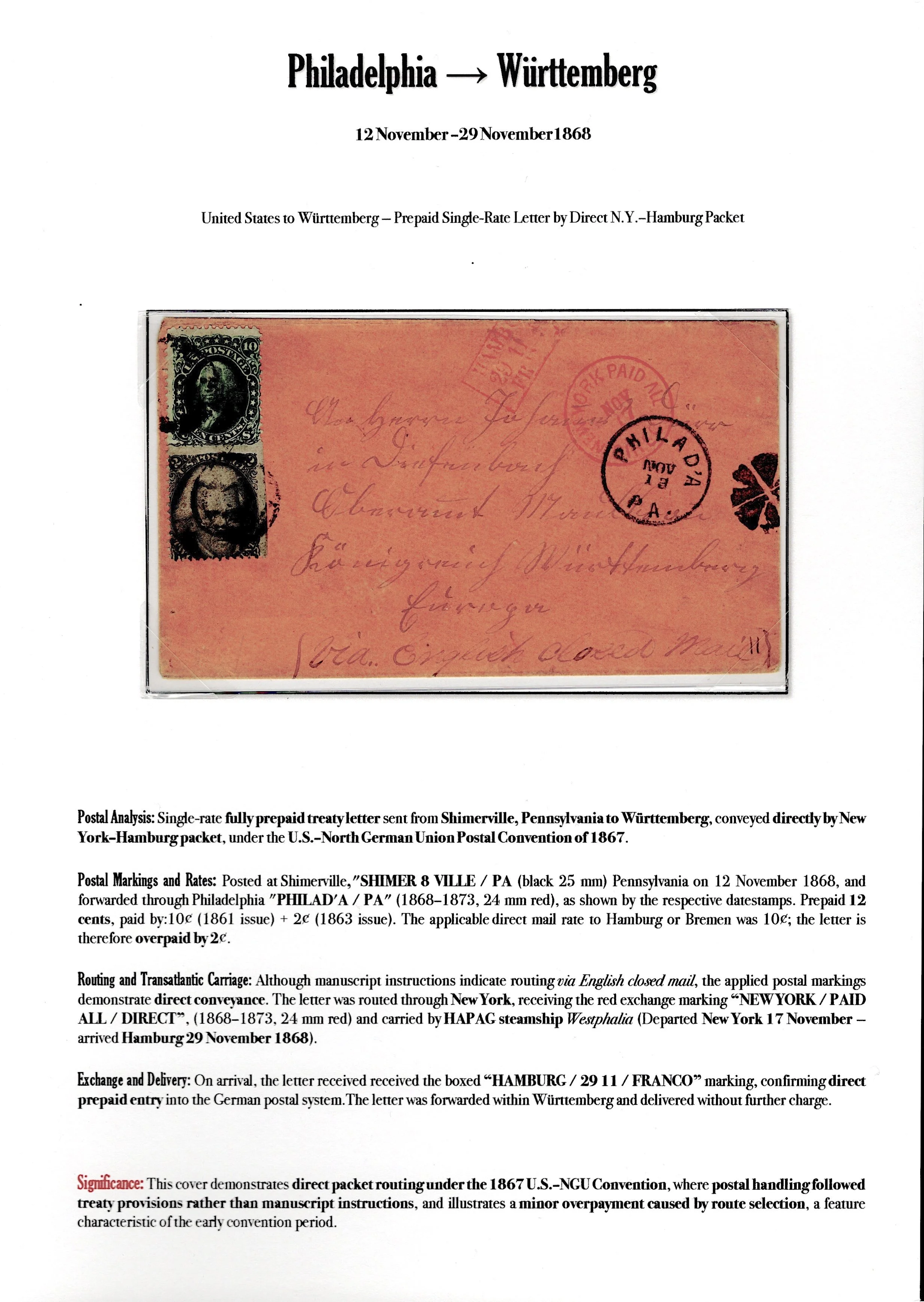
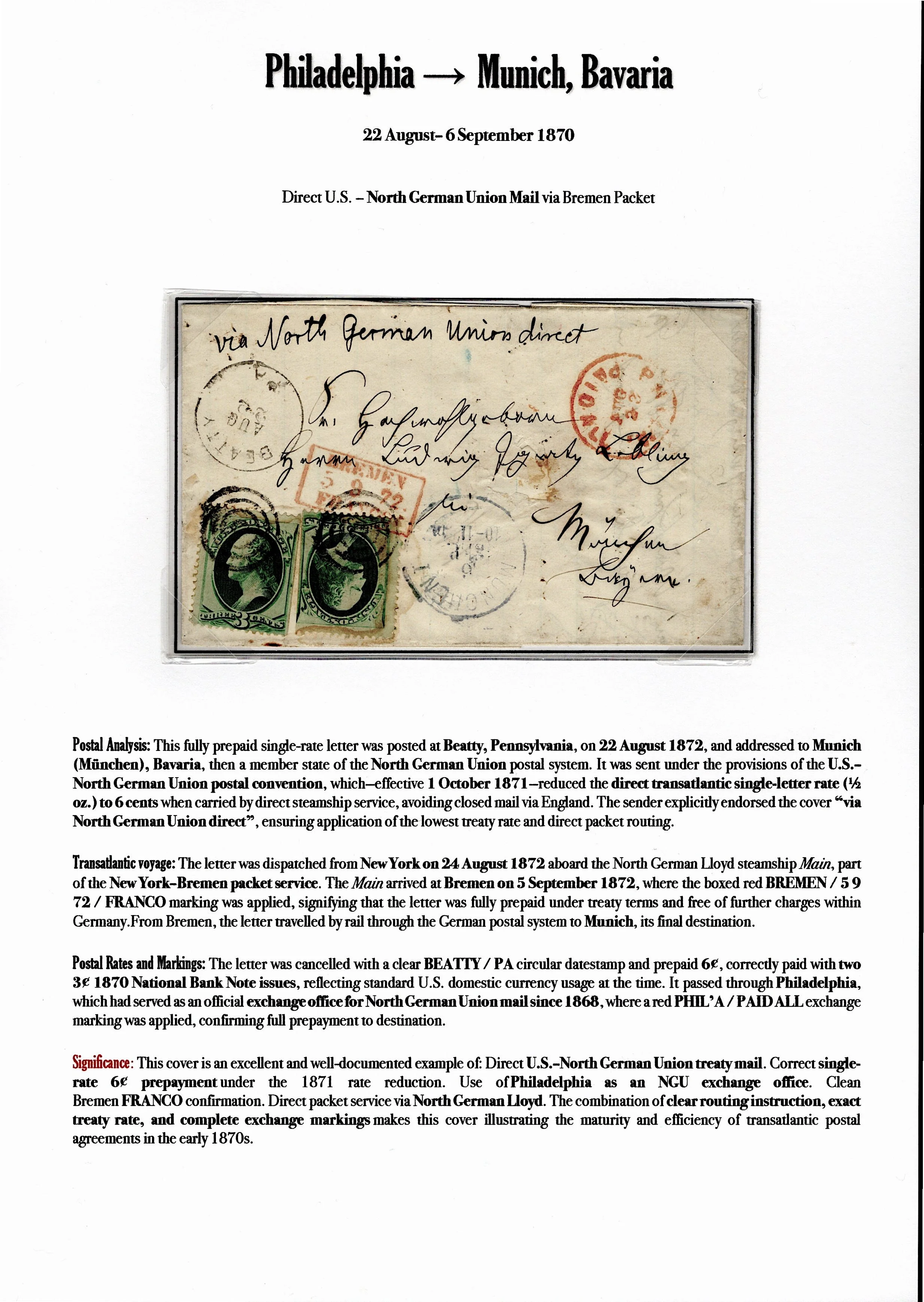
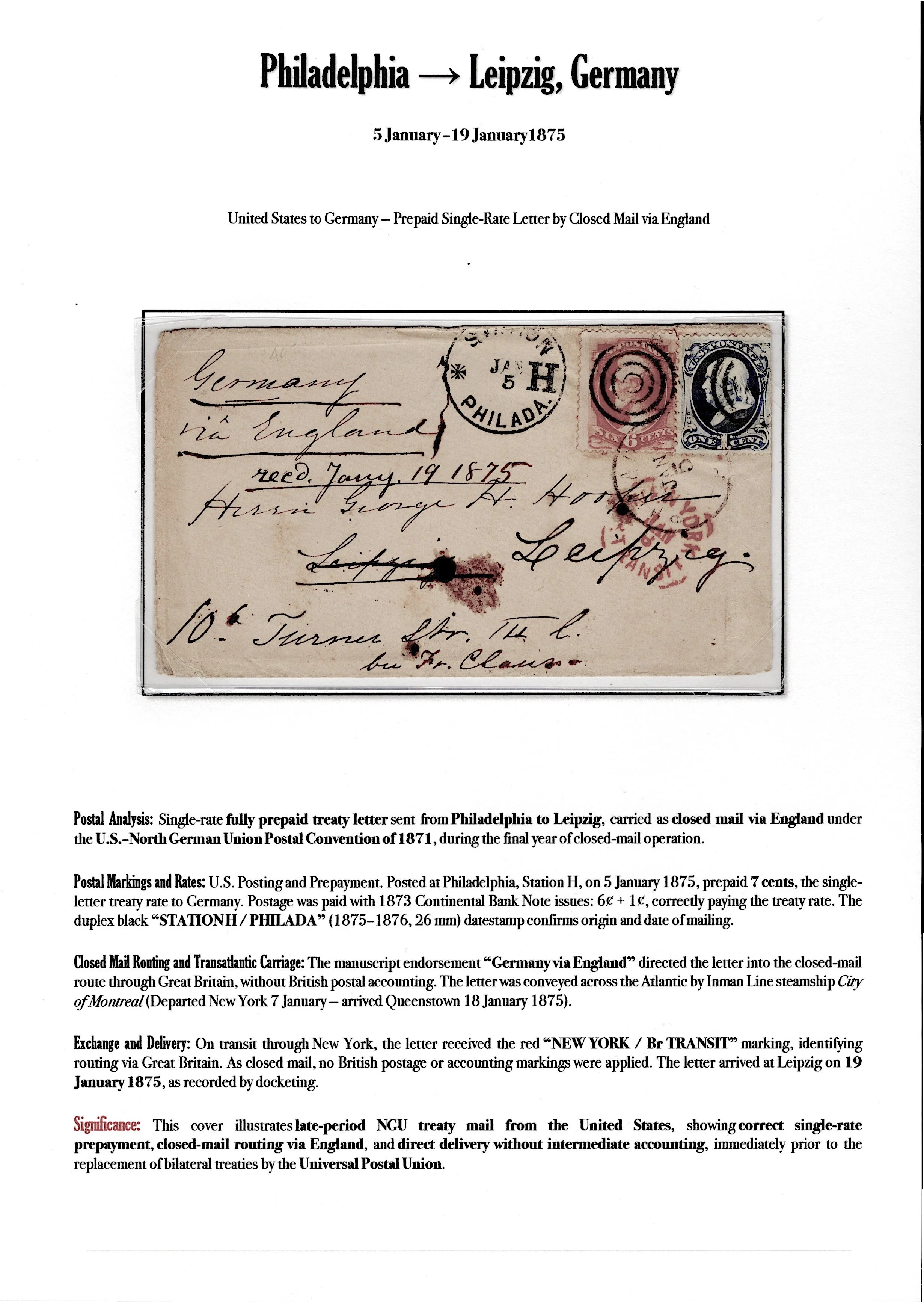
The Bilateral Postal Convention System, 1867–1874
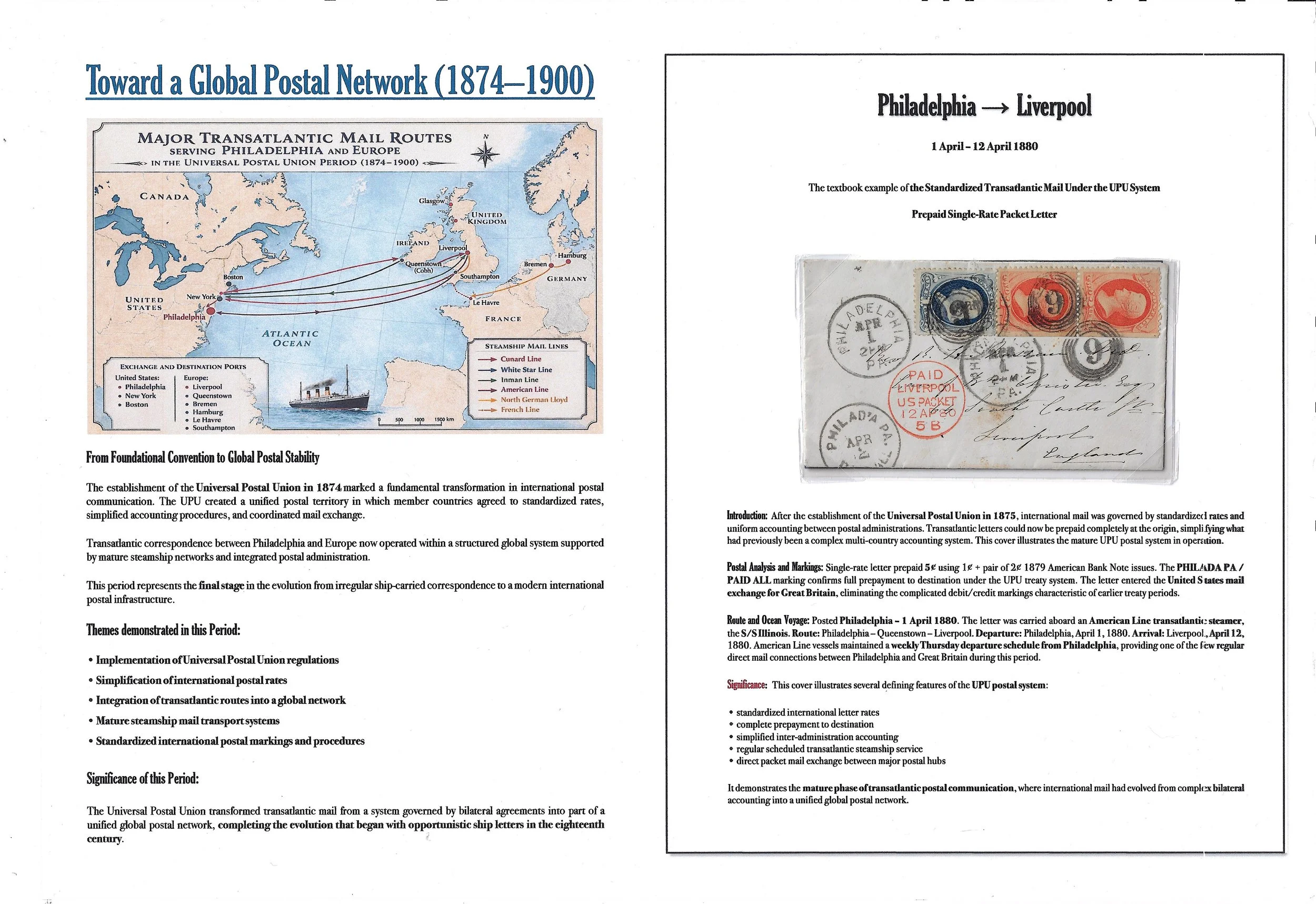
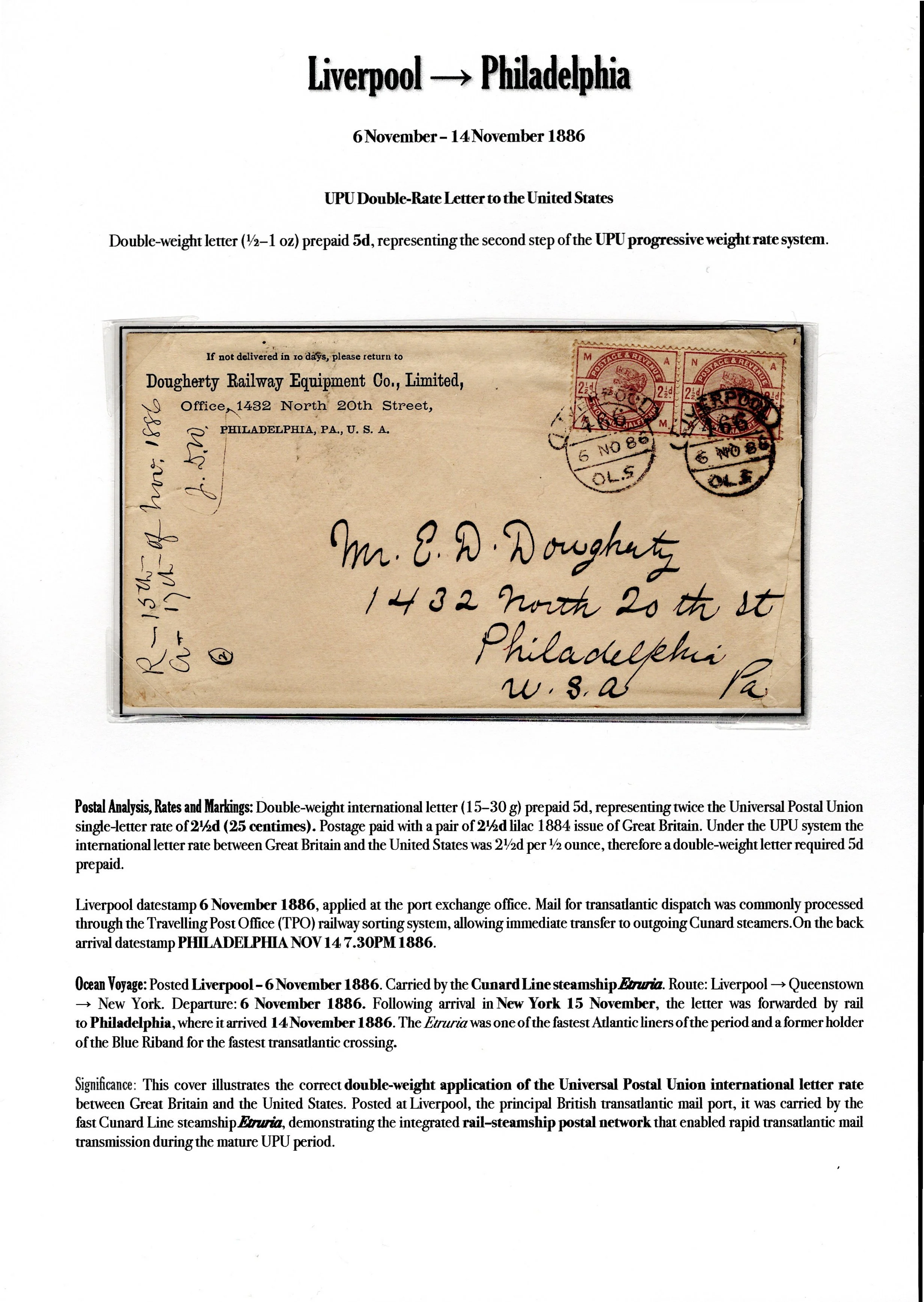
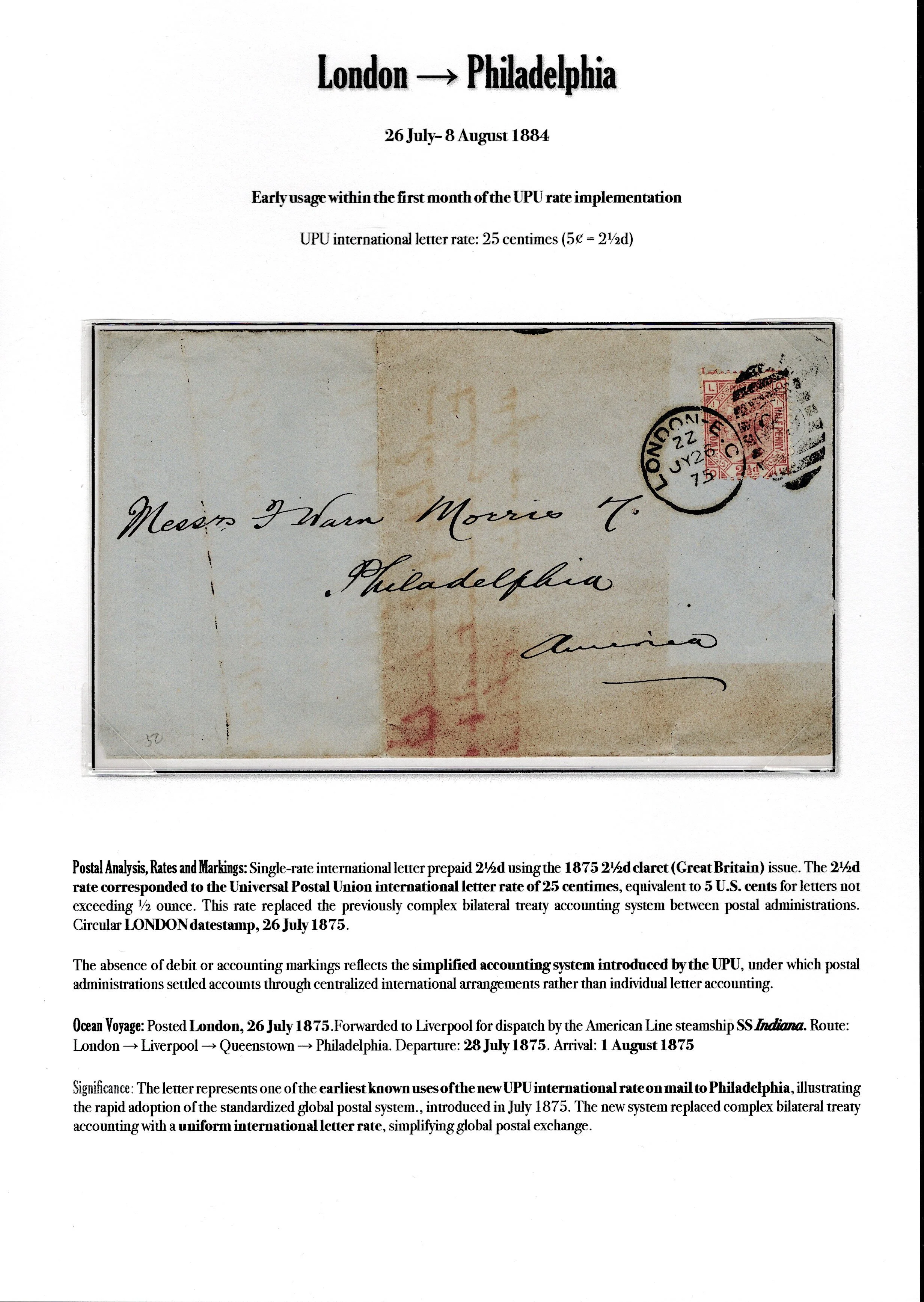
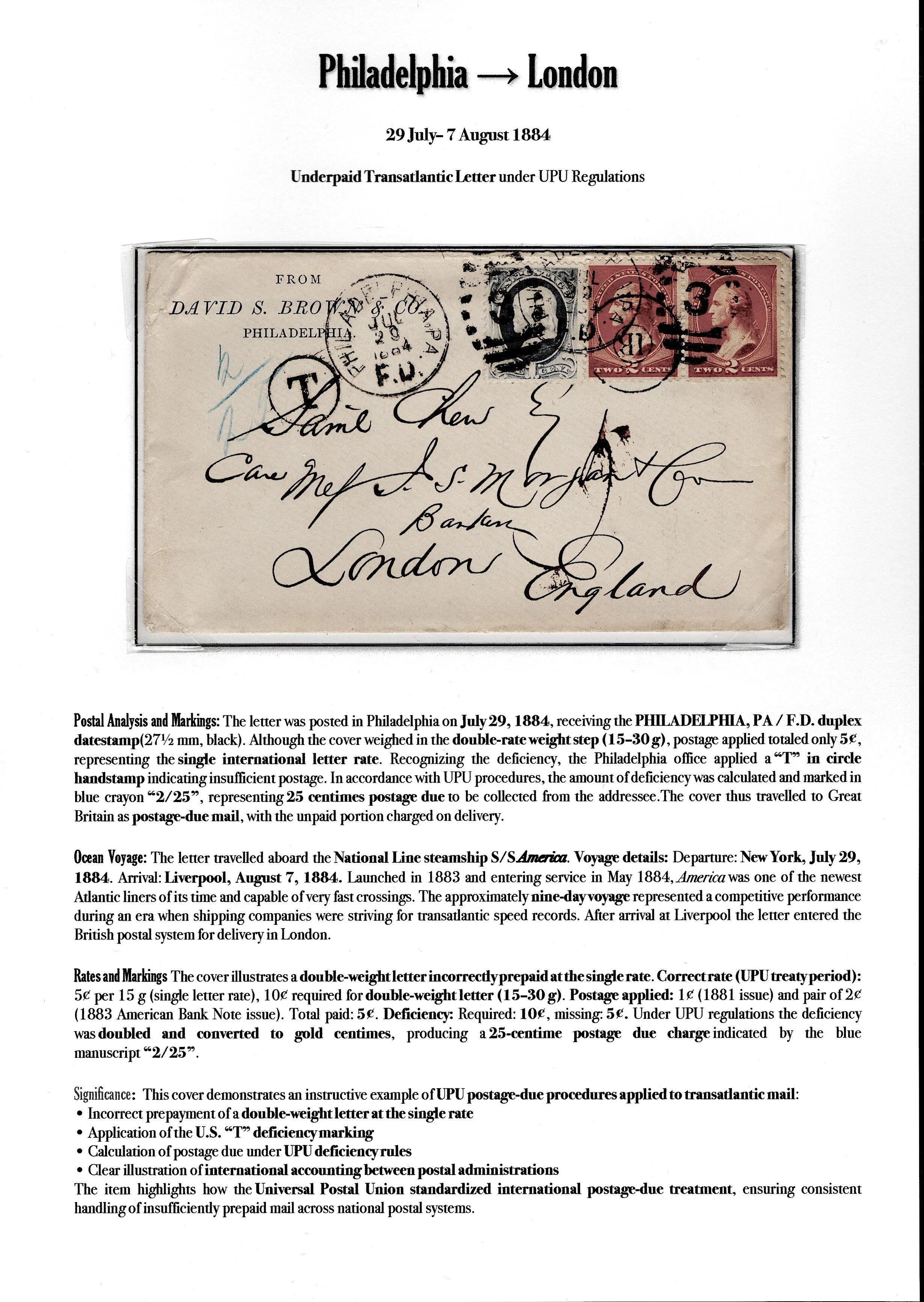
Toward a Global Postal Network, 1874–1900
Importance of the Exhibit: The Philadelphia–Europe mail connection provides a focused way to examine the broader transformation of transatlantic postal communication. Over the period covered, mail handling changed from private ship carriage and separate national accounting into an integrated international system. The exhibit uses Philadelphia as a case study to demonstrate that wider postal evolution.
10.5. 2026 On first appearance,It received Large Vermeil (88 points Nordia26 FEPA)