THURN & TAXIS:
Routes, Carriage Systems, and Cross-Border Accounting
(1597–1866)
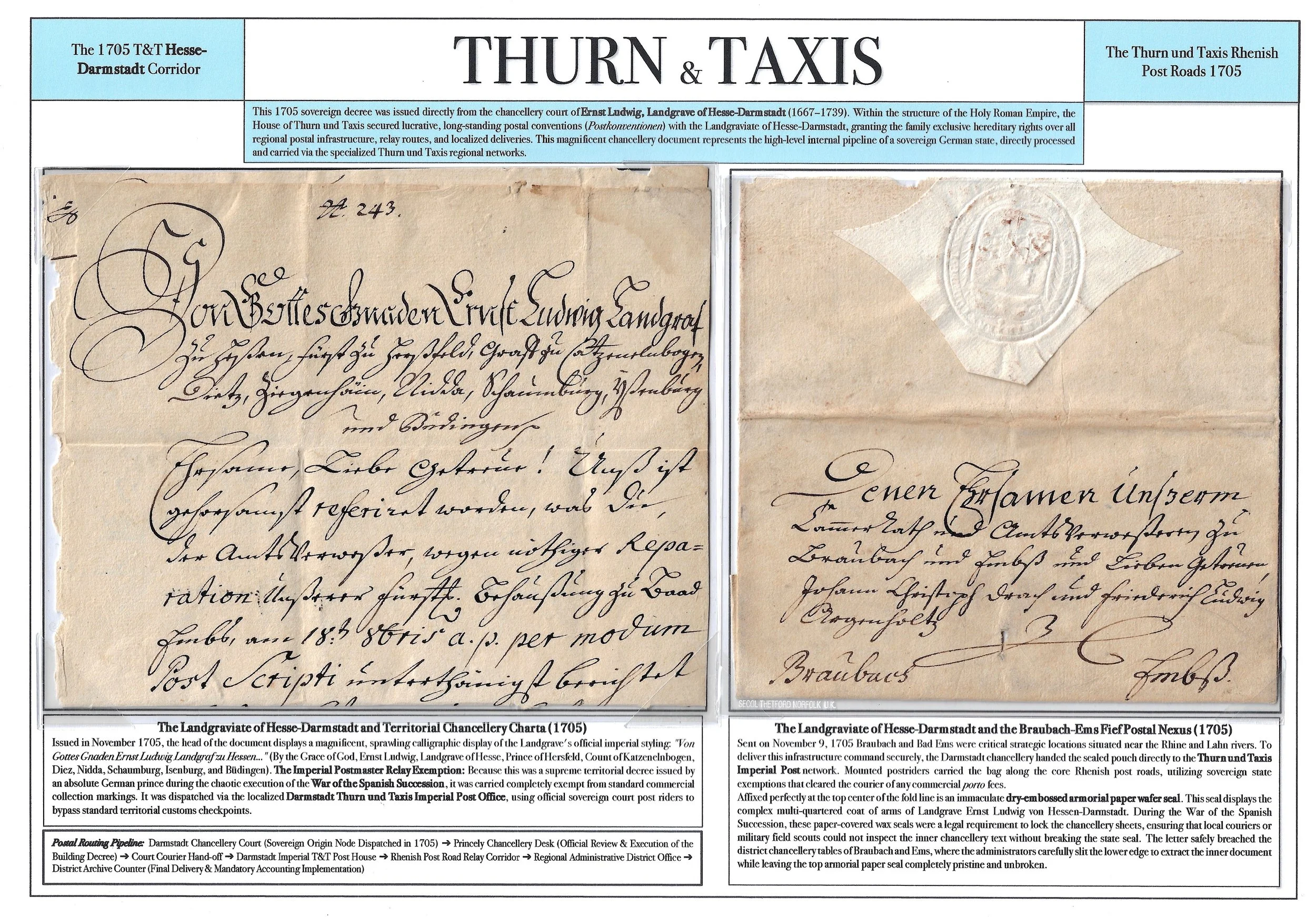
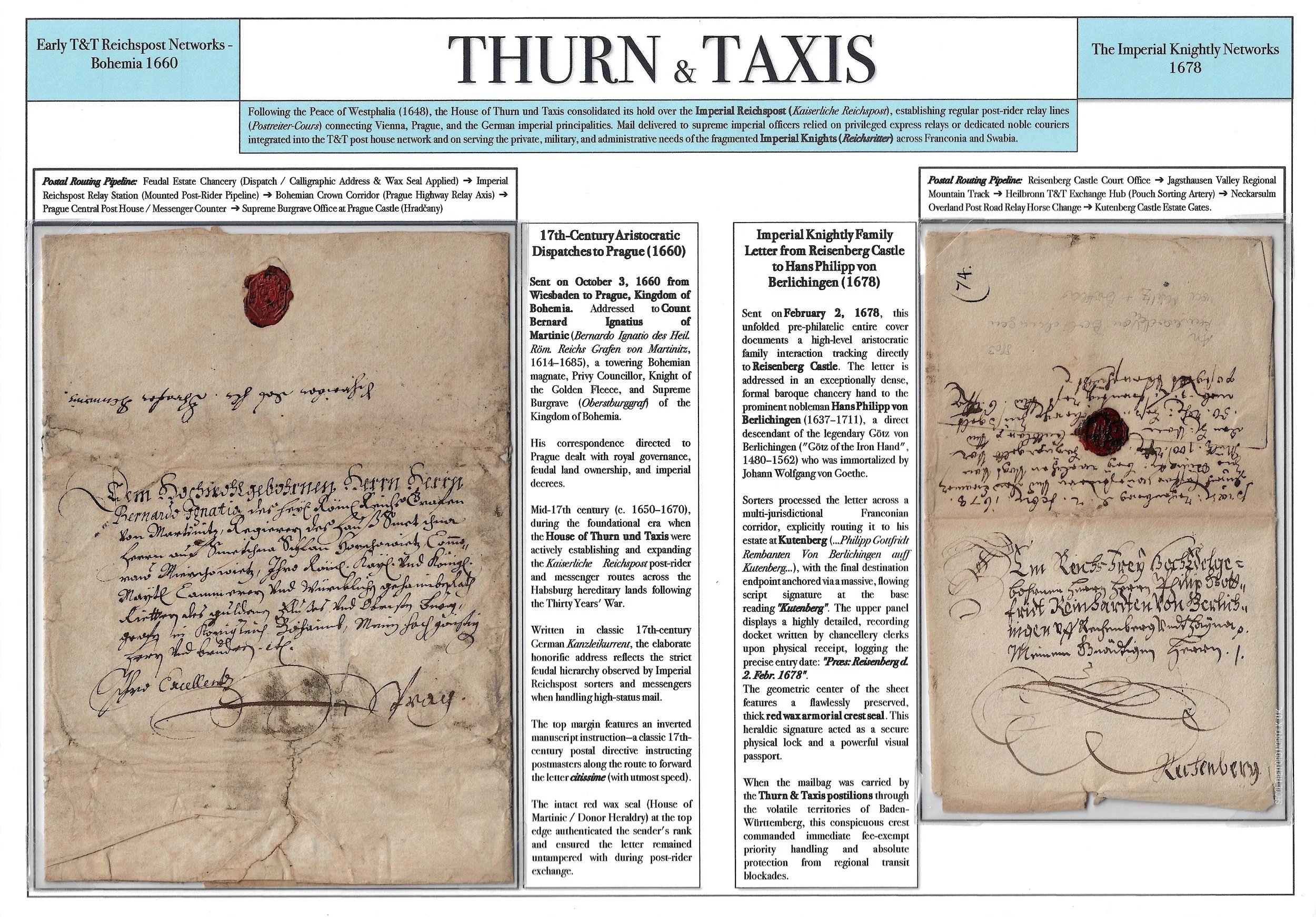
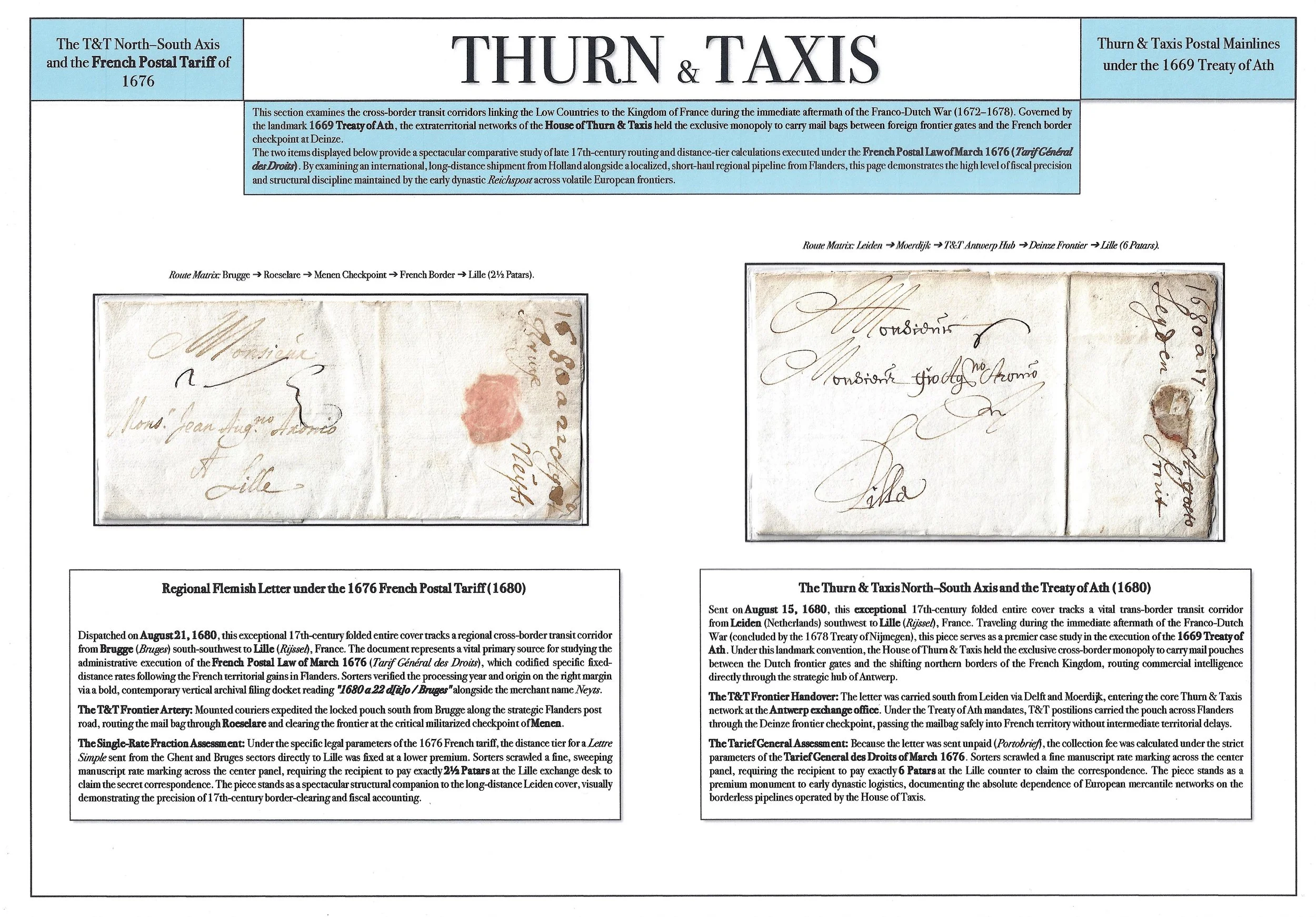
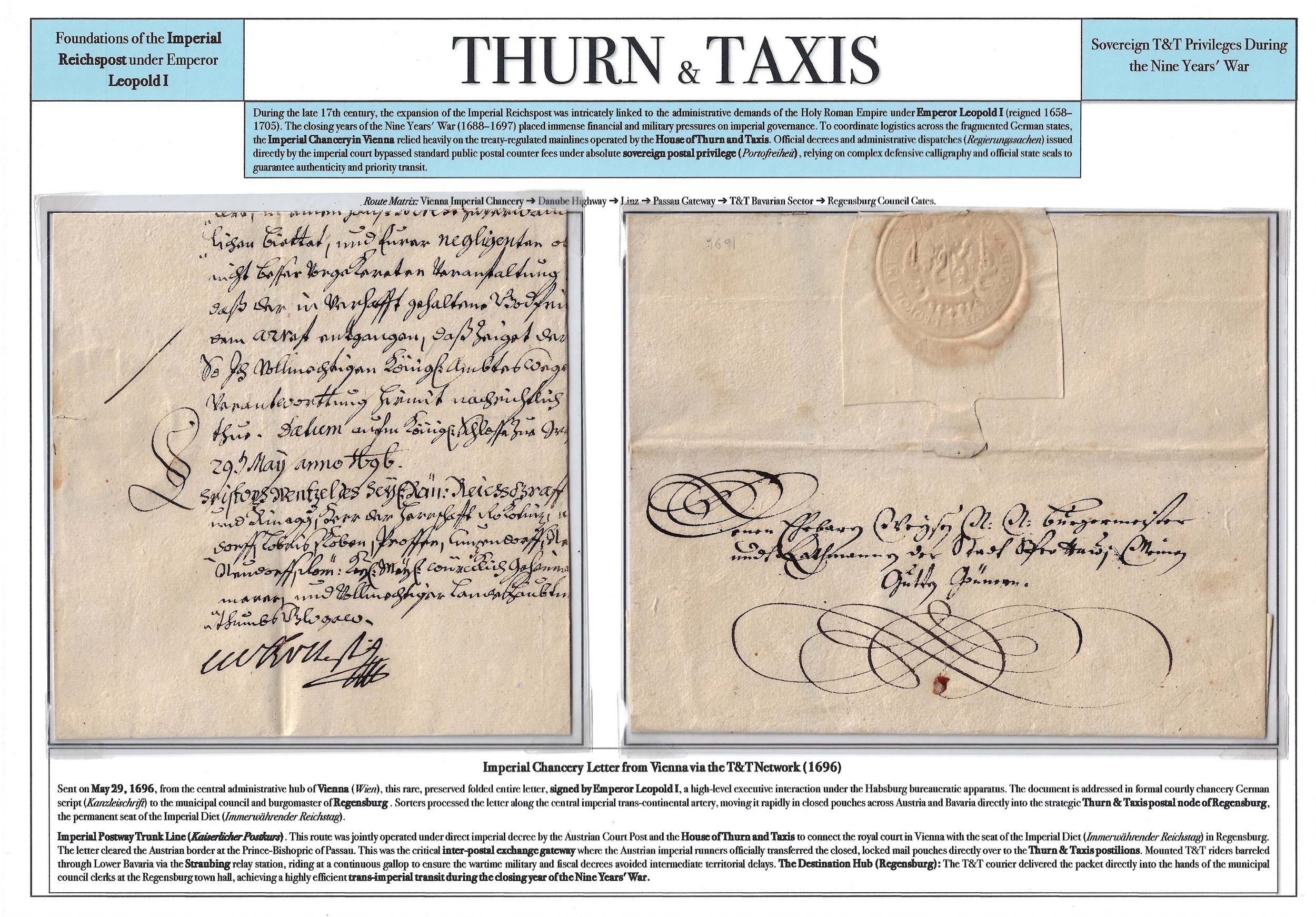
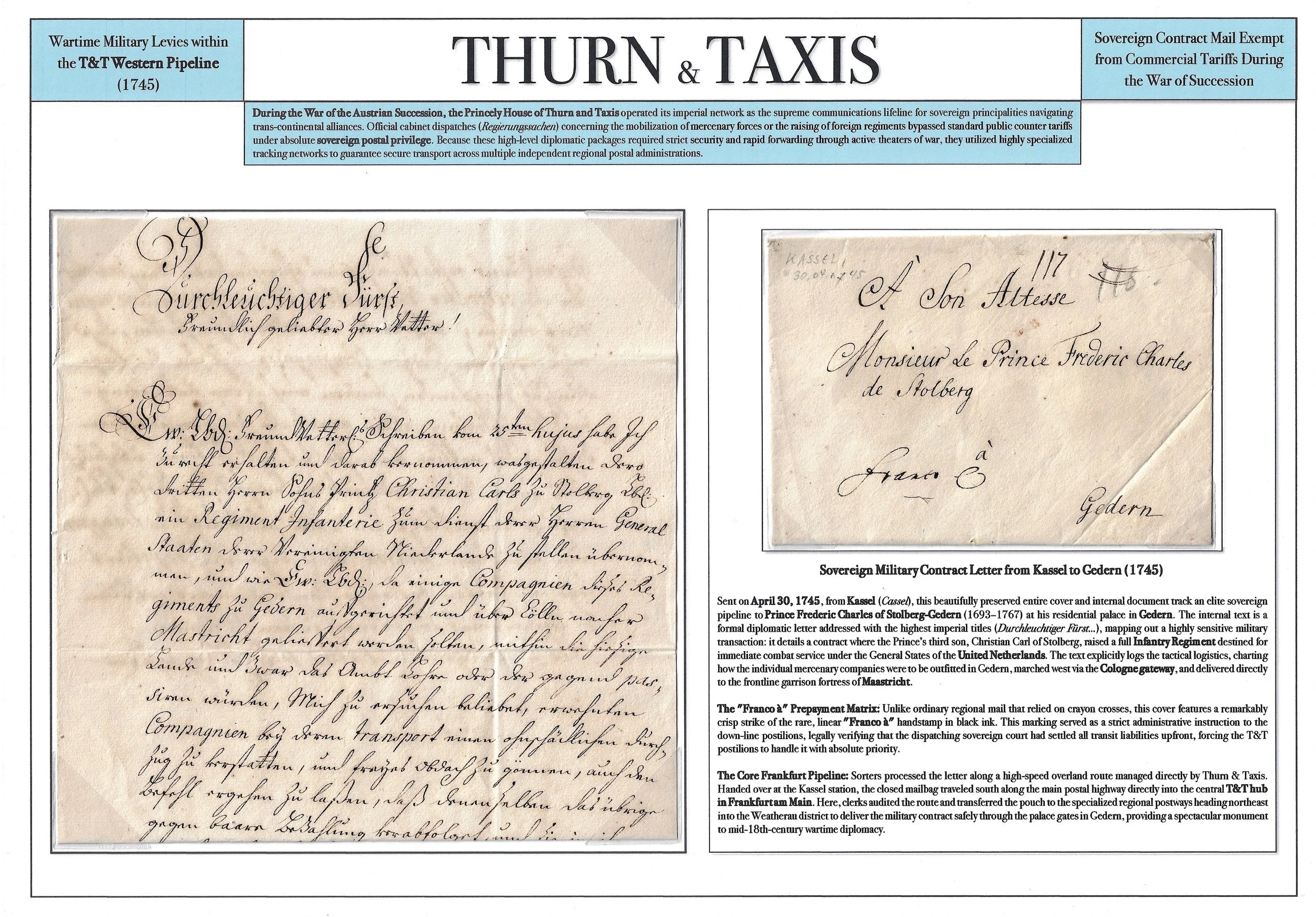
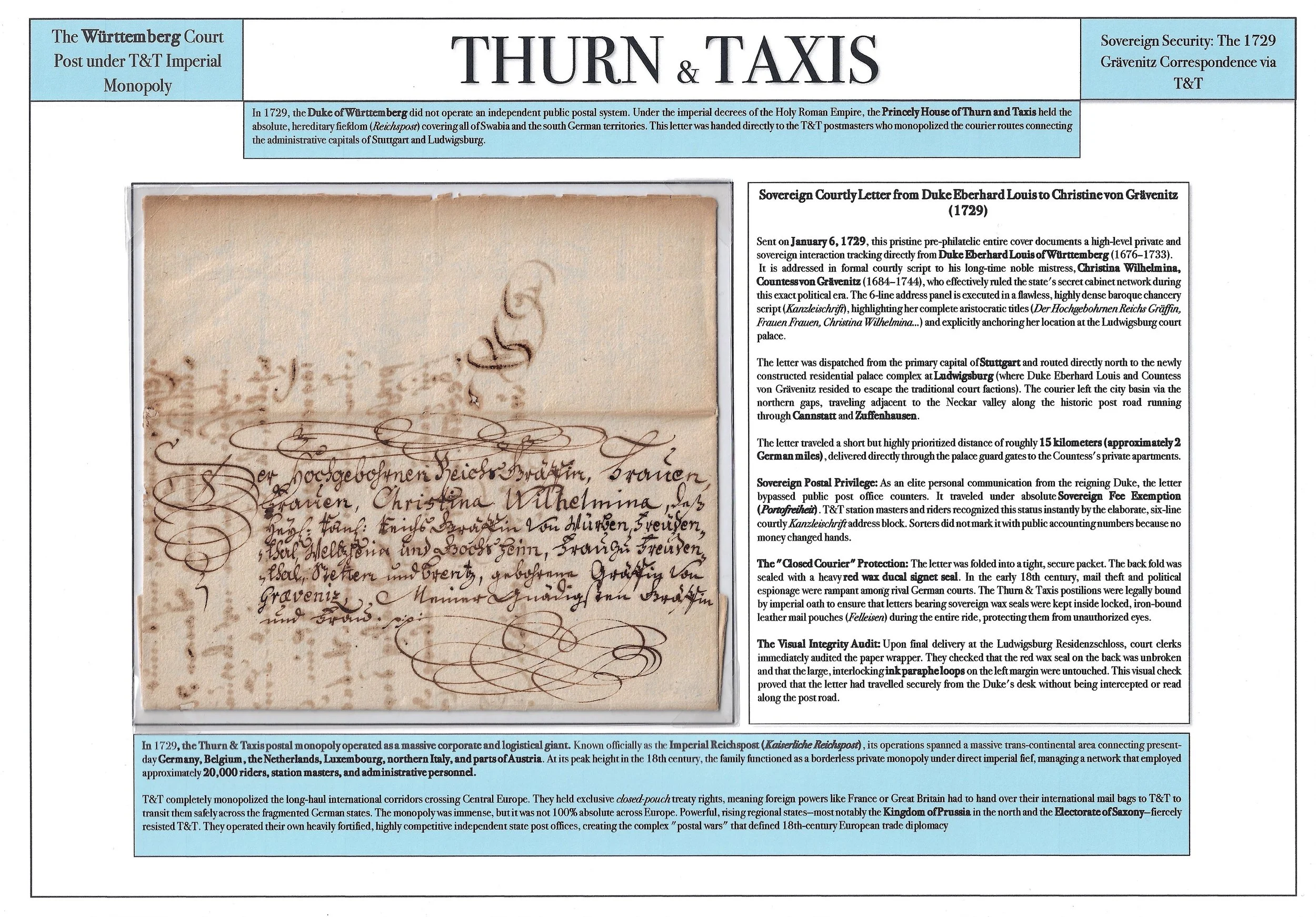
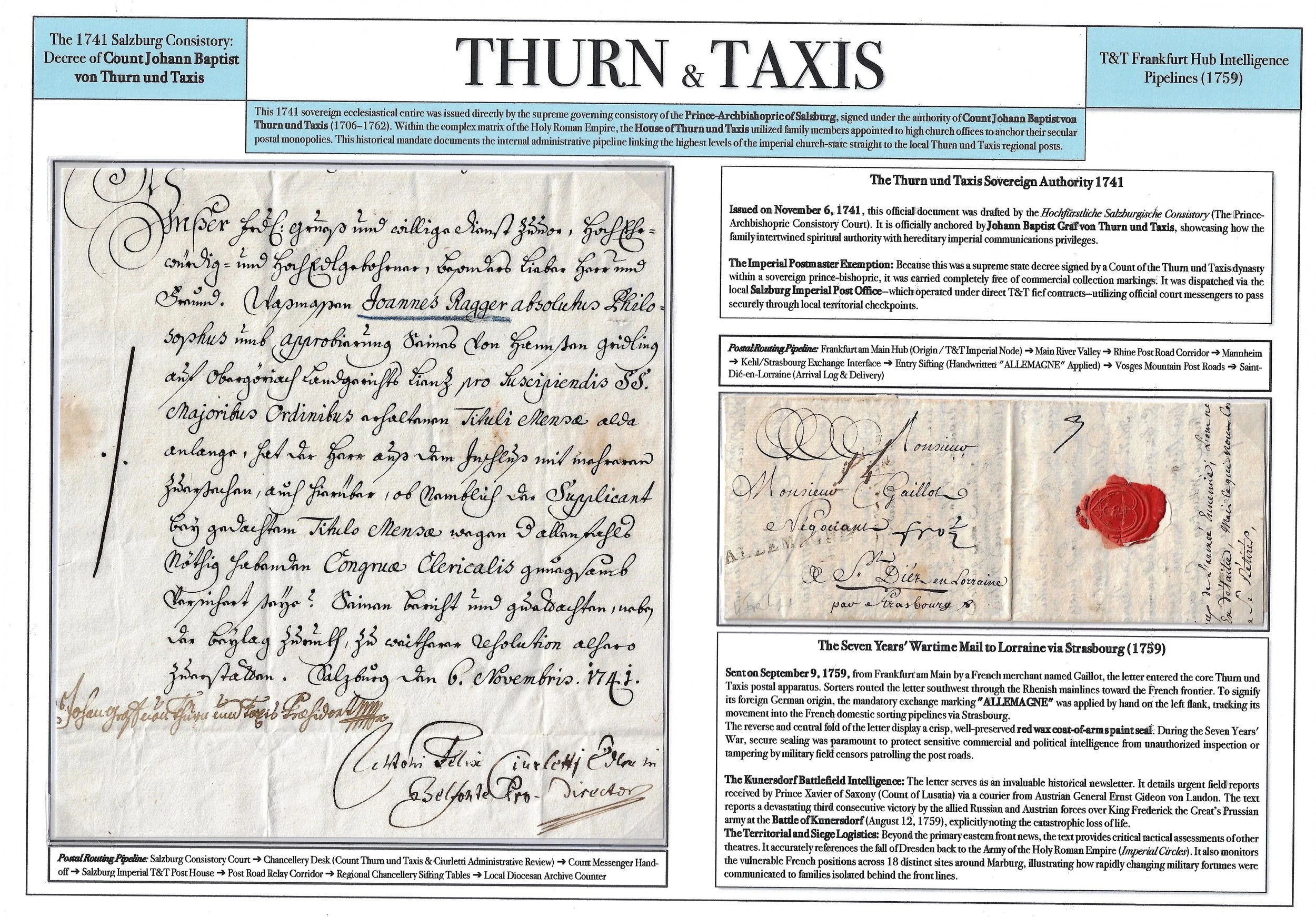
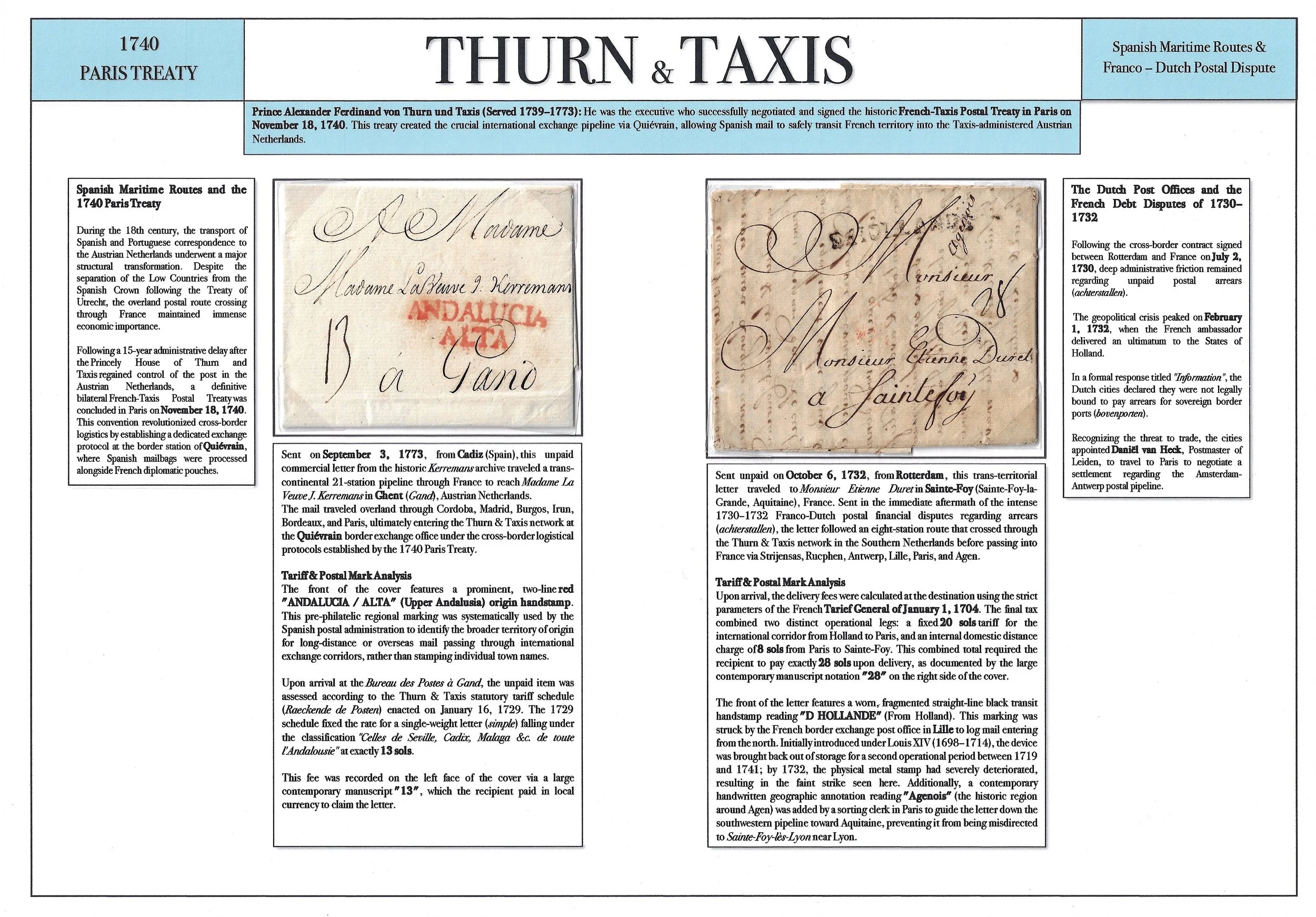
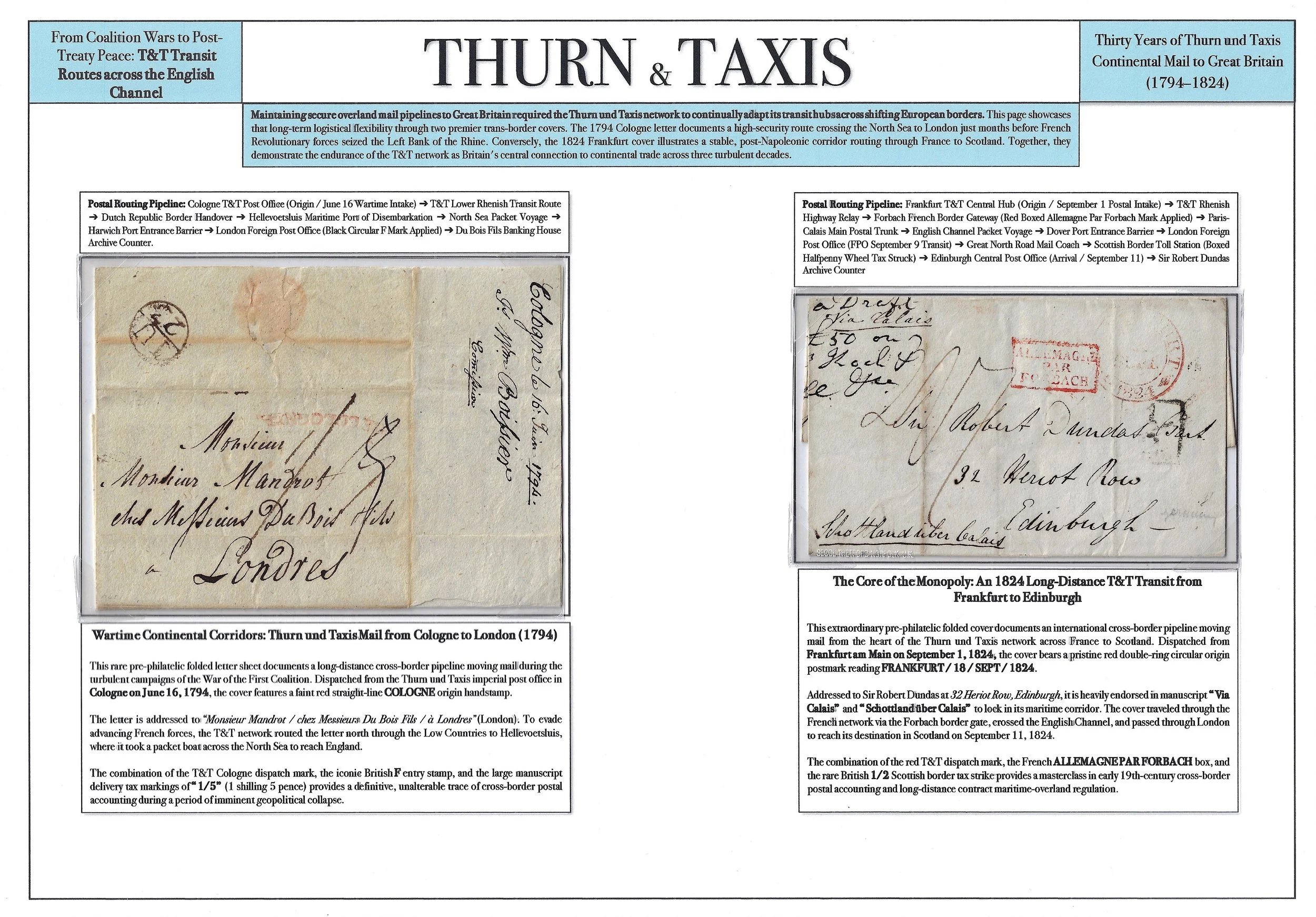
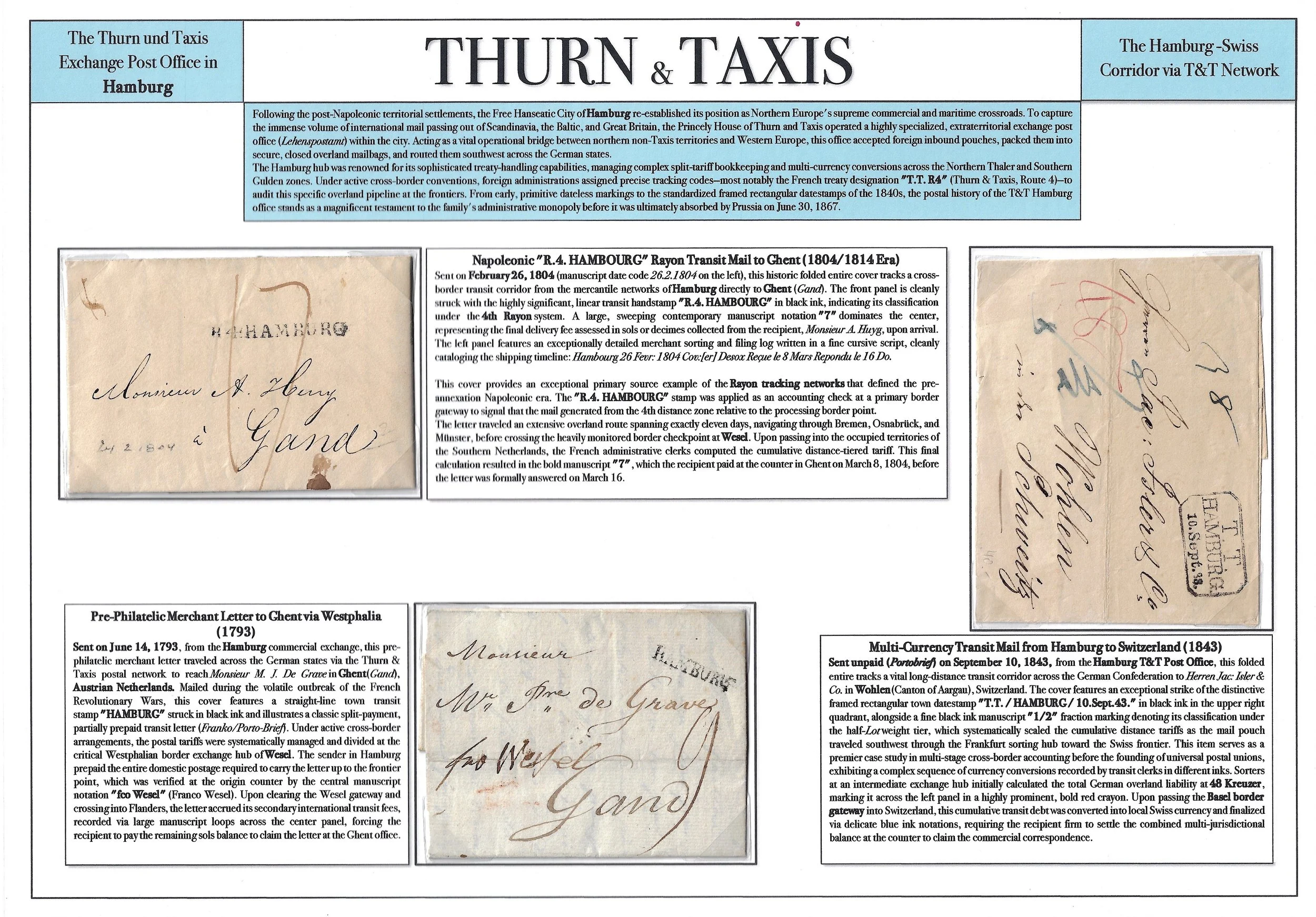
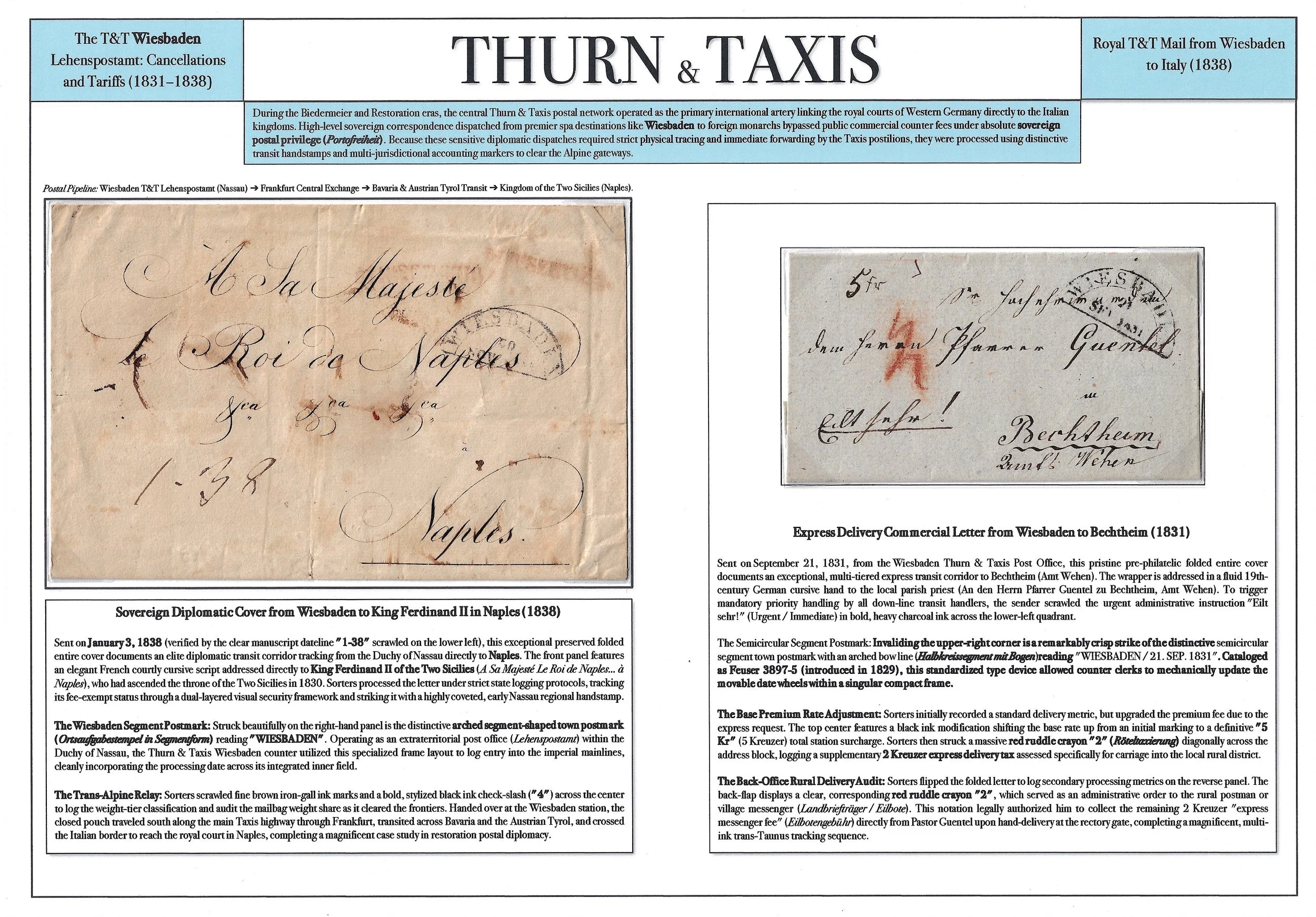
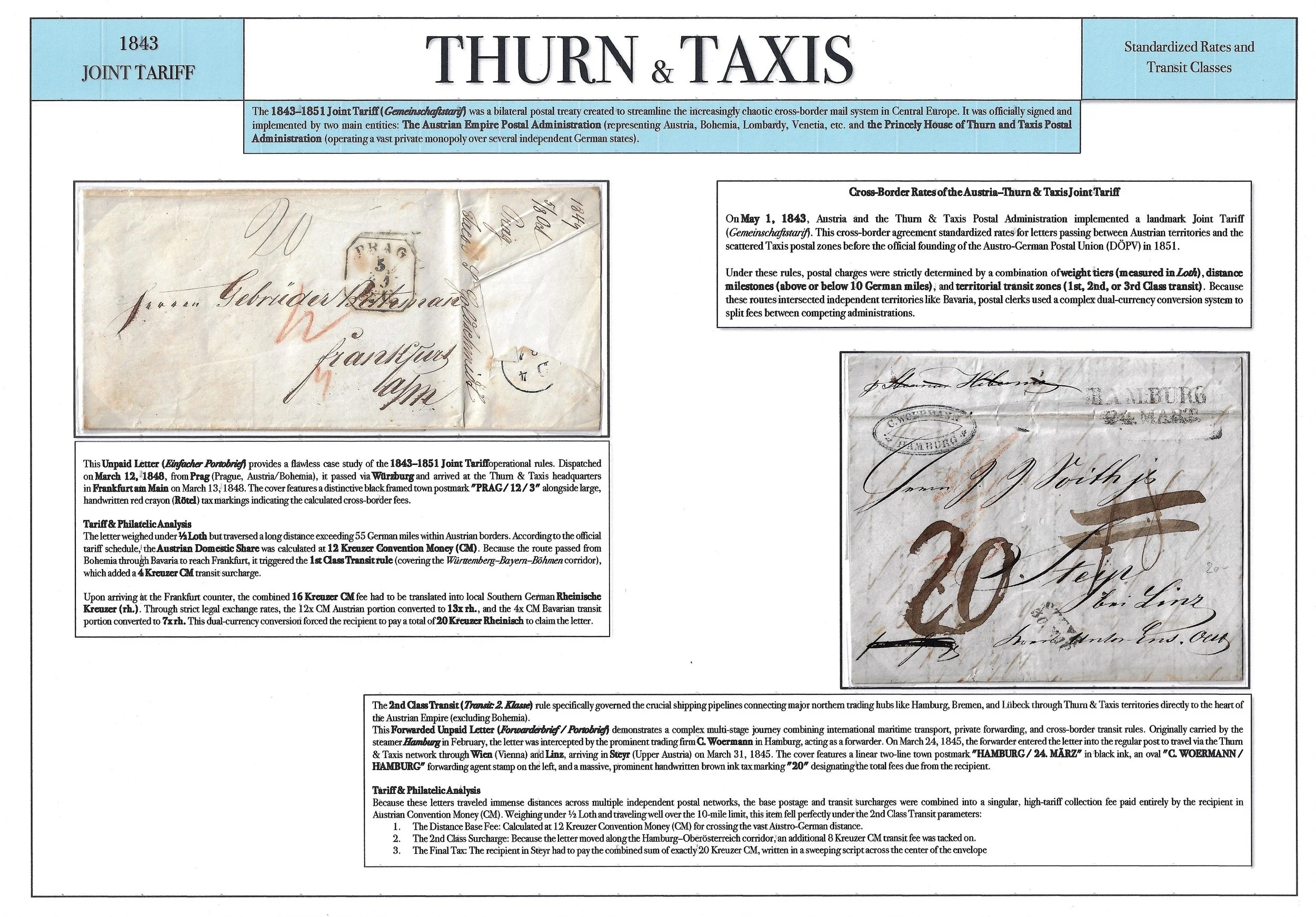
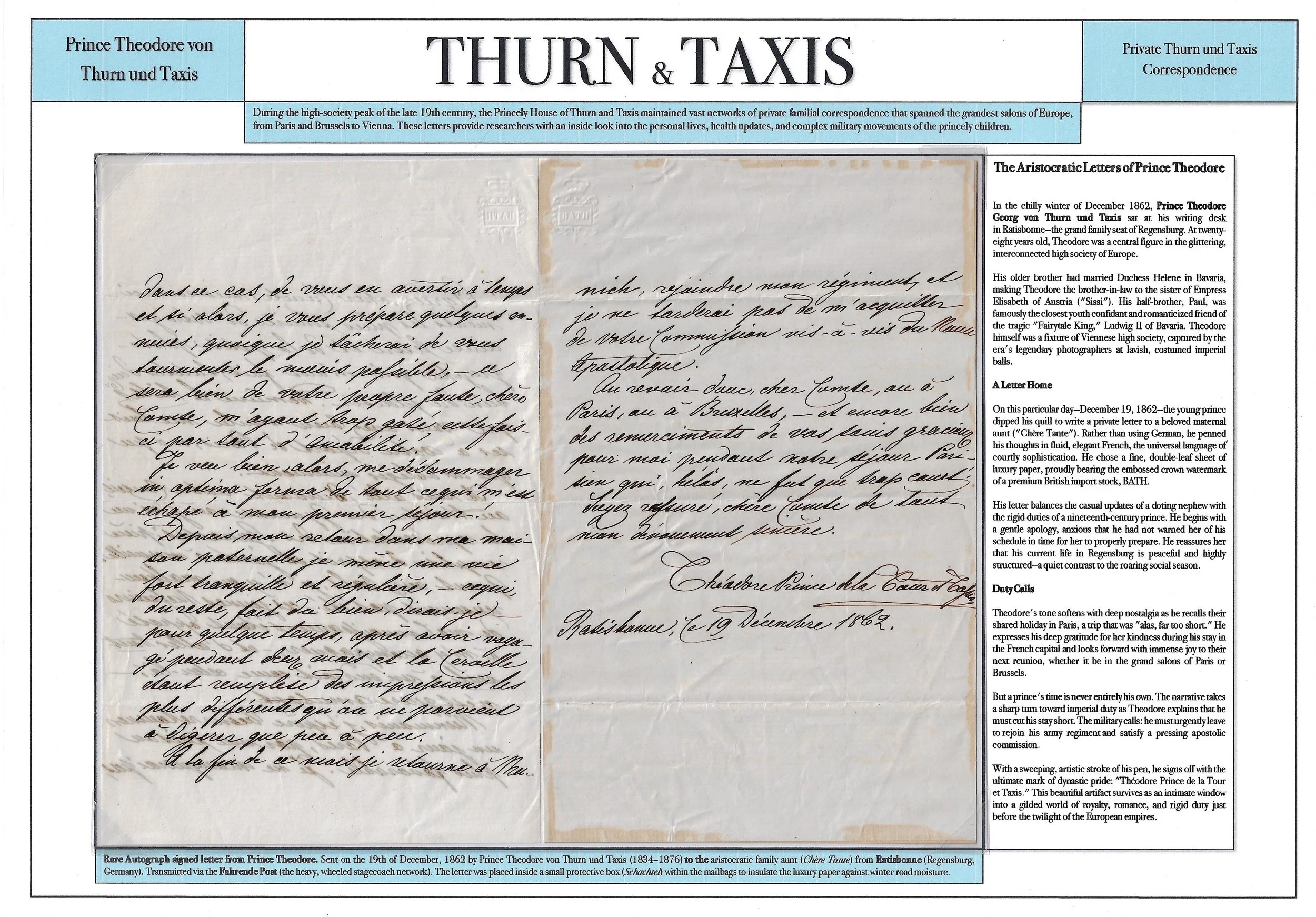
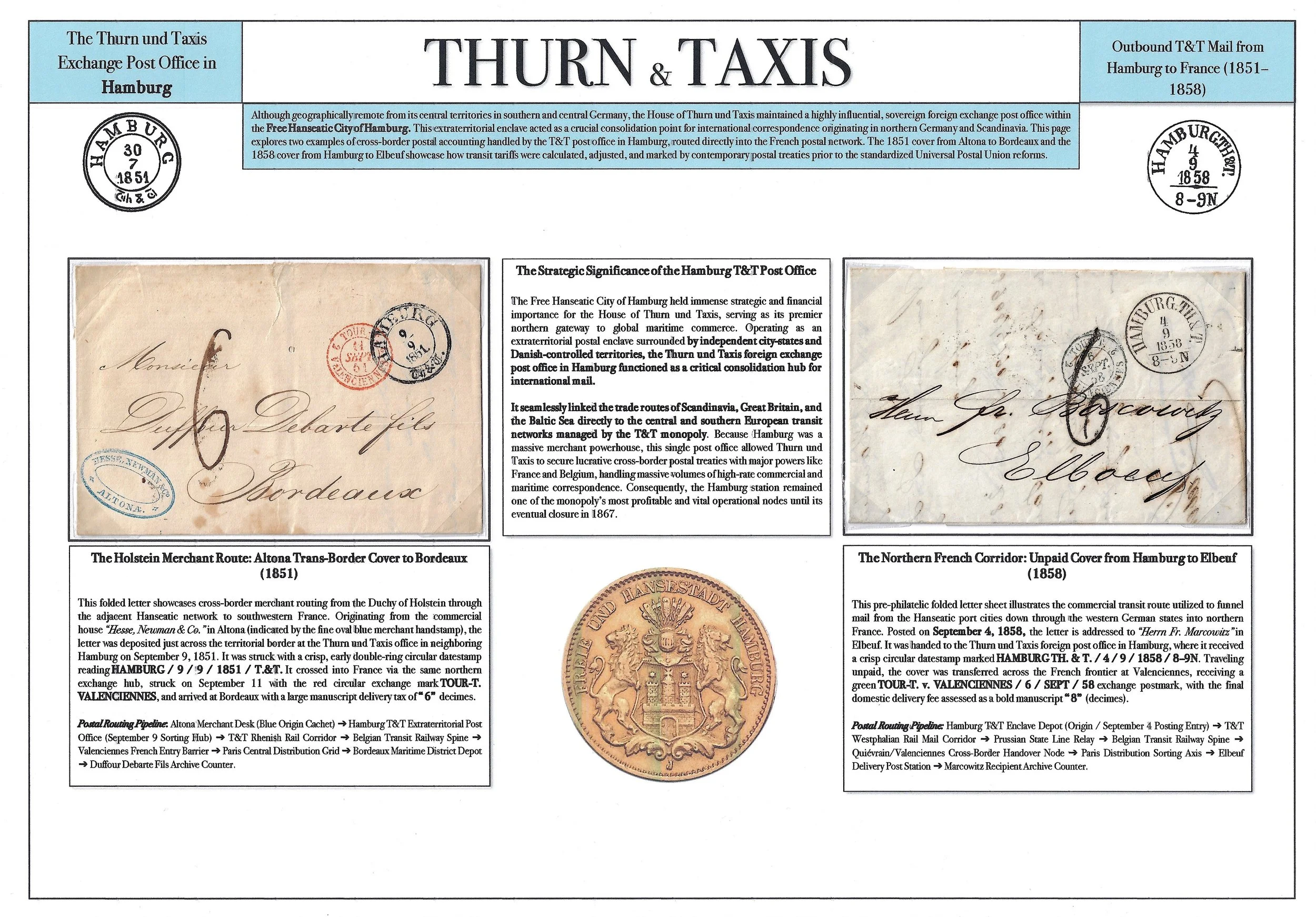
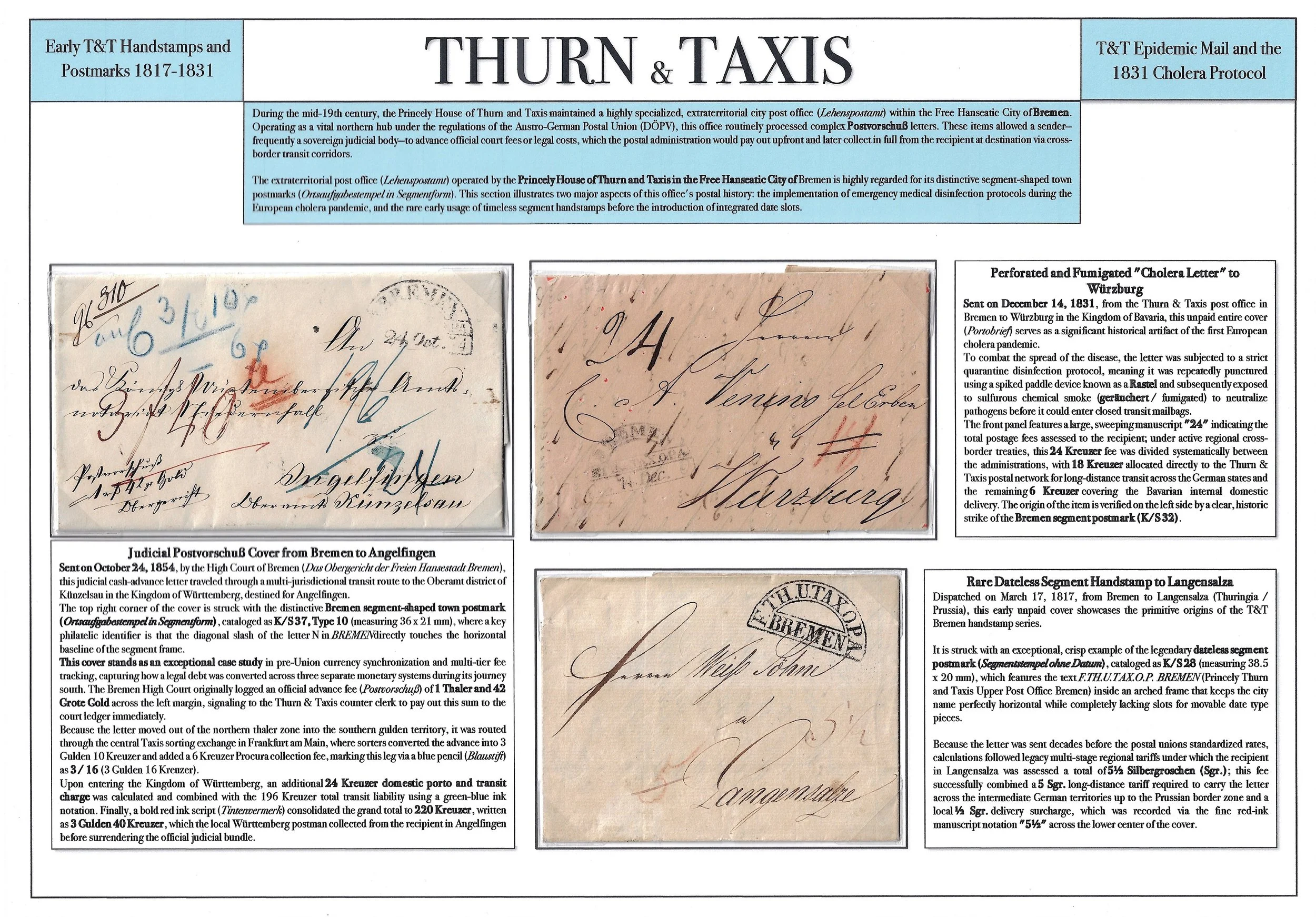
The significance of Thurn und Taxis to postal history—and to the evolution of posts across Europe—is truly second to none! As they conquered the European continent through their post-horse relays, the dynasty itself grew over the centuries into one of the most powerful and influential noble houses in European history.
Having already built collections dedicated to two of the other titan dynasties that fundamentally shaped Europe—the Bourbons and the Rothschilds—it was only natural that I tackled the extraordinary story of Thurn und Taxis next. While the Bourbon and Rothschild exhibits were exceptionally tough challenges to construct, they were nothing compared to the monumental scope of Thurn und Taxis!
This journey spanning nearly three centuries, starting from the late 1500s, has been an epic personal quest. It took over five years of passionate work to create this first iteration—which happily emerged as an almost-complete, high-level 90+ point exhibit right out of the gate - I wish! Uncovering, verifying, and securing the rarest transit routes and complex postal tariffs demanded immense time, patience, and investment.
Yet, because there is hardly a more captivating or significant theme in all of postal history, I can joyfully say once again: as long as the road was, every single step was worth it. And the adventure is still only just beginning! :)
Scope and Purpose
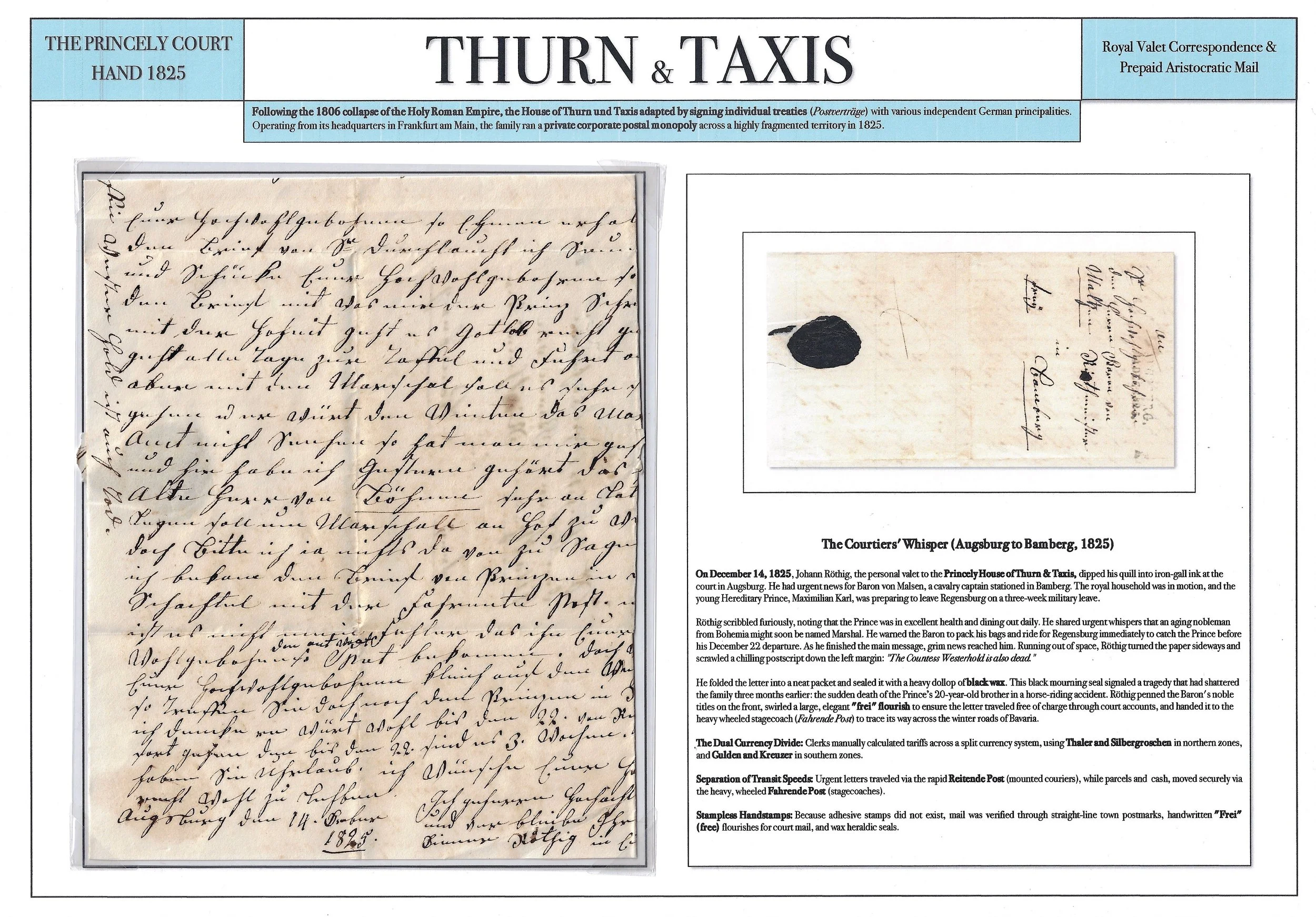
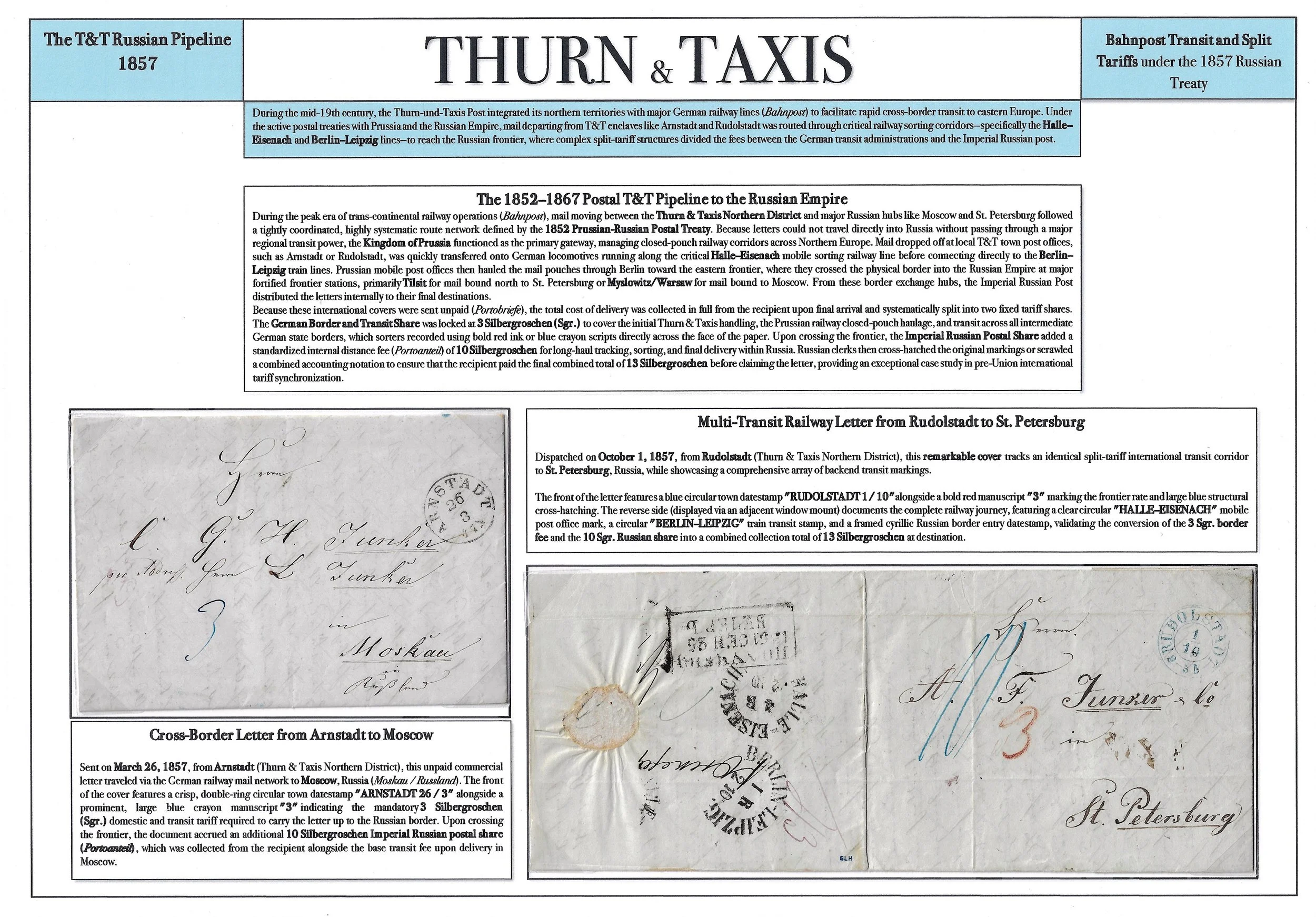
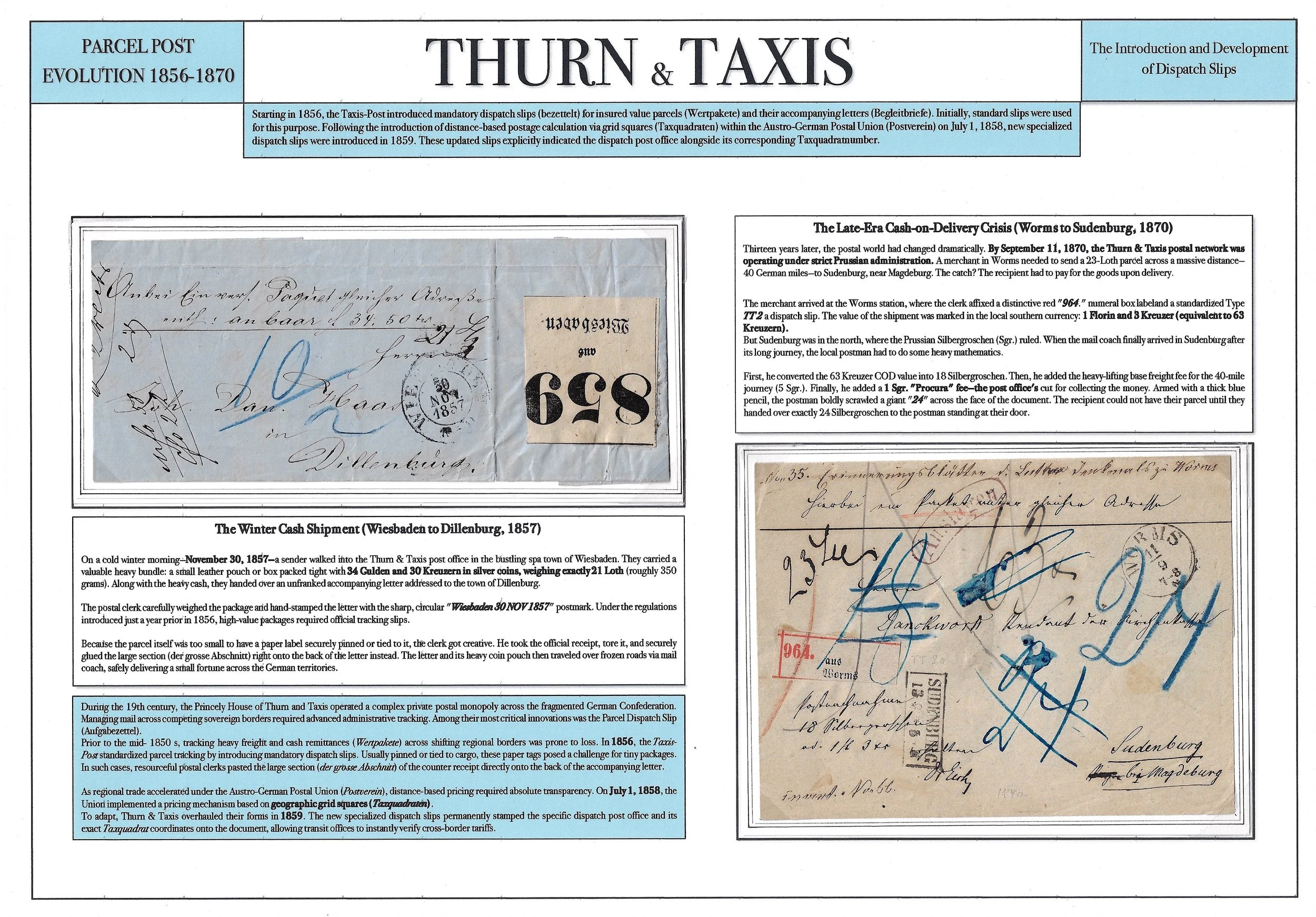
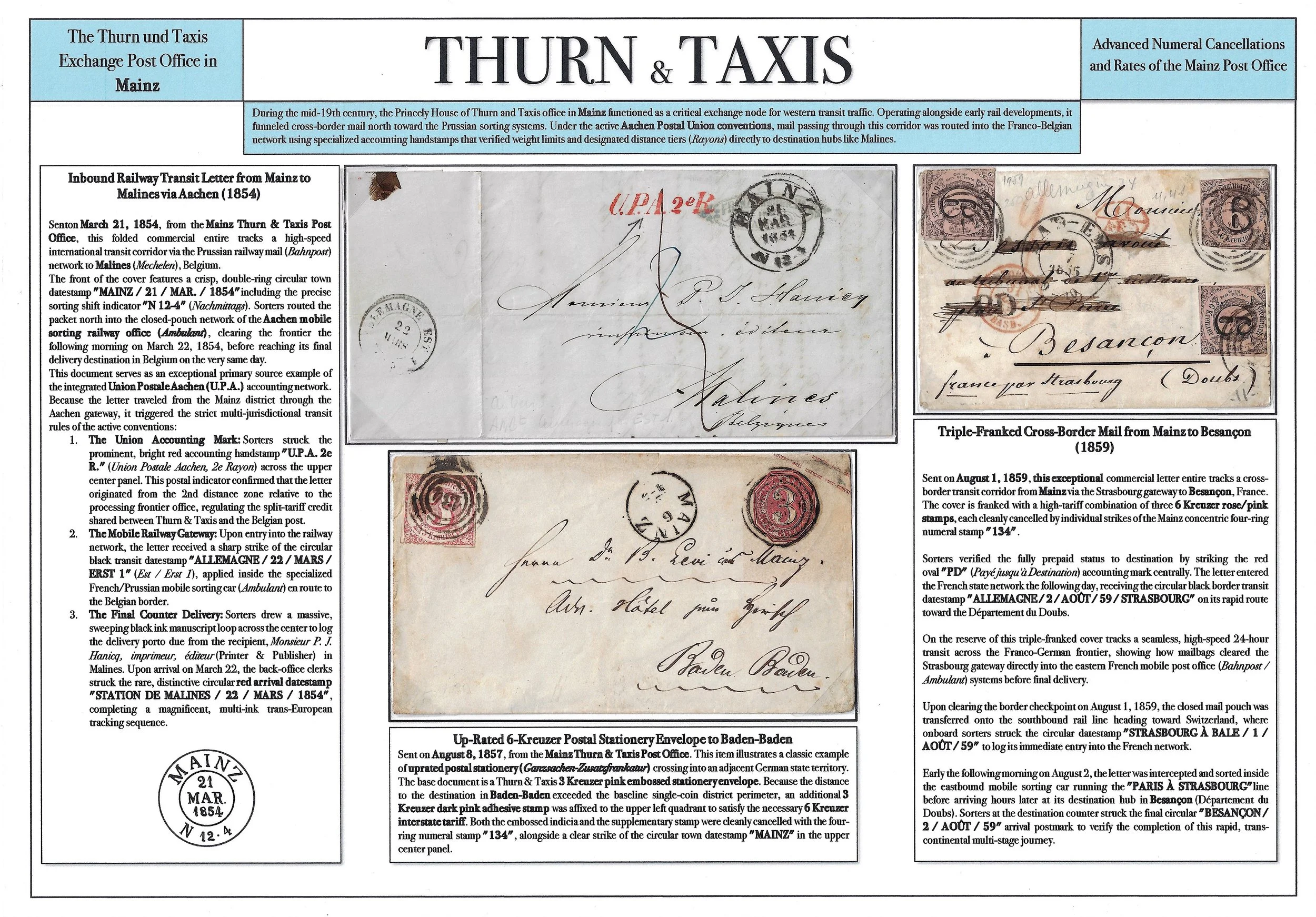
This eight-frame exhibit presents a systematic study of the operational routes, carriage methods, and accounting mechanics of the Thurn & Taxis postal network across three centuries. Originating from the Imperial monopoly charters granted by the Holy Roman Emperors, the Taxis family established the first unified trans-European relay network. The exhibit traces the evolution of these postal corridors from late 16th-century mounted couriers to the complex multi-currency transit systems of the German-Austrian Postal Union era, ending in 1866 prior to the Prussian state takeover.
Key Postal History Aspects Demonstrated
Network & Routing Mechanics: Development of primary arterial post-horse routes connecting Brussels, Frankfurt, Regensburg, Vienna, Rome, and Hanseatic enclave ports.
Carriage & Express Systems: Structural distinction between Imperial relay mail, express Cito directives, official sovereign free-mail (Cabinetssache), and competing municipal messenger lines (Stadsboden).
Tariff Systems & Exchange Accounting: Transition from early manuscript rate notations and 17th-century regional tariffs (such as the 1613 Brussels and 1729 T&T Tariff) to complex cross-border exchange accounting involving multi-stage currency conversions (Kreuzer, Soldi, Sols, Stuivers, and Silbergroschen).
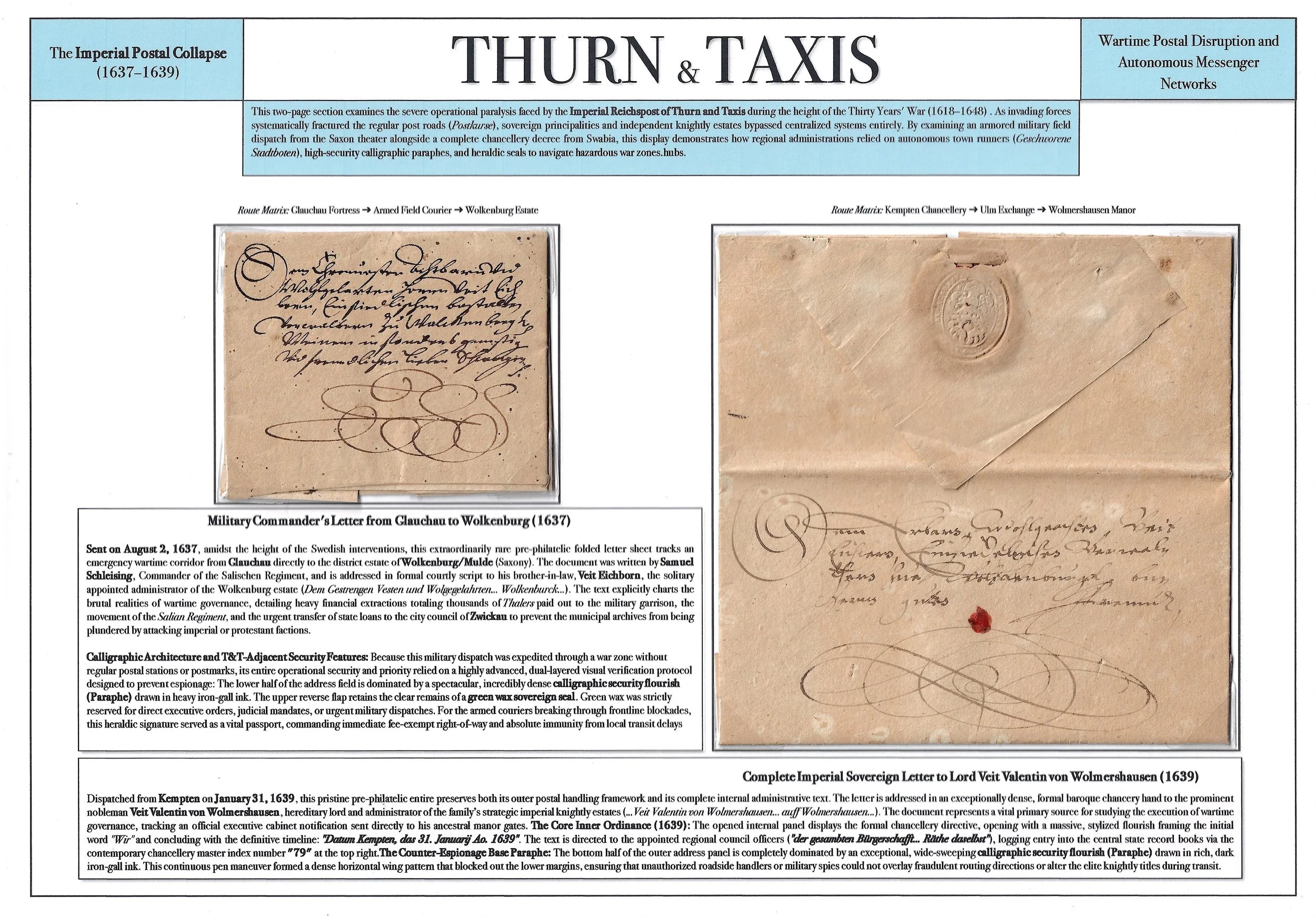
Wartime Rerouting & Foreign Interventions: Impact of the Thirty Years' War, Nine Years' War, War of the Spanish Succession, and Napoleonic conflicts on corridor maintenance and border exchange desks.
Exhibit Structure & Frame Distribution
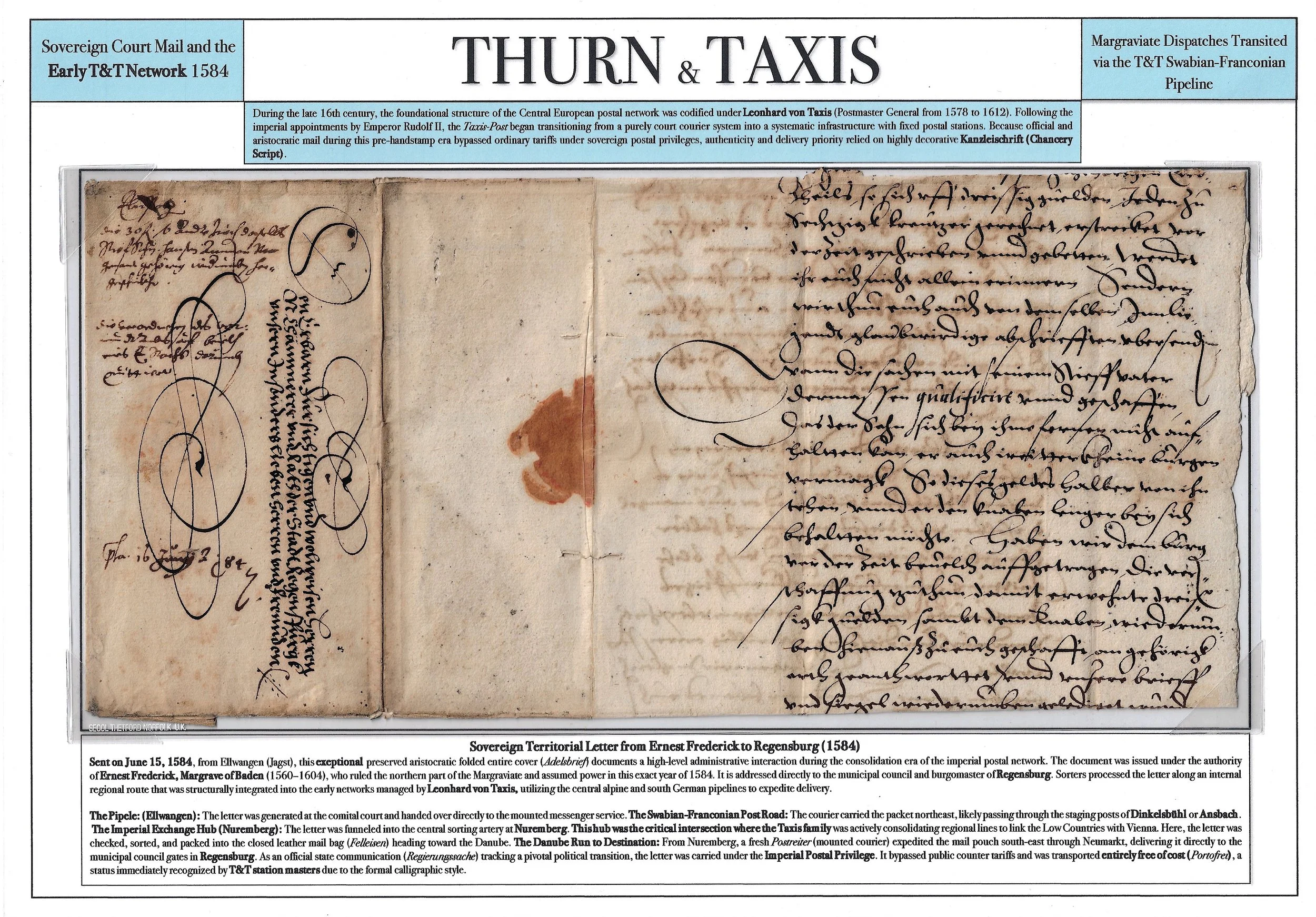
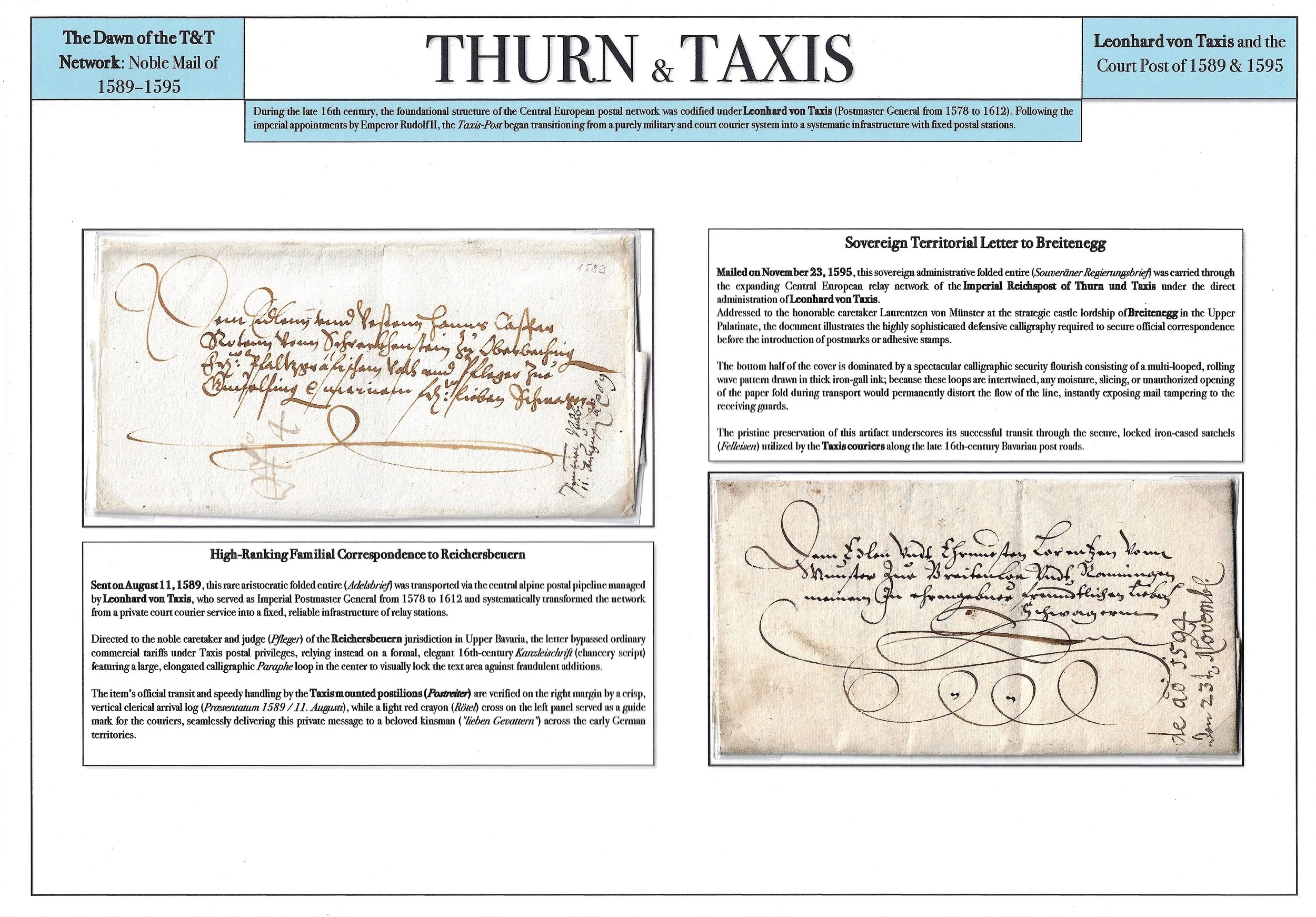
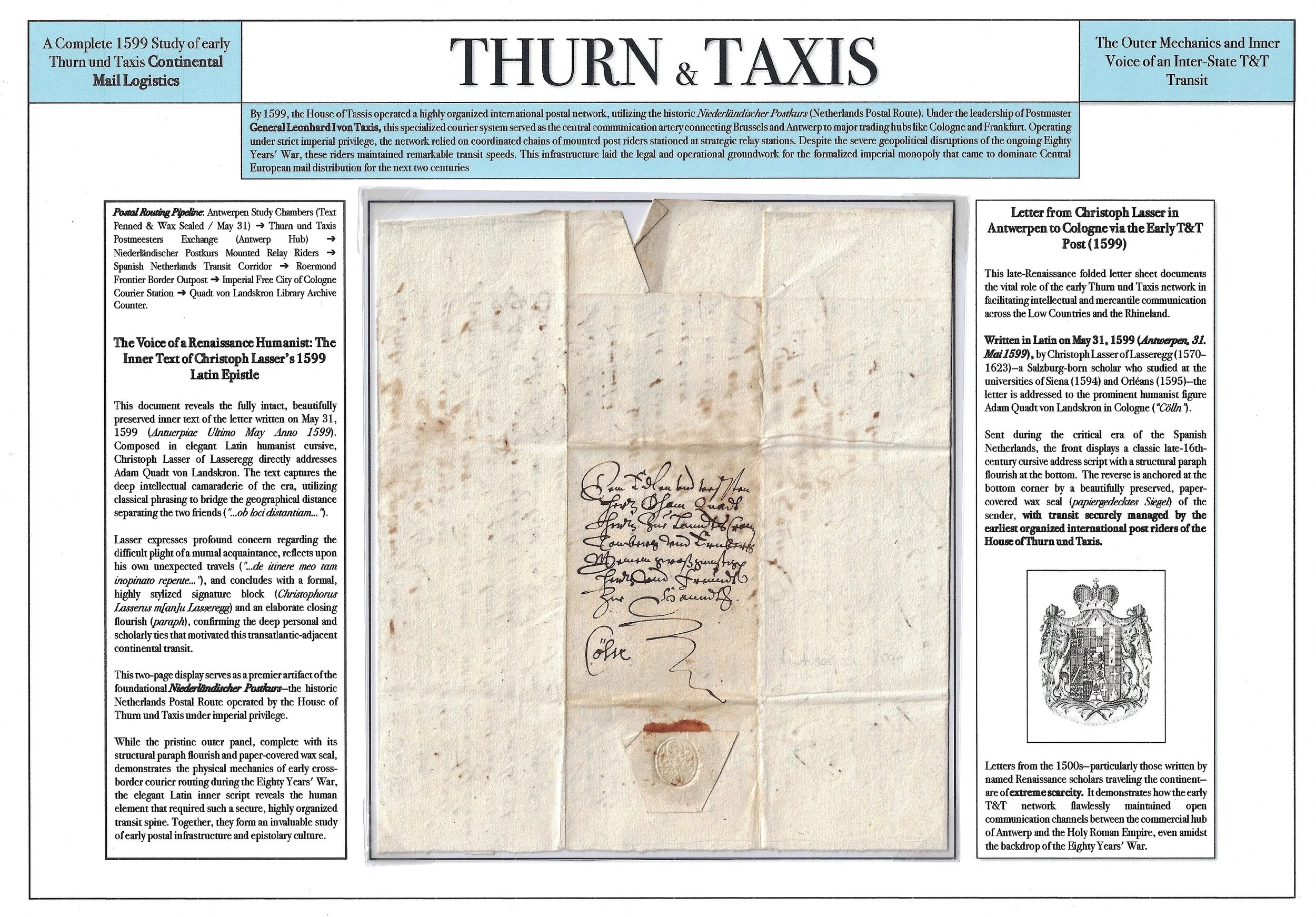
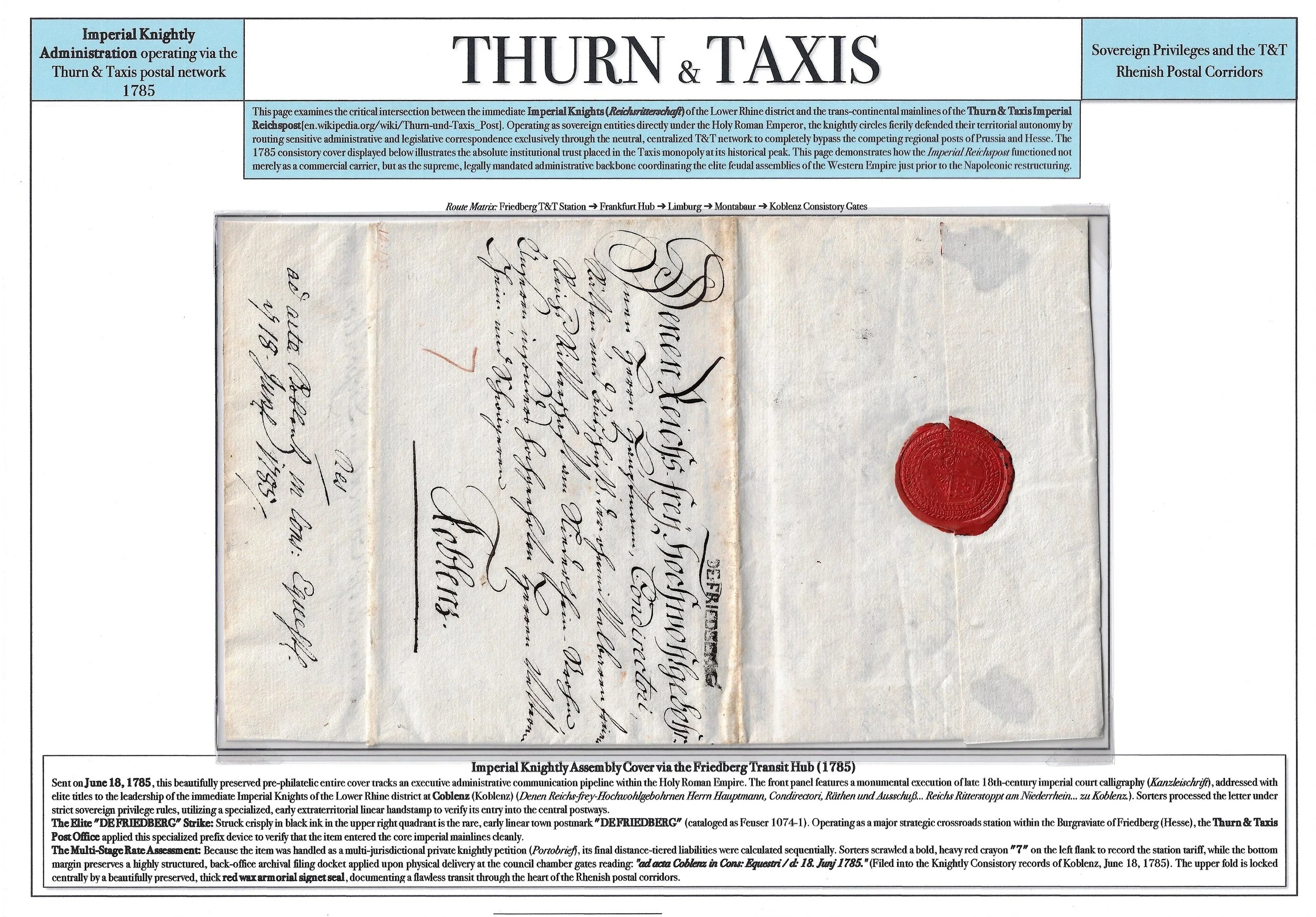
Frame 1: Foundations of the Imperial Network & Early Corridors (1597–1650)
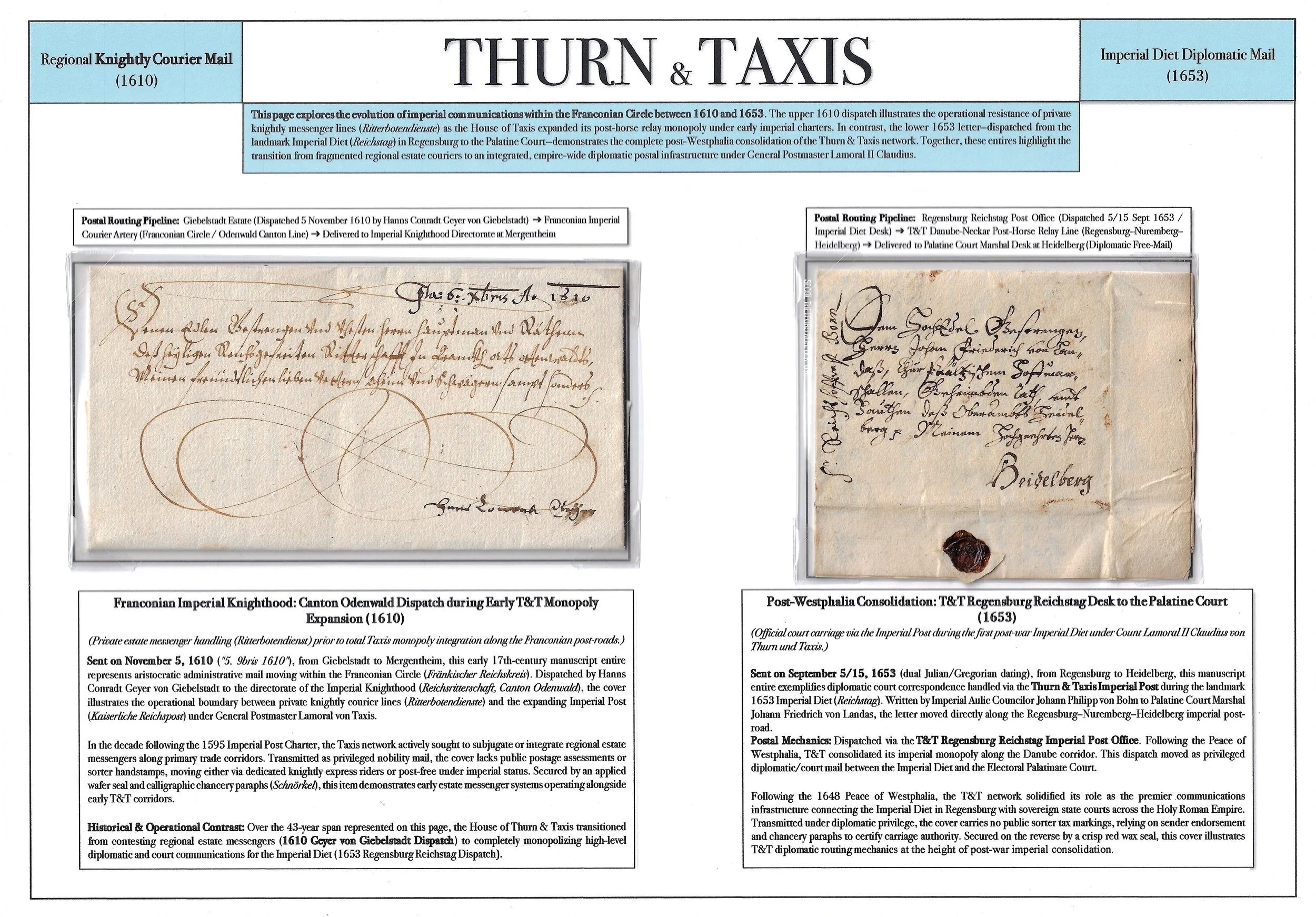
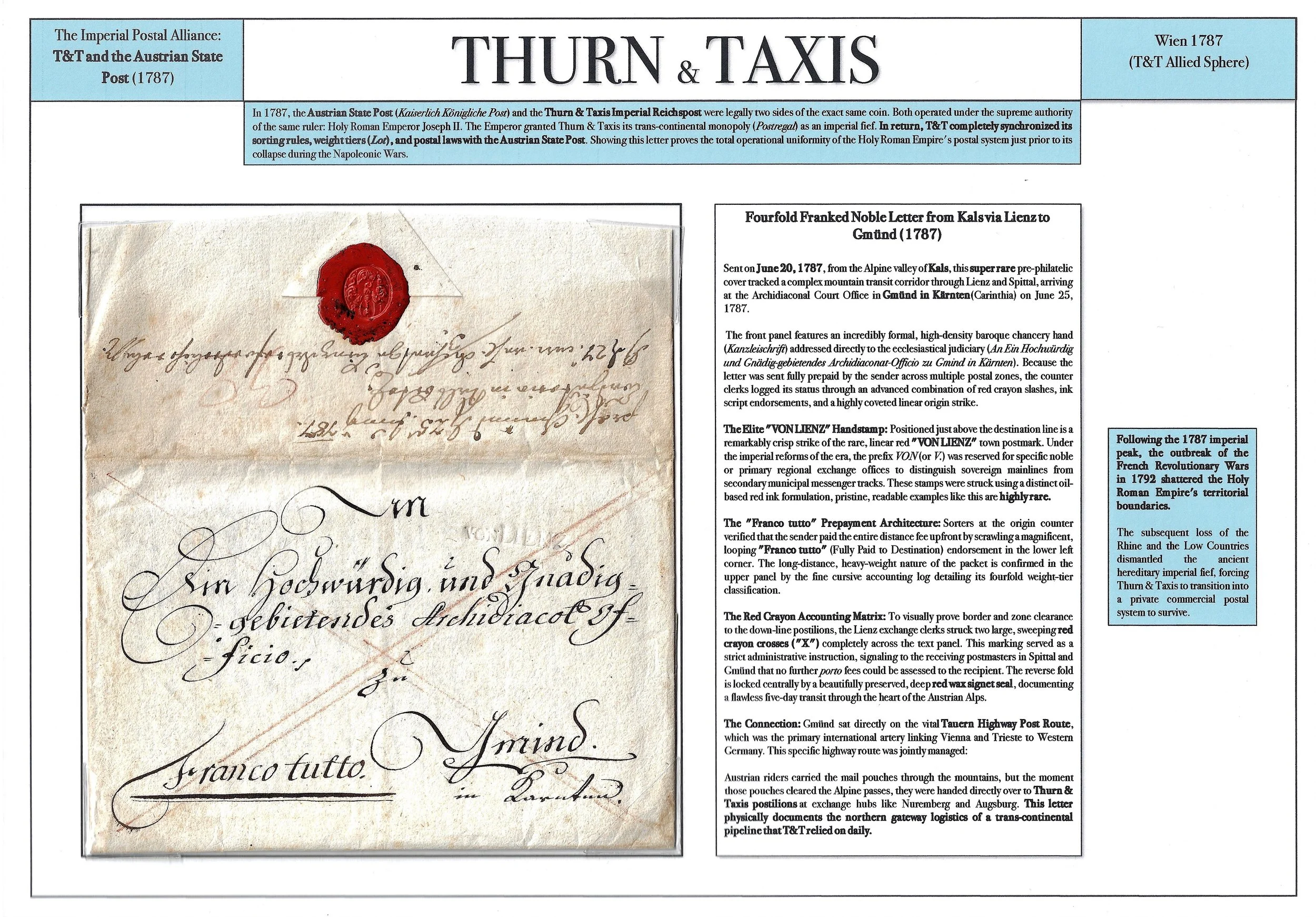
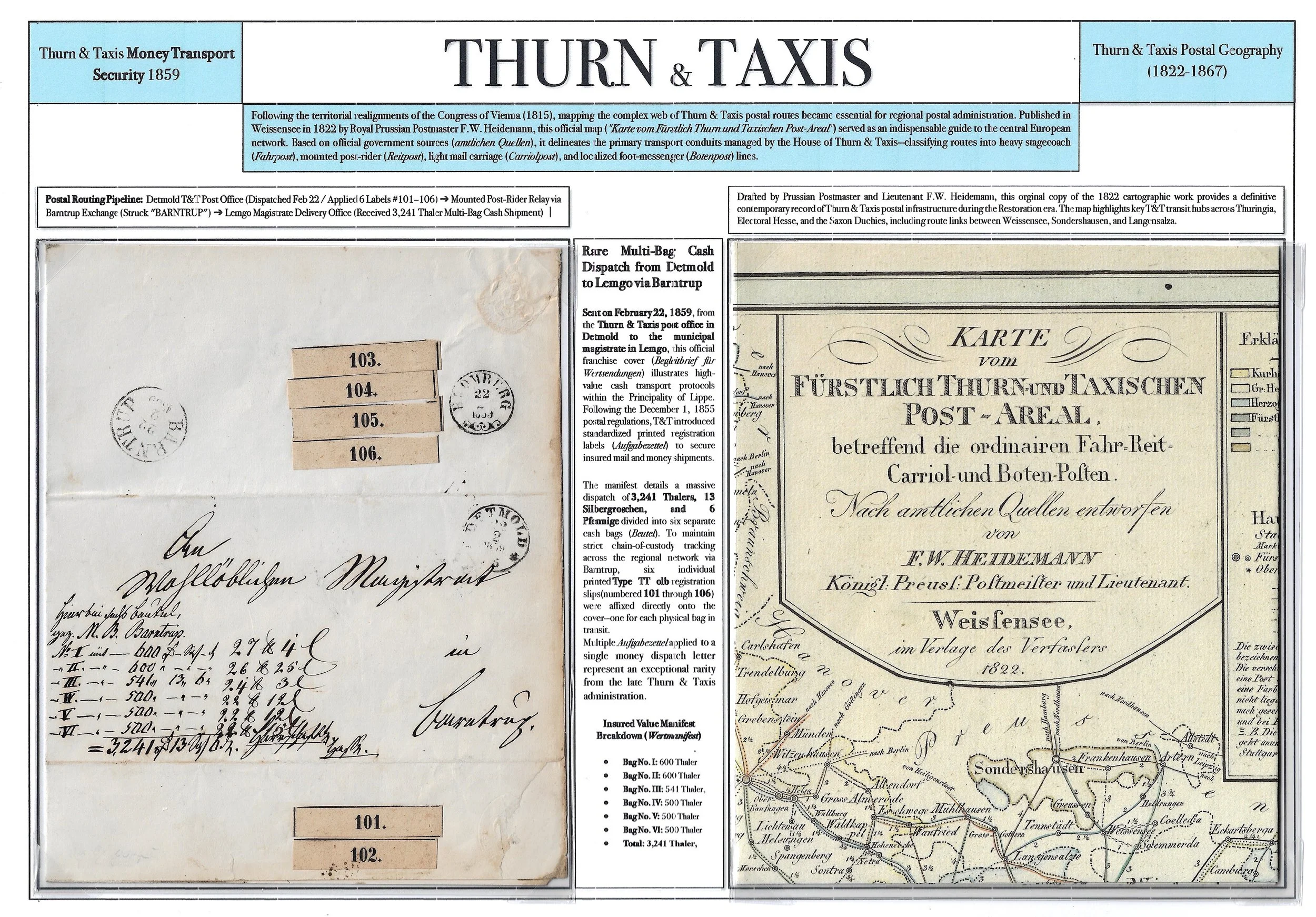
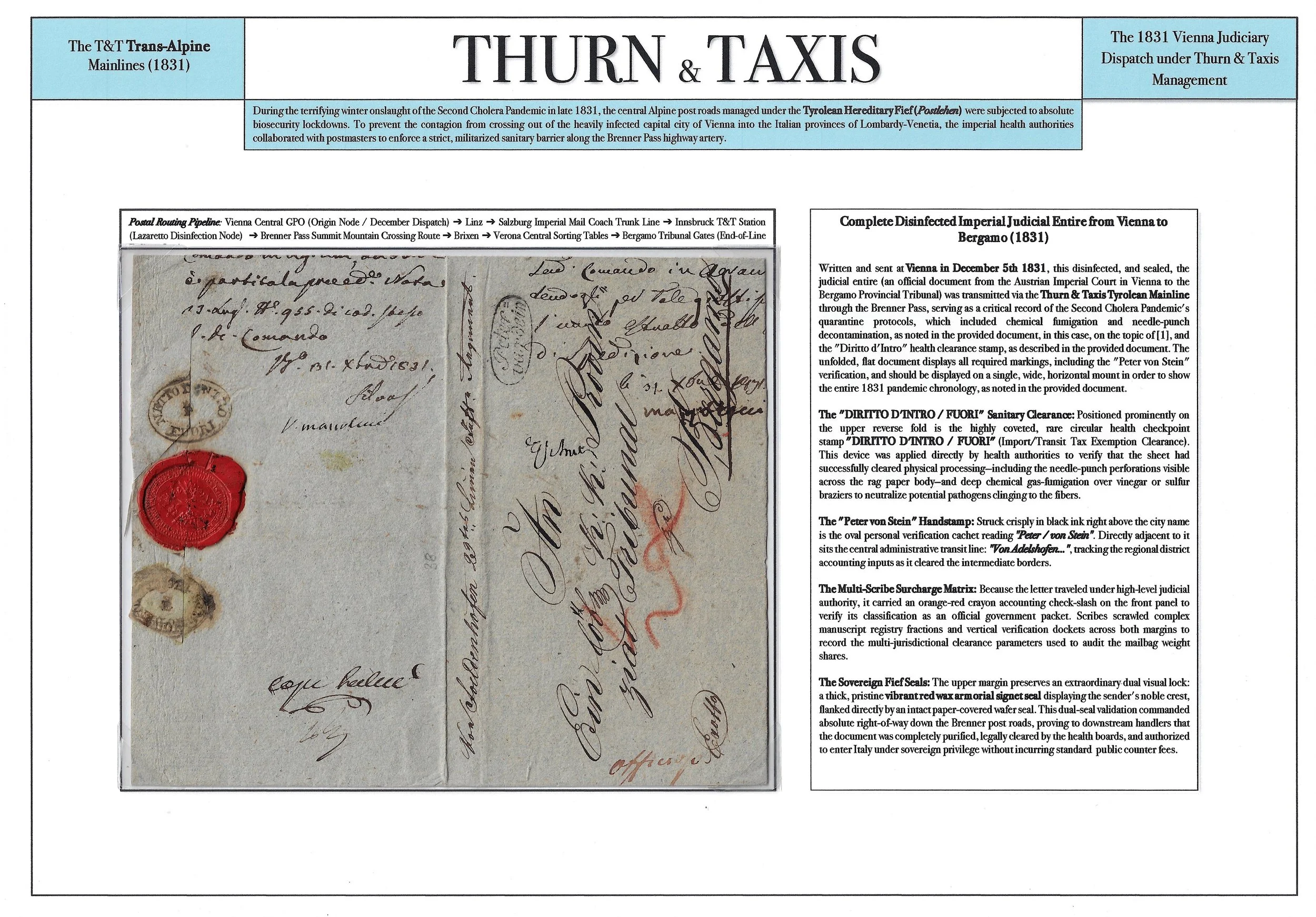
Imperial monopoly charters, Brussels headquarters, early Cito Cito express directives, Thirty Years' War rerouting, and parallel municipal/knightly messenger lines (1607 Würzburg, 1610 Giebelstadt, 1612 Harburg, 1628 Brussels, 1630 Antwerp, 1645 Lille, 1650 Antwerp).
Frame 2: Trans-European Trunk Lines & Maritime Transit (1651–1714)
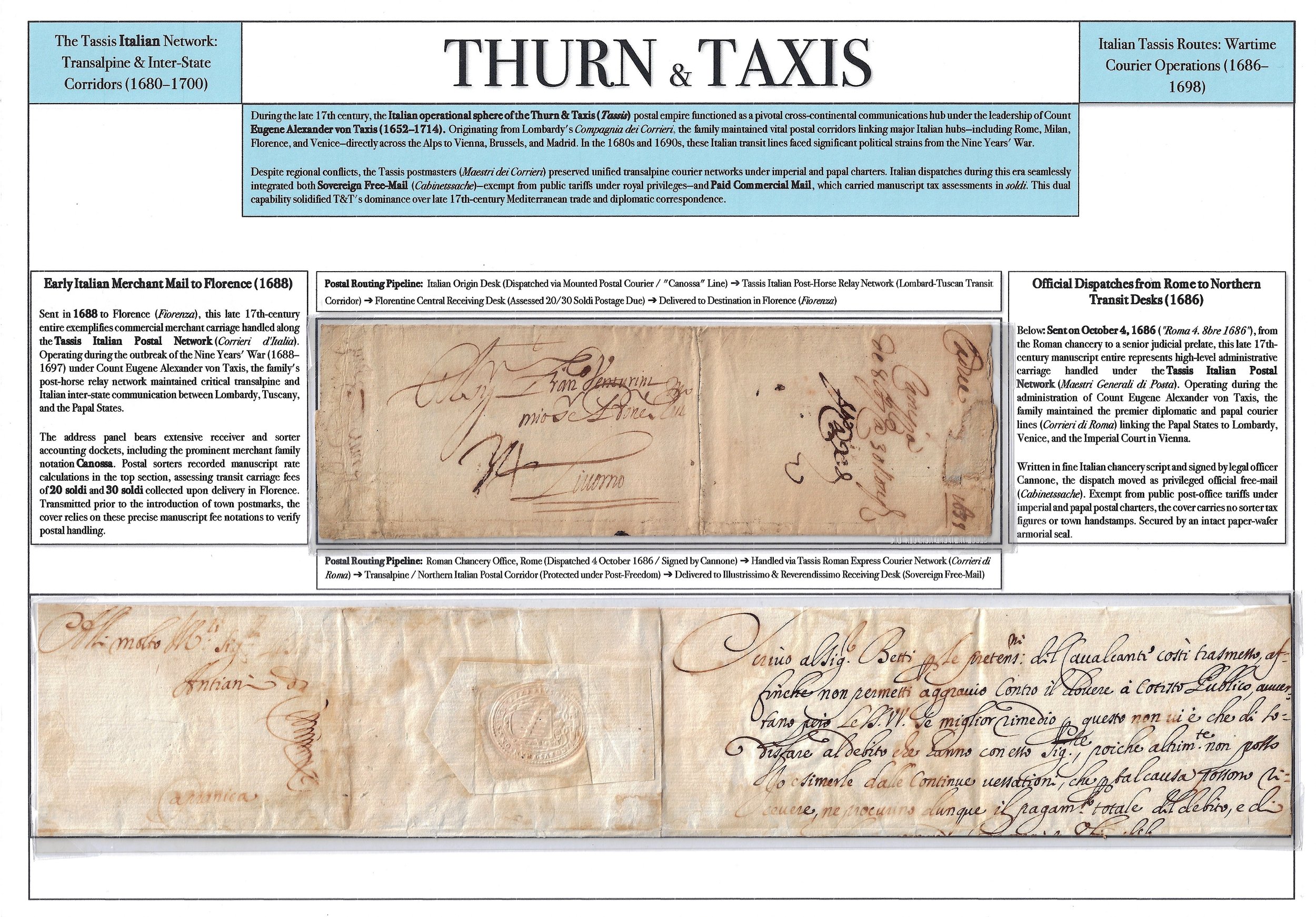
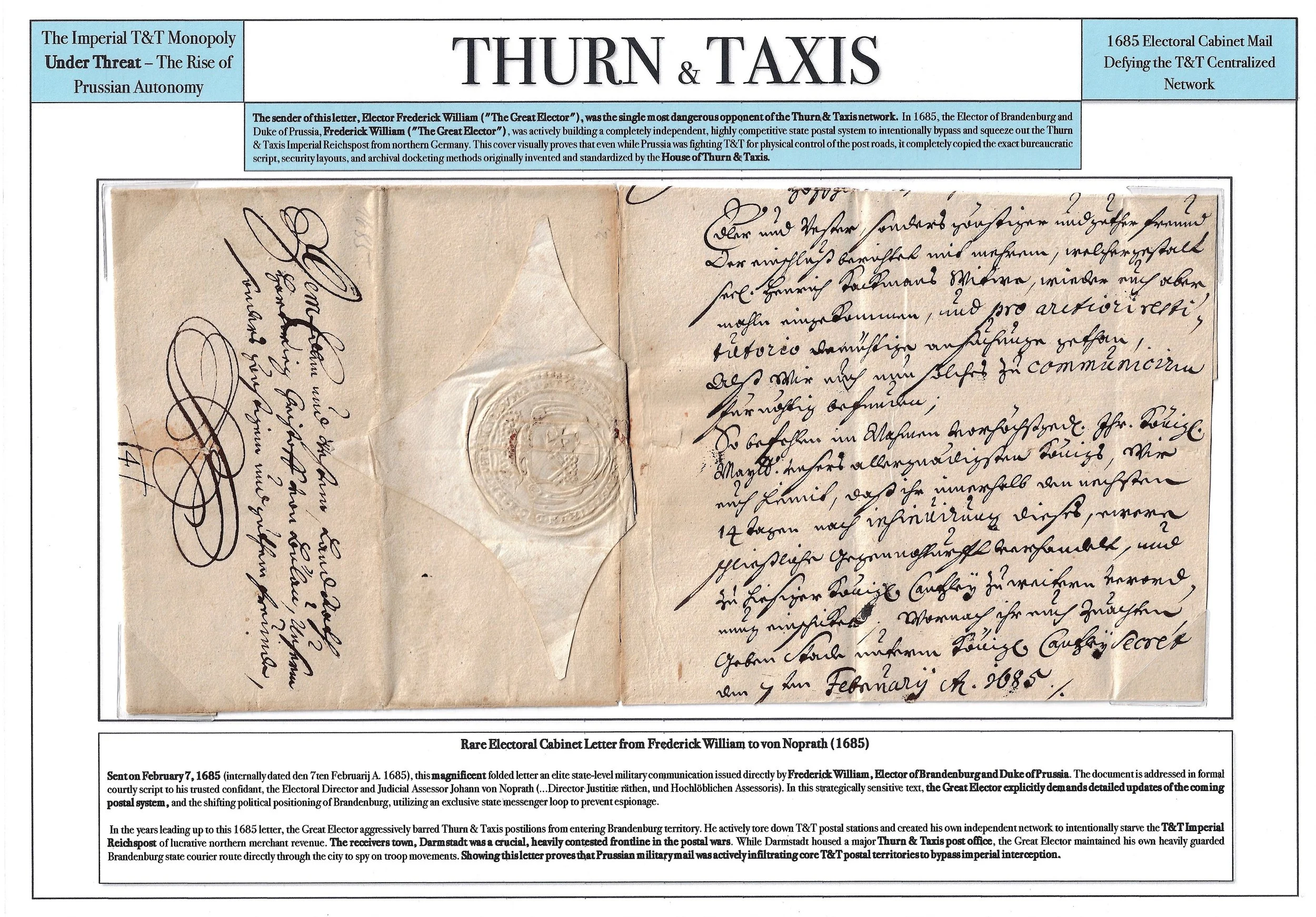
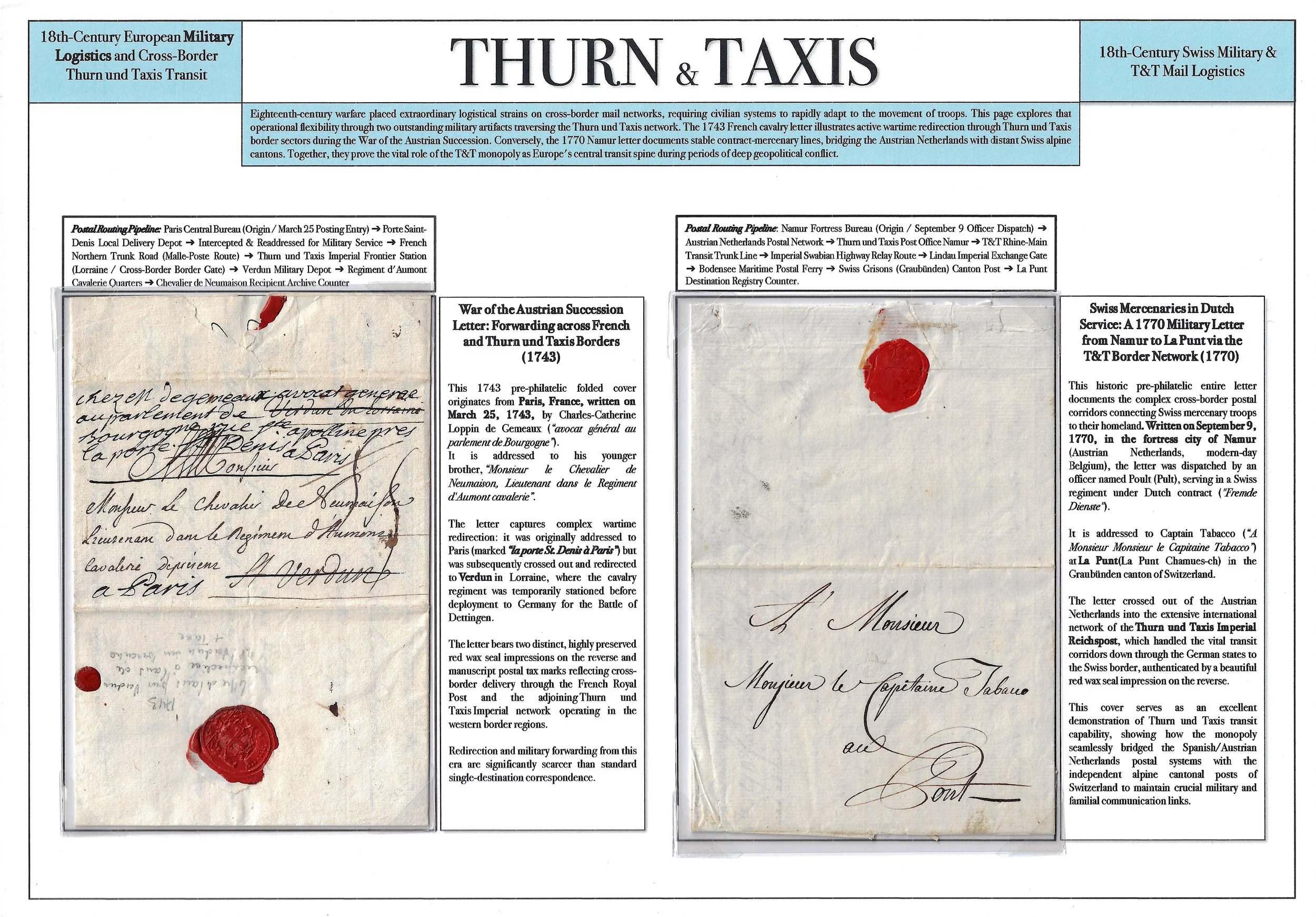
Post-Westphalia consolidation, Spanish-Flemish corridor (Posta de España a Flandes), Papal/Italian sector lines, and Spanish Succession wartime posts.
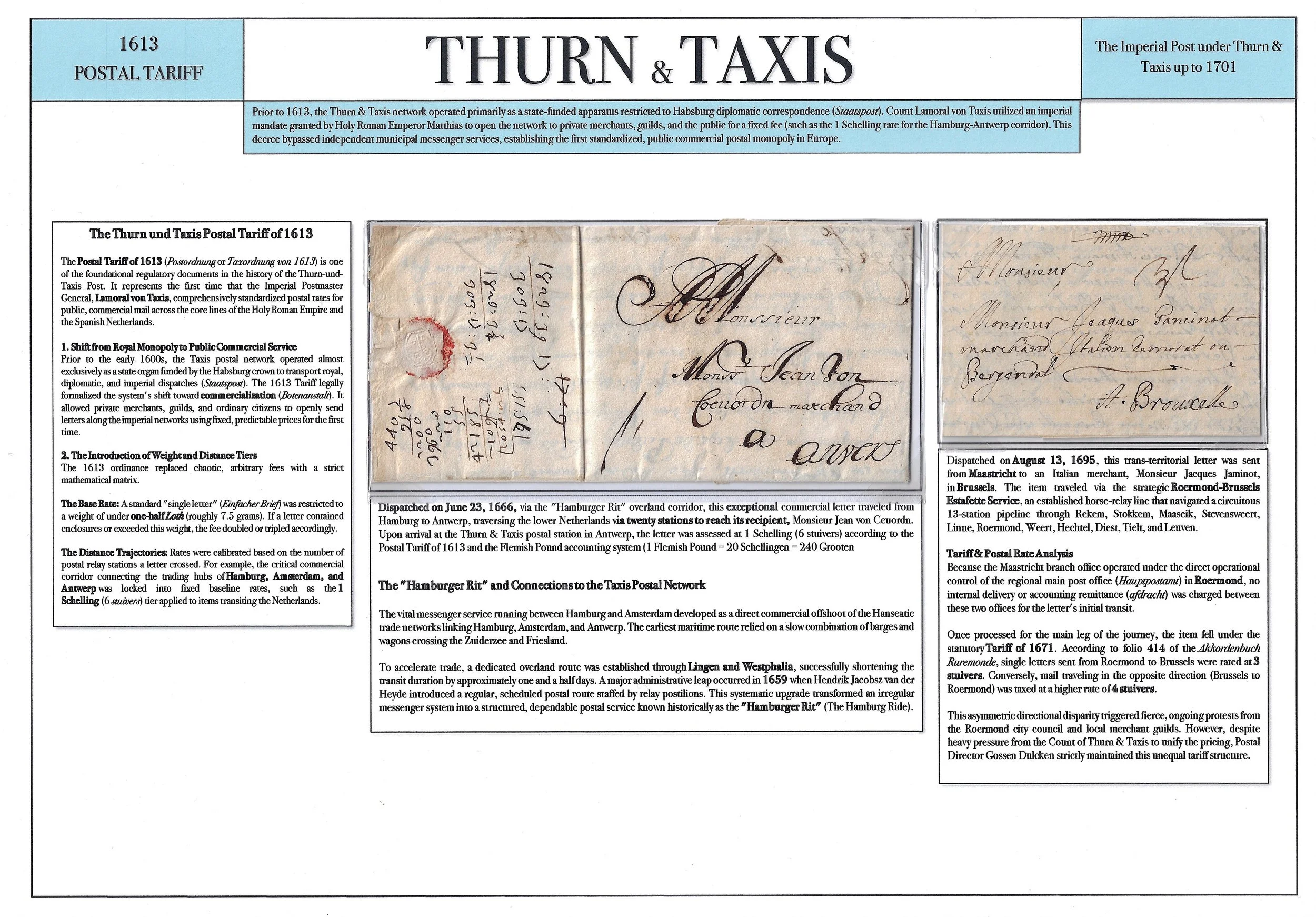
Frame 3: System Standardization & Hanseatic Enclave Corridors (1715–1755)
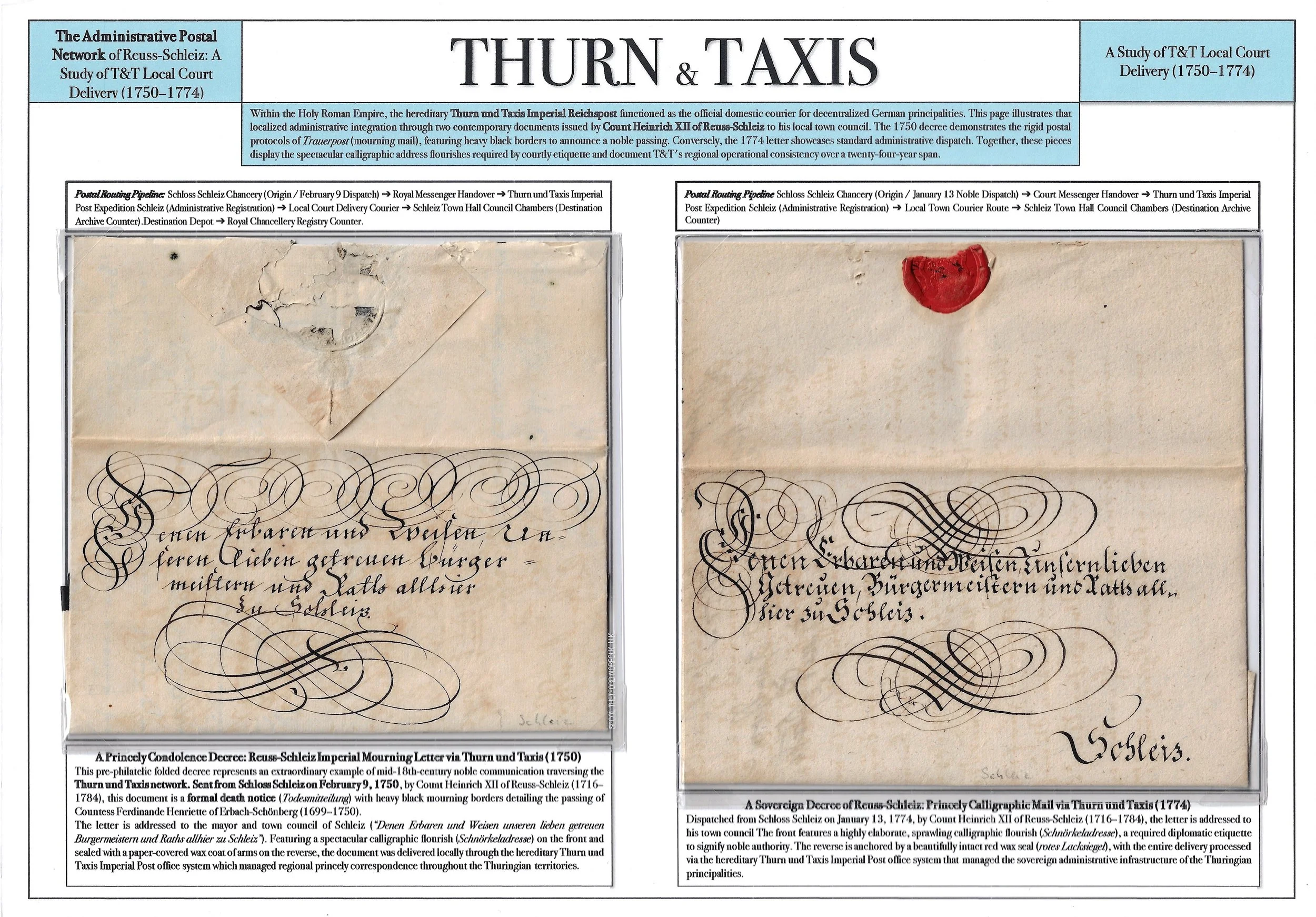
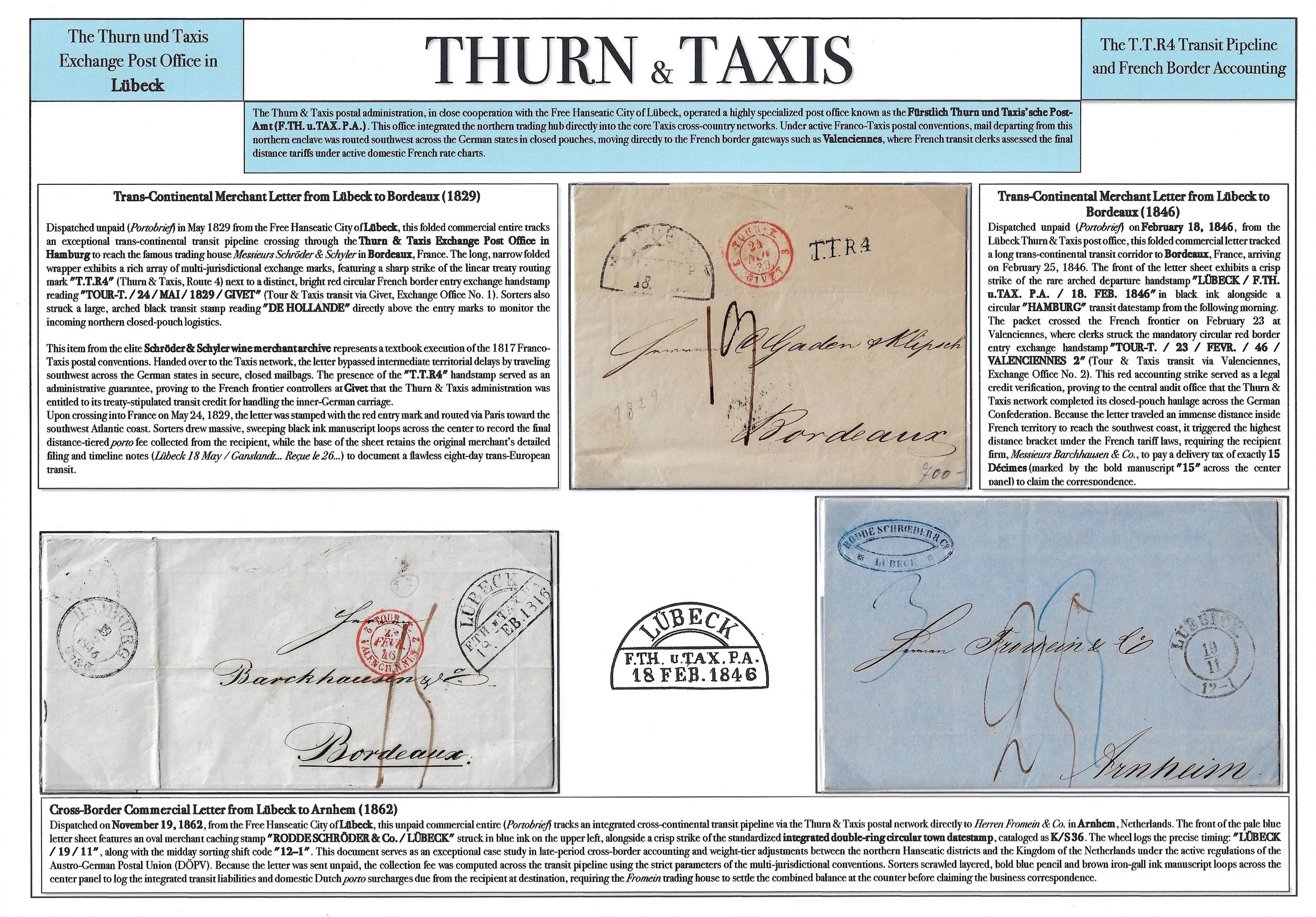
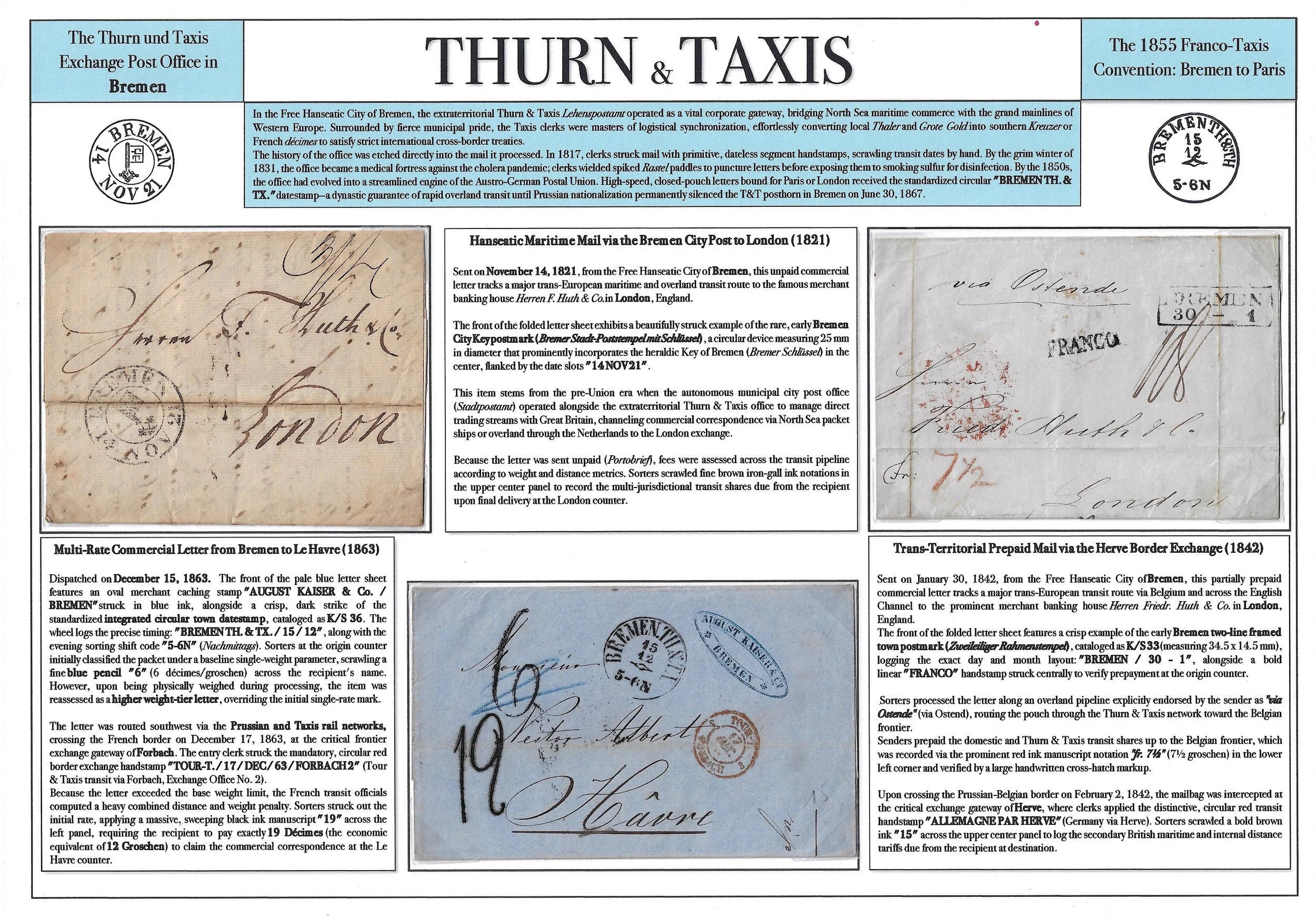
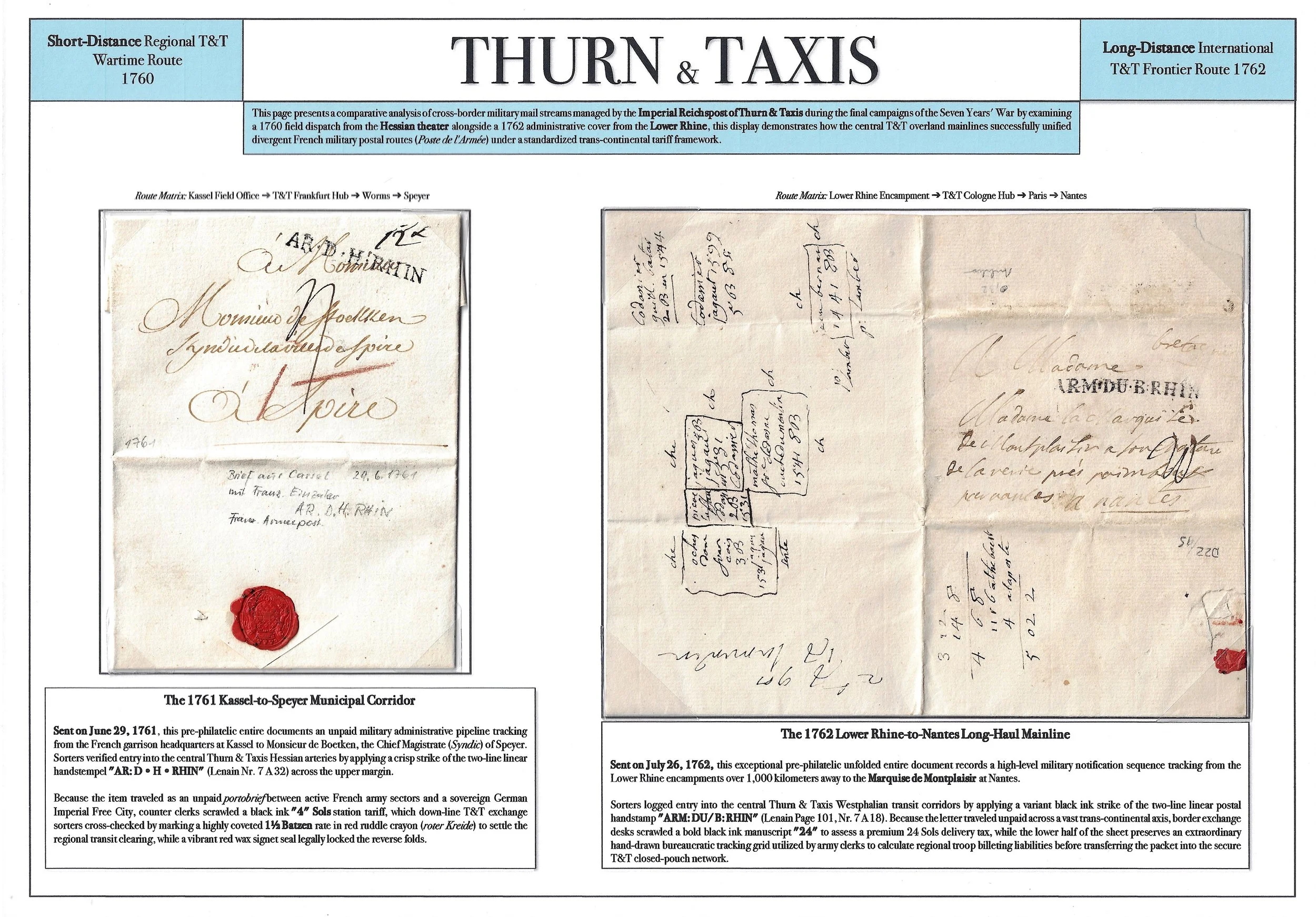
The landmark 1729 Imperial Postal Tariff, sovereign free-mail, transition toward Frankfurt/Regensburg, and T&T enclave operations in Hanseatic free cities (Hamburg, Bremen, Lübeck).
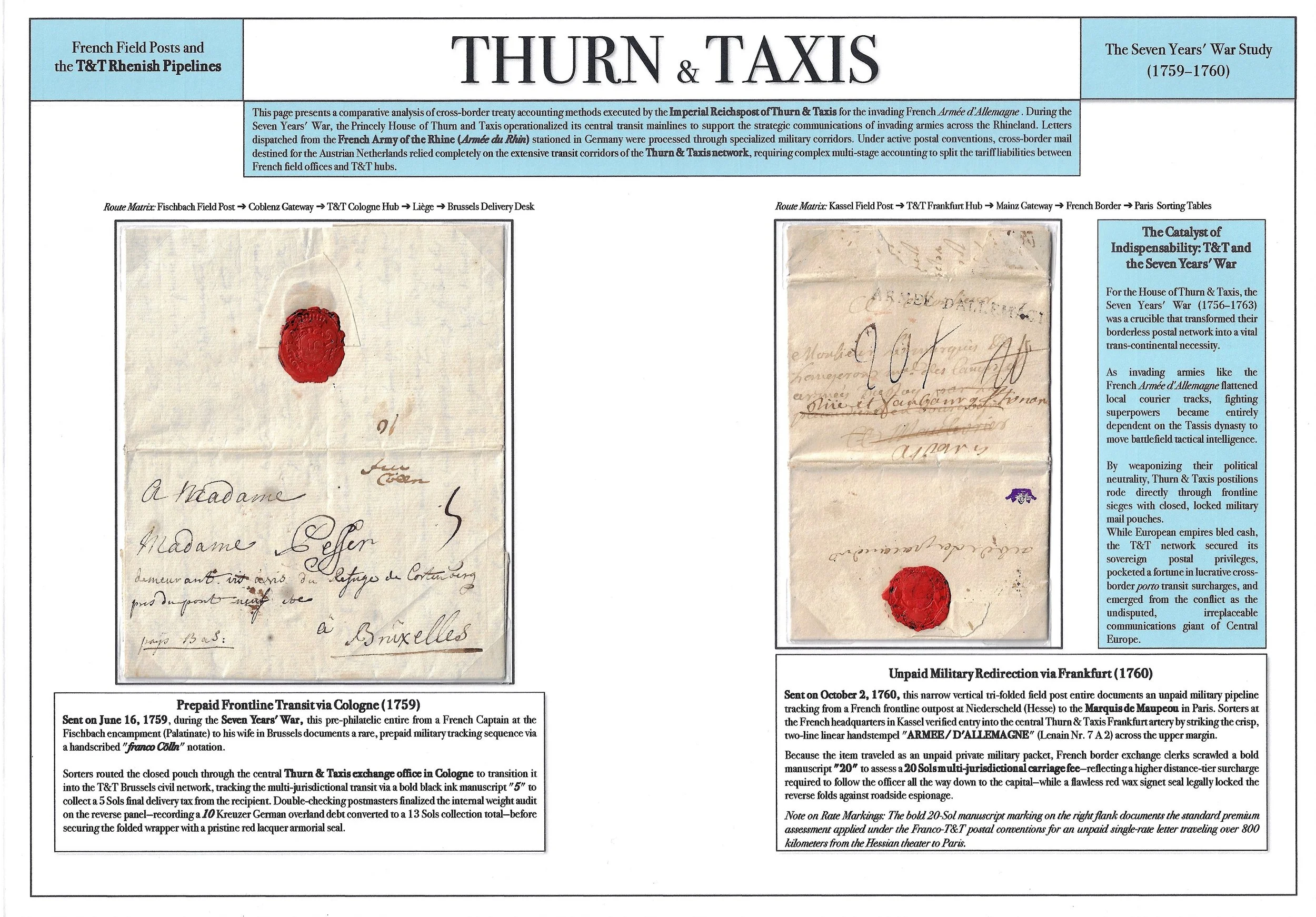
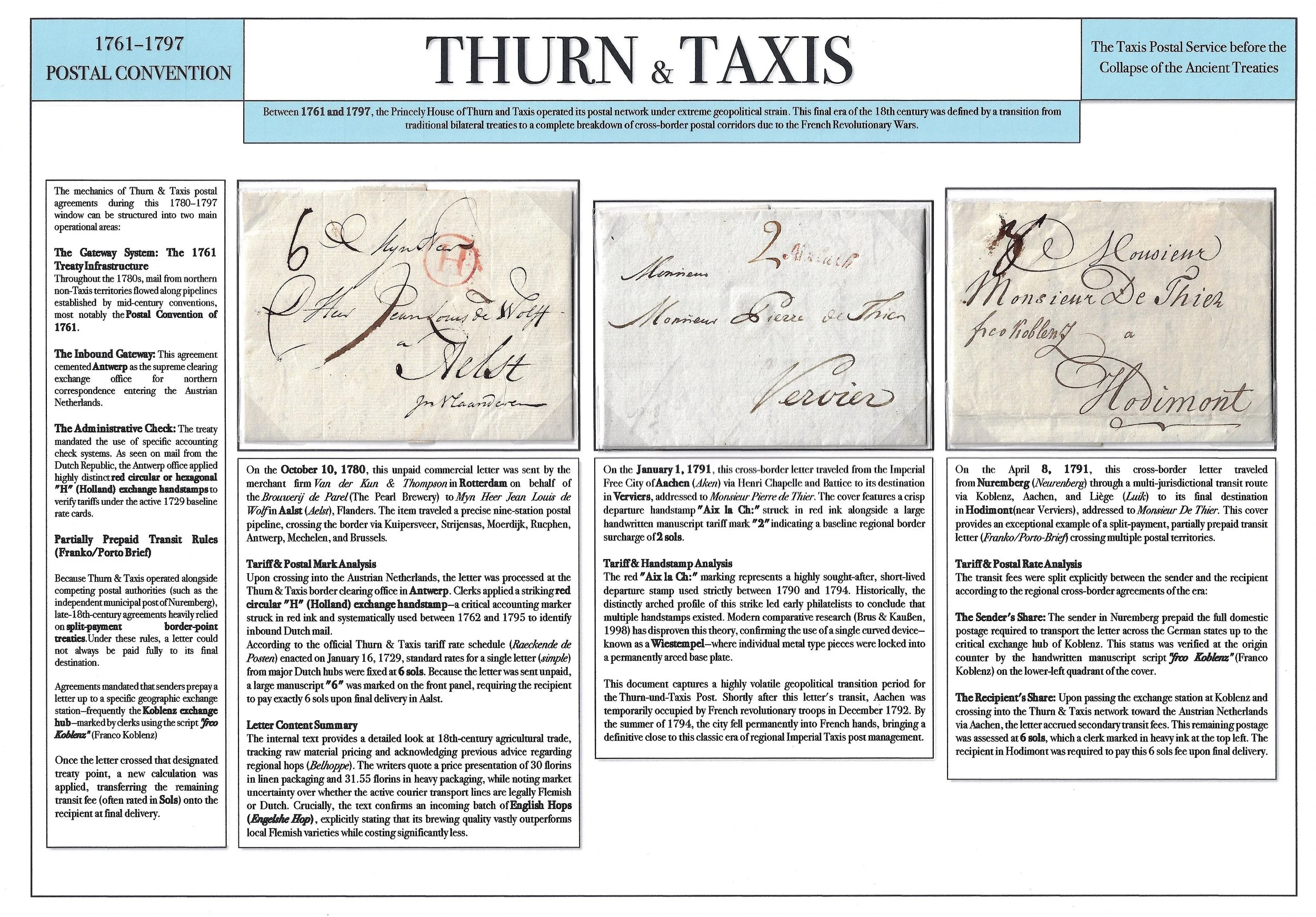
Frame 4: Trans-Imperial Exchange & Multi-Currency Accounting (1756–1792)
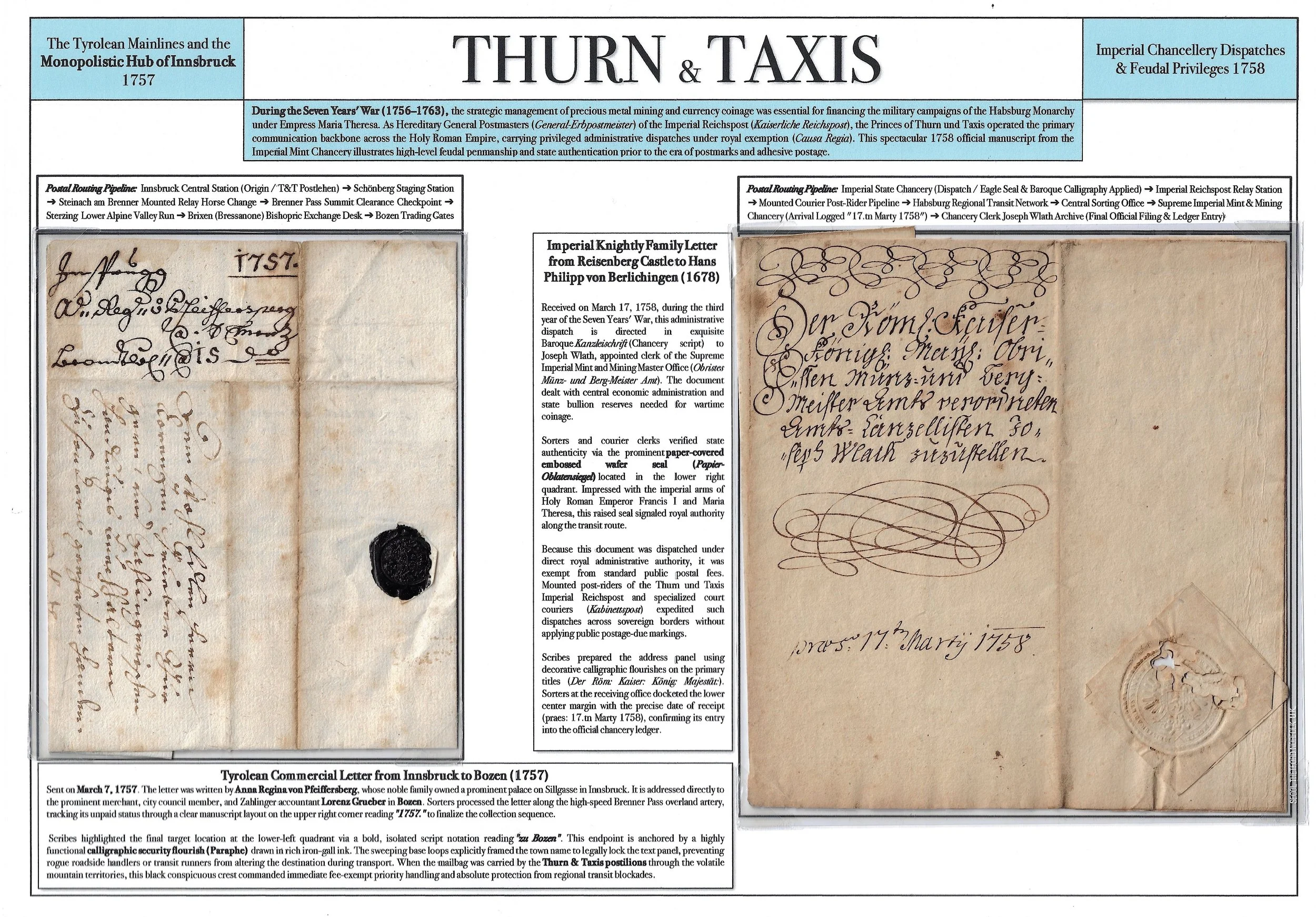
Seven Years' War routes, cross-continental Bohemian-Brabant corridors, and multi-stage exchange desk accounting (Kreuzer, Sols, Stuivers, Sgr.) at Cologne, Rötz, and Nuremberg.
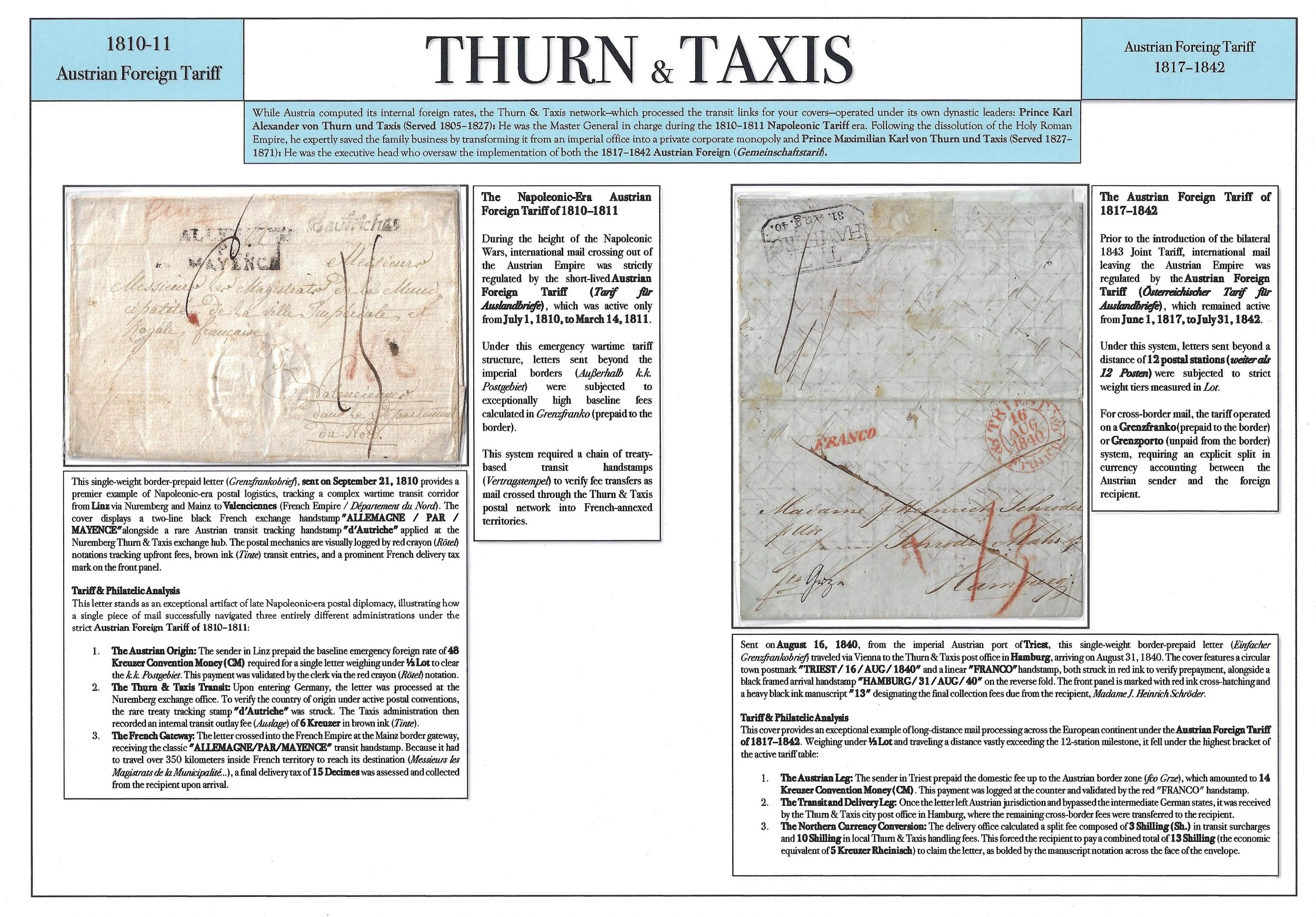
Frame 5: Napoleonic War Rerouting & System Disruption (1793–1815)
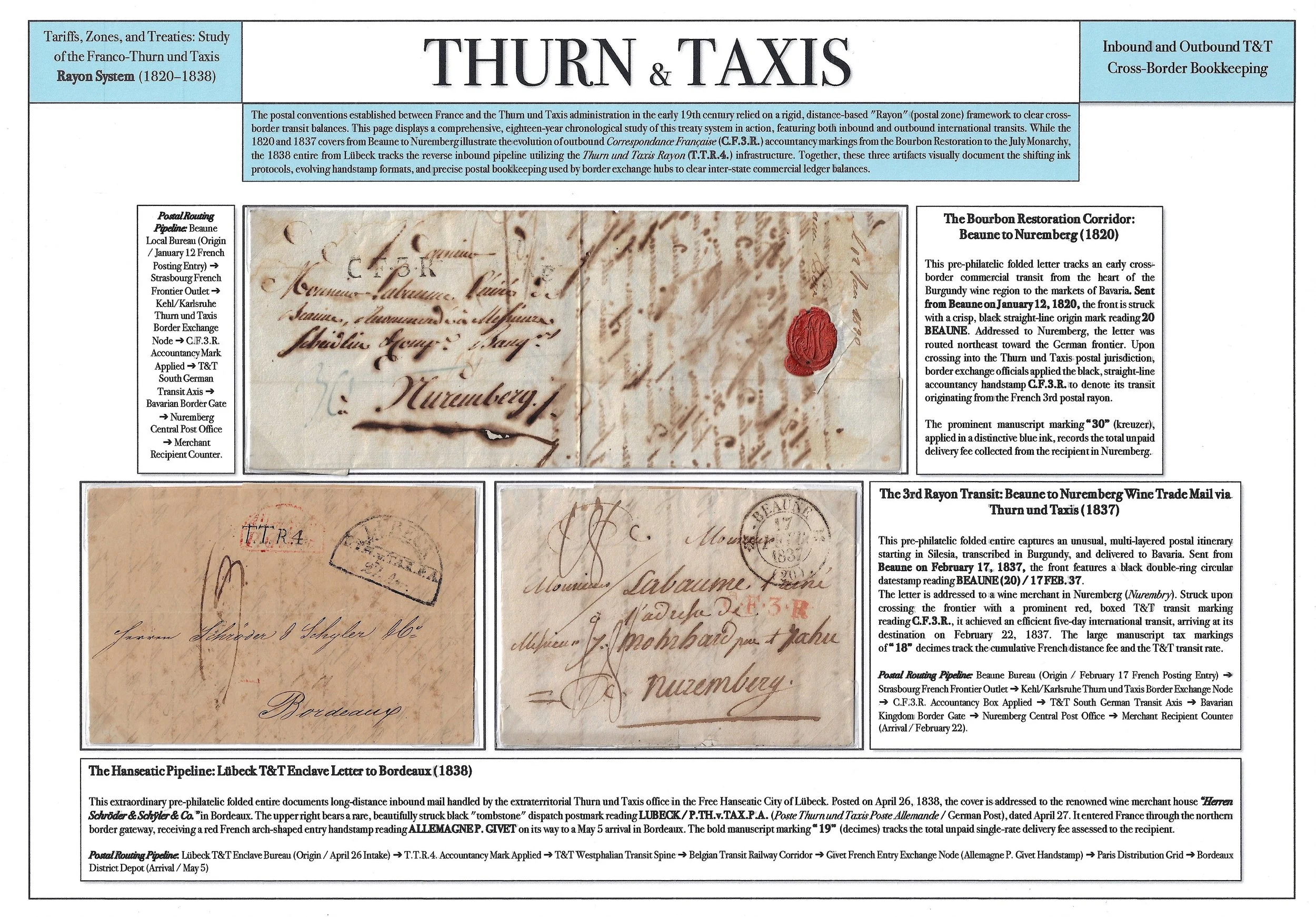
Loss of the Left Bank of the Rhine, French military posts (Poste Militaire), French departmental/border exchange handstamps (Rayon entry marks), and transition to the Princely T&T Private Post.
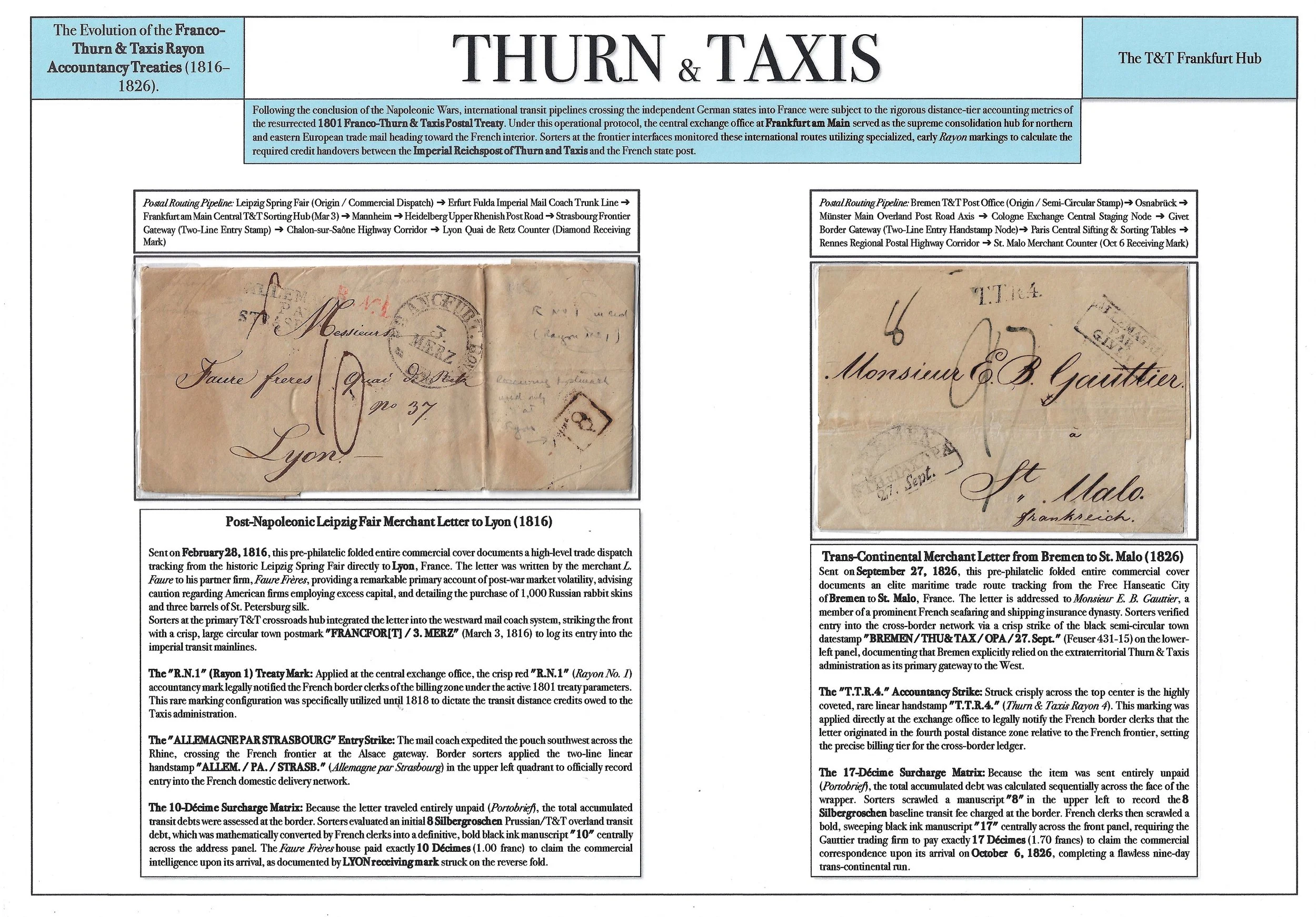
Frame 6: Post-Congress Reorganization & Bilateral Conventions – Part I (1816–1835)
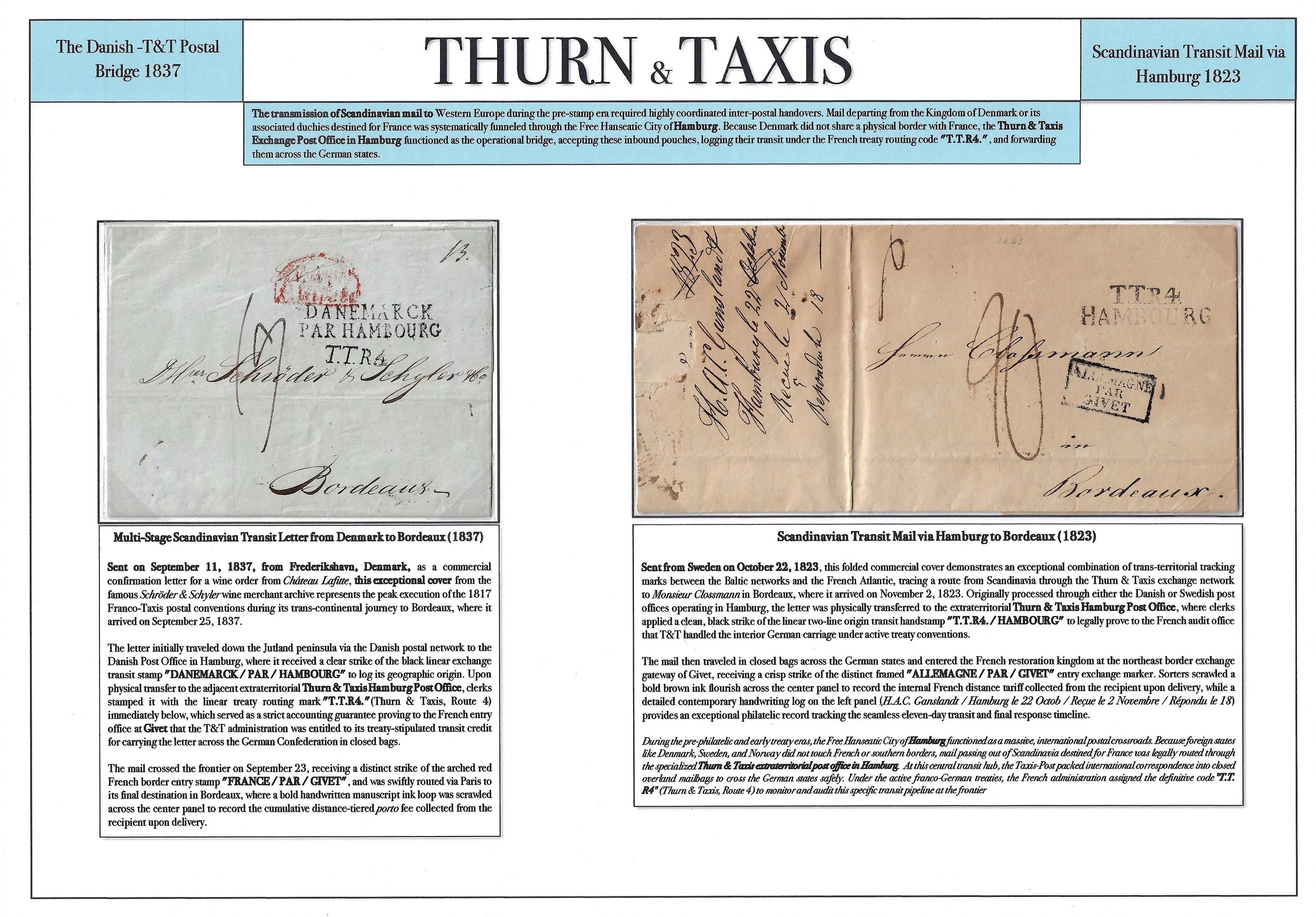
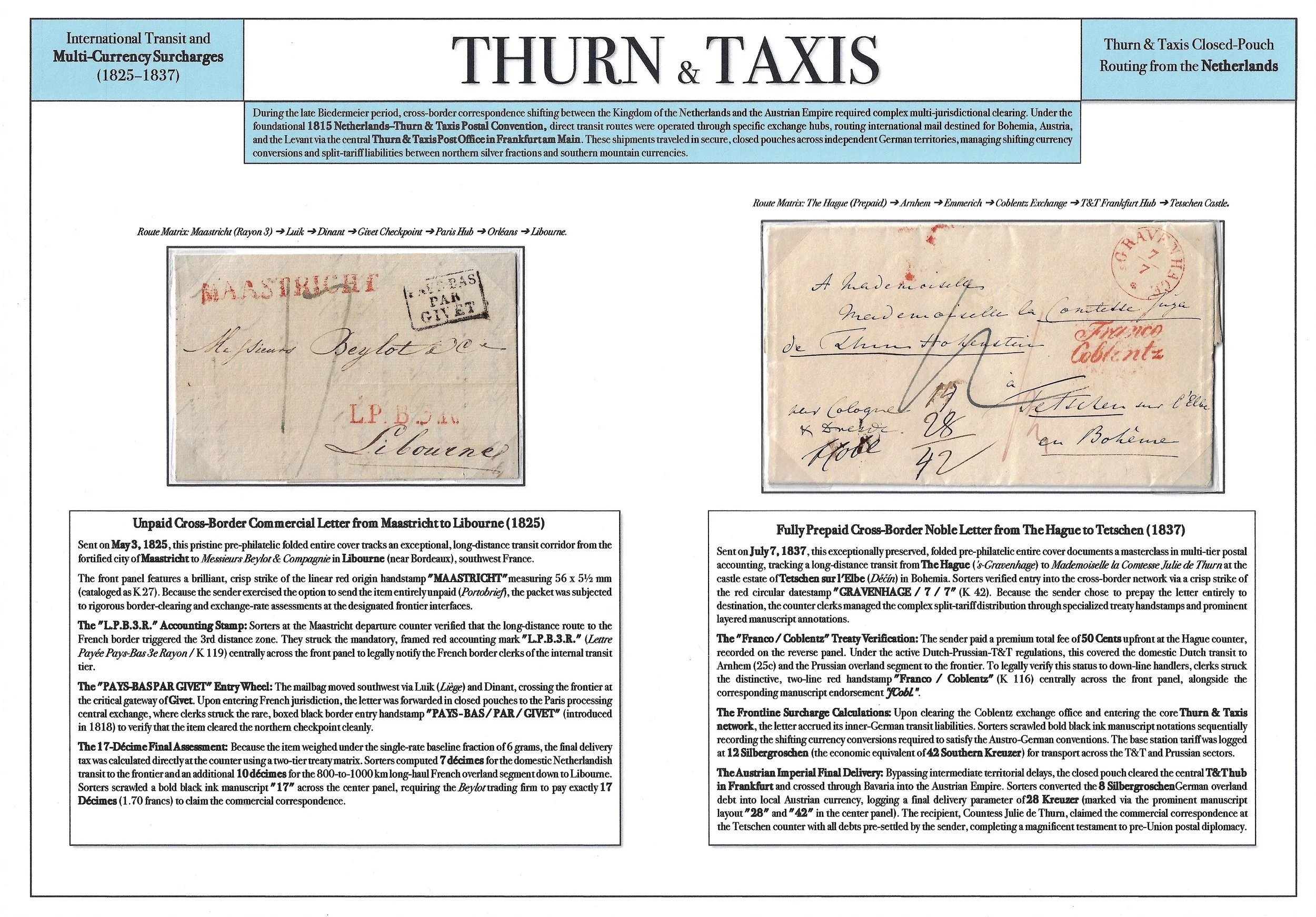
Scope: Re-establishment of German state postal leases, early bilateral postal treaties, court mai,, and pre-stamp Hanseatic enclave routing to France.
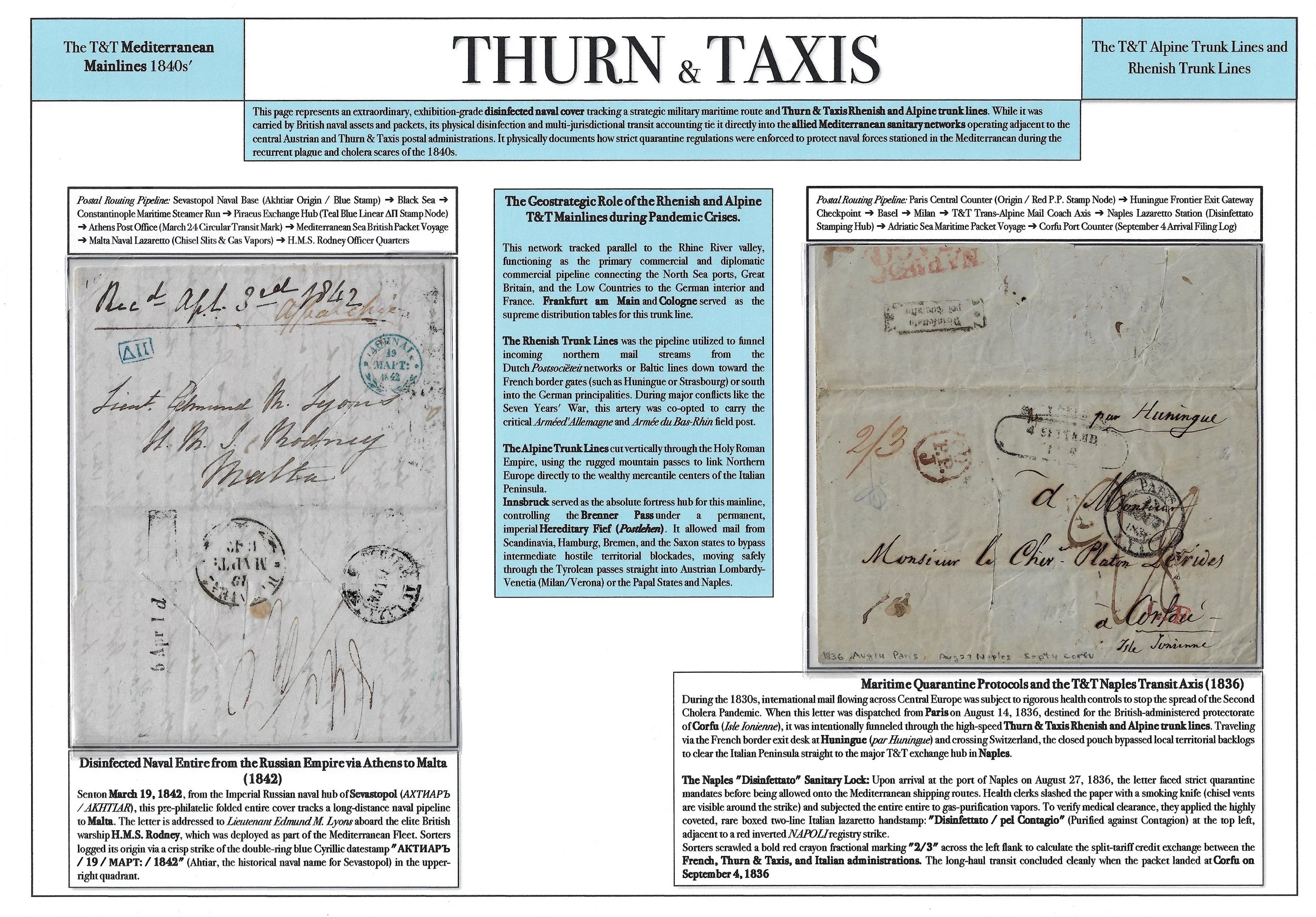
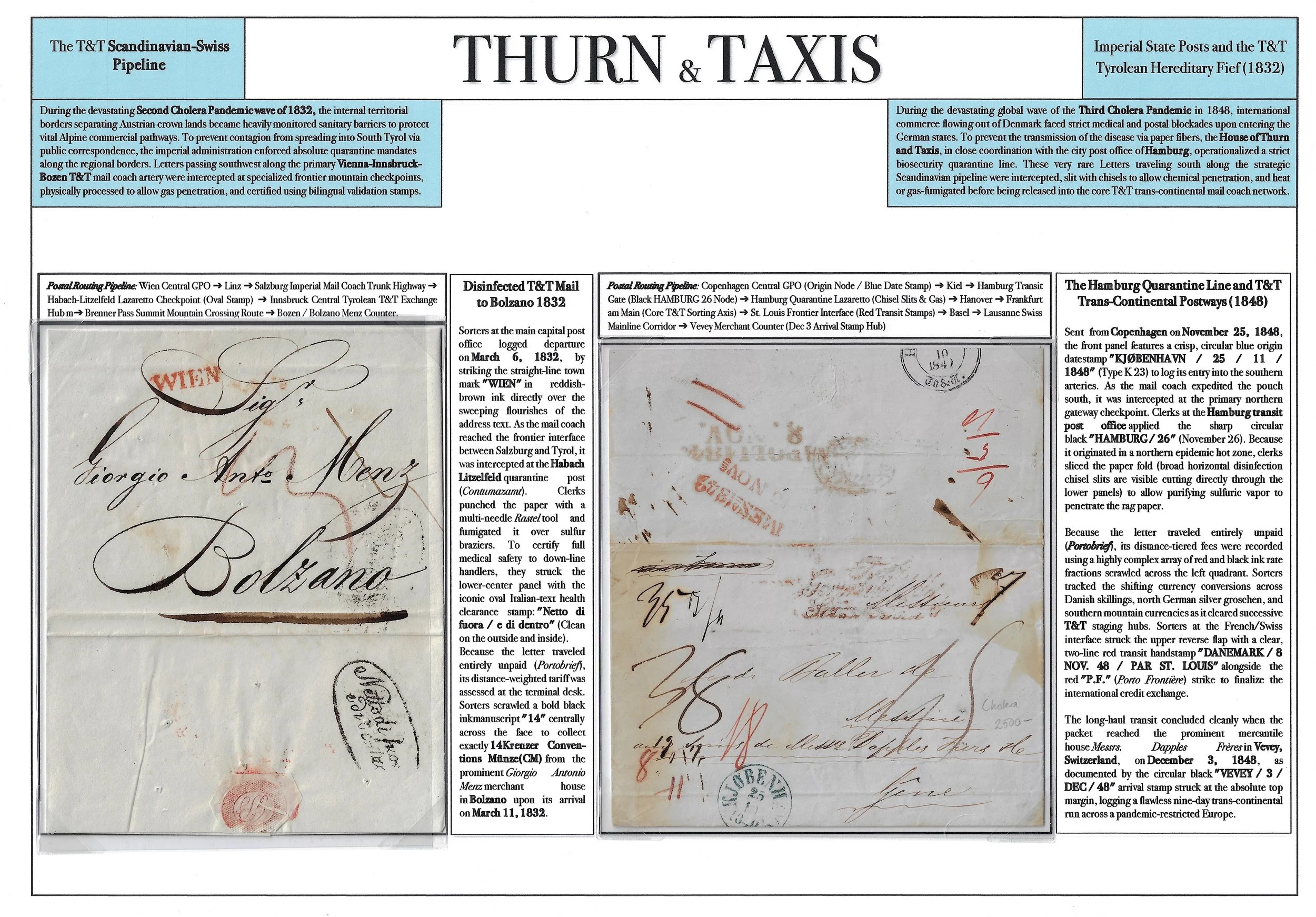
Frame 7: Post-Congress Reorganization & International Conventions – Part II (1836–1851)
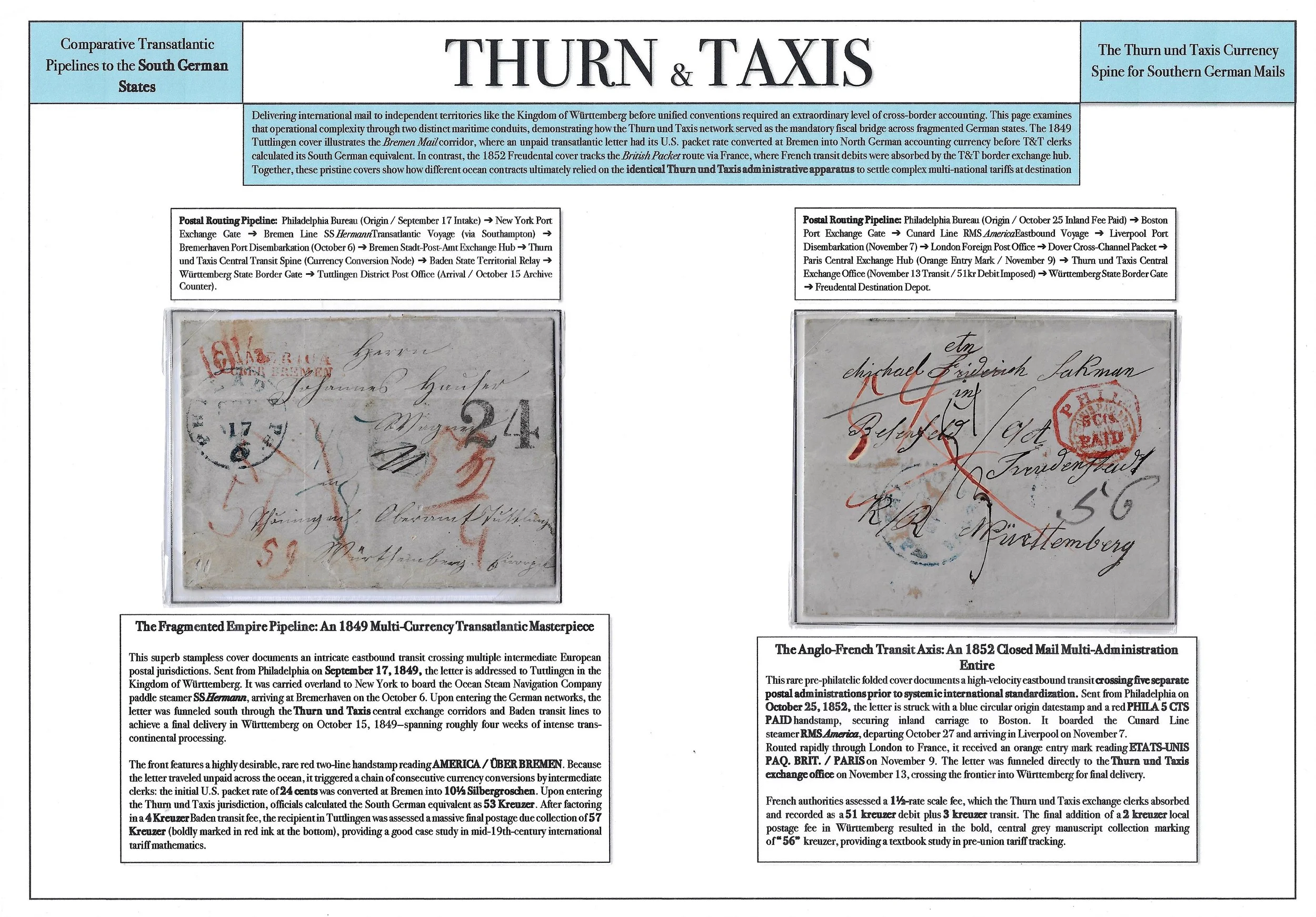
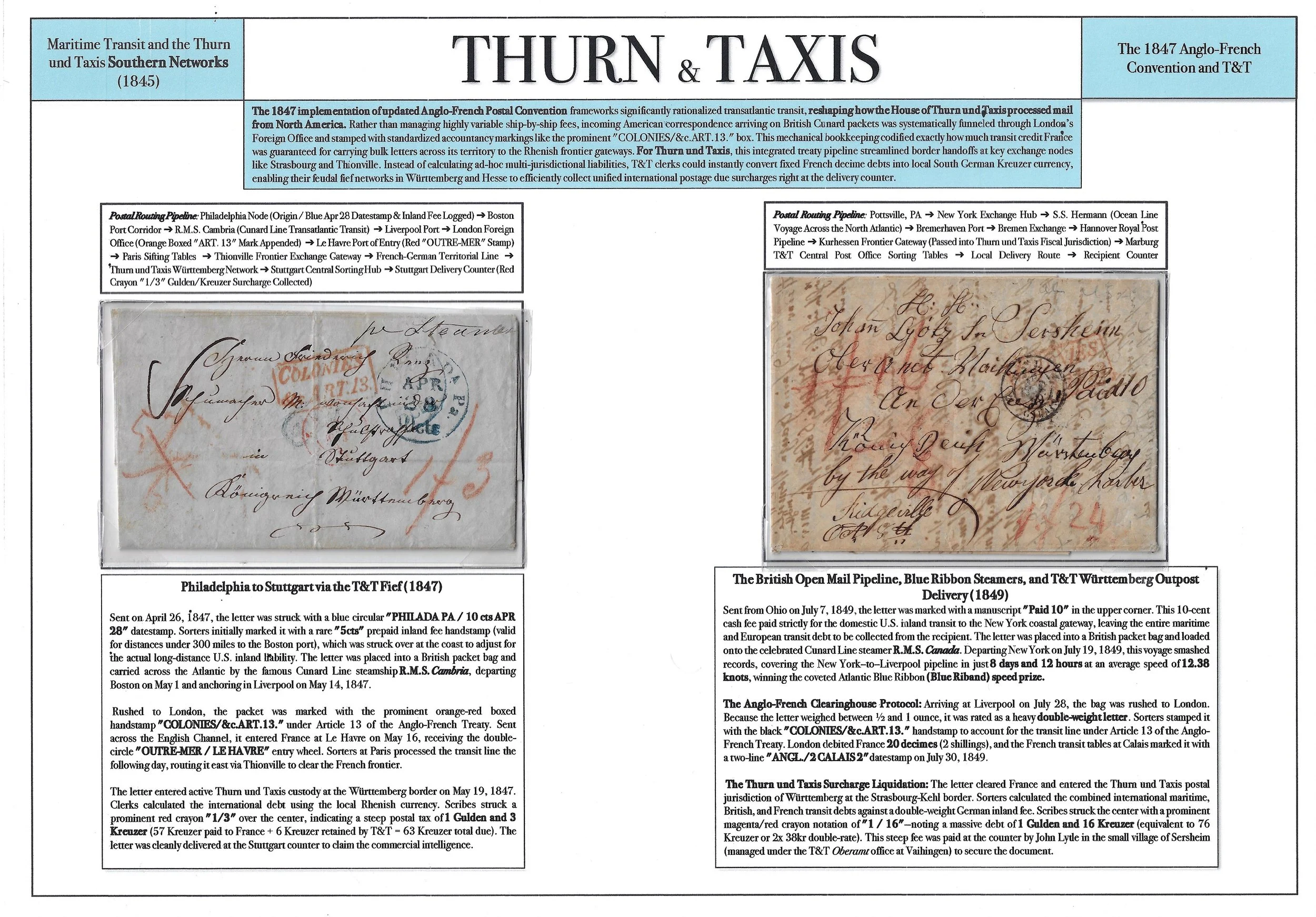
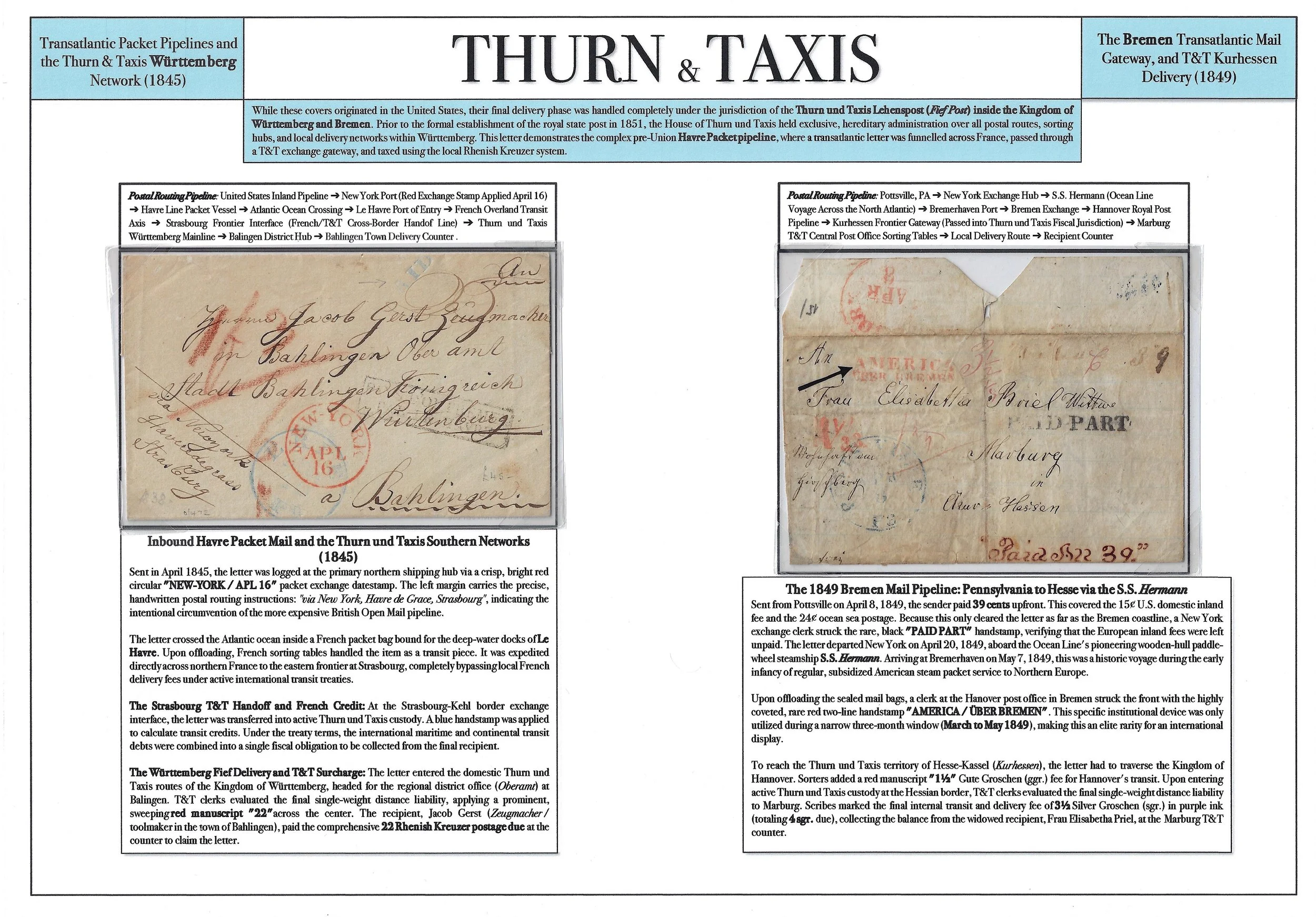
Scope: Peak pre-stamp treaty mechanics (Franco-T&T, Austro-T&T, Anglo-T&T), entry handstamps, rayoning distance steps, and complex cross-border manuscript postage-due accounting on the eve of adhesives.
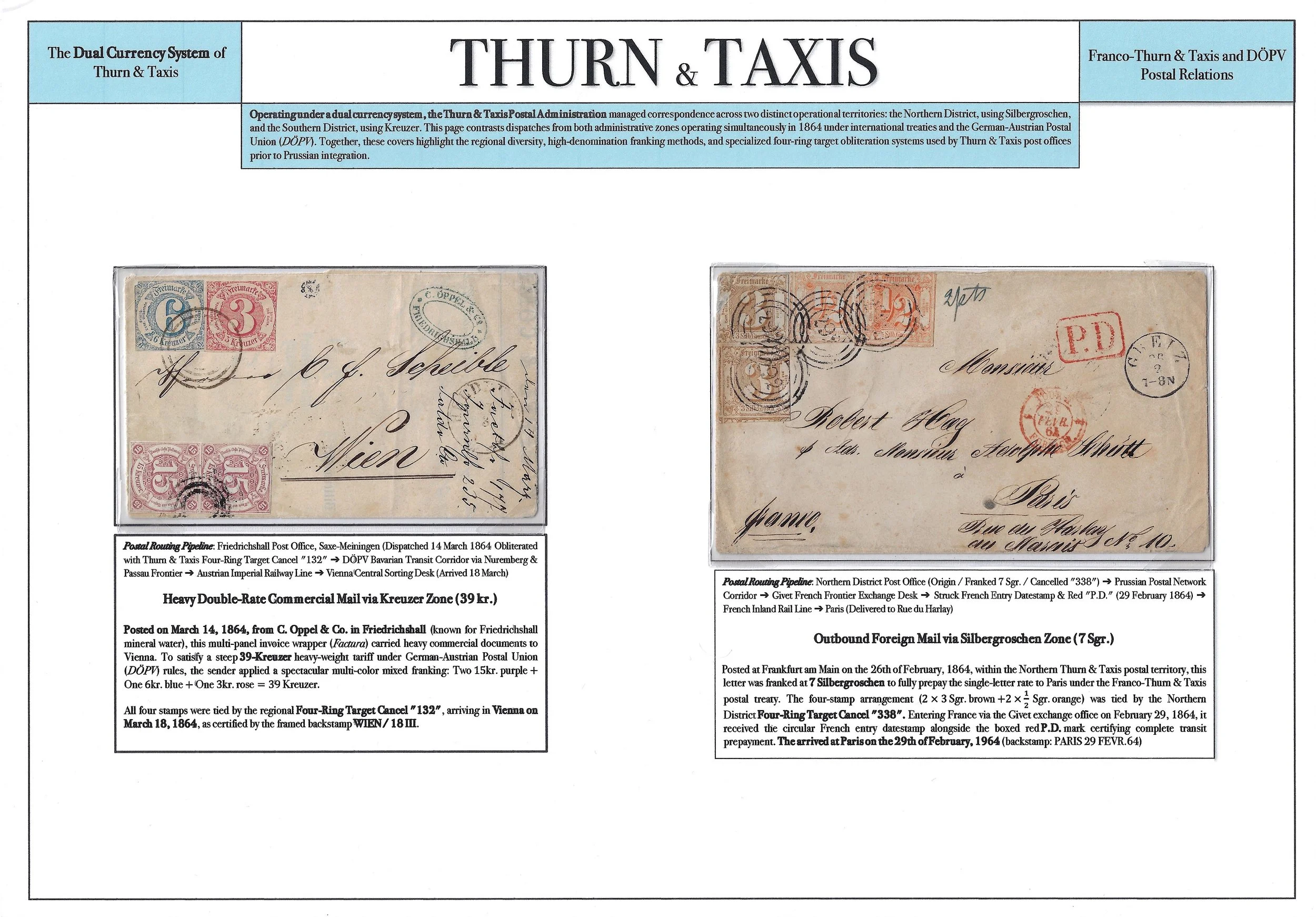
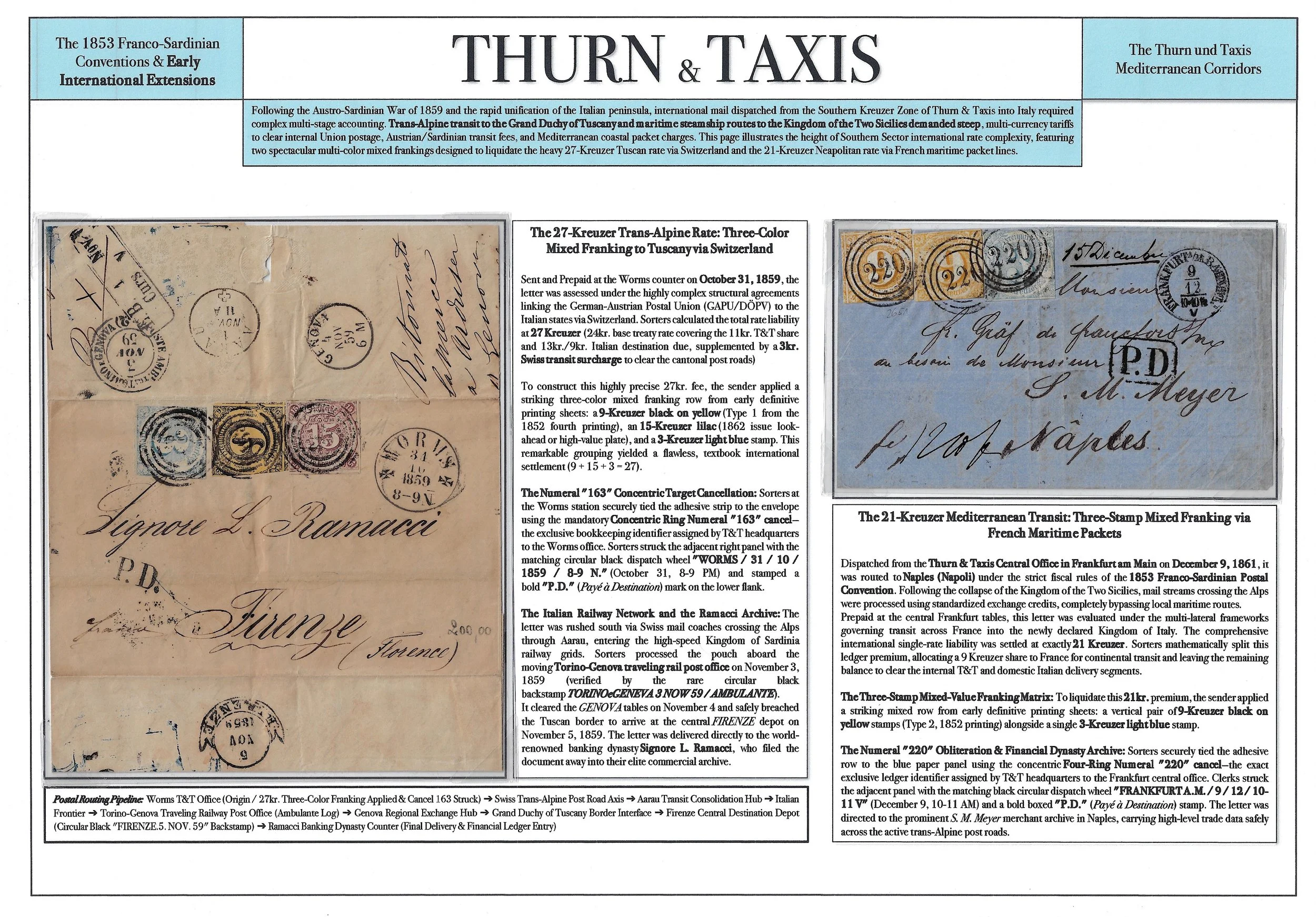
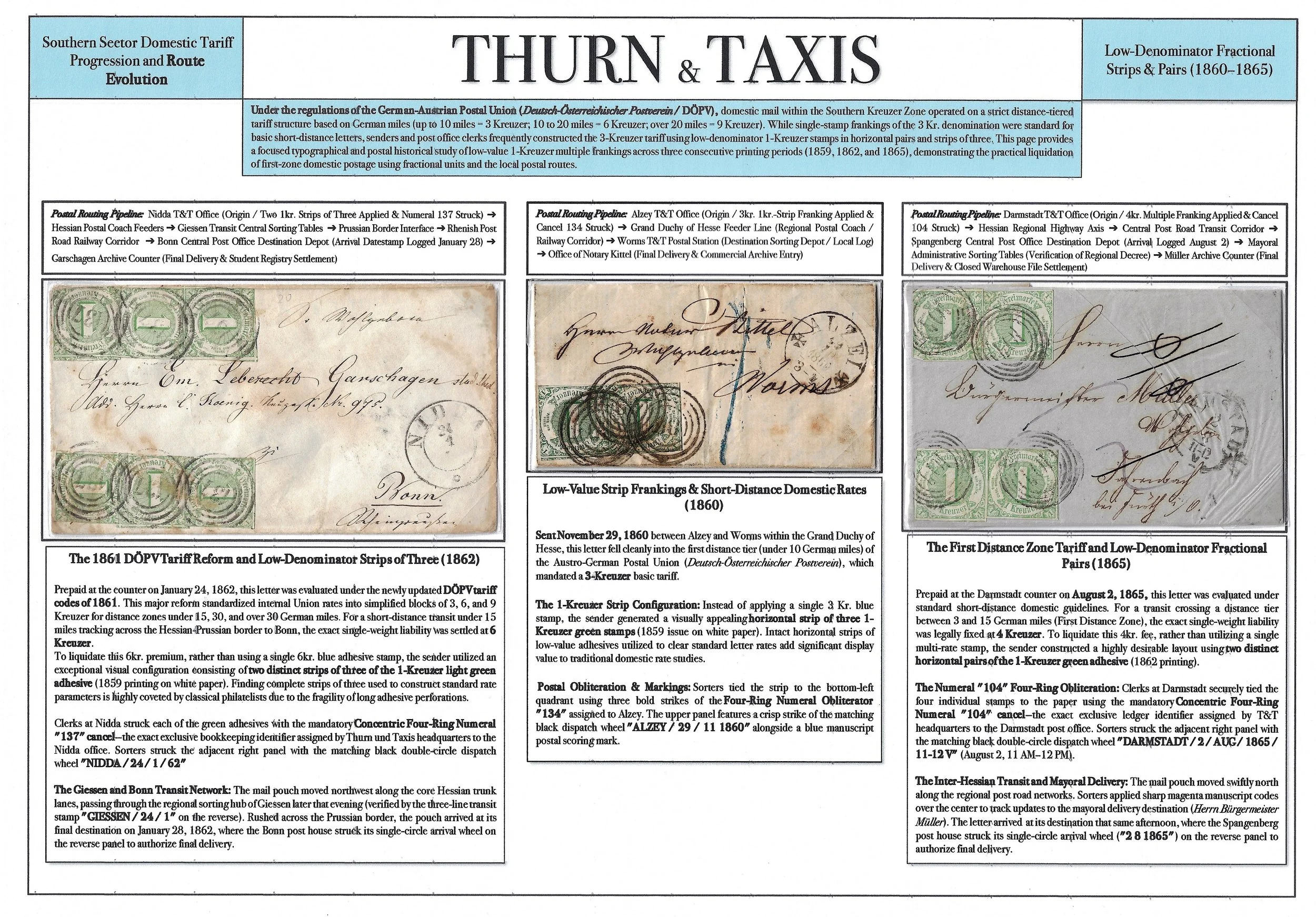
Frame 8: The Adhesive Stamp Era – Dual Currency & Union Transit (1852–1866)
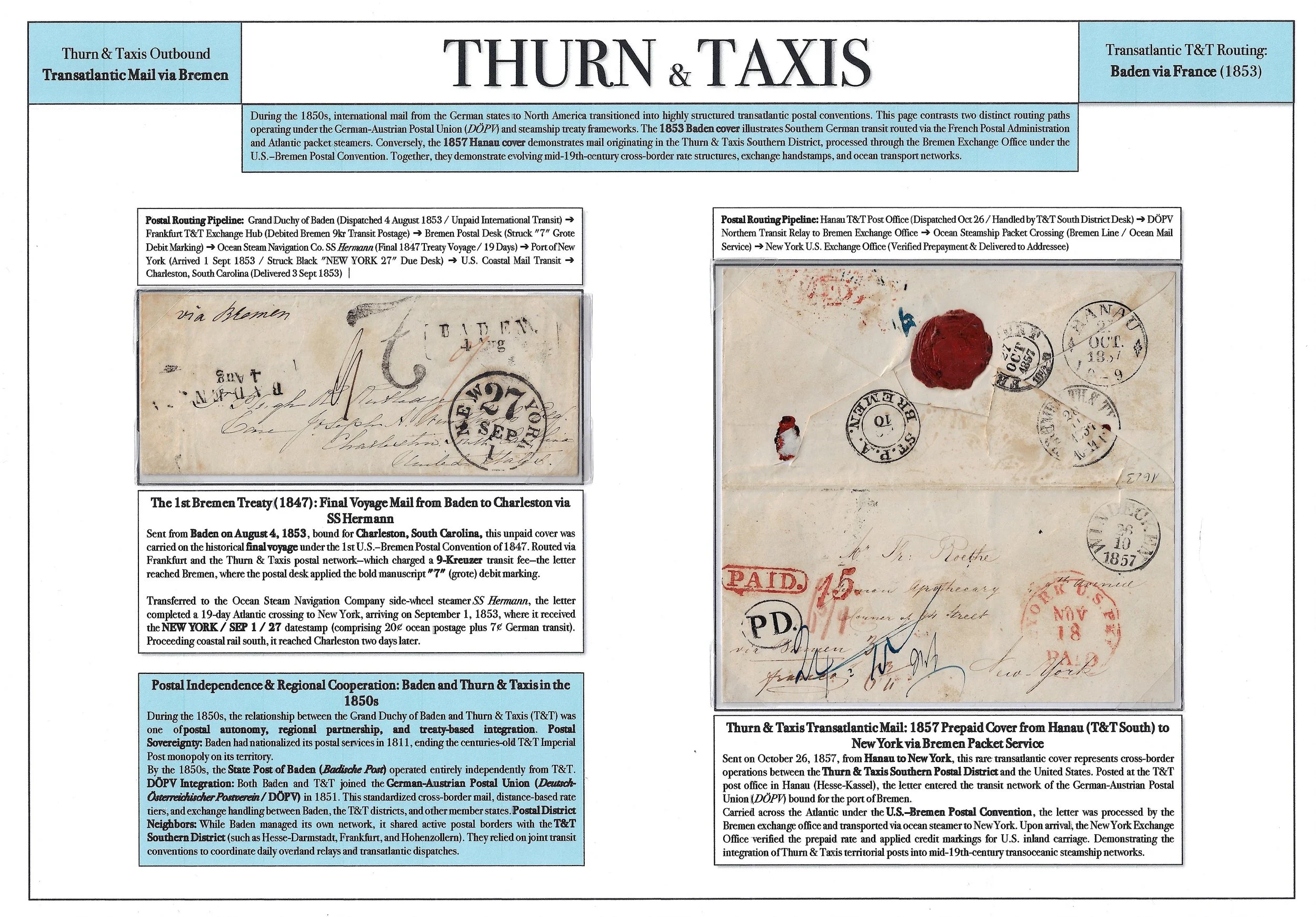
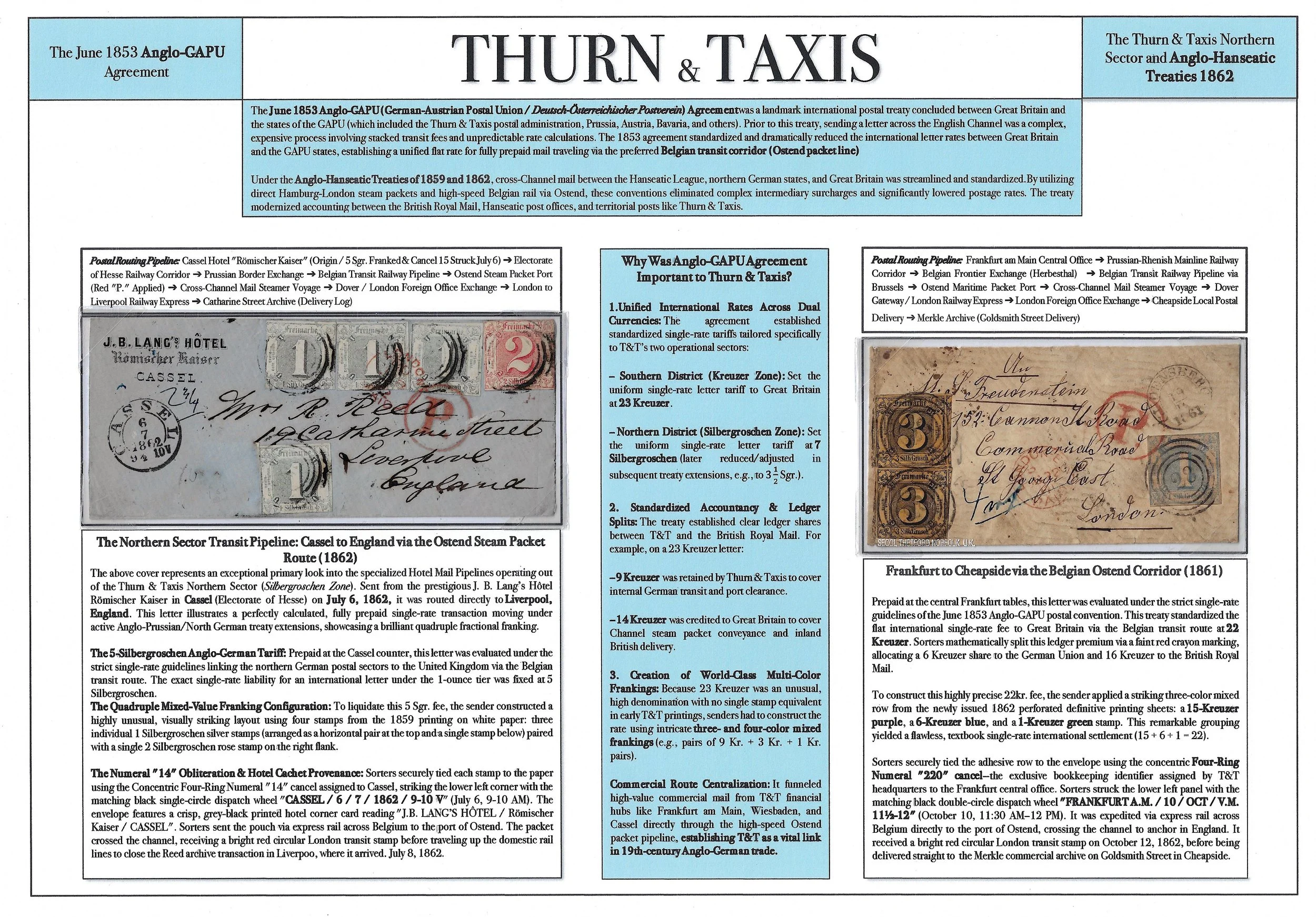
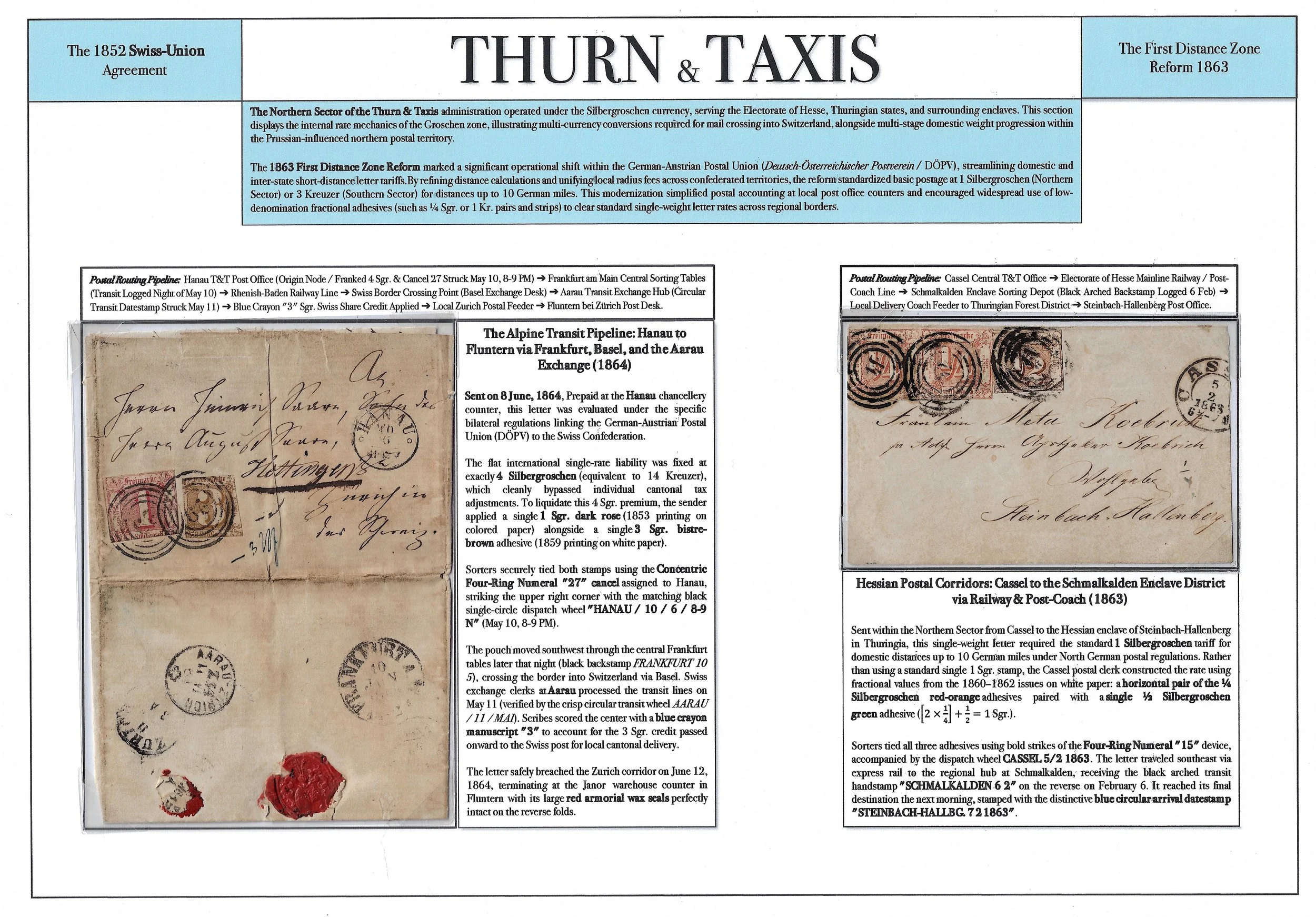
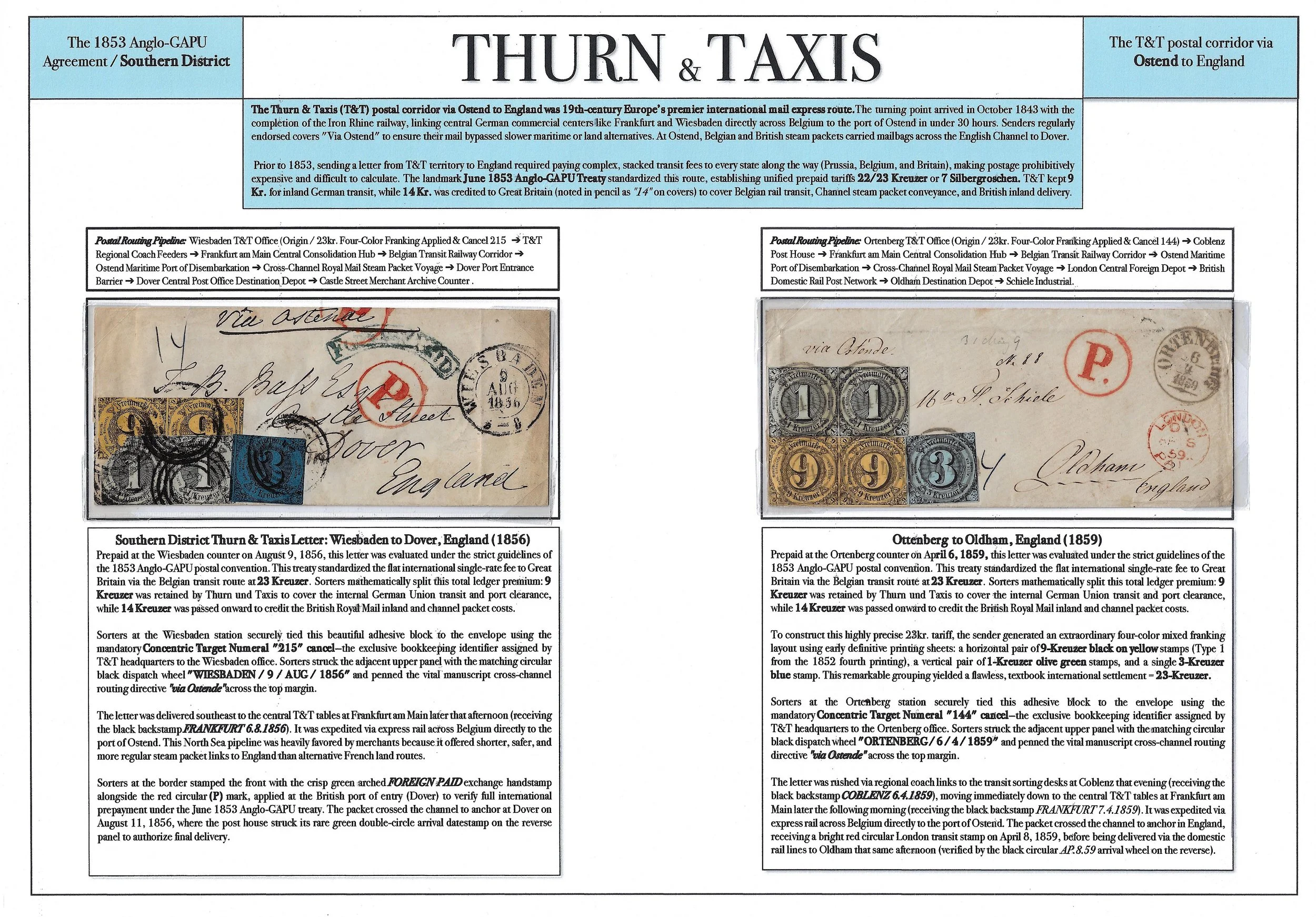
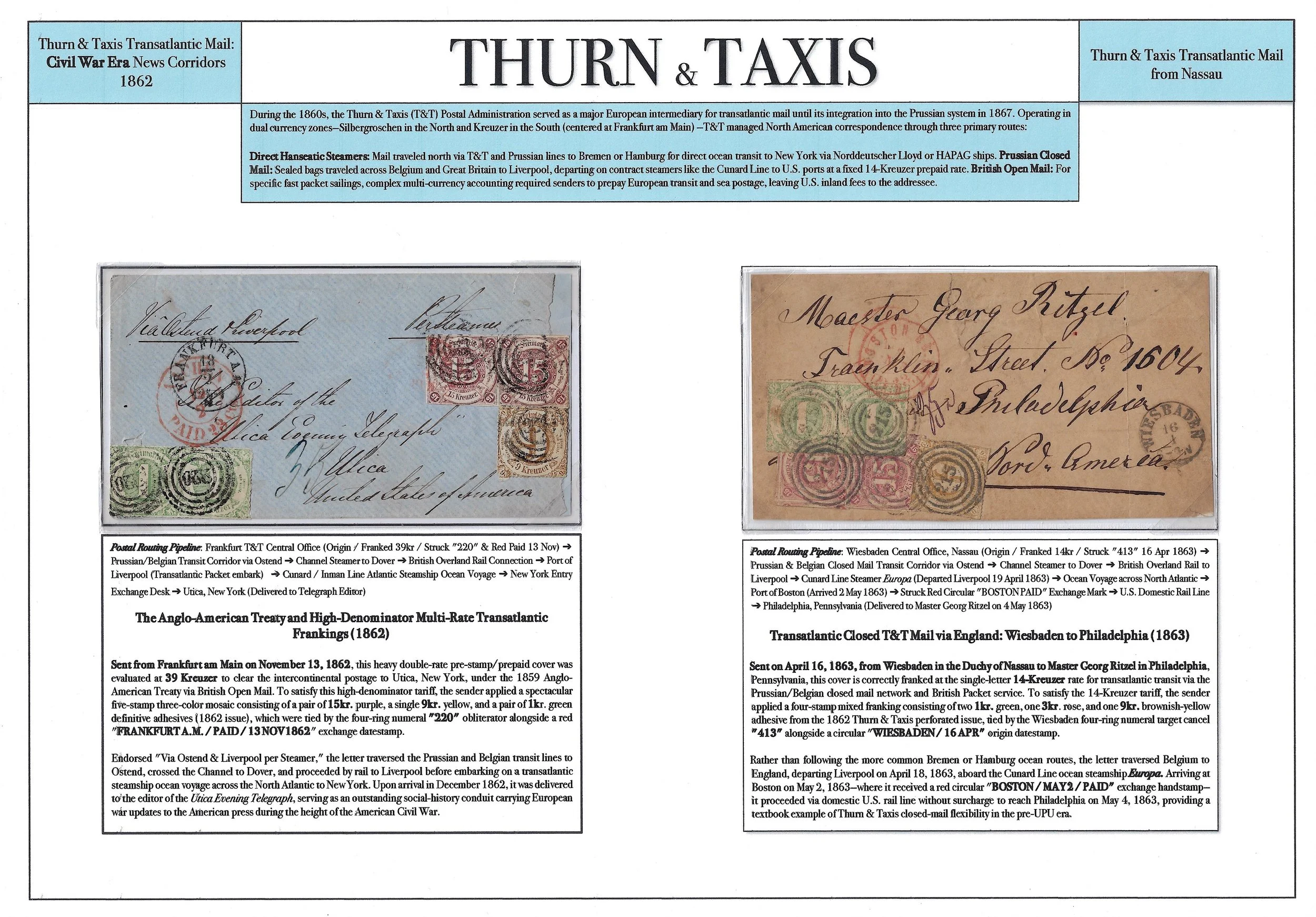
Scope: Complete synthesis of the adhesive era in a single high-impact frame: Northern District (Silbergroschen) vs. Southern District (Kreuzer), German-Austrian Postal Union (GAGPV) distance tariffs, mixed frankings, registered (Reco)/express mail, and overseas/trans-Atlantic packet lines.
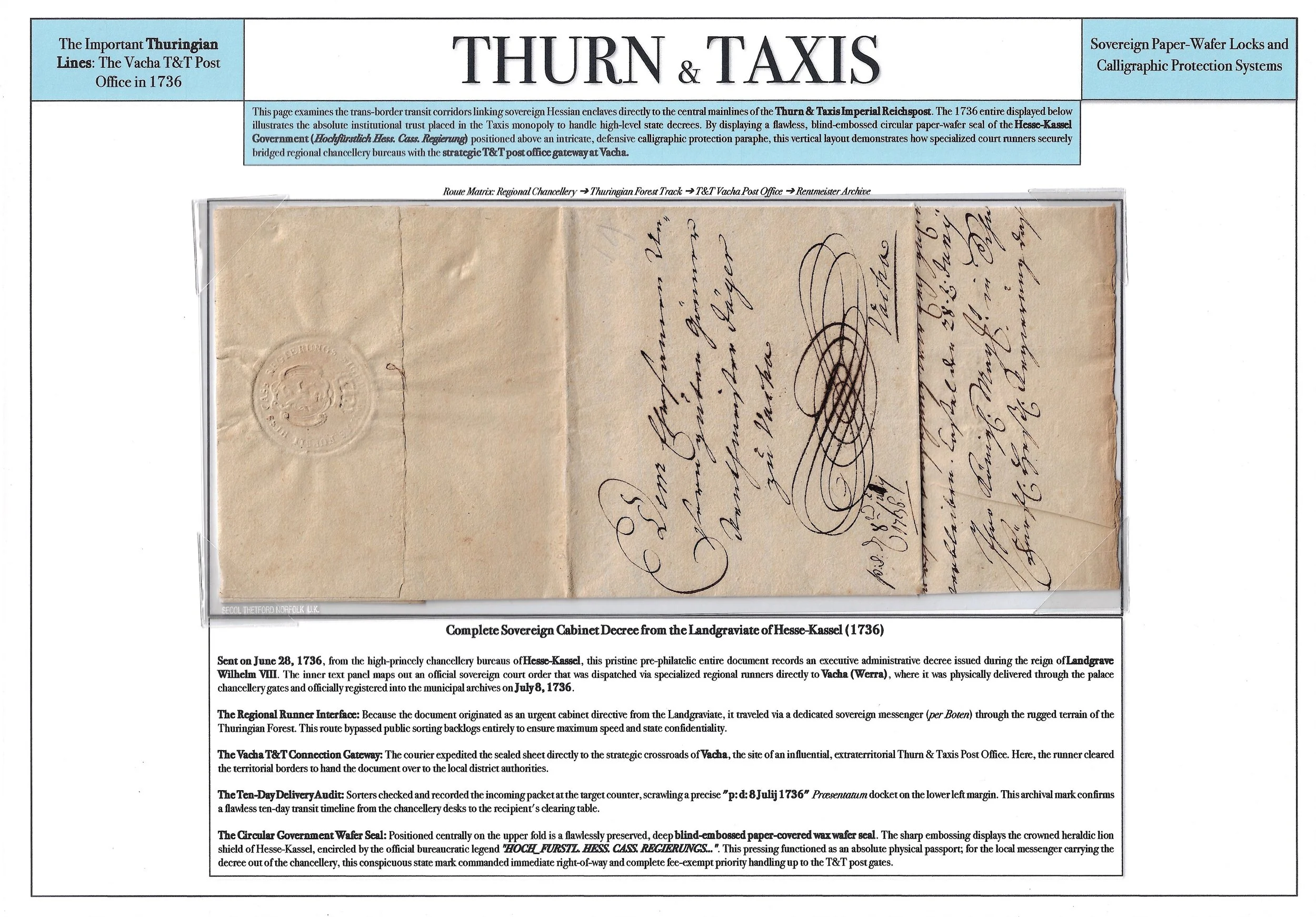
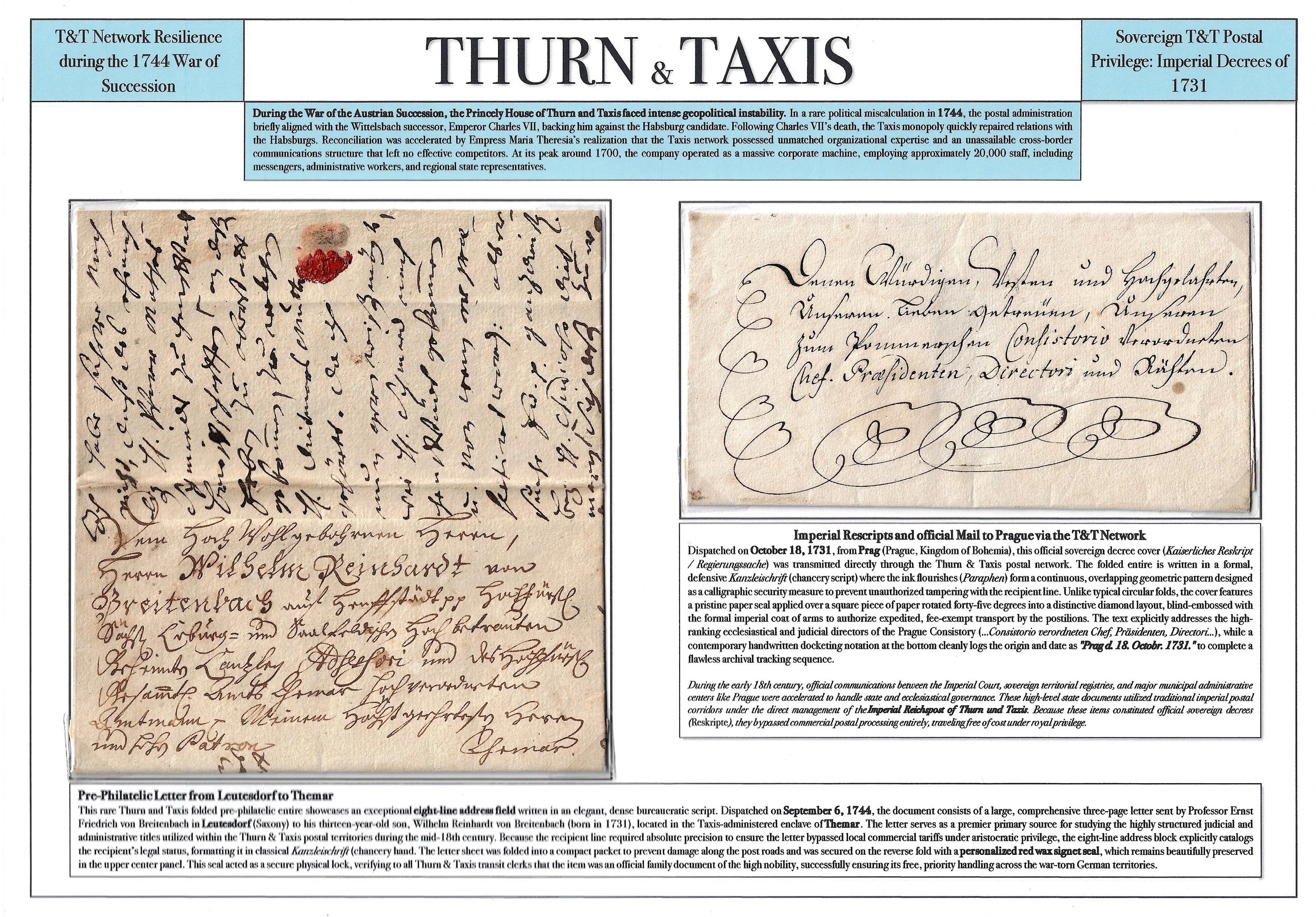
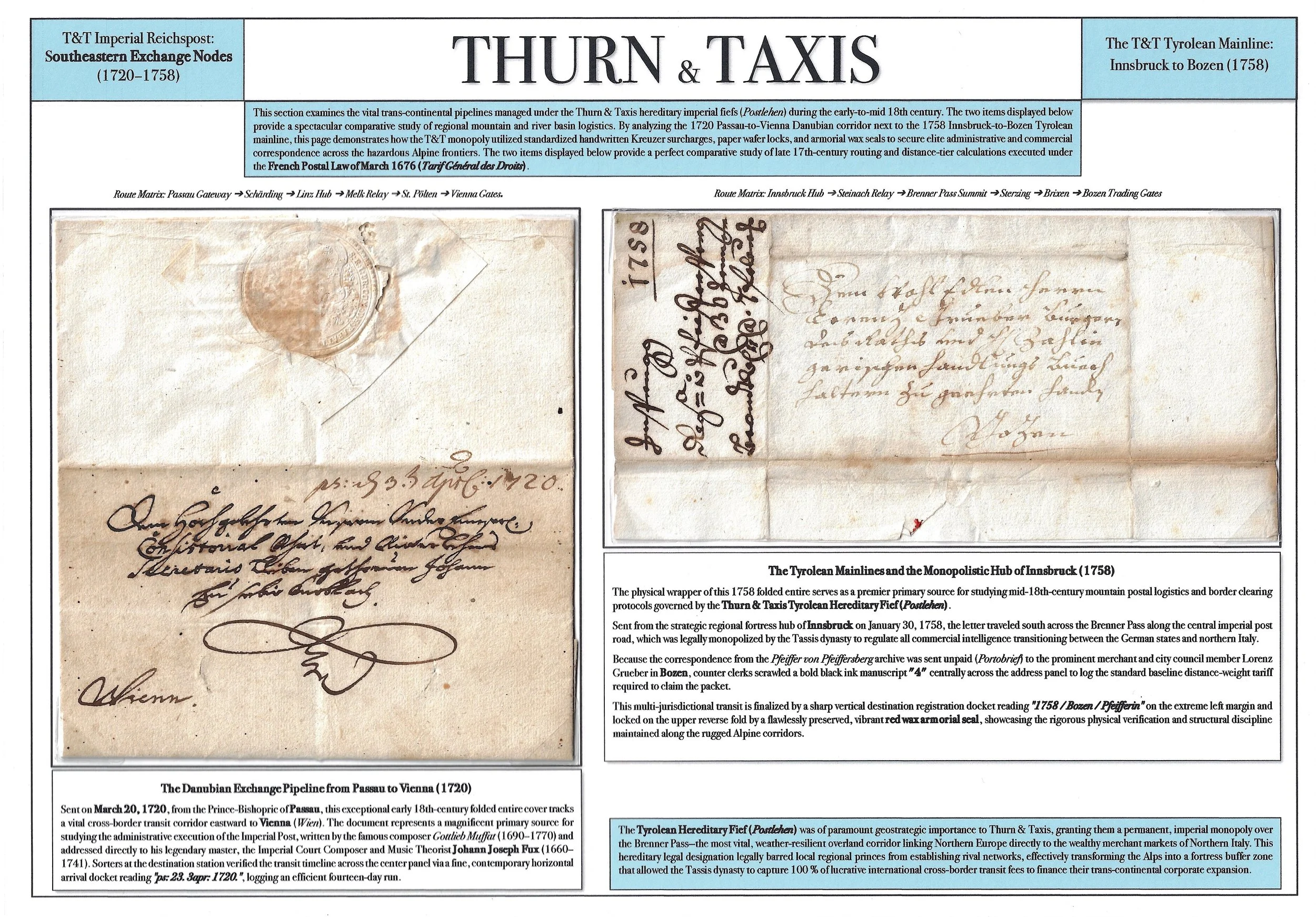
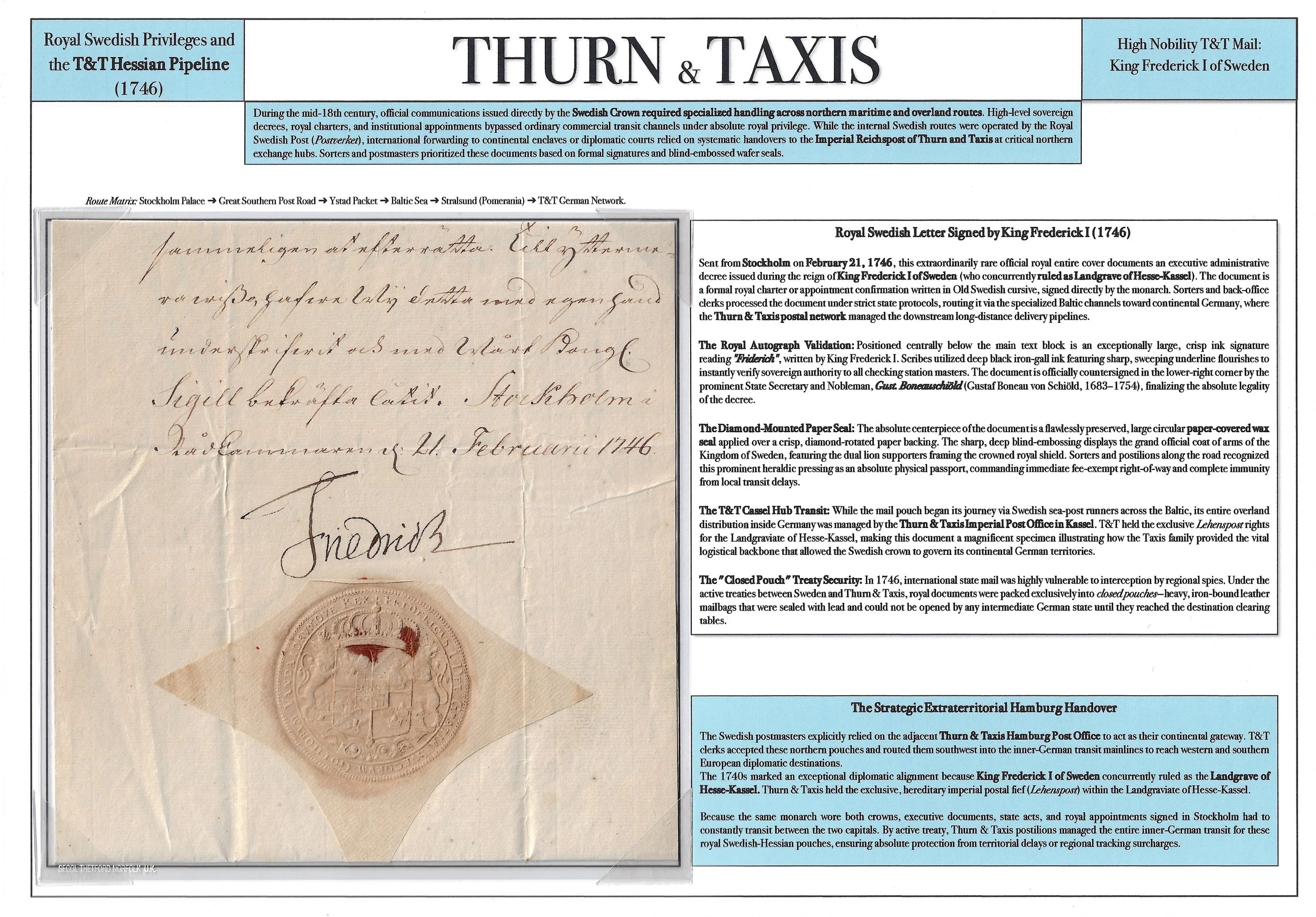
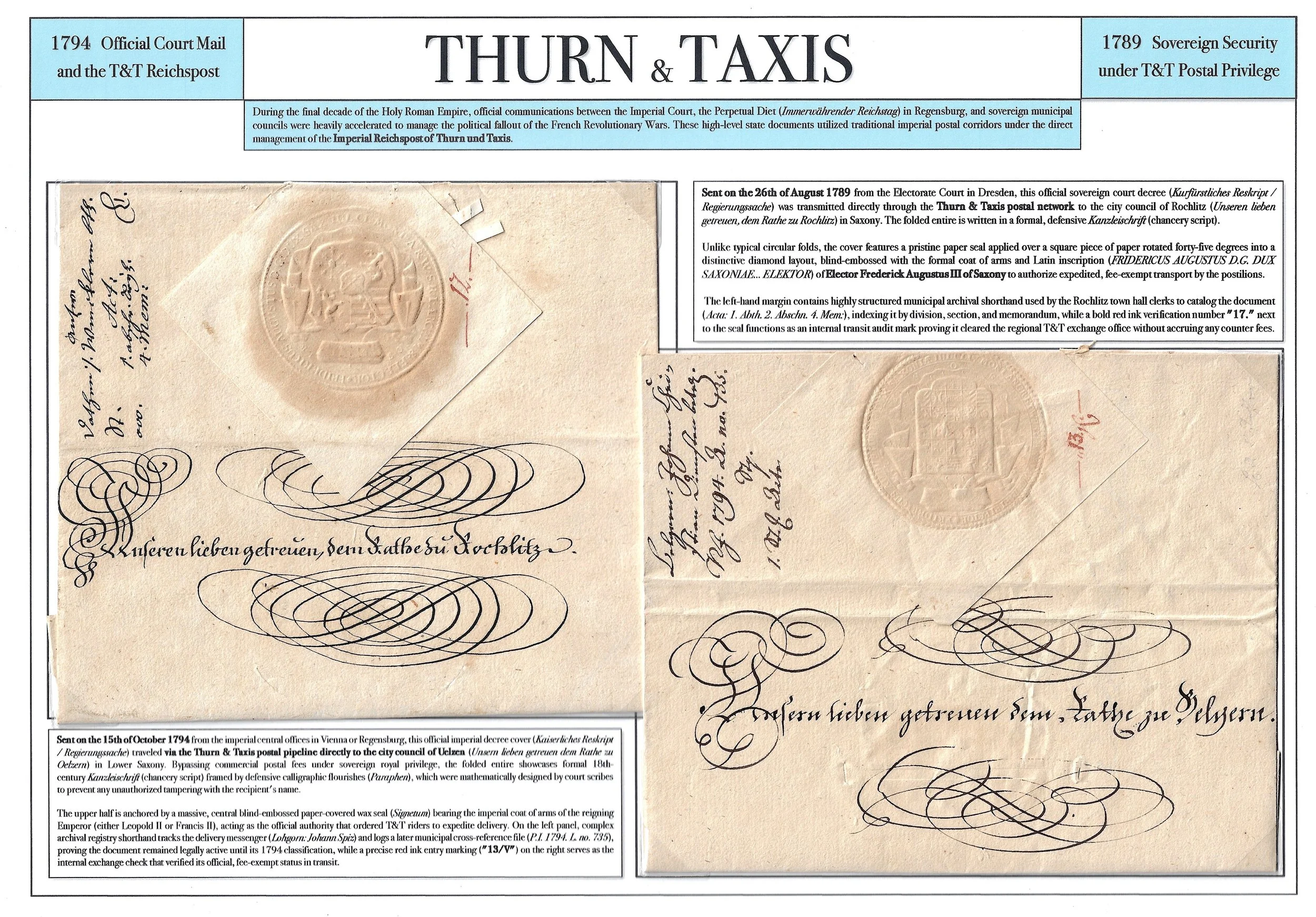
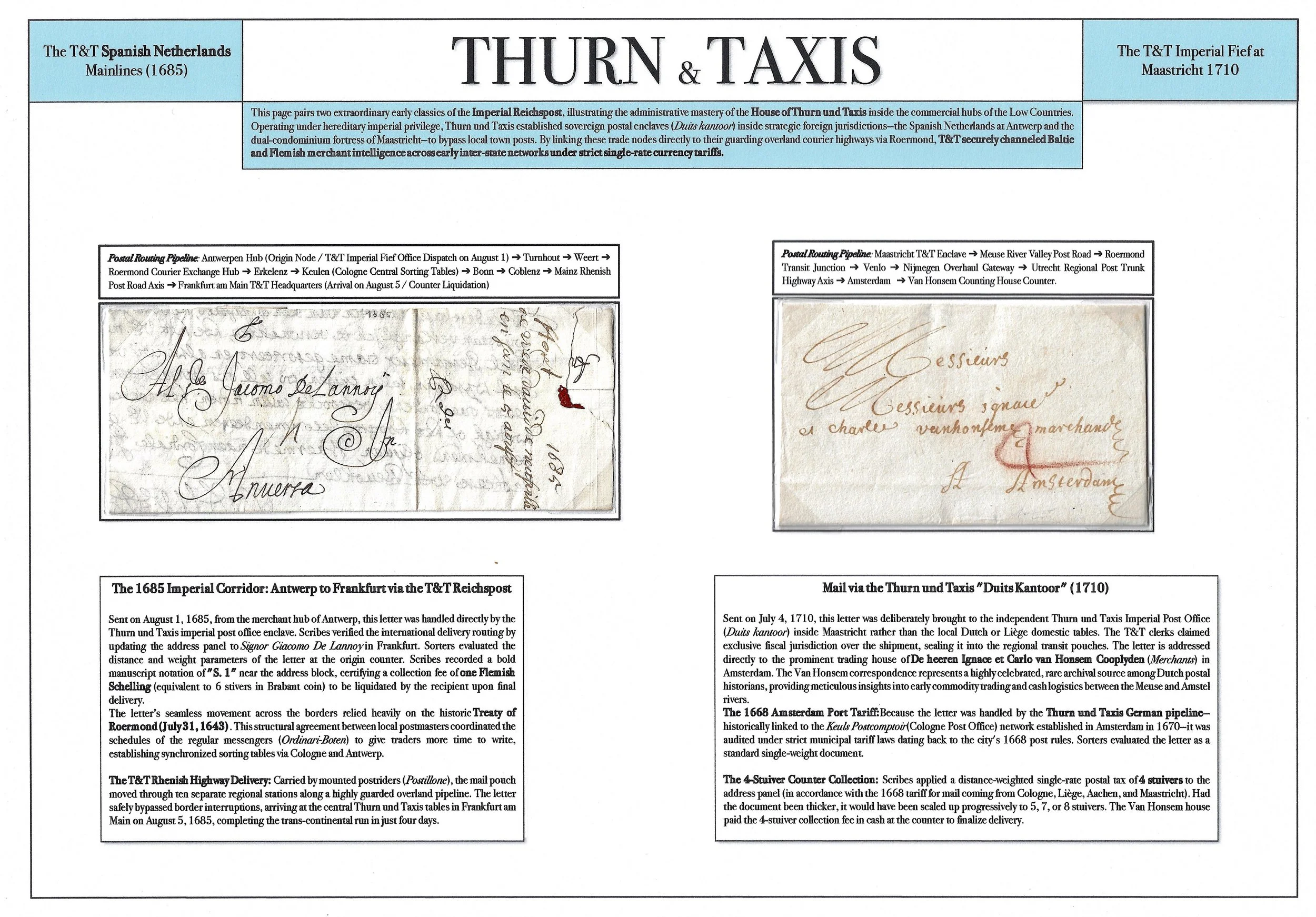
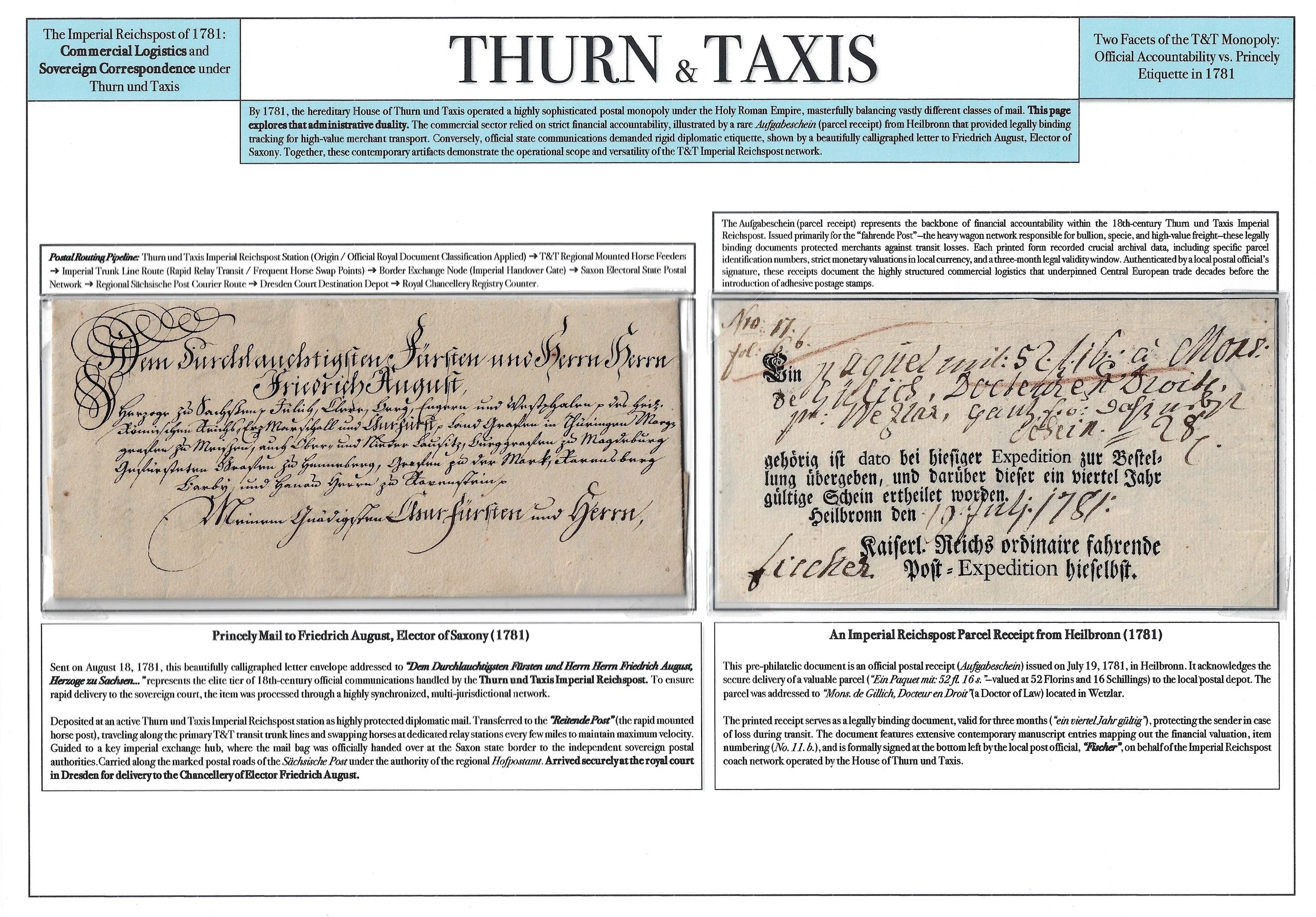
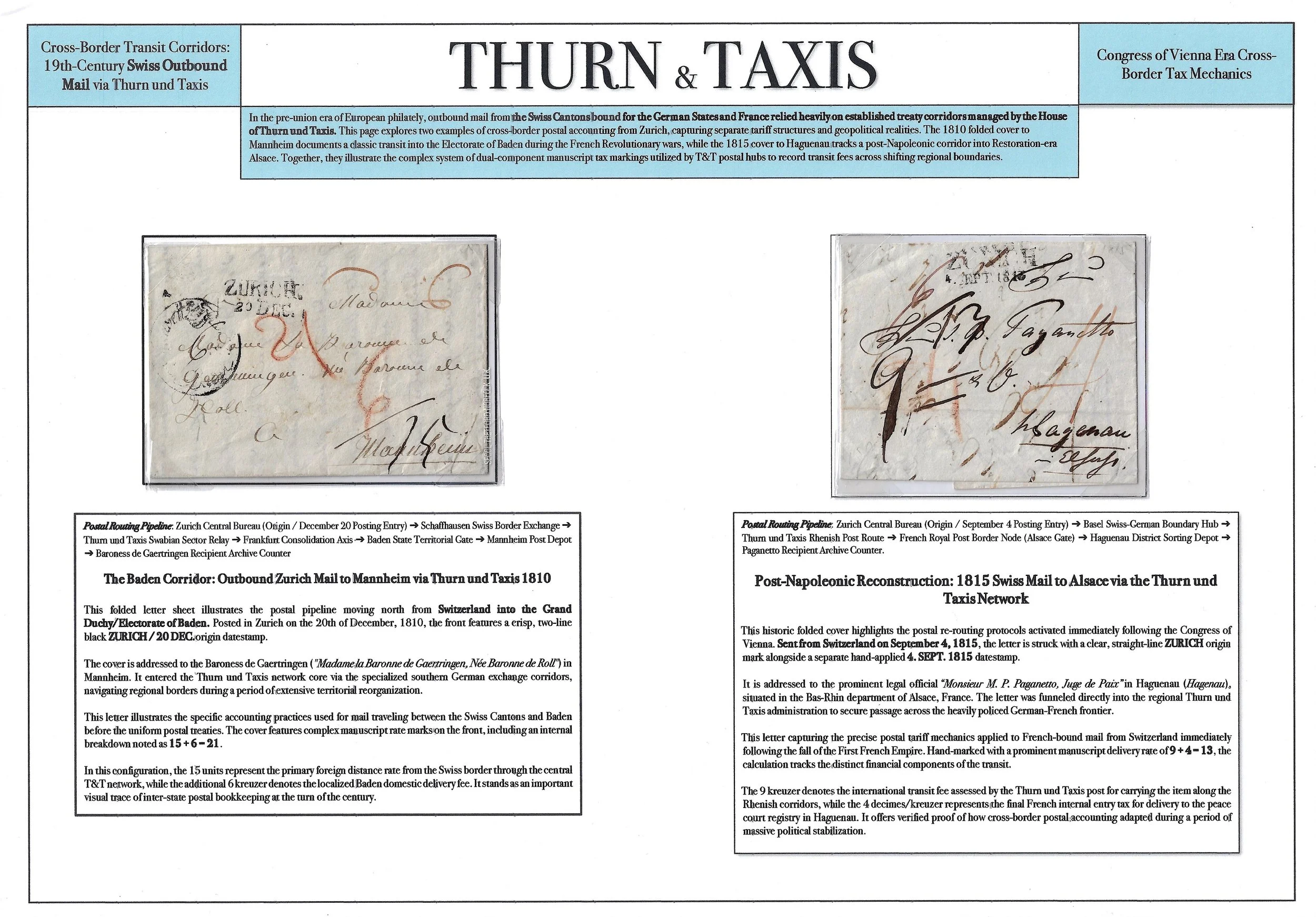
The pages (coming 6.9.2026) presented here are part of the exhibition collection, though certainly not all of them, as I have already created 85 A3 exhibit pages so far—whereas a standard 8-frame exhibit requires 64 pages—and more are on the way! I will curate the final competitive exhibit as the first show approaches in April 2027. Until then, please treat these presented pages as a broader working collection rather than a finished exhibition framework. Comments and feedback are warmly welcome!